









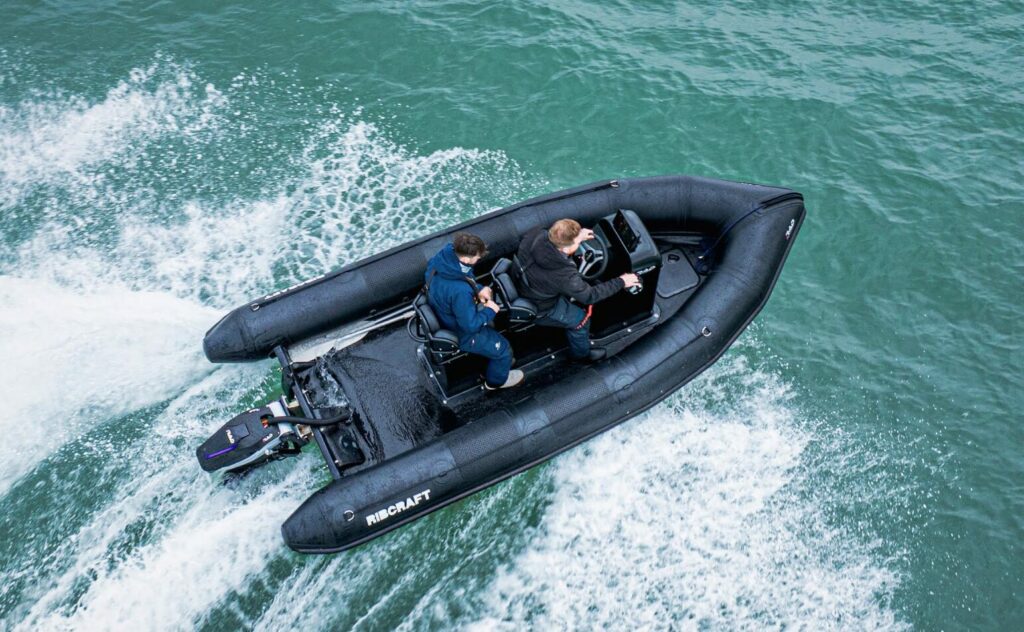
With the PRO 480 Electric, Ribcraft is applying a tried and tested recipe to professional RIBs: electrify without sacrificing performance. Developed in France on a recognised Ribcraft base, this 4m80 powered by a Torqeedo Deep Blue 50 R electric outboard is aimed at the safety, training and coastal work sectors. It sends out the signal that electric propulsion is no longer confined to slow dinghies or niche uses!
A professional base, electrified without compromise
The Ribcraft PRO 480 Electric is based on a platform well known to professionals. The hull has historically been used by rescue services, diving clubs and institutional operators for its robustness, stability and ability to withstand intensive use. Zero Emission Nautic has not sought to reinvent the hull, but to transform the propulsion chain. The heart of the system is the Torqeedo Deep Blue 50 R electric outboard. With a peak power of around 50 kW, the equivalent of an 80 hp petrol engine, it is clearly in the serious motorisation category.
Energy is supplied by a 40 kWh high-voltage battery, operating at around 350 volts, integrated into a turnkey package that includes power electronics and energy management. This technological choice places the PRO 480 Electric in a different dimension to that of small electric pleasure boats. This is a work tool, designed to take off, glide and maintain operational speeds compatible with professional missions.

Close to thermal performance
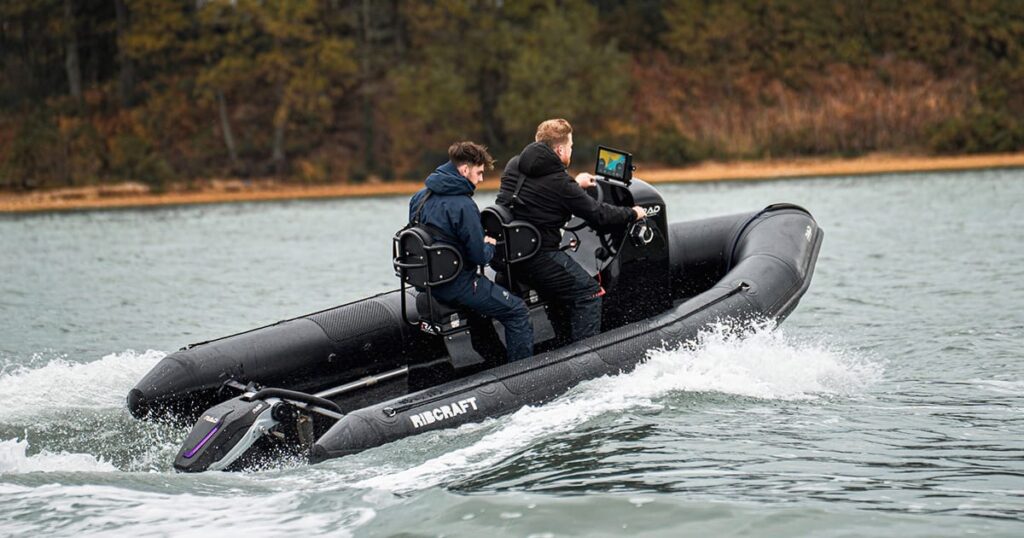
On the water, the PRO 480 Electric claims a range of use from 4 to 30 knots with two people on board. This range reflects the philosophy behind the project. At low power, between 2 and 6 kW, the Deep Blue system allows you to sail for long periods, with a range that can exceed ten hours at around 5 knots. A clear advantage for port surveillance, training or coastal observation missions. At full power, the engine delivers between 20 and 25 knots for around three quarters of an hour. That’s a range of around 16 to 20 nautical miles, enough for quick interventions or short but dynamic trips.
As is often the case with electric vehicles, the best compromise lies between the two: intermediate speeds, around 12 to 16 knots, offer the best balance between speed, silence and endurance. This logic of use differs from that of combustion engines, where the fuel reserve is used to artificially extend range. Here, the operator is encouraged to think about his missions in terms of their energy profile, but in return gains unprecedented comfort: instant acceleration, absence of vibrations, and above all a silence that profoundly changes the onboard experience.
Silence, maintenance and image
The benefits of the PRO 480 Electric are not limited to its performance figures. For professional users, the ancillary benefits are often decisive. The absence of an internal combustion engine drastically reduces noise levels, which improves working conditions, facilitates on-board communication and limits disturbance to local residents and coastal users. Maintenance is also simplified. Fewer moving parts, no draining, no complex fuel circuit. In the long term, operating costs will become a major factor.
Finally, image plays an increasingly important role. For local authorities, training organisations and public operators, using an electric RIB sends out a strong signal about the ecological transition. The PRO 480 Electric is clearly a credible technological showcase, far removed from solutions that are symbolic but not very operational.
A regulatory framework ready for electric vehicles
Contrary to popular belief, French and European regulations do not restrict this type of boat. With a power output of 50 kW, the PRO 480 Electric is comparable to a conventional motorboat. For private customers, a pleasure craft licence is compulsory, but for professionals, the usual rules applicable to fast motorboats apply: safety equipment, registration and compliance with current standards. At 4.80 metres in length, the unit is well below the thresholds triggering specific obligations for large vessels.
To date, there are no special exemption or experimental arrangements for this type of propulsion: electric power is treated as a technological alternative, not as a regulatory exception. As far as ports are concerned, the dynamic is clearly favourable. Since 2022, the French law on mobility has required marinas with more than 100 berths to reserve a minimum proportion of their berths for electric boats. At the same time, the declared objective of a carbon-neutral State fleet by 2050 is creating a favourable context for the deployment of professional electric solutions for coastal missions.
A weak signal that could become strong
The Ribcraft PRO 480 Electric is not a mass-market product, nor does it seek to be. Its positioning is to meet precise professional needs, over controlled mission cycles, with high standards of reliability and performance. But through this type of project, a whole sector is being structured. By combining a recognised professional hull with a proven high-voltage electric motor, Zero Emission Nautic is demonstrating that electric power is no longer confined to slow yachts or prototypes.
At a time when environmental constraints are tightening and coastal uses are coming under increasing scrutiny, this type of RIB could well become the standard for certain missions. Just as has happened in the commercial vehicle sector, the electrification of the professional marine sector is progressing in stages. The PRO 480 Electric is a concrete illustration of this: discreet, pragmatic, but resolutely forward-looking.
Sources: actunautique.com – ribcraft.com – torqeedo.com