
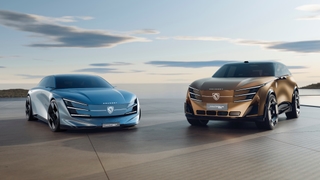


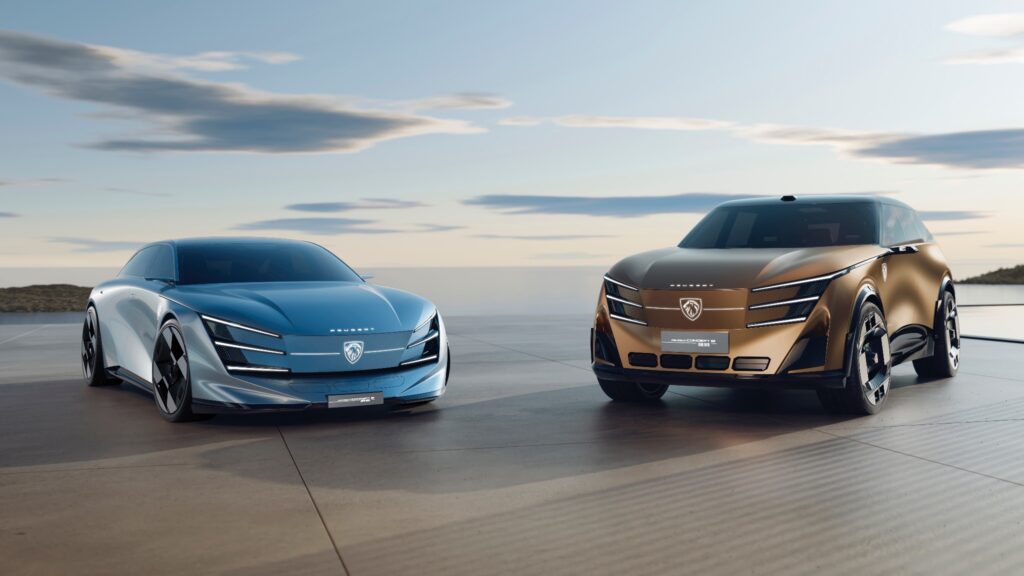
Returning to the iconic stage of the 2026 Beijing Motor Show with two concept cars, Concept 6 and Concept 8, the French brand is not content merely to showcase prototypes. It is laying the foundations for a strategic plan for the years to come. Behind these two models lies a fairly clear message: China is becoming an industrial, technological and strategic hub for the group.
Beijing, the hub of the automotive industry
The Beijing Motor Show is now one of the most important events on the global automotive calendar. It serves as a platform where manufacturers come to test out their global strategies. The reason is simple: China has been the world’s largest automotive market for over 15 years and has become a real trendsetter.
Indeed, Beijing has been the setting for the launch of iconic models from the world’s leading brands, as well as several generations of models from Chinese manufacturers that have become key players on the global market.
The 2026 edition once again confirms that technology will be the watchword, with a flurry of announcements, often centred on models designed specifically for the Chinese market.
A return that forms part of a global strategy
Peugeot’s presence in Beijing is not merely a matter of timing. It forms an integral part of the brand’s overall strategy.
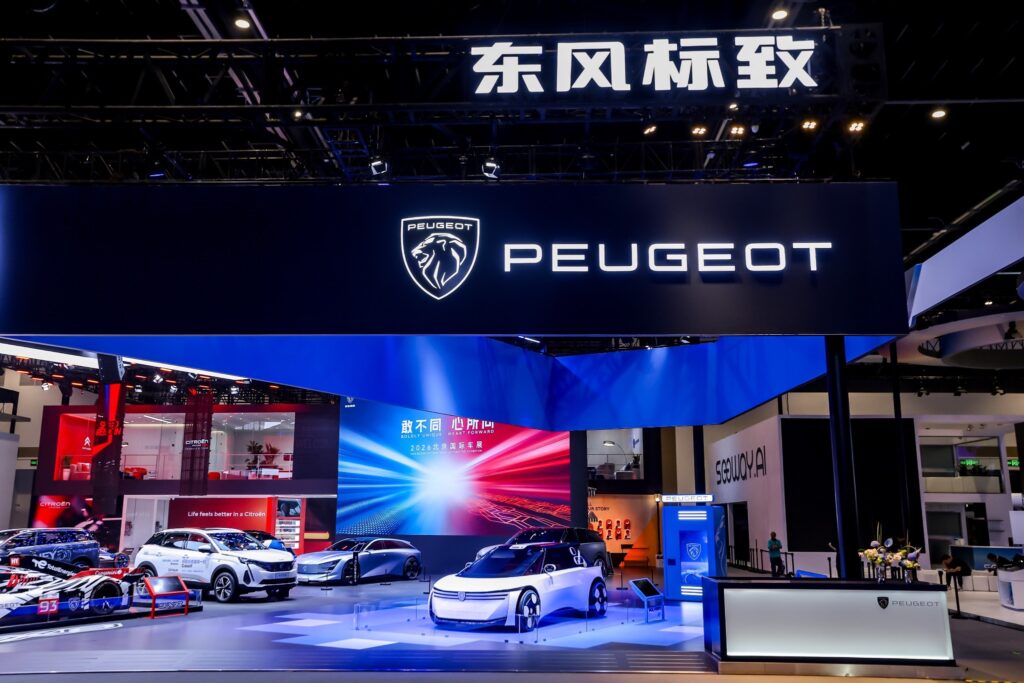
In its press release, the manufacturer explains that China is both a market – as it remains the world’s largest – and a catalyst for change, as it now influences the development of the group’s future models.
Alain Favey, CEO of PEUGEOT, puts it succinctly: “The Beijing Motor Show is now a key event for PEUGEOT. […] China is a major driving force behind our global transformation, particularly in the areas of electrification, innovation and the brand’s move upmarket.”
The two concept cars on display (Concept 6 and Concept 8) are designed for the Chinese market – ‘in China, for China’ – but not exclusively, as the aim is to roll them out to the group’s other markets.

Concept 6: Peugeot returns to the large saloon
First concept presented: Concept 6. A large saloon with a highly refined, futuristic silhouette, halfway between a classic saloon and a dynamic estate car. The design follows a fairly clear rationale: to reaffirm the brand’s identity in a segment where styling is becoming increasingly uniform.
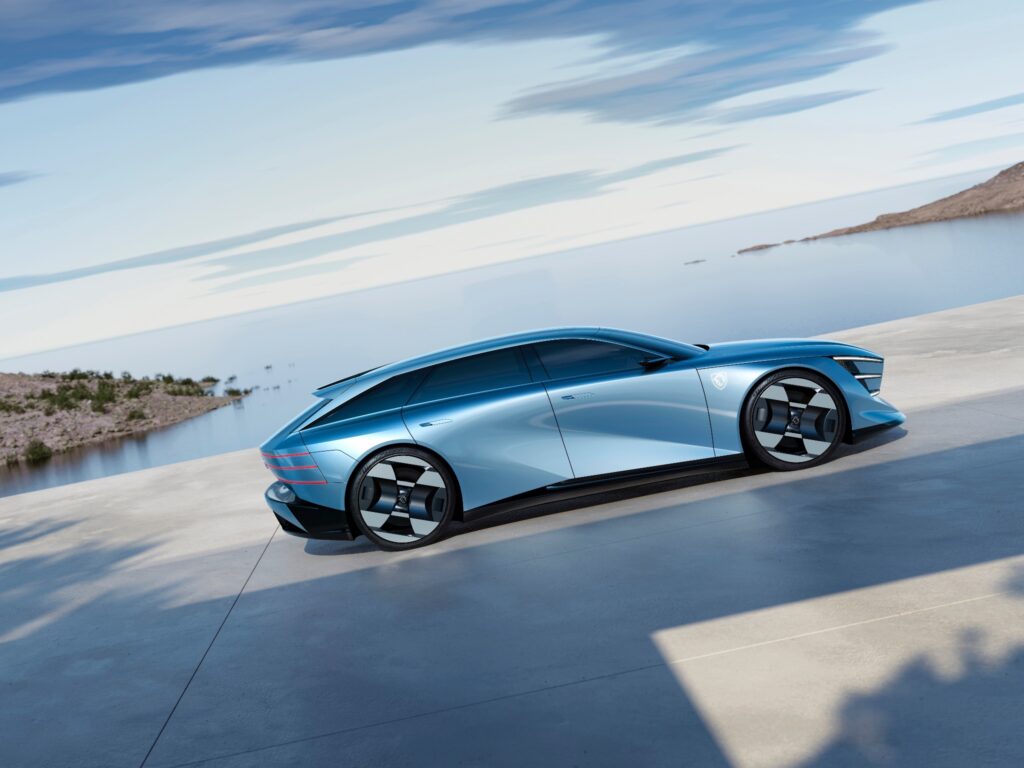
In reality, this is very much a true estate car, with a sleek design that visually evokes the Instinct concept unveiled in 2017. Its slender silhouette is defined by a long bonnet, a high waistline and striking proportions. The press release speaks of a certain ‘French-style’ elegance and, above all, a desire to stand out visually in a highly conventionalised market. The front and rear light signatures feature the brand’s characteristic three claws, whilst the new Peugeot logo is prominently displayed, here reimagined with an LED display that reinforces the futuristic look.
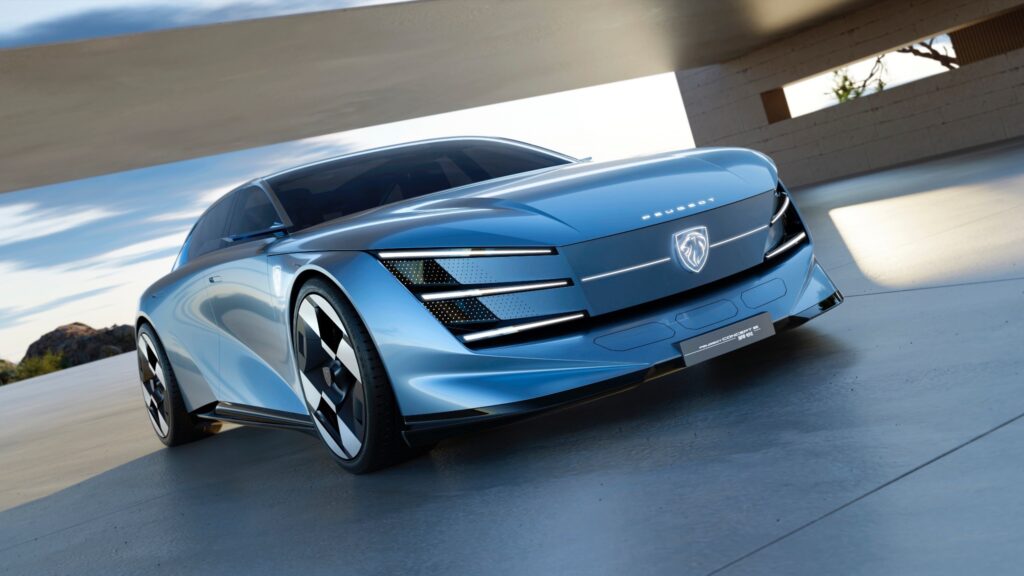
But that is not the main point. Concept 6, beyond being a design exercise, offers a glimpse of a future production saloon. It will be manufactured in China in partnership with Dongfeng, at the Wuhan plant. Peugeot is working directly with its local partner to design a model intended for the Chinese market, as well as for export.
Concept 8: the SUV, blending premium styling with a bold design statement
With the Concept 8, Peugeot is targeting the most strategic segment of the global market: that of large SUVs.
The model features a modern design, though one that is deliberately more conventional than the Concept 6. Its appearance is clearly reminiscent of a blend between a Peugeot SUV and a Range Rover, with a commanding silhouette and proportions typical of the segment.
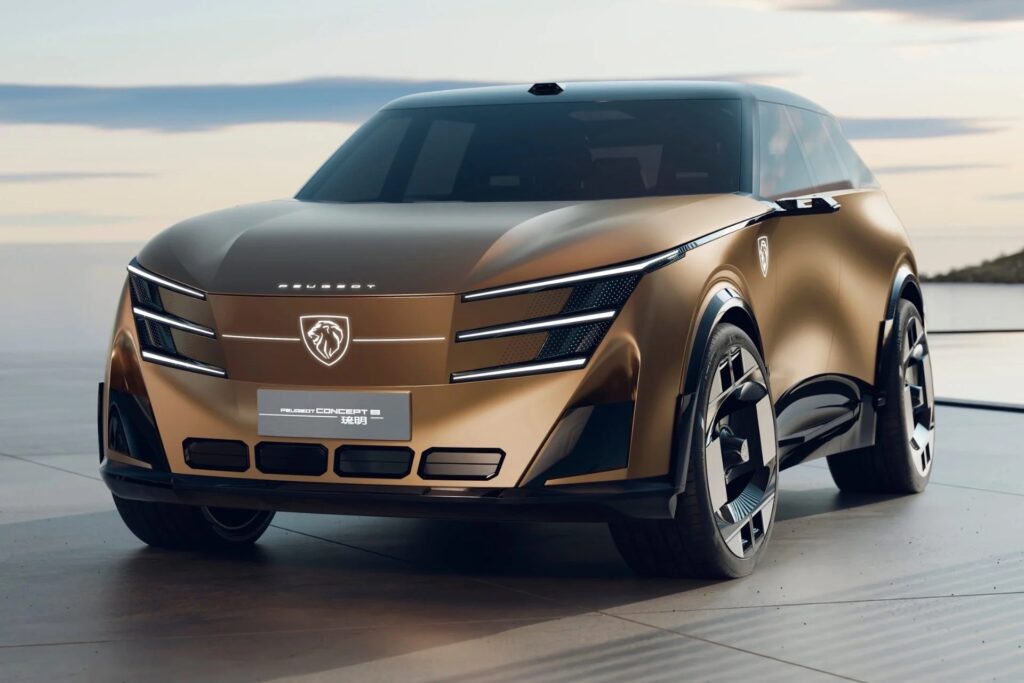
Looking at the details, the design is meticulously executed. The wheel arches are sculpted, whilst the heavily tinted glass surface stretches uninterrupted from the windscreen to the rear of the vehicle.
At the rear, Peugeot has incorporated a distinctive diffuser and a spoiler that extends a sweeping line into the Concept 8, lending a more dynamic touch to an overall design that is quite substantial.
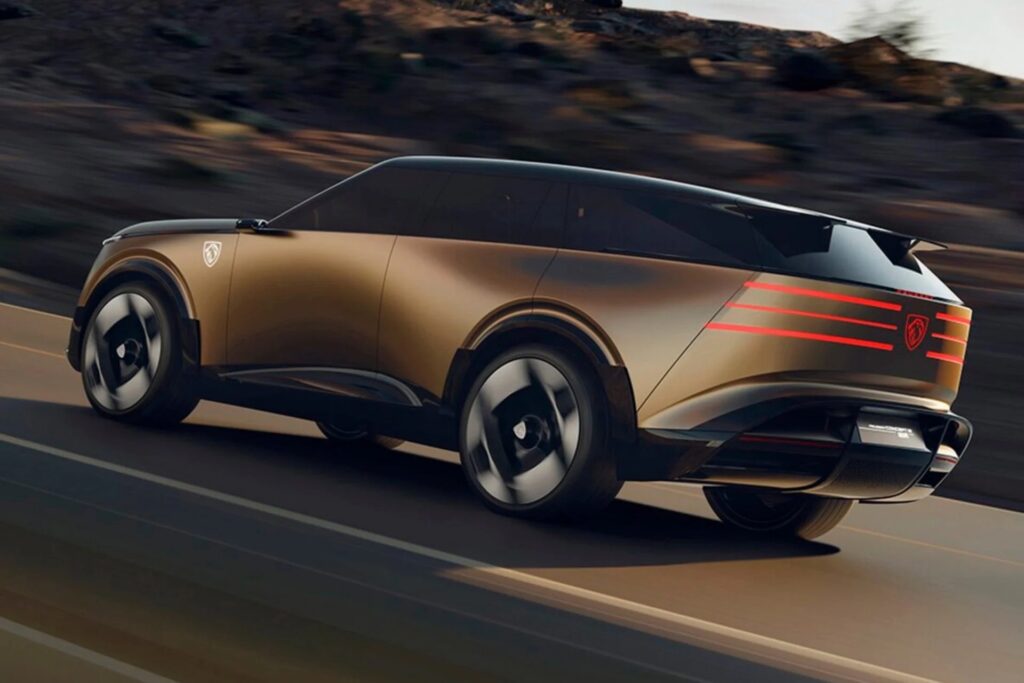
As with Concept 6, this is more than just a design exercise. Concept 8 heralds a future production SUV, set to be manufactured in China in partnership with Dongfeng, to cater both to the local market and to international ambitions.
An ambition that remains purely theoretical
There is, however, one significant caveat: at this stage, all of this remains purely conceptual. There are no detailed specifications, no specific launch schedule, and no pricing strategy.
We understand the strategy, but not yet the execution. And in a market as competitive as China’s, that is often where everything hinges. There can be a significant gap between the intention and the final product.
What Beijing says about Peugeot
The French giant’s return to Beijing shows that Peugeot has identified the right strategies. We already knew this, but it confirms a clear commitment to electrification, a gradual move upmarket and, above all, deeper integration into the Chinese market.
The brand is no longer content simply to adapt its models. It is seeking to develop a strategy in which China serves as a springboard for its global expansion, under the motto ‘in China, for China’. It remains to be seen whether this ambition will soon translate into actual vehicles capable of competing with the fierce competition in the Middle Kingdom.