
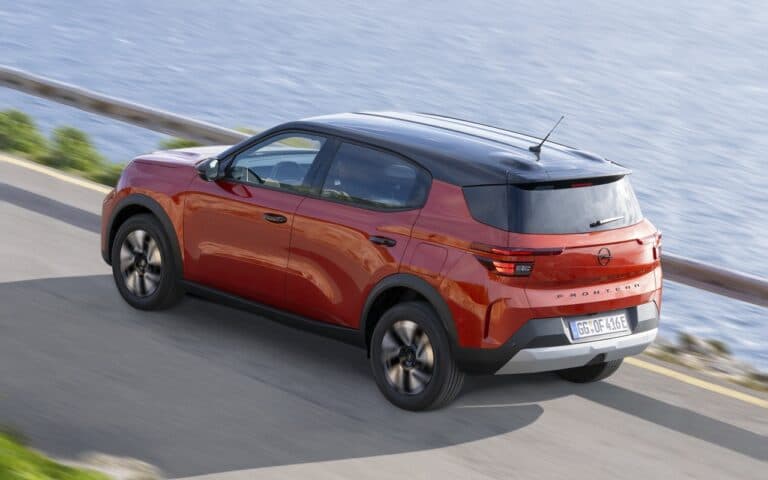
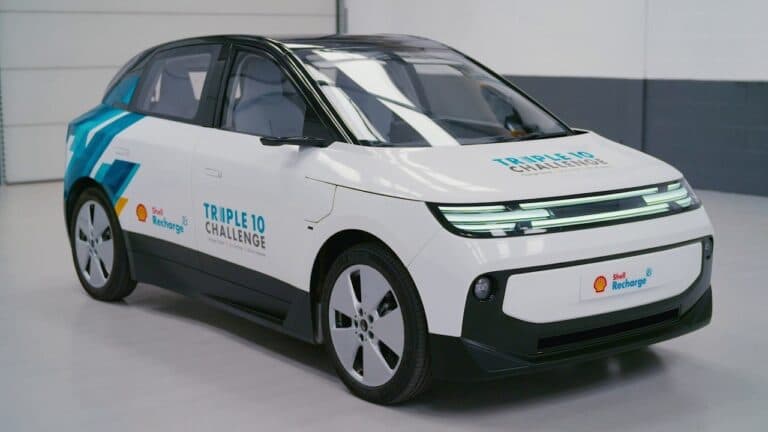
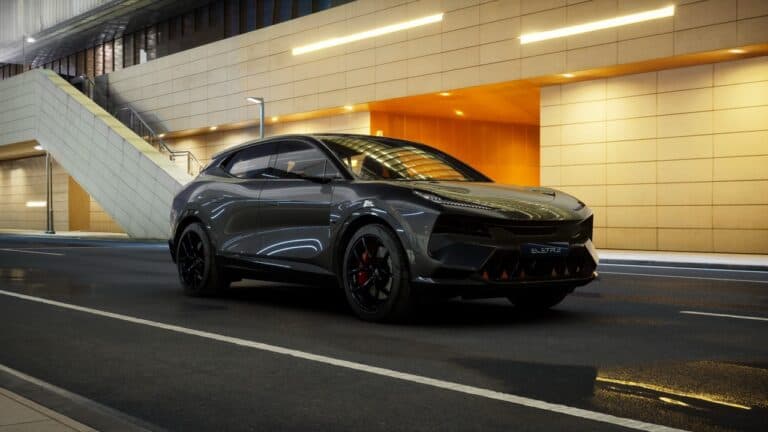
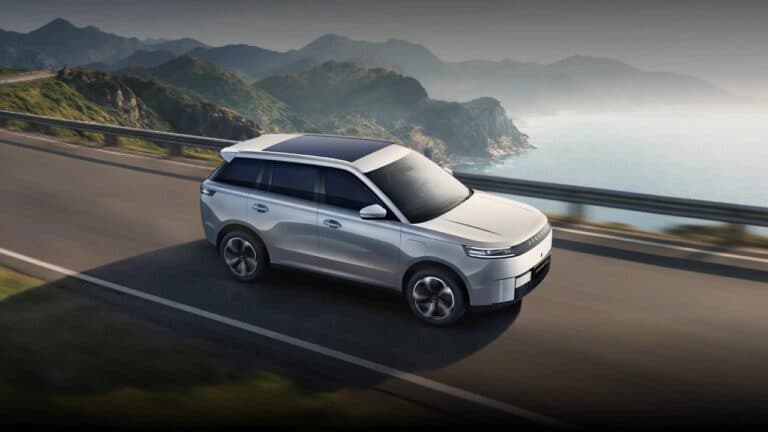

Auto China, the world’s largest motor show, has just opened its doors to the public in Beijing. The 2026 edition marks a turning point in the international automotive sector, as local brands are now setting the pace with a flurry of innovations and fresh ideas for the cars of tomorrow – and, more broadly, for the mobility of the future. If you feel this doesn’t concern you here in France, think again, because the new models unveiled today in Beijing will soon be appearing in our showrooms, within 18 to 36 months.

Auto China in figures
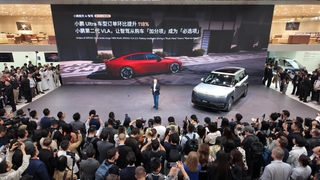
The Beijing Motor Show (held every two years, alternating with the Shanghai Motor Show) welcomes the global automotive industry for around ten days. 1,400 vehicles from some 100 Chinese and international manufacturers are on display in huge exhibition halls covering 380,000 m² (the equivalent of 50 football pitches). 170 world premieres, 70 concept cars. Naturally, Chinese brands are playing to their strengths: electric cars, high-capacity batteries, tenfold increases in charging speeds, integration of AI software, development of autonomous driving, comfort and in-car innovations. Faced with this avalanche of new developments being rolled out at record speed, European manufacturers are not giving up, but must forge partnerships with Chinese firms to bridge an obvious technological gap (BMW-CATL, Audi-Huawei, Volkswagen-Xpeng…).
Chinese dominance in the automotive industry is growing
The Beijing Motor Show is primarily aimed at Chinese customers, but also indirectly at European motorists. The world’s largest market (with over 34 million vehicles sold in 2025) accounts for one in three new car registrations worldwide. Half of these are electric cars. China accounts for two-thirds of global electric vehicle sales, and, crucially, production continues to rise: nearly 35 million vehicles were manufactured last year, with one-seventh of these destined for export (Europe, America, Asia). These foreign markets are all the more important as domestic demand is slowing: a 17% drop in passenger car sales in the first quarter in China. There are now too many local manufacturers competing with one another and driving down prices, even at the cost of reduced profits. International expansion is therefore inevitable.
BYD, Xiaomi and Xpeng are pushing ahead with AI
Faced with fierce competition, manufacturers are therefore focusing on software, in-car technological innovations and the ability to create a cohesive ecosystem. Meanwhile, Chinese customers now need to be retained and encouraged to move upmarket, through large, modern and well-equipped SUVs or sporty, powerful models.
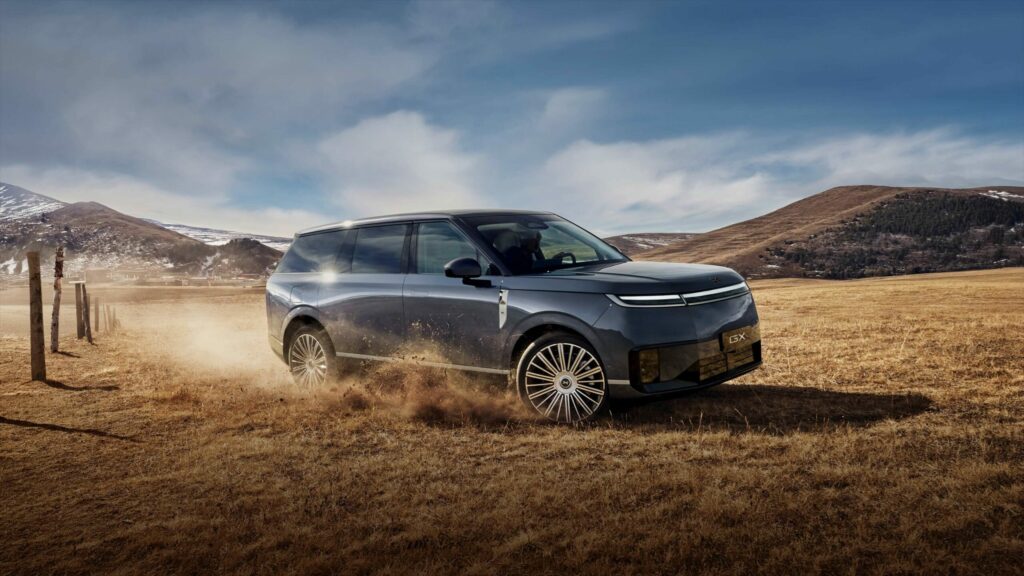
Xpeng unveils the GX, an imposing luxury SUV featuring complex and highly accurate on-board AI designed to streamline autonomous driving: its on-board computing power is equivalent to that of 100 high-end smartphones, or 10 times more powerful than the FSD system developed by Tesla. Put simply, the car detects obstacles, continuously analyses all peripheral cameras and makes decisions in a matter of milliseconds, without needing an internet connection.
BYD Yuan Plus III: it will be launched in Europe under the name Atto 3, a compact electric SUV that will benefit from BYD’s new ultra-fast charging technology, known as Flash Charging: from 10% to 70% in 5 minutes. These specialised charging points are gradually being rolled out in China and could appear in Europe by 2027.
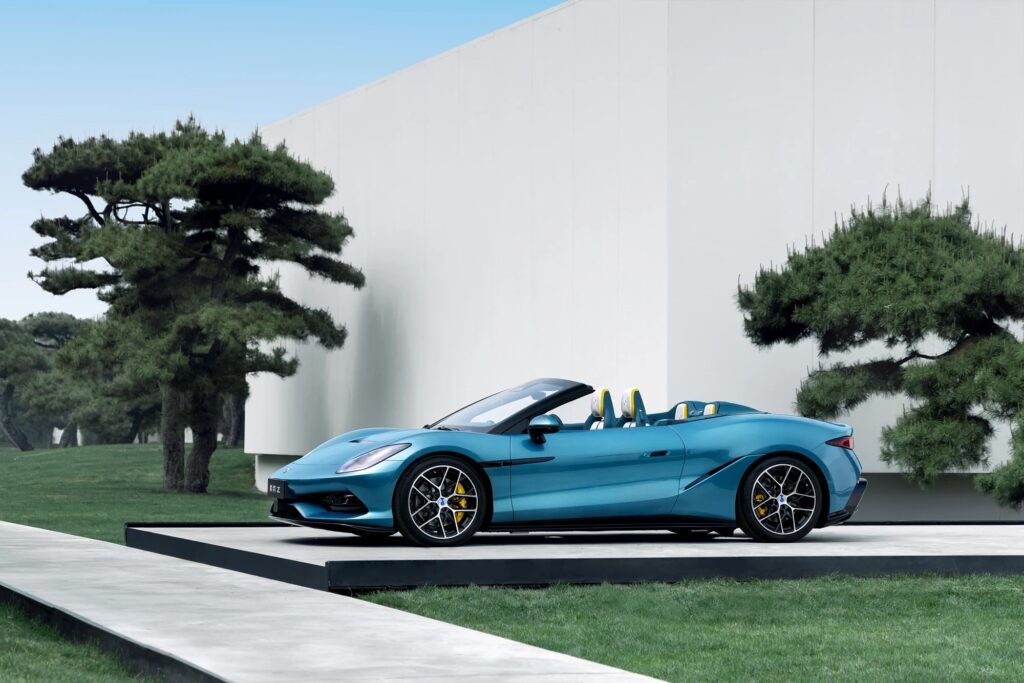
Denza Z (BYD Group): An electric convertible supercar with three motors capable of delivering a total output of 1,000 hp and accelerating from 0 to 100 km/h in under 2 seconds. The aim: to dethrone the best European supercars. To optimise its handling, the Z is fitted with intelligent suspension that balances the chassis every 10 milliseconds. The steering and braking are electronically controlled via ‘steer-by-wire’, meaning there is no longer any physical connection between the driver and the road. The steering wheel is square and retracts into the dashboard in the event of a collision.
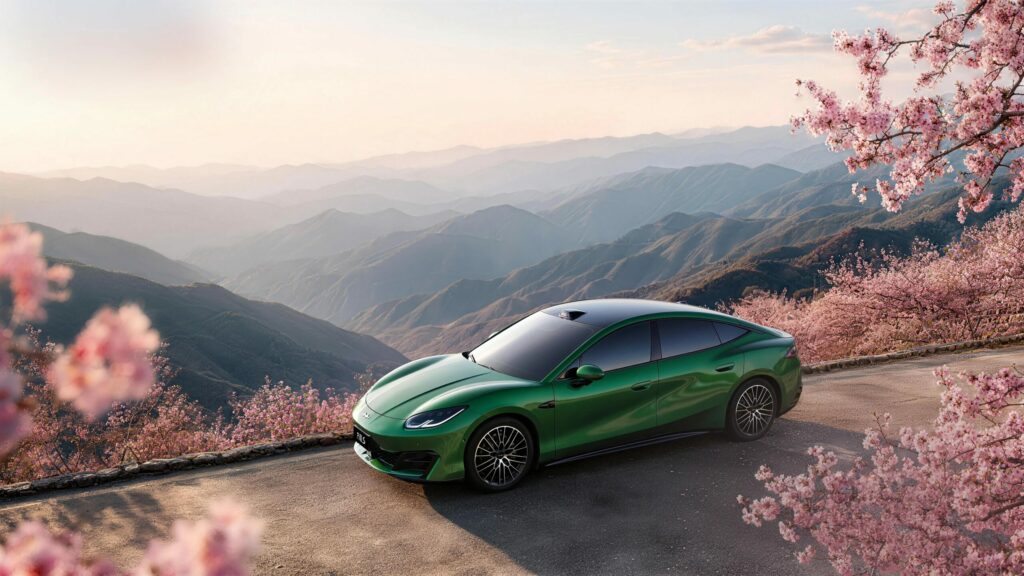
Fang Cheng Bao (BYD Group): a Chinese domestic brand specialising in SUVs and off-road vehicles, it is expanding its range with a sports saloon (similar to a Porsche Panamera) called the Formula S. Equipped with Lidar and multiple cameras for autonomous driving, an intelligent chassis and four-wheel steering, this GT coupé is designed to be highly dynamic (1,000 hp and three motors) and could arrive in Europe soon.
Xiaomi YU7 GT: This is Xiaomi’s sporty SUV, positioned as a rival to the electric Porsche Macan. With a battery capacity of over 100 kWh, a range of 700 km and 990 hp, it will initially be launched in China before likely taking on the European premium brands.
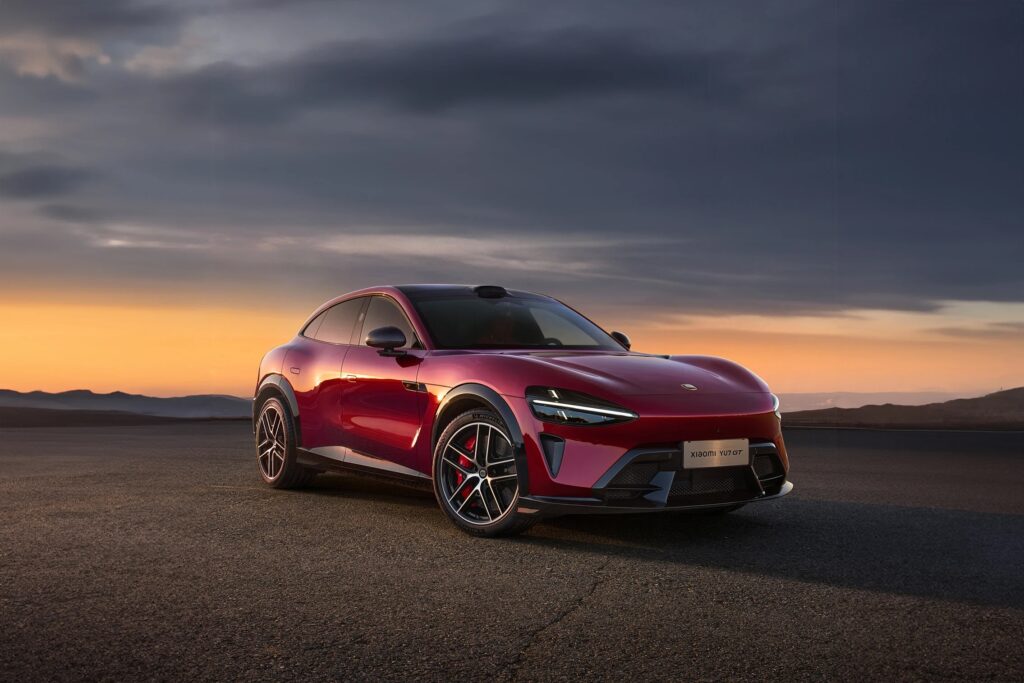
Lynk & Co: Geely Group’s premium brand is entering the luxury GT segment with the ‘Time to Shine’ concept, developed in the group’s Swedish design studios (Geely owns Volvo). This sculptural prototype heralds an upcoming electric sports car whose digital chassis is controlled by AI. Configured for the track, the computer uses advanced control systems to assist all body movements, thereby enhancing the dynamism of this rear-wheel-drive model, which promises a 0 to 100 km/h time of under 2 seconds.
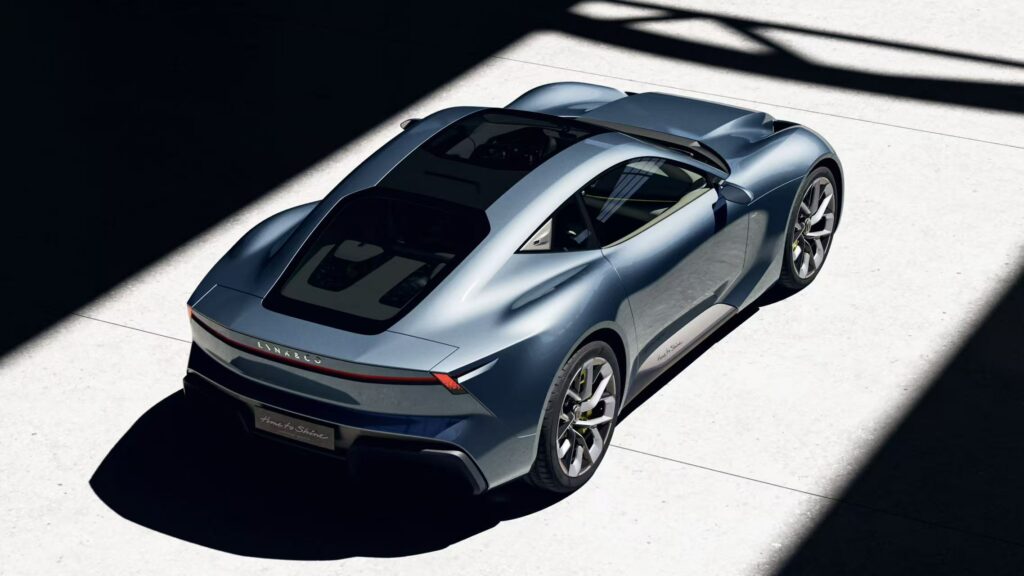
NIO ES9: At 5.36 metres long, it is China’s largest SUV (larger than a Rolls-Royce Cullinan) and features three LiDAR sensors for autonomous driving. Under the floor lies a battery with a capacity of over 100 kWh and a range of up to 620 km.
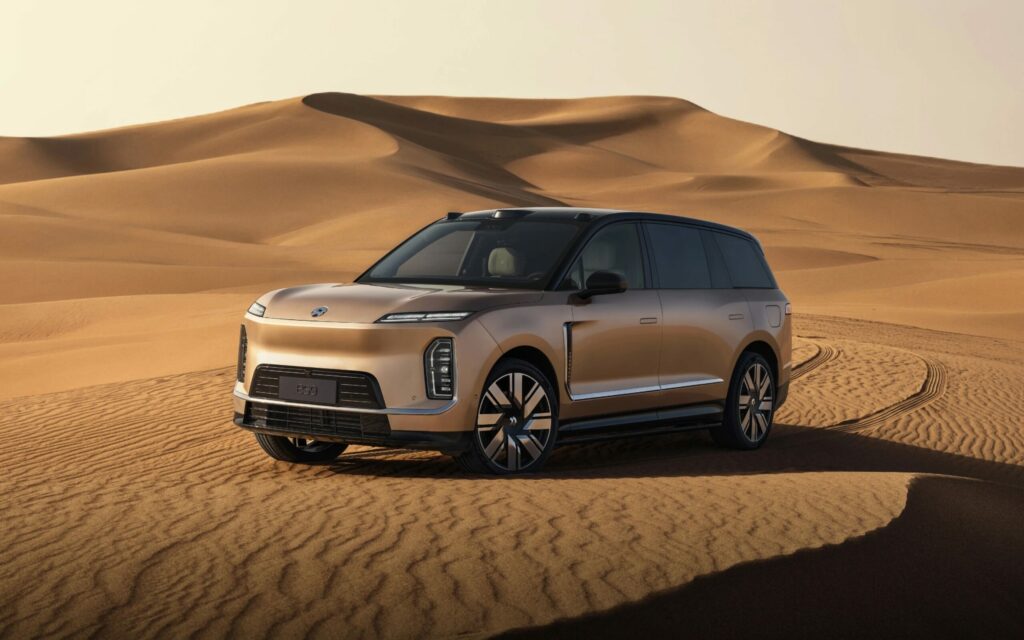
Zeekr SUV 8X: this high-end hybrid SUV aims to be as powerful as a supercar, delivering nearly 1,400 hp in its most extreme configuration. 0 to 100 km/h in under 3 seconds. The electric-thermal combination offers a range of up to 1,400 km, whilst fast charging (on this 900 V architecture) can take less than 10 minutes to go from 20% to 80%.
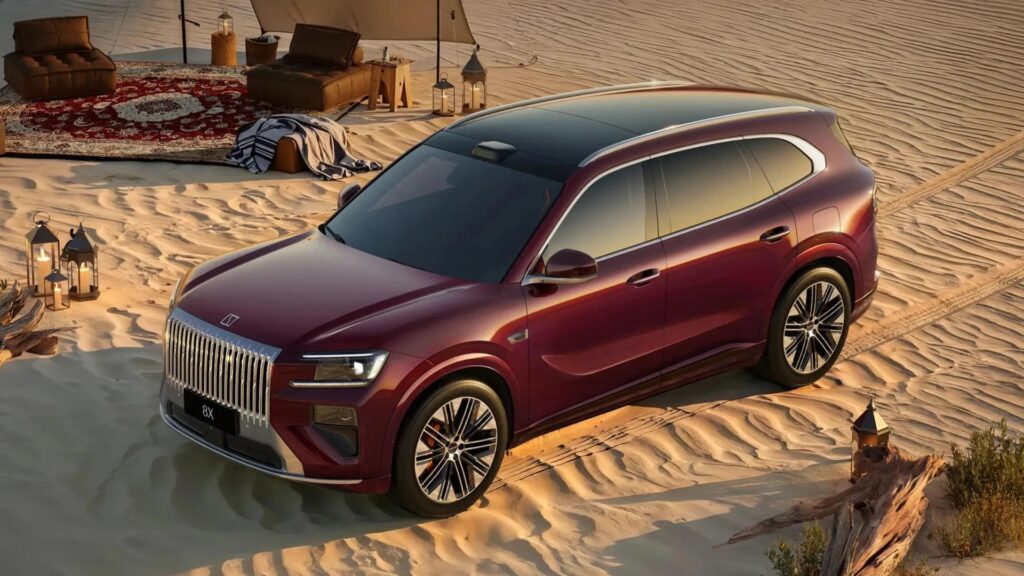
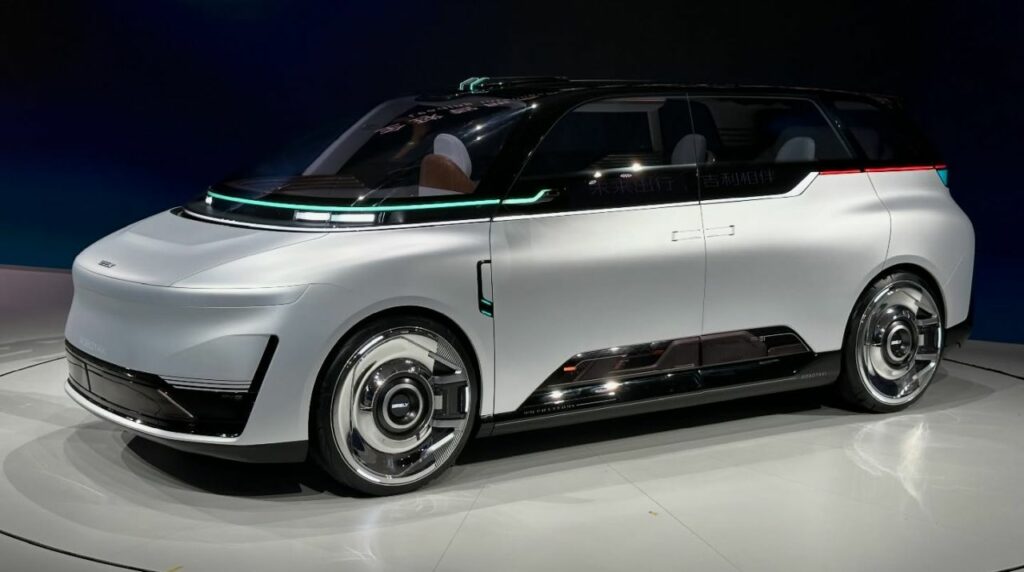
Alongside the expansion of its Galaxy range (a generation of smart cars featuring integrated AI for autonomous and assisted driving), the Geely Group has unveiled its first robotaxi, the Eva Cab, as a concept car. This vehicle, which has no steering wheel or controls, is equipped with a processor whose decision-making capabilities are three times faster than those of an experienced human driver. The World Action Model (WAM) is a brain (with three levels of 360° perception) that enables the vehicle to think and judge instantly (95% of everyday driving situations are handled automatically, such as making a U-turn, for example).
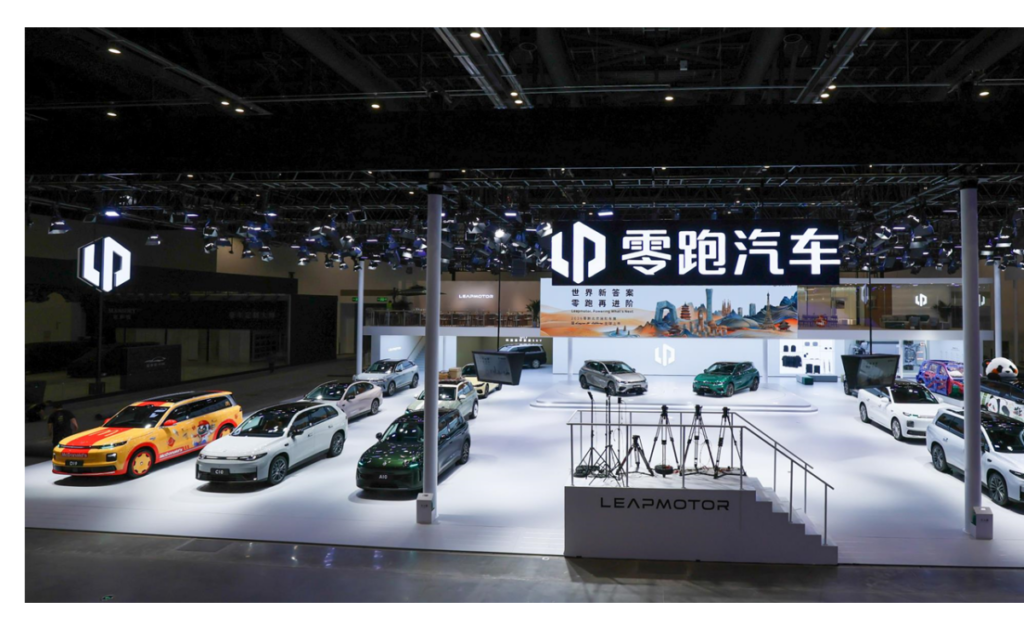
Leapmotor is launching the B05 in Europe. This compact model (4.43 m) is designed to achieve high sales volumes, with prices starting at €26,900. It will join the production line alongside the compact B10 SUV (assembled at the Stellantis plant in Zaragoza, Spain). A slightly sportier B05 Ultra version is currently reserved for the Chinese market.
The ‘low-altitude’ economy is really taking off
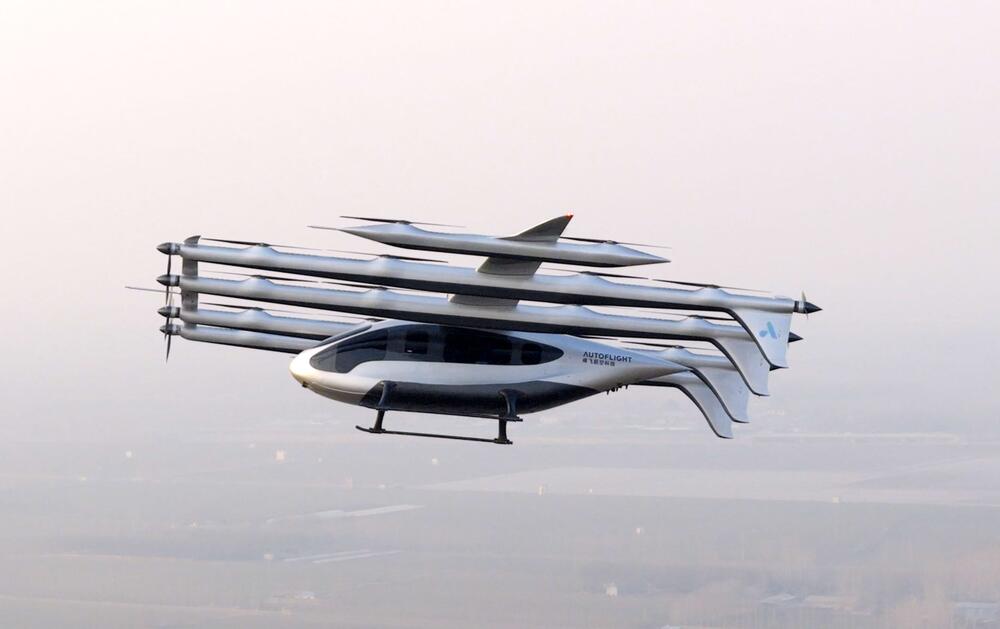
Beyond road transport, the Beijing Motor Show also highlights the future of ‘airborne’ mobility. What is described as the ‘low-altitude economy’ encompasses drones, flying taxis and other aerial vehicles operating at altitudes lower than those of traditional commercial airspace. For instance, the start-up AutoFlight is refining its eVTOLs (Electric Vertical Take-Off and Landing), a kind of 10-seater shared taxi, remotely piloted to cover urban and suburban distances. Such shuttles are also under development at Geely and Xpeng, as this new mobility economy is a priority for the Chinese authorities.