
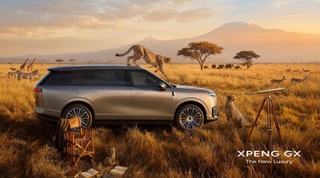
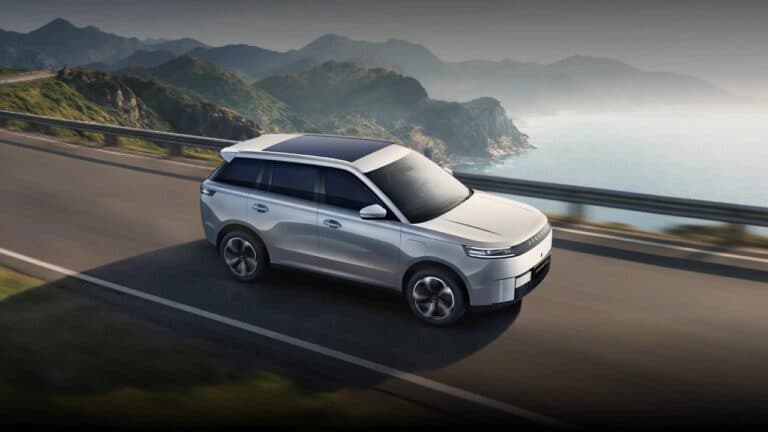

At the beginning of February 2026, XPeng lifted the veil on its new flagship: the GX, for eXploration. An electrified SUV over 5.26 metres long, with 6 seats, ultra-technological… and a design that clearly evokes the Range Rover Electric still under development. The message is clear: it’s possible to build a massive, high-tech SUV with status… for half the price.
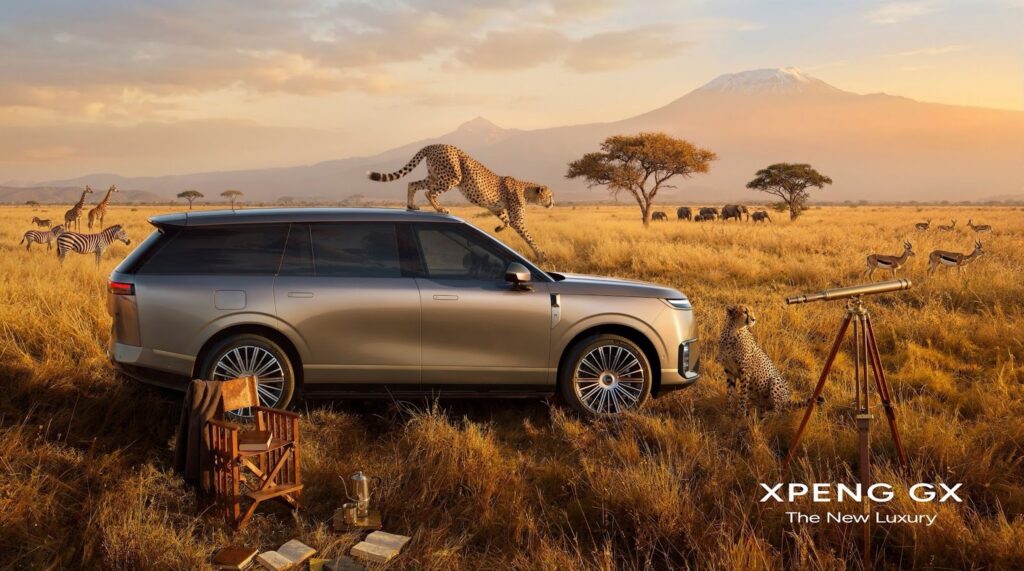
A large, ultra-technological electric (and hybrid) SUV
The real difference between the GX and the G9 (in the same segment) is not immediately apparent: it lies beneath the bodywork. The SUV is based on the SEPA 3.0 platform (Smart Electric Platform Architecture), the most advanced technological base developed by XPeng to date. It’s not just an electric platform: it’s an architecture designed from the outset to integrate artificial intelligence at the very heart of the vehicle.
With the GX, artificial intelligence is not limited to screens or voice commands. It plays a direct role in the way the vehicle handles. Indeed, the GX adopts 100% steer-by-wire steering combined with four-wheel steering capable of turning the rear wheels by up to 10 degrees. In addition, the air suspension, steering and engine torque management are controlled in real time by algorithms capable of anticipating body movements, road conditions and driving style.
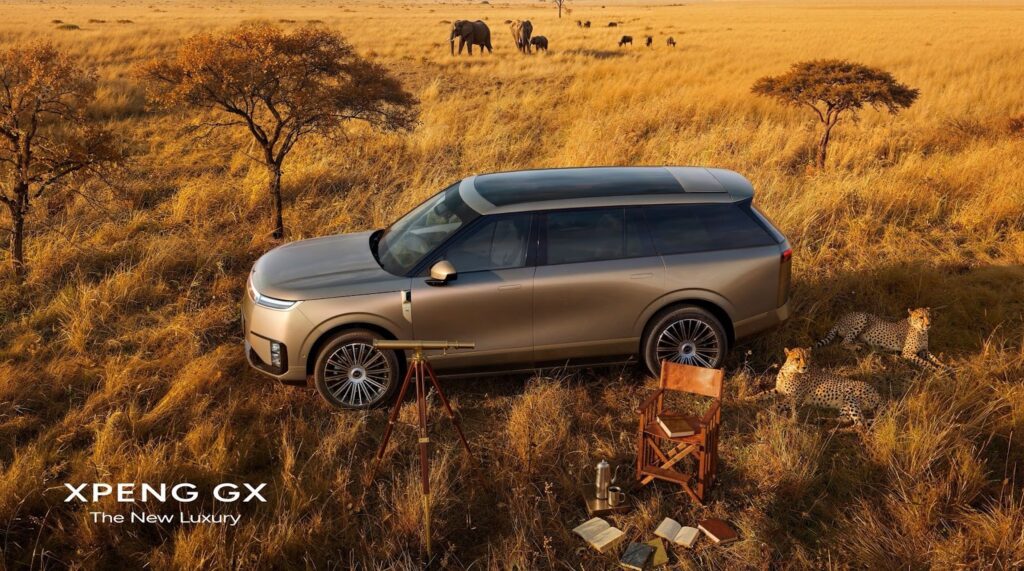
Two engines are planned:
- a 100% electric version, with rear-wheel drive or all-wheel drive, 800 V architecture and ultra-fast 5C recharging (10 to 80% in around 15 minutes under optimum conditions);
- an EREV (Extended Range Electric Vehicle) version, combining a battery with a combustion engine that acts solely as a generator. Cumulative range: over 1,000 km in the Chinese CLTC cycle.
An obvious target: the Range Rover
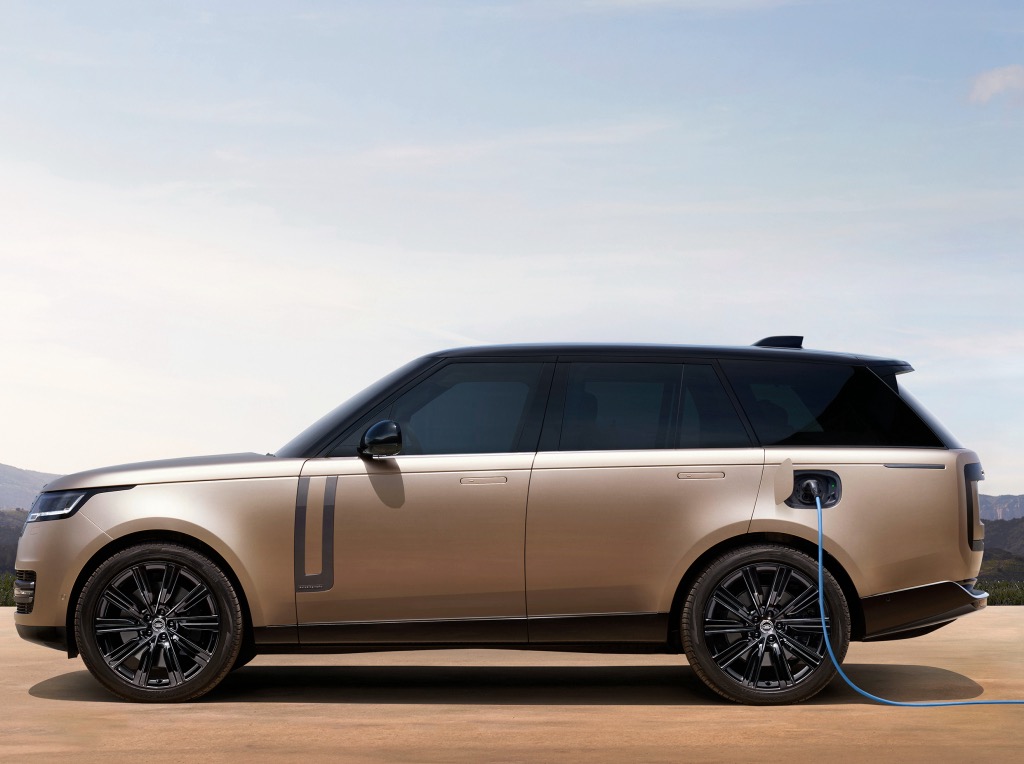
It’s hard not to see the inspiration. With its upright front end, massive proportions and perfectly horizontal roofline, the GX takes its cues from the benchmark British SUV, the Range Rover.
We’re starting to get used to it: it’s not just on technology that the Chinese are hoping to compete with the market leaders, but on price. Positioned above the G9 (China price: ~350,000-460,000 yuan, or €35,000-46,000), XPeng’s current top-of-the-range SUV, the GX starts at ~400,000 yuan (< €50,000 in China) according to CnEVPost, three times cheaper than an electric Range Rover expected to cost at least €140,000.
Behind the GX, a clear international strategy
The GX does not stand alone in the range. It is part of XPeng’s global expansion. After a record year in China in 2025, with 429,445 sales worldwide (up 126% on 2024), including 45,008 export sales (up 96%), the brand is preparing its European offensive (factories in Germany and Hungary from 2026). XPeng has set an ambitious target: to generate 50% of its sales outside China by 2028.
The idea is clear: to show that a Chinese manufacturer can produce a large premium SUV that is credible in the face of European benchmarks such as the BMW iX or the Tesla Model X, while retaining a price advantage.
The presence of an EREV version also illustrates a pragmatic approach to international markets. XPeng knows that not all countries yet have a uniform recharging network. Offering a cumulative range of over 1,000 km removes a major psychological barrier, particularly in rural Europe and certain emerging countries.
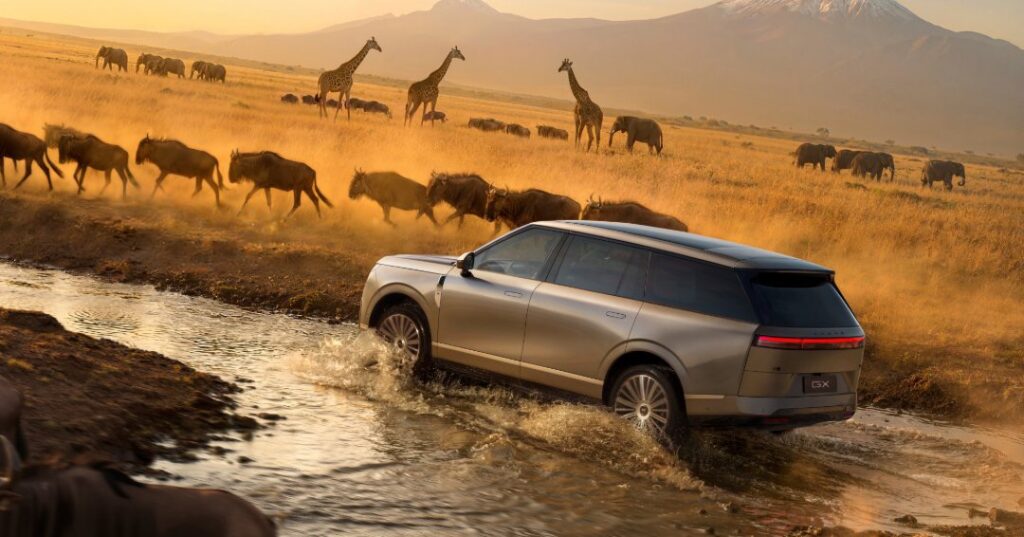
When will it be released?
The official world premiere is expected at the Beijing Motor Show in April 2026. The commercial launch in China is scheduled for late 2026 or early 2027.
As far as Europe is concerned, nothing is less certain. If it were to cross borders, between homologation, regulatory adaptation of steer-by-wire and organisation of the after-sales network, an arrival before 2028 seems unlikely.
But one thing is certain: if XPeng manages to maintain a competitive price positioning outside China, the GX could become one of the models that symbolise the Chinese offensive in the premium segment.