



The news was confirmed during the presentation of Stellantis’ “FastLane 2030” plan. In 2028, Citroën will launch a revival of its famous 2CV with an electric motor, as part of the roll-out of an E-car range of small, affordable models across the entire group. This new iteration of France’s most iconic car
is already sparking the imagination of enthusiasts, but will it be enough to revive the chevron-badged brand, which has fallen somewhat behind other manufacturers within Stellantis?

The return of a folk legend
Almost 80 years after the launch of the legendary Citroën 2CV (in 1948), Citroën has finally confirmed what many had hoped for but never really believed would happen: the return of one of the most
iconic cars in history. But this will be neither an opportunistic neo-retro exercise nor a simple marketing reissue, as this future 2CV will be electric, affordable and designed as a modern response to new forms of mobility. It is a bold gamble, but one that reflects the brand’s ingenious character: “Reinventing the 2CV
of tomorrow is an immense challenge and responsibility,” says Xavier Chardon, Citroën’s CEO. “The original 2CV was never designed to become an icon. It became one because it offered people greater freedom. The new 2CV will carry on this spirit, not out of nostalgia, but by reinventing its simplicity and accessibility for today’s world. Electric. Essential. Affordable. Human. It marks the return of an optimistic vision of
progress.”

A philosophy rather than a design
Citroën therefore has no intention of replicating the round, friendly ‘face’ of the car that was originally known by the code name TPV (Toute Petite Voiture), but rather of evoking and reinterpreting ‘the spirit of the
Deuche’. From a manufacturing perspective, the cost of producing the bodywork exactly as it was would alone prevent the car from being offered at a low price. At a time when manufacturers are drawing on their heritage to revive
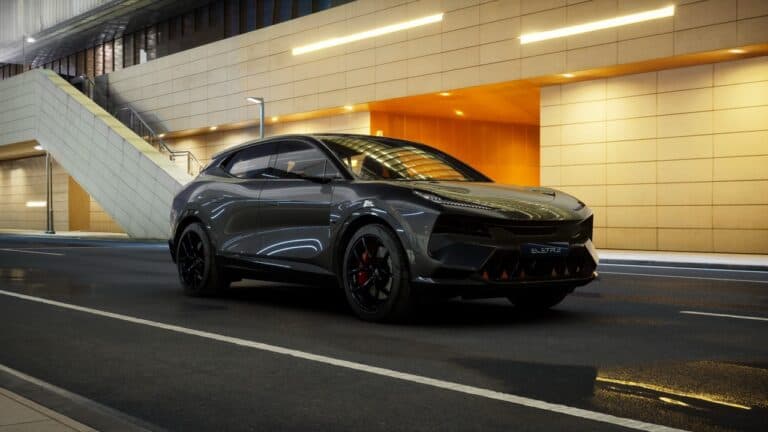
successful cars – such as Fiat with the 500 or Renault with the R5 – Citroën will not be able to follow this trend, despite the evocative image released alongside the announcement.
The future model will build on the core strengths that made the 2CV such a success: lightness, versatility, ease of use, affordability and a strong personality. Behind the scenes, Citroën seems to be seeking to answer a question that has become central to the automotive industry: how can we make electric cars desirable without making them unaffordable? Citroën’s CEO sums up this ambition: “True innovation is not about adding more and more, but about improving lives and focusing on what really matters.”

An electric anti-SUV?
Unlike other manufacturers at present, Citroën will therefore not be producing a trendy urban SUV that is heavy, more powerful and more expensive. The example of the recent Renault R4,
marketed as a small SUV that bears no resemblance to the versatile and practical car of the past, illustrates this point. Its sluggish sales prove that a marketing concept alone is not enough to attract the
crowds. On the other hand, the future 2CV is set to launch the ‘E-car’ category, the Stellantis group’s project for compact, lightweight and affordable electric vehicles. The specifications
thus echo those of the original TPV from the 1930s: a simple, robust and economical means of transport for the masses. This future Citroën could thus become one of the symbols of electric cars finally becoming popular and accessible to Europeans in particular.

Citroën ‘demoted’ within Stellantis
Whilst we wait to see the design of the 2028-generation 2CV, this announcement – however upbeat it may be – should not obscure the fact that Citroën has been sidelined under the ‘FastLane 2030’ plan. Within
the Stellantis group, the chevron-badged brand has effectively been ‘demoted’ to the status of a regional brand, like Opel or Alfa Romeo. In other words, Citroën products will not benefit from
the latest innovations, nor from the largest investments reserved for the four so-called ‘global’ manufacturers: Peugeot, Fiat, Jeep and RAM. The popularity of Citroëns cannot mask the fact that sales have been slumping
for several years: 350,000 units sold last year in Europe, its main market, compared with one million annual sales in the early 2000s. It is also likely that the 2CV will be produced abroad, in one of Stellantis’ Italian or Spanish factories (where the small Fiat Panda or entry-level Opel models are made), in order to reduce costs.

A strategy consistent with the ë-C3
Nevertheless, this comeback hasn’t come out of the blue. For several months now, Citroën has been rolling out a series of initiatives focused on affordable electric vehicles, notably with the Citroën ë-C3, which meets motorists’ everyday needs. It is one of the ‘star’ models of the social leasing scheme (EVs for less than €100 a month) launched in France last year.
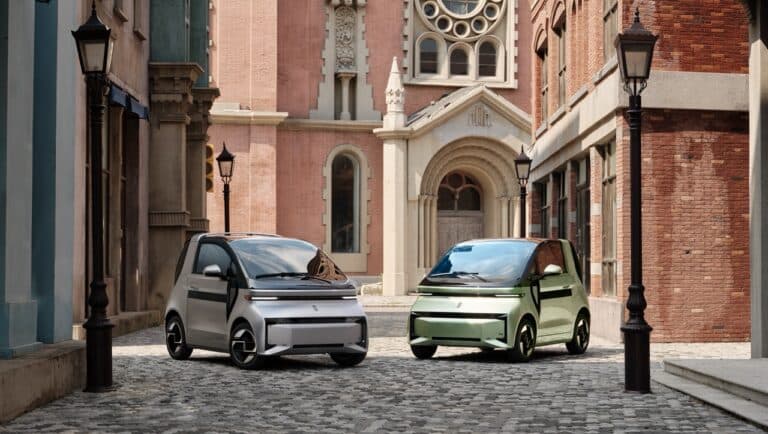
Another model that has found a new audience is the AMI. A small, licence-free electric car with limited top speed, it is very popular with young students in suburban areas. The future 2CV is therefore expected to slot in between these two models. To appeal to buyers, its profile will need to be less status-oriented, more emotional and potentially more disruptive than current electric city cars.
The question remains: what impact will the return of the 2CV have? This is a major challenge for Citroën. Revamping the 2CV amounts to rethinking a cultural icon as much as an automotive one. With
over 5 million units produced between 1948 and 1990, the “deuche” remains associated with a very French idea of freedom, simplicity and non-conformity. In other words, the exact opposite of the arrival of
small electric city cars, imposed by European regulations.

See you at the 2026 Paris Motor Show
Citroën invites you to the Paris Motor Show in October 2026 to discover the first concrete details of the project. It will no doubt be a concept car that will be scrutinised for its design,
its nods to the past and its homage to the original 2CV. Further information on the platform, range and price will be provided. We can expect specifications in line with
those of the new electric Renault Twingo in the A-segment. An entry-level price of around €15,000, a small battery offering a range of 250 km (or more), and technical innovations and manufacturing processes sourced from China (through the Leapmotors partnership with
Stellantis) to reduce development time to under two years. If Citroën succeeds in its venture, the brand could well revive an idea that the automotive industry seemed to have forgotten: making mobility simple, accessible and appealing once again.