






With 100 flights carried out under real conditions, including IFR operations (based mainly on on-board instruments, not direct vision) in demanding weather conditions, Beta Technologies’ Alia CX300 electric aircraft has just passed a key stage in its operational maturation. Conducted by Bristow Norway in the heart of the Norwegian « regulatory sandbox », this full-scale test programme demonstrates that electric aviation is no longer a mere concept, but a credible solution for regional, logistics and passenger transport missions.
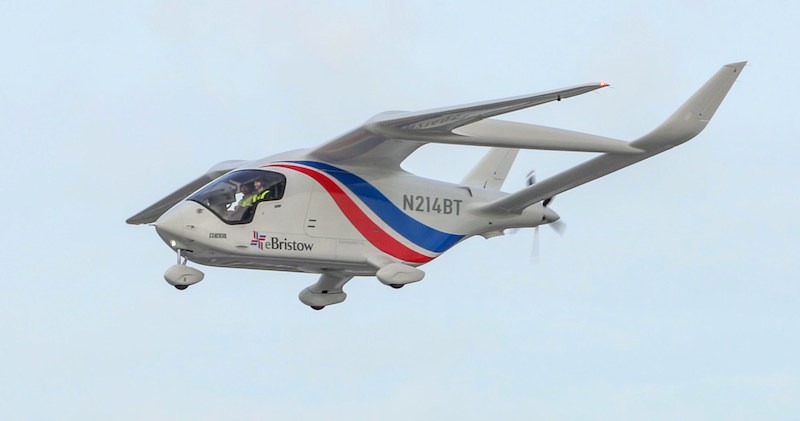
Electric aviation often moves forward in small steps, far from spectacular announcements. But sometimes, a concrete milestone allows us to measure progress. In Norway, Bristow Norway and Beta Technologies have just provided a significant illustration of this. The Alia CX300, an all-electric aircraft, has reached the symbolic threshold of 100 flights as part of an intensive test programme conducted under strict regulatory supervision.
This figure, reached on 17 December 2025, is not a marketing demonstration. It is part of a demanding operational environment, designed to test the reliability, maintenance and regulatory integration of zero or low emission aircraft. An ideal playing field for assessing the industrial credibility of electric aviation.
A unique regulatory framework
The pre-production CX300, registered N214BT, was delivered to Bristow Norway at the beginning of August 2025 after a European ‘Grand Tour’ designed to demonstrate its capabilities. It then joined the Norwegian test arena, a first-of-its-kind scheme piloted by Avinor and the Norwegian Civil Aviation Authority. The aim of this scheme is to accelerate the integration of new aeronautical technologies by enabling progressive, supervised but realistic testing.
The six-month programme was structured in phases. The first few weeks were devoted to local flights around Stavanger, to validate procedures and get to grips with the aircraft. From 4 September, the aircraft began visual cargo flights to Bergen, before moving on to IFR operations, including in poor weather conditions. This is a necessary step for any aircraft destined to operate in northern regions. This gradual ramp-up has enabled the CX300 to be put through its paces in operating scenarios close to those of a commercial service, a far cry from the idealized test flights.
Performance, simplicity and initial lessons
Pilots qualified on the CX300 describe it as a ‘high-performance’ machine, with exceptional manoeuvrability and an unprecedented level of silence. The hundredth flight was completed without any major failures, despite the demanding IMC conditions. This sends out a strong signal to regulators and operators alike: electric power can keep its promises beyond good weather and short flights. This operational reliability is all the more remarkable given that the aircraft remains a pre-production model, still in the validation and optimisation phase.
The Norwegian programme was not limited to observing the CX300 in flight. It also enabled maintenance procedures to be tested in a real operational environment. These operations confirmed the feasibility of the interventions and the overall robustness of the system. They also highlighted a number of practical challenges, including increased tyre and brake wear. Minor radio interference, linked to the electric motor, was also detected. These were corrected by repositioning the antennae and adding shielding. These are standard technical adjustments, but invaluable for ensuring the reliability of future commercial operation.
Rapid recharging and European operations
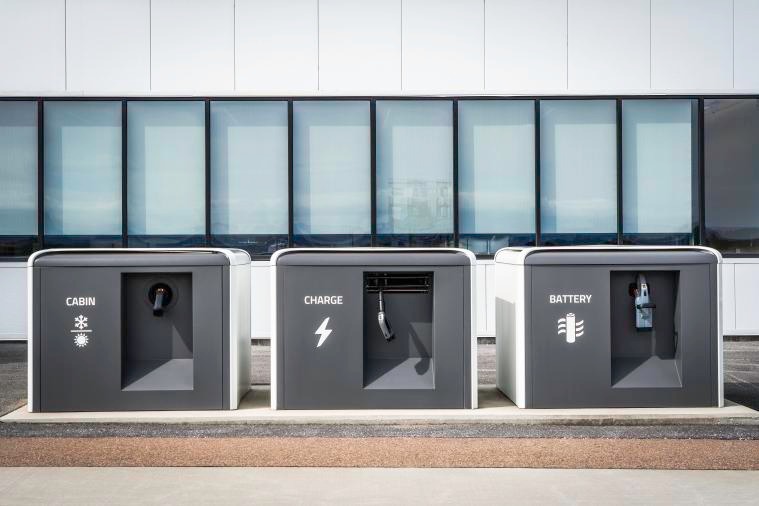
One of the most closely scrutinised aspects was, of course, recharging. At Stavanger, the infrastructure put in place enabled the CX300’s battery to be recharged to 80% in around 30 minutes, a time compatible with regional round trips. For night-time needs, the « charge cube » system developed by Beta ensures overnight full recharging. These data are crucial in convincing operators and insurers, who are often cautious about new technologies.
The test programme is due to finish at the end of January 2026, but Bristow is already looking beyond that. The operator is considering keeping the aircraft in Europe or the UK to explore offshore missions, in particular to the Scottish islands, for both freight and passenger transport. At the same time, a new proposal is being studied for testing, from the end of 2026, a hybrid short take-off and landing aircraft developed by Electra. The CX300 has not only achieved a symbolic milestone. Above all, it has demonstrated that electric aviation can move out of the laboratory and into the real world. A decisive step, at a time when the aviation sector is still looking for ways to reconcile mobility, performance and decarbonisation.

Sources : @BETA – www.flightglobal.com – aiaa.org – www.bristowgroup.com