

As the world’s leading oil exporter, Saudi Arabia is making a major strategic shift with Vision 2030. The kingdom is banking on electromobility to diversify its economy and reduce its dependence on hydrocarbons. Through massive investment, the construction of a national industrial ecosystem and ambitious targets, the country is building a market that is still in its infancy, but which is driven by an unwavering political will.
Vision 2030: a clear course towards electrification
To bring about this change, Saudi Arabia is not doing things by halves. The Vision 2030 programme, steered by Crown Prince Mohammed ben Salmane, has set a symbolic target: 30% of vehicles on the road in Riyadh must be electric by 2030. This may seem a modest figure by European standards, but it represents a revolution in a country where a litre of petrol costs €0.57.
The kingdom is also aiming for carbon neutrality by 2060, a commitment that has aroused the scepticism of international observers, but which now structures its entire mobility policy. To achieve this, the government is relying on its sovereign wealth fund, the PIF (Public Investment Fund), which is deploying 150 billion Saudi rials (around €34.35 billion) over the decade to build the country’s electricity ecosystem.
To encourage this change, the government has introduced clear incentives such as exemption from customs duties and registration fees for electric vehicles. The country also provides subsidies for company fleets. This strategy is typical of the Gulf monarchies, where the state pilots and provides massive funding before the market takes over.
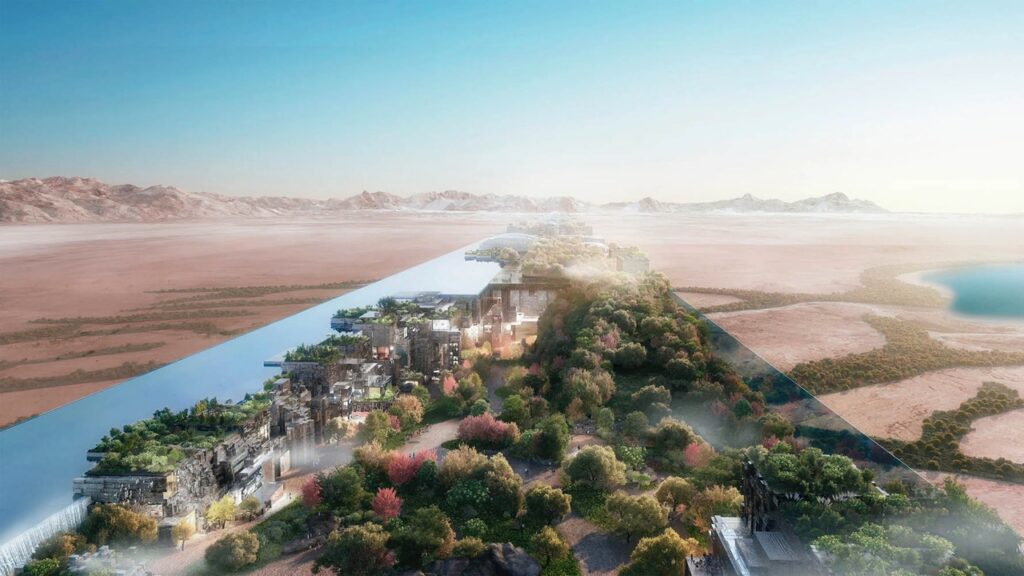
Beyond the 2030 targets, the creation of major urban projects such as NEOM, Qiddiya and The Line will highlight this different way of getting around. In these areas, entire fleets of electric vehicles will be deployed to arouse people’s curiosity.
A charging network in the making
Infrastructure remains the Achilles heel of Saudi electromobility. To date, the kingdom has around 1,200 public charging points spread over 400 sites, still a modest figure for a territory four times the size of France. But the stated ambition is quite different: 5,000 charging points by the end of 2025 and 50,000 by 2030.
EVIQ (Electric Vehicle Infrastructure Company), created by the PIF and the Saudi Electricity Company, plans to install around 60 multi-hub stations by the end of 2025-2026, concentrated on the main urban routes: Riyadh, Jeddah and Dammam.
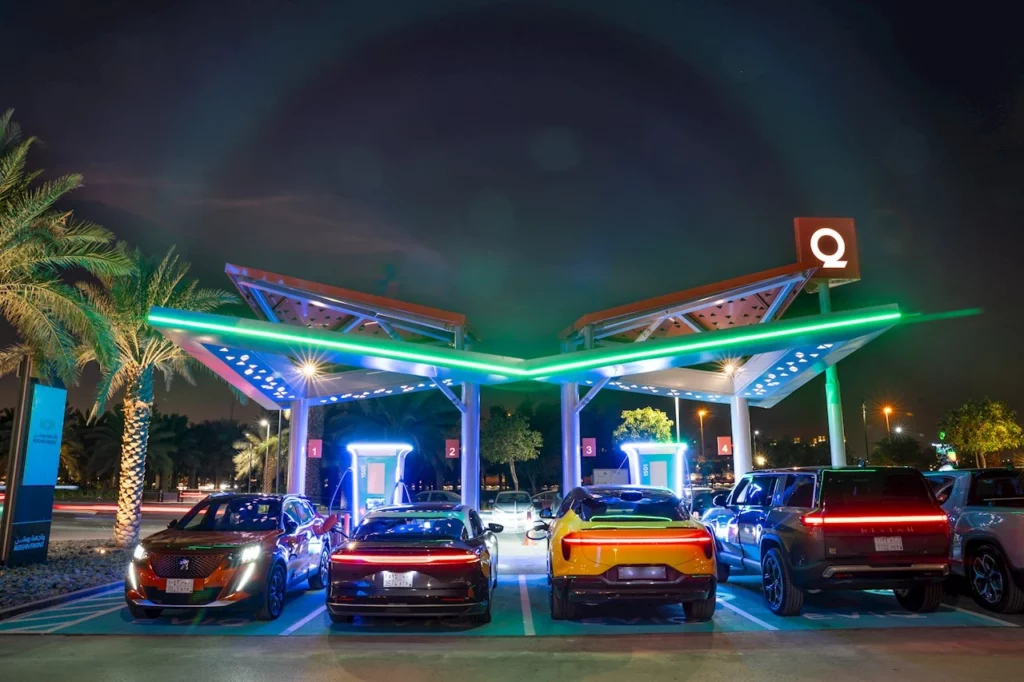
Since January 2024, dedicated investment has reached 5.3 billion Saudi rials (around €1.21 billion), with the aim of covering not only urban areas but also the motorways linking Riyadh to Jeddah (950 km) or Dammam.
But the challenge is huge: in a country where distances are immense and extreme temperatures put infrastructures to the test, the network must be both dense and reliable. According to a study by Roland Berger, Saudi users are already 94% satisfied with existing public charging points, a higher rate than in Germany or the United States.
A massive car market, but still shy on electric vehicles
Saudi Arabia is the leading automotive market in the MENA region (Middle East and North Africa), with around 837,000 new vehicles expected to be sold in 2024. But of this colossal volume, the share of electric vehicles remains marginal. Registrations have jumped from 375 EVs in 2021 to more than 12,000 by the end of 2023, with an estimated share of 15% of new sales in major cities by the end of 2025.
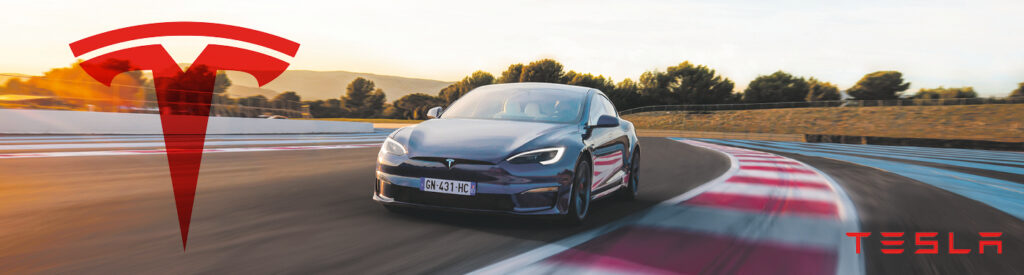
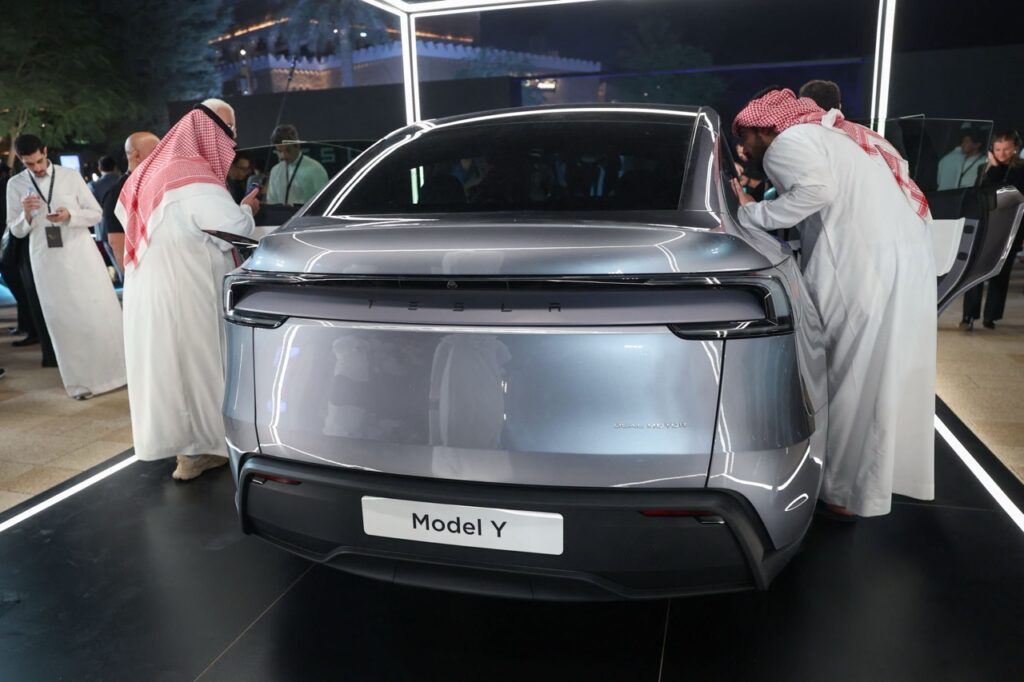
The most visible electrified models on Saudi roads are mainly imports: Tesla dominates the premium segment, while BYD is aiming to sell 5,000 units by 2025. In the hybrid segment, Toyota and Hyundai/Kia continue to dominate, benefiting from customers who are used to traditional powertrains and reassured by the fact that they are not totally dependent on recharging stations. But local players are emerging who hope to shake up this hierarchy.
Ceer, Lucid, EVIQ: the pillars of the national ecosystem
Saudi Arabia wants to do more than just import electric vehicles. The kingdom is methodically building a national automotive industry, with three strategic pillars:
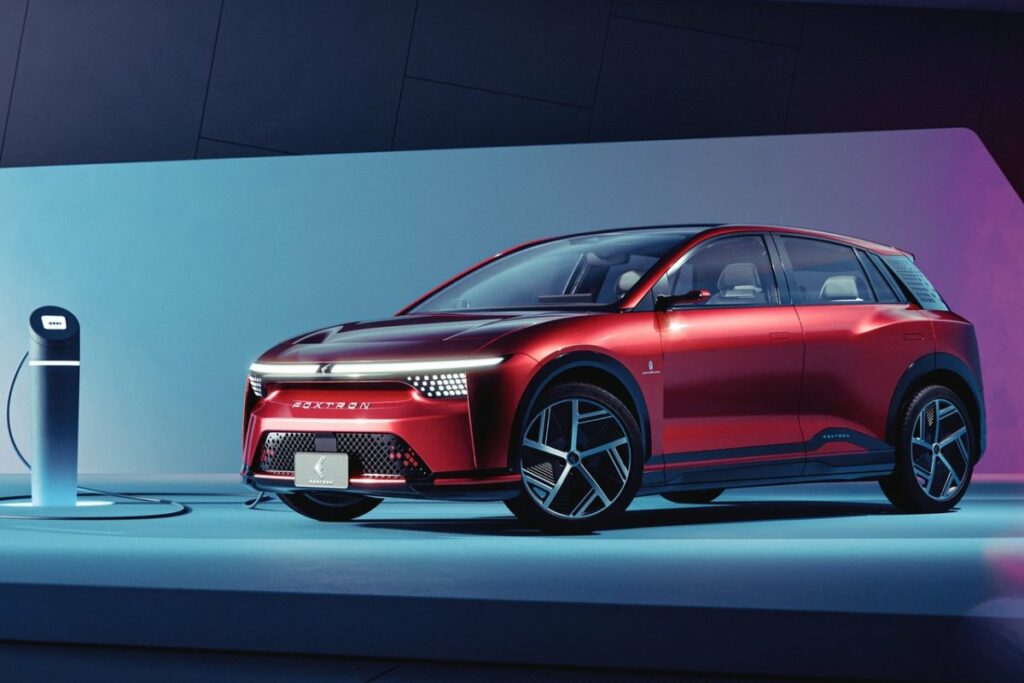
- Ceer Motors, Saudi Arabia’s first 100% electric brand, produces saloons and SUVs in partnership with Foxconn and BMW, with a target capacity of 150,000-170,000 vehicles/year.
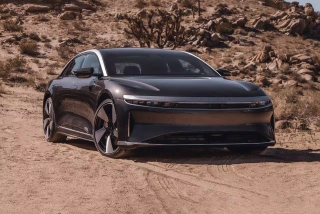
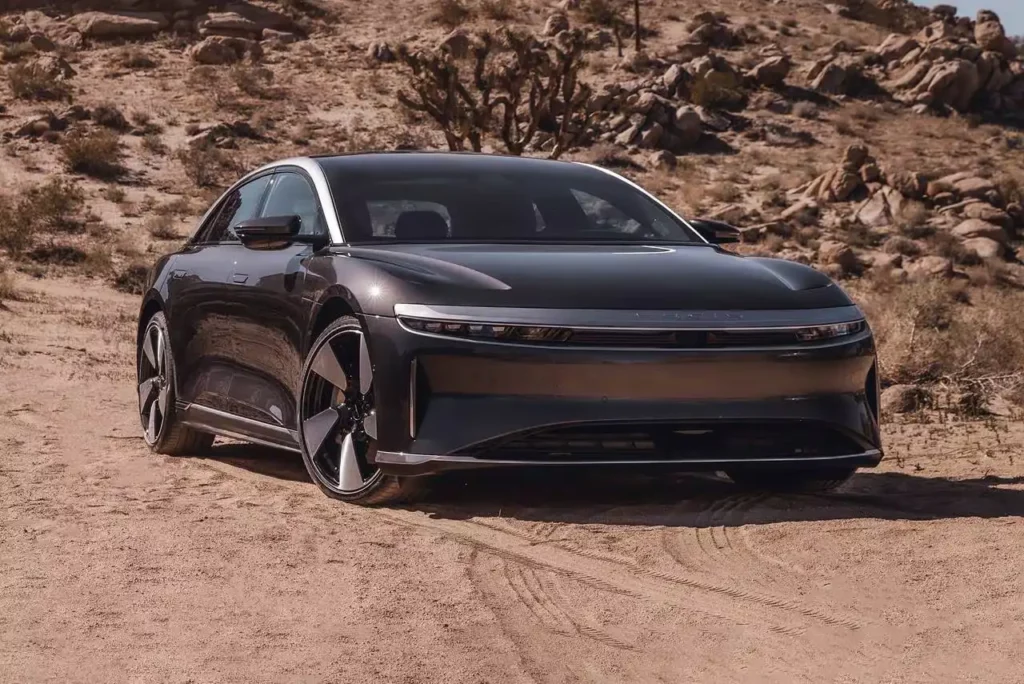
- Lucid Motors, in which PIF holds a 61% stake, assembles the Lucid Air at KAEC and plans to produce up to 150,000 units a year, with an agreement to purchase 100,000 vehicles over the decade. The Saudi police have been using Lucid vehicles since the beginning of 2024.
- EVIQ deploys infrastructure, develops smart-charging and integrated energy solutions for urban projects.
Several local start-ups complete the ecosystem with fleet management and energy optimisation solutions. Hyundai and Human Horizons are also investing, confirming the country’s international appeal for EV manufacturers.
Hyundai, Human Horizons and industrial ambitions
The Saudi ecosystem is not limited to national players. In September 2023, Hyundai announced plans for a local plant to produce electric and gas-powered vehicles, confirming the Kingdom’s attractiveness to major international groups. In June 2023, a €4.8 billion agreement was signed with Human Horizons. This Chinese EV manufacturer develops, manufactures and hopes to sell its EVs on the Saudi market.
Barriers: price, infrastructure and cultural habits
Despite these ambitions, the adoption of electric vehicles remains limited by a number of structural obstacles. EVs are still expensive (Lucid Air > €80,000, Tesla > €50,000) compared with combustion vehicles. For such a large area, the infrastructure is inadequate (1,200 public points). Inter-city journeys remain problematic, with the range of the best batteries not exceeding 400 to 500 km. Cultural habits are also holding back adoption: a litre of petrol costs €0.57, thermal SUVs symbolise social status, and almost a third of drivers do not have access to home recharging.
Outlook: expected to take off from 2025-2026
The first Ceer deliveries are expected from the second half of the decade, Tesla has opened three dealerships (Riyadh, Jeddah, Dammam) with operational superchargers, and the EVIQ network is beginning to grow. Analysts expect sales to accelerate from 2026 onwards, driven by the arrival of more affordable models and the gradual improvement of infrastructure. The government is keeping up the pressure: the Vision 2030 targets are non-negotiable and investment in the ecosystem is continuing.
A bet on the future
Saudi electromobility embodies a fascinating paradox: a country built on oil that is investing massively in its alternative. This transition is not the result of a sudden ecological conviction, but of a strategic calculation to diversify the economy. Vision 2030 is not limited to EVs: it encompasses tourism, renewable energies, urban megaprojects and industrial transformation. Unlike other emerging markets, Saudi Arabia has a major advantage: virtually unlimited financial resources and a centralised political will. The next few years will tell whether this project turns into an industrial success story. In a country where petrol costs nothing and internal combustion SUVs reign supreme, getting electromobility off the ground is as much a technical feat as a cultural revolution.