


On Monday 9 February, Ferrari unveiled the name and interior architecture of its very first 100% electric car: the Ferrari Luce. Presented in San Francisco, the world’s epicentre of technology and design, this announcement marks a major strategic turning point for one of the world’s most iconic carmakers, which is approaching electrification as a new field of expression in terms of design, engineering and driving experience.
« Luce », more than a name, a vision
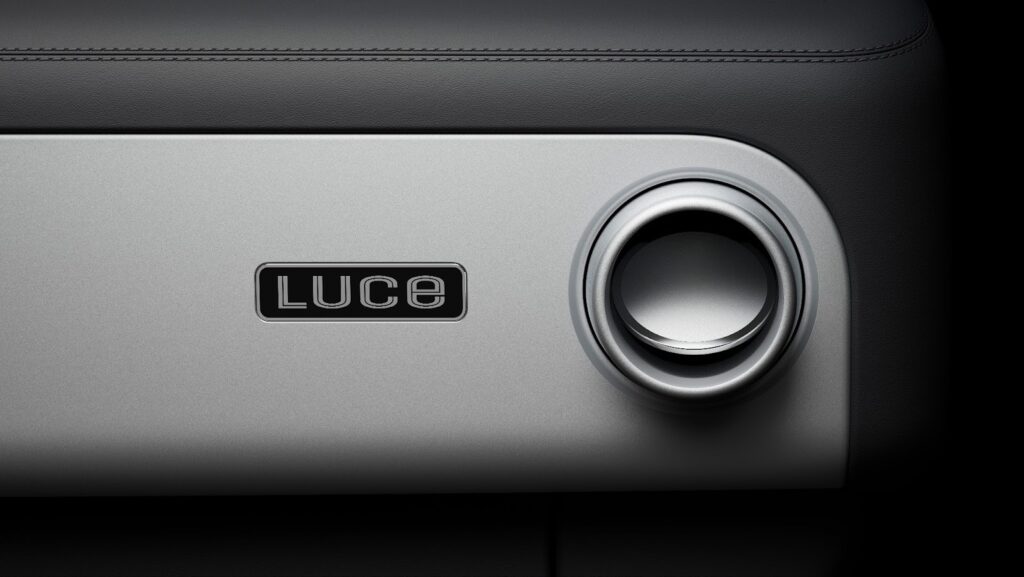
In Italian, Luce means ‘light’ or ‘illumination’. A choice that is far from insignificant. With this model, Ferrari is not simply naming a technological innovation, but asserting a philosophy: electrification as a means, not an end, and « where design, engineering and imagination converge to create something that didn’t exist before ».
With Luce, the Maranello-based brand is asserting its claim to silent yet powerful electrification, driven by clarity of design, precision of engineering and a clear vision of the future. It thus becomes the symbol of a sought-after balance between the sporting heritage dear to the Italian giant, radical energy innovation and the evolution of contemporary uses.
A strategic partnership with LoveFrom
To design this first 100% electric Ferrari, the Italian manufacturer has enlisted the help of a leading partner: LoveFrom. This creative collective was founded by Sir Jony Ive and Marc Newson, two former Apple designers whose work includes the iPhone and Apple Watch. For the past five years, the LoveFrom teams have been working closely with Ferrari on the entire Luce project, from the overall philosophy to the smallest details of the interface.

The choice of San Francisco for the development of this future jewel of technology is not insignificant. A veritable global epicentre of user experience and digital design, the city embodies the convergence between technology and a sense of use that Ferrari intends to place at the heart of its first electric car.
A cabin designed as a pure driving space
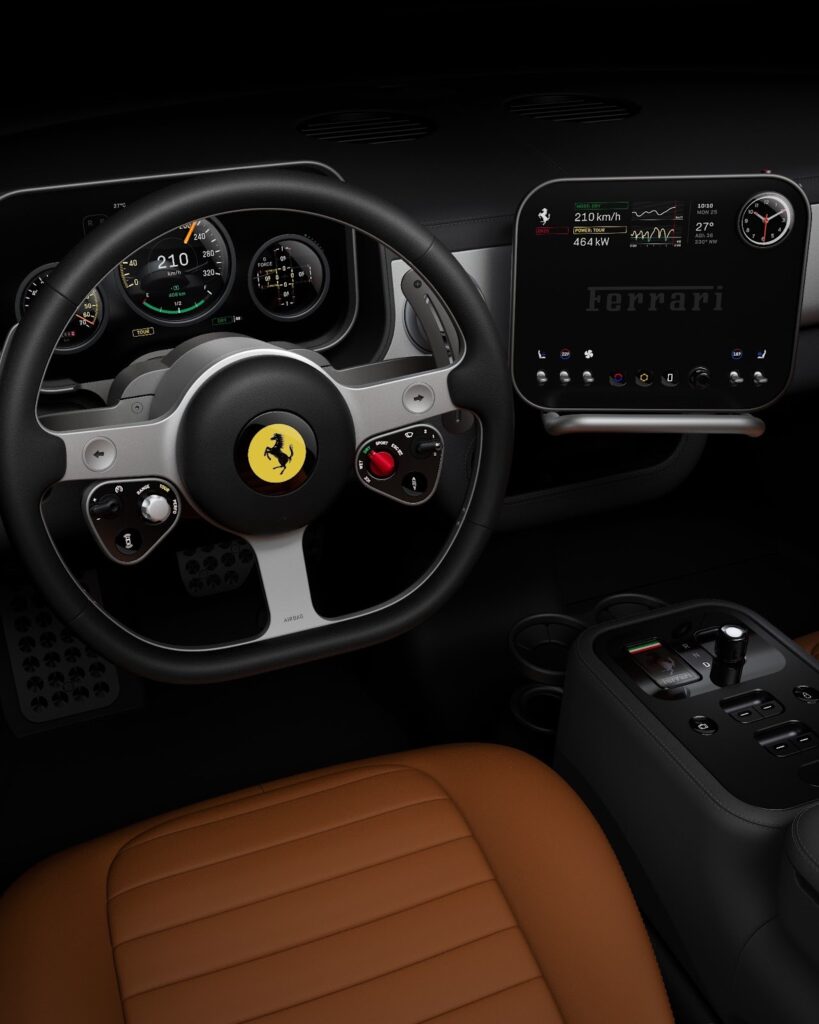
The first tangible element to be unveiled is the interior of the Ferrari Luce. Far from the overkill of screens that has become the norm in the world of electric vehicles, Ferrari has gone against the grain here. The cabin is designed as a streamlined, rational volume, entirely at the service of driving.
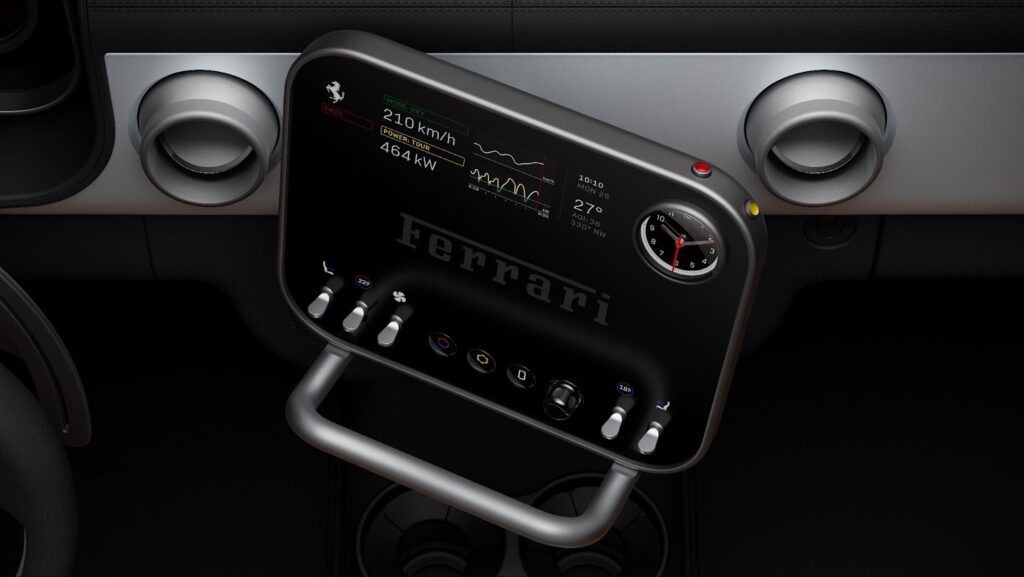
The press release from the transalpine brand reveals a hybrid interface. High-precision mechanical buttons, thumbwheels and physical switches remain central, complemented by multifunction digital screens, notably the central screen that swivels from right to left. Conceived from the outset as a coherent whole, the hardware and software are assembled in concert to offer intuitive and immediate controls, in keeping with Ferrari’s sporting and sensorial DNA.
A racing-inspired steering wheel and interface
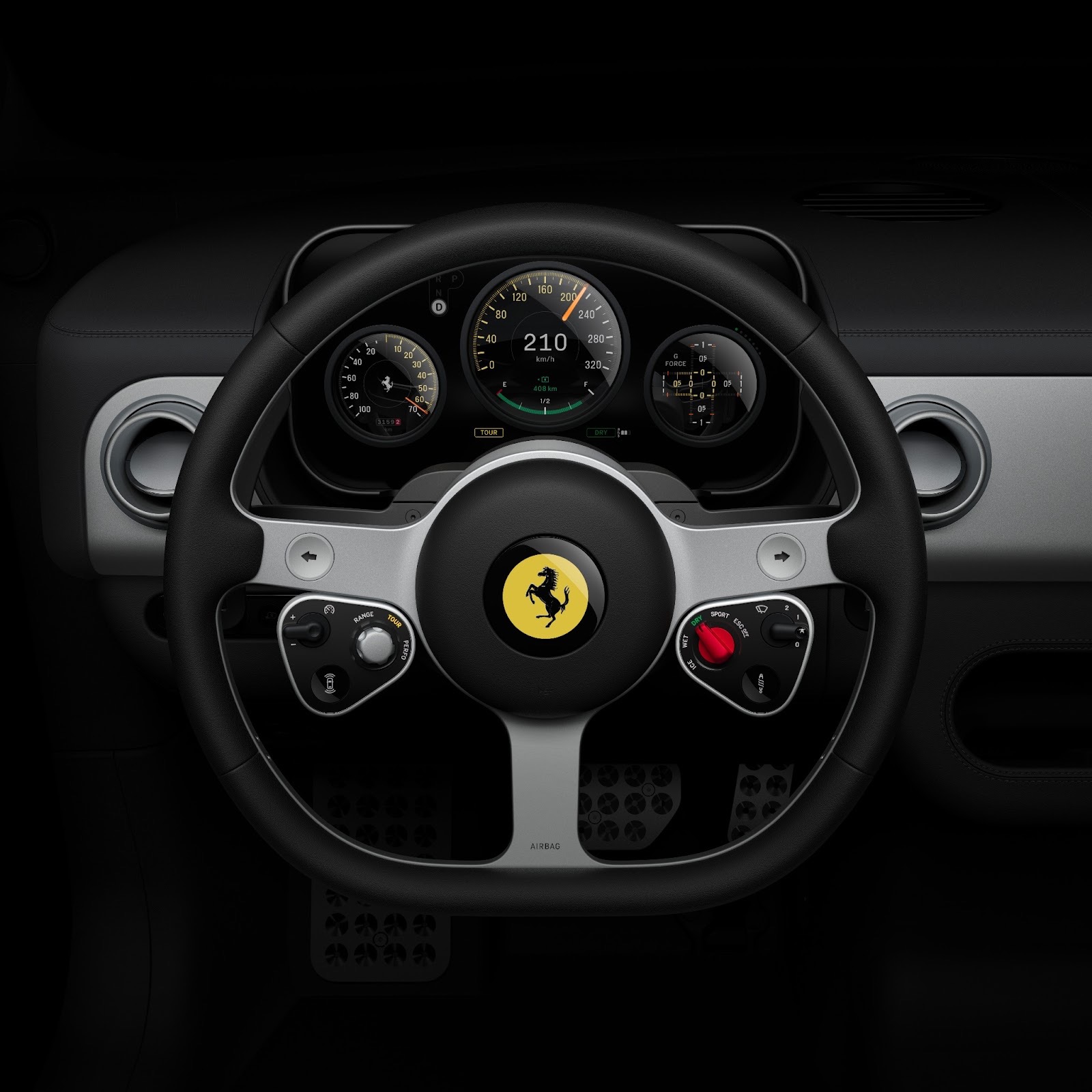
The steering wheel alone embodies this synthesis of tradition and modernity. It will please combustion engine purists who were not thrilled at the idea of this iconic brand going electric. The steering wheel is inspired by the three-spoke Nardi steering wheel used on Ferrari sports cars of the 1950s and 1960s, and features a 100% recycled aluminium structure developed specifically for the Luce. It is 400 grams lighter than a conventional Ferrari steering wheel and incorporates analogue control modules directly inspired by Ferrari’s other historic branch, Formula 1.

Nothing has been left to chance: all the mechanical and acoustic feedback from each control has been subjected to more than twenty tests by the brand’s test pilots, to guarantee interaction that is as precise as it is satisfying.
An end-to-end rethink of the user experience
The digital interface is based on three separate screens: the driver’s binnacle, the central control panel and a rear display. The binnacle, mounted on the steering column, moves with the steering wheel to optimise information readability – a first for a production Ferrari.
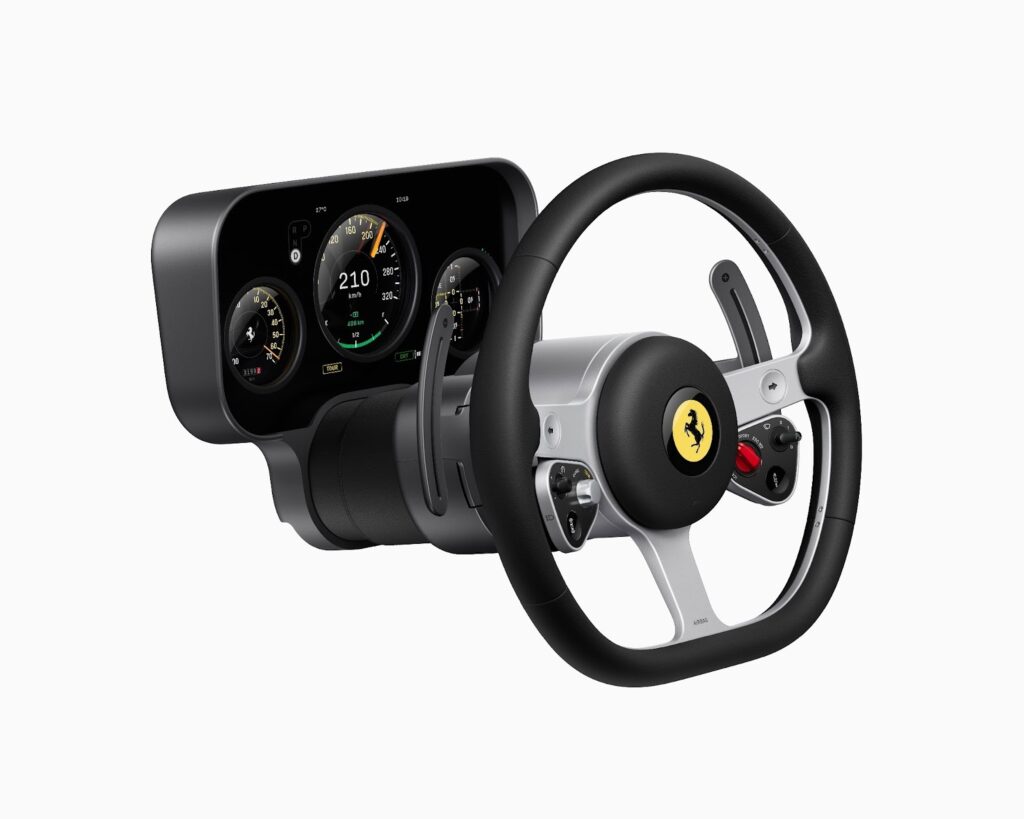
The deliberately restrained graphics are inspired by the Veglia and Jaeger counters used on Ferraris in the 1950s and 1960s. The aim is clear: to reduce the driver’s cognitive workload by providing immediate access to essential information, like a watch face. The central screen features a hybrid dial: real hands on a digital background, capable of transforming into a clock, stopwatch or compass, depending on the driver’s needs.
Noble materials
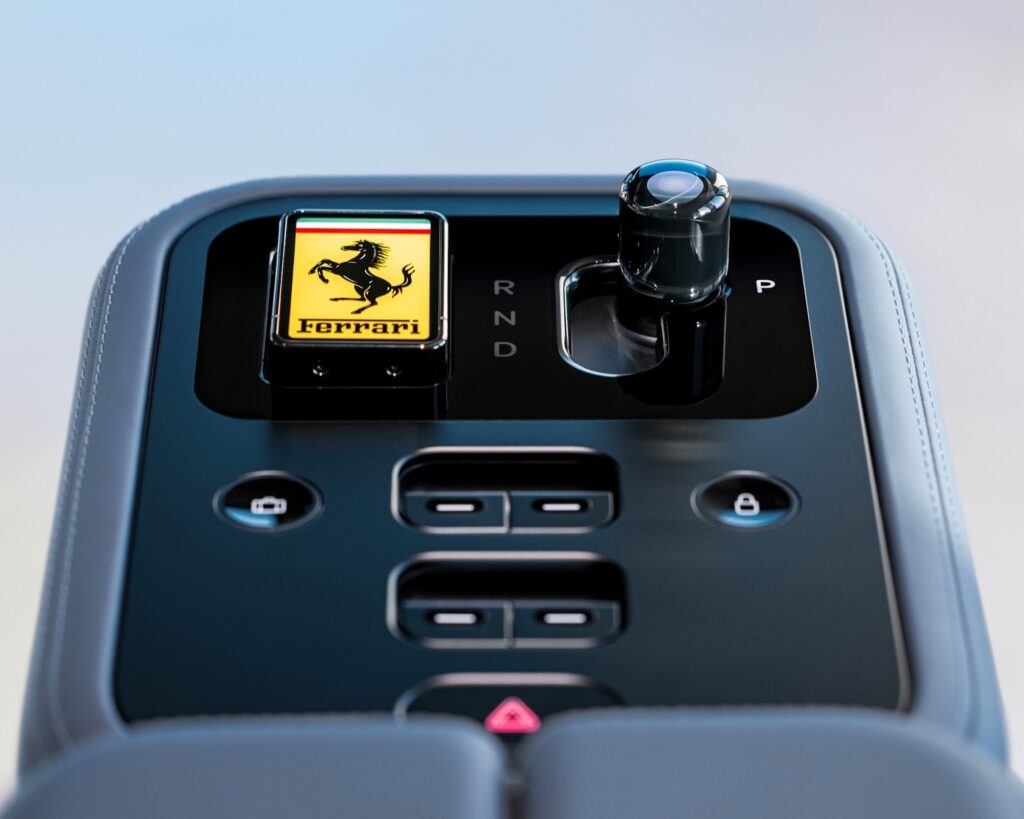
True to its standards of excellence, Ferrari has paid extreme attention to the choice of materials. Recycled aluminium is CNC-machined from the mass, then integrated using a state-of-the-art process that guarantees strength, durability and depth of colour. The press release mentions the use of Corning® Gorilla® Glass to protect the screens, centre console and selector from scratches and impacts.
A long-prepared shift to electricity
The arrival of the Ferrari Luce is no surprise. Behind this first 100% electric Ferrari lies a strategy that has been underway for over a decade. From Formula 1 and the KERS system to the hybrid LaFerrari in 2013 and the SF90 Stradale in 2019, Maranello has gradually made electrification part of its DNA.
The turning point officially came in 2021, when Ferrari confirmed that it was working on an all-electric model, before confirming this trajectory in its 2022-2026 strategic plan. The opening of e-building in 2024 and the presentation of the model’s technology in 2025 paved the way.
An electric Ferrari, but resolutely Ferrari
The Ferrari Luce is the first 100% electric Ferrari. Above all, it embodies a clear determination: to sacrifice nothing of the emotion, driving pleasure and identity of the brand, while paving the way for a new generation of sports cars.
The full reveal of the model, including its exterior design, is expected in May 2026 in Italy. In the meantime, let’s let our imaginations create an even sportier and more technologically advanced model, rooted in the DNA of the prancing horse brand.