




In the Netherlands, electric mobility is now firmly established in the automotive landscape. With nearly 40% of new car sales expected to be fully electric by 2025 and one of the densest charging networks in Europe, the country ranks among the continent’s most advanced markets. But after a decade driven by tax incentives, the Netherlands is now entering a more complex phase: that of consolidation.

The electric vehicle market is now firmly established in the automotive sector
The Dutch car market recorded a total of 409,201 new passenger car registrations in 2025, a relatively stable overall figure, although the mix of vehicles continues to change rapidly. Indeed, fully electric vehicles (BEVs) accounted for around 158,453 units, or 38.7% of the market, whilst plug-in vehicles as a whole accounted for 58.4% of sales.
Electric vehicles are therefore no longer a niche segment. They have established themselves as the norm in the market. Momentum remains strong: in October 2025, BEVs even exceeded a 40% monthly market share, with nearly 14,000 registrations in that month alone.

A transition that now extends beyond corporate fleets alone
For several years, growth in the Dutch market has been largely driven by commercial fleets and company cars. However, this trend is gradually changing. According to data from Statistics Netherlands (CBS), the number of plug-in vehicles on the road exceeded one million in the spring of 2025, reflecting much wider uptake among private individuals.
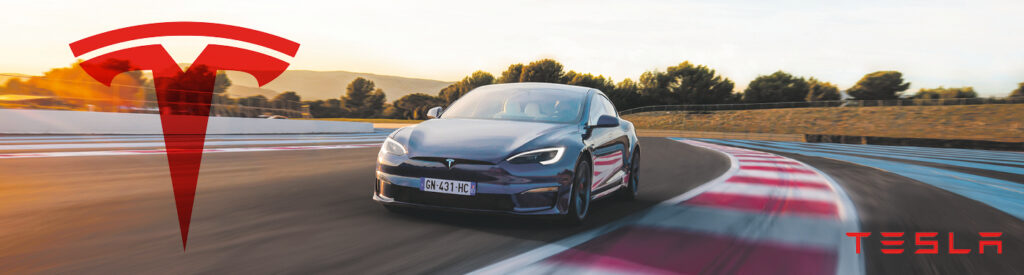
The Dutch market is no longer limited to business use: electric vehicles have gradually become part of everyday life for the general public. Models such as the Tesla Model Y, the Volvo EX30, the Kia EV3 and the Skoda Enyaq are now among the most common electric vehicles in the country. Chinese manufacturers are also making rapid headway, particularly with models from BYD and MG.

One of the densest charging networks in Europe
Infrastructure remains one of the country’s key strengths. The Netherlands now has over 60,000 public charging points, making it one of the densest networks in Europe relative to its population.
The country also has more than 4,400 fast-charging points with a capacity of at least 100 kW, with a significant number of multi-operator hubs located throughout the country.
This density reflects a situation specific to the country: in very densely populated urban areas, home charging is not always possible.

A clear policy objective for over a decade
The Netherlands’ lead is based on a long-standing and particularly clear political strategy. As early as 2017, the government had set an ambitious target: all new cars sold in the Netherlands must be zero-emission by 2030. This policy remains the benchmark for the country today.
This strategy forms part of a broader climate framework, with a national target to reduce CO₂ emissions by 49% by 2030 compared with 1990 levels. The new policy framework introduced in 2026 by the coalition comprising, in particular, D66, VVD and CDA, as well as by Rob Jetten, Prime Minister of the Netherlands, confirms this direction. Electromobility is no longer treated as merely an automotive issue, but as a central element of the Dutch energy transition.

The gradual phasing out of tax breaks is changing the market dynamics
The Netherlands’ success has long been underpinned by a tax system that is extremely favourable to electric vehicles. But this phase is gradually coming to an end.
Since 2025, electric vehicles have also been subject to the BPM registration tax, with a base rate of around €667, which is set to rise gradually over the coming years.
This development marks a significant turning point: the market must now continue to grow with less generous support than before. The challenge is therefore as much an economic one as it is an environmental one. The Netherlands must maintain a high rate of adoption whilst gradually reducing the budgetary cost of public support.
A market now facing its first structural limitations
However, the Netherlands is not without its vulnerabilities. The country’s main challenge is no longer implementation, but its ability to maintain momentum in a less favourable climate.
The gradual phasing out of tax incentives, growing pressure on the electricity grid and reliance on public charging points in major cities are now making the transition more complex.
The country must also continue to adapt its infrastructure to cope with ever-increasing demand, whilst ensuring that electric vehicles remain economically attractive despite less favourable tax arrangements.

Conclusion
The Netherlands is now one of Europe’s leading countries in the field of electric mobility. With a market share of nearly 40% for fully electric vehicles, more than 60,000 public charging points and a long-standing policy framework, the country has well and truly moved beyond the take-off phase.
But this progress also marks the start of a new phase, likely the most challenging one: that of achieving economic and infrastructural balance. For in the Netherlands, the question is no longer whether electric vehicles can establish themselves.
It is now a question of how to sustainably maintain a market that has already reached maturity.