
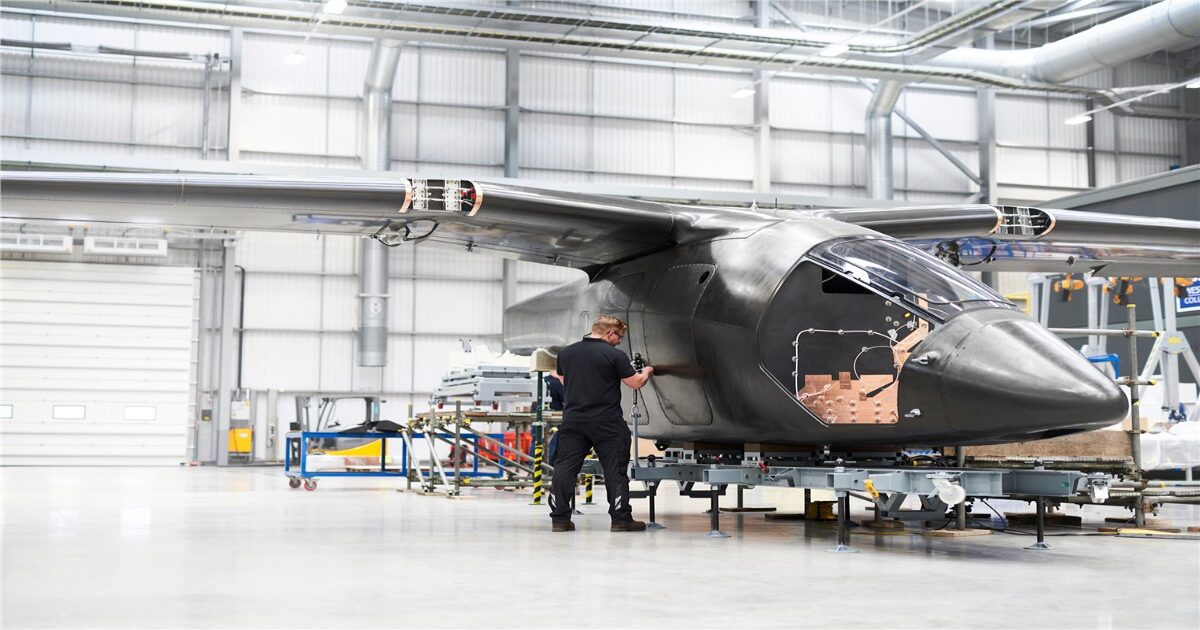





As the global race for flying taxis intensifies, one question is on everyone’s lips: how do you rapidly design, certify and industrialise aircraft as complex as eVTOLs? To meet this challenge, the French group Dassault Systèmes is putting forward a technological approach that could well become an industry standard. In a technical paper entitled Getting Cleared for Takeoff, expert Roberto Licata explains how the company’s digital platforms can accelerate the development of these new electric aircraft.
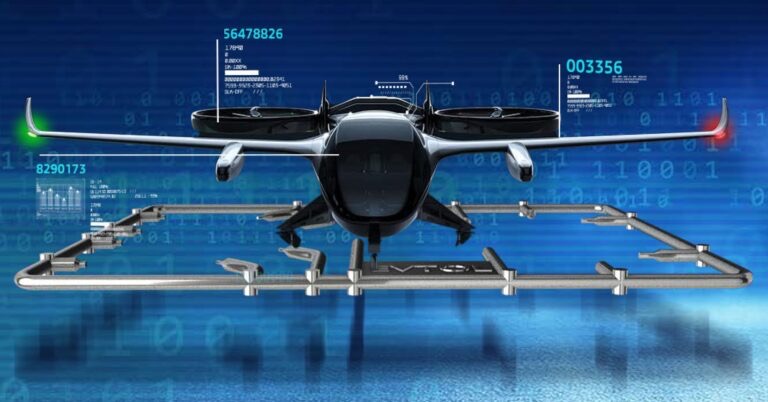
A market that could exceed $1,000 billion
According to several projections cited in the document, the eVTOL industry – these electric aircraft with vertical take-off and landing – could reach 300 billion dollars by 2030, then more than 1,000 billion dollars by 2040.
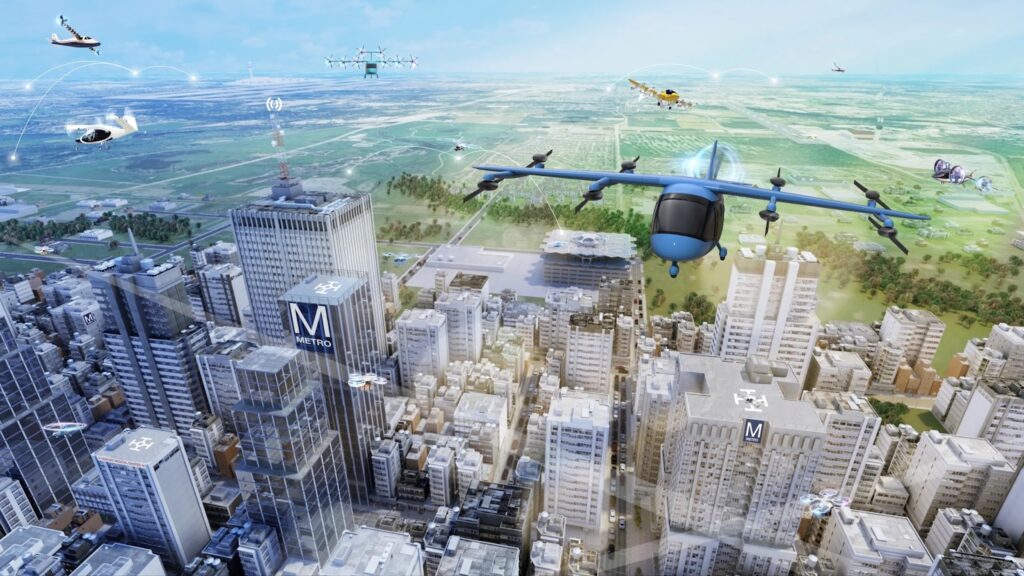
These aircraft are at the heart of the Advanced Air Mobility (AAM) concept, which aims to transform urban and regional mobility using electric flying taxis capable of vertical take-off. According to some analyses, future urban air transport fleets could even overtake those of the biggest airlines in terms of the number of aircraft and frequency of flights within the next decade.
Obviously, in this context, the first players capable of certifying and industrialising their devices will have a clear lead.
Roberto Licata, expert in advanced air mobility
This is precisely the analysis made by Roberto Licata, Solution Experience Director for the Aerospace & Defense industry at Dassault Systèmes. He specialises in model-based systems engineering (MBSE), design and simulation.
Today, it manages a portfolio of solutions in three key areas:
- New Space,
- Advanced Air Mobility,
- technological innovation.
Its message is clear: to develop a competitive eVTOL, it is no longer enough to use separate engineering tools. You need to adopt a holistic approach, capable of connecting design, simulation, certification and production in a single digital environment.

The unprecedented complexity of eVTOL aircraft
One of the major challenges facing the sector is the technical complexity of these new aircraft. An eVTOL combines several critical technologies:
- advanced aerodynamics (multiple rotors, hybrid architectures),
- electric propulsion and high-density batteries,
- digital avionics and fly-by-wire,
- aeronautical certification is still under construction with the authorities.
The combination of all these technologies needs to be simulated to fully understand the ins and outs of the project. Whereas in the past, simulation was often used at the end of the development cycle, it is now a central part of the design process, enabling numerous configurations to be tested virtually even before a physical prototype is built.
A digital platform for simultaneous design and simulation
To meet these challenges, Dassault Systèmes is showcasing its 3DEXPERIENCE cloud platform, which combines design, simulation and data management in a single environment. This approach, known as MODSIM (Modeling + Simulation), is based on a simple principle:
- a single data model for design (CAD) and engineering (CAE),
- teams working simultaneously on the same digital environment,
- much faster design iterations.
In practical terms, this avoids the loss of information and software incompatibilities that are often responsible for delays in aeronautical programmes. The potential gains are significant:
- 20 to 40% reduction in preliminary design time,
- 40 to 60% faster convergence towards an optimal design,
- 20 to 40% faster resolution of non-conformities,
- 10 to 25% reduction in certification time.
Accelerating certification, one of the biggest challenges
In the aeronautics industry, certification is often the longest and most costly stage. For eVTOLs, the situation is even more complex: authorities such as the FAA in the United States and the EASA in Europe are still working to define the safety standards for these new aircraft.
The proposed approach involves integrating certification requirements right from the design phase, using simulations to test critical scenarios virtually:
- crashworthiness,
- bird strikes,
- electromagnetic interference.
This model-based strategy means that problems can be anticipated rather than being discovered late during physical testing.
Preparing production even before the first flight
Beyond technical development, one of the major challenges for eVTOL start-ups remains industrialisation. Moving from a functional prototype to mass production represents a major transformation.
The 3DEXPERIENCE platform also enables :
- virtually simulate assembly lines,
- optimising industrial tooling,
- synchronise suppliers and the supply chain.
European start-ups already committed
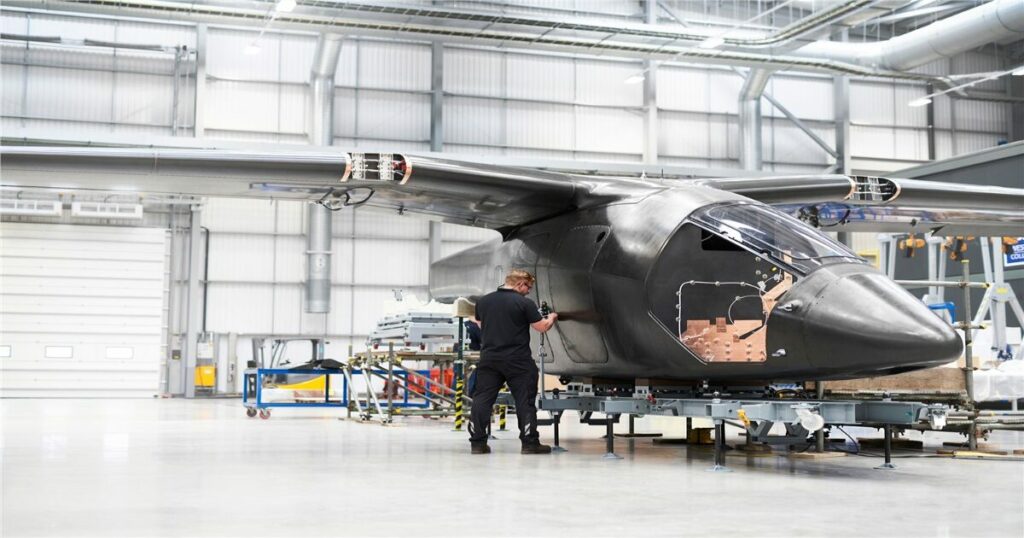
Several companies in the sector are already using these tools. These include :
- Ascendance Flight Technologies, a Toulouse-based start-up developing a hybrid vertical take-off aircraft,
- Vertical Aerospace, British manufacturer of electric aircraft,
- Zuri, a European start-up working on an accessible VTOL.
All use the Dassault Systèmes cloud platform to manage design, simulation and collaboration between teams.
A global technological battle
Advanced air mobility is now one of the most competitive sectors in aeronautics. In this battle, technology is no longer limited to engines or batteries: digital tools are also becoming a strategic advantage.
And if flying taxis do one day take off in our cities, part of their success could well have been conceived… in a French virtual environment.