



Long limited to simple manoeuvring aids, car parking is now becoming a veritable field of innovation for manufacturers. Mercedes-Benz, BMW, Volkswagen and the new Chinese giants are all vying with each other to develop technologies that will enable vehicles to park themselves, without a driver on board. It’s a playing field that is still tightly controlled by regulations, but one that is strategic in the race for the autonomous car.
From simple assistant to fully autonomous parking
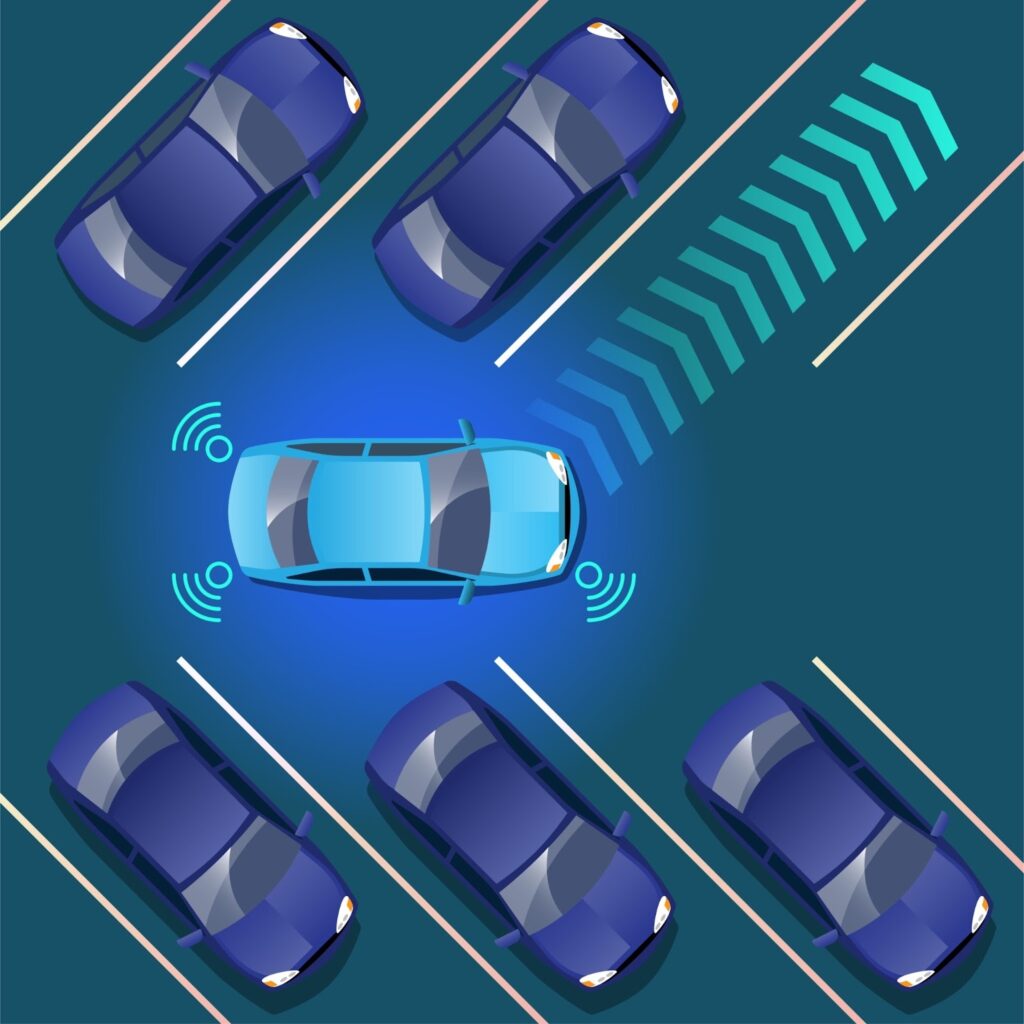
The first parking aids appeared in the 2000s with ultrasonic systems, followed by semi-automated devices capable of managing the steering wheel or pedals under the driver’s supervision. These technologies are part of the SAE (Society of Automotive Engineers) classification, an international scale that defines six levels of driving automation, from level 0 (no automation) to level 5 (fully autonomous vehicle). The first automated parking systems fall into SAE levels 1 to 2, where the driver remains in charge of the manoeuvre.

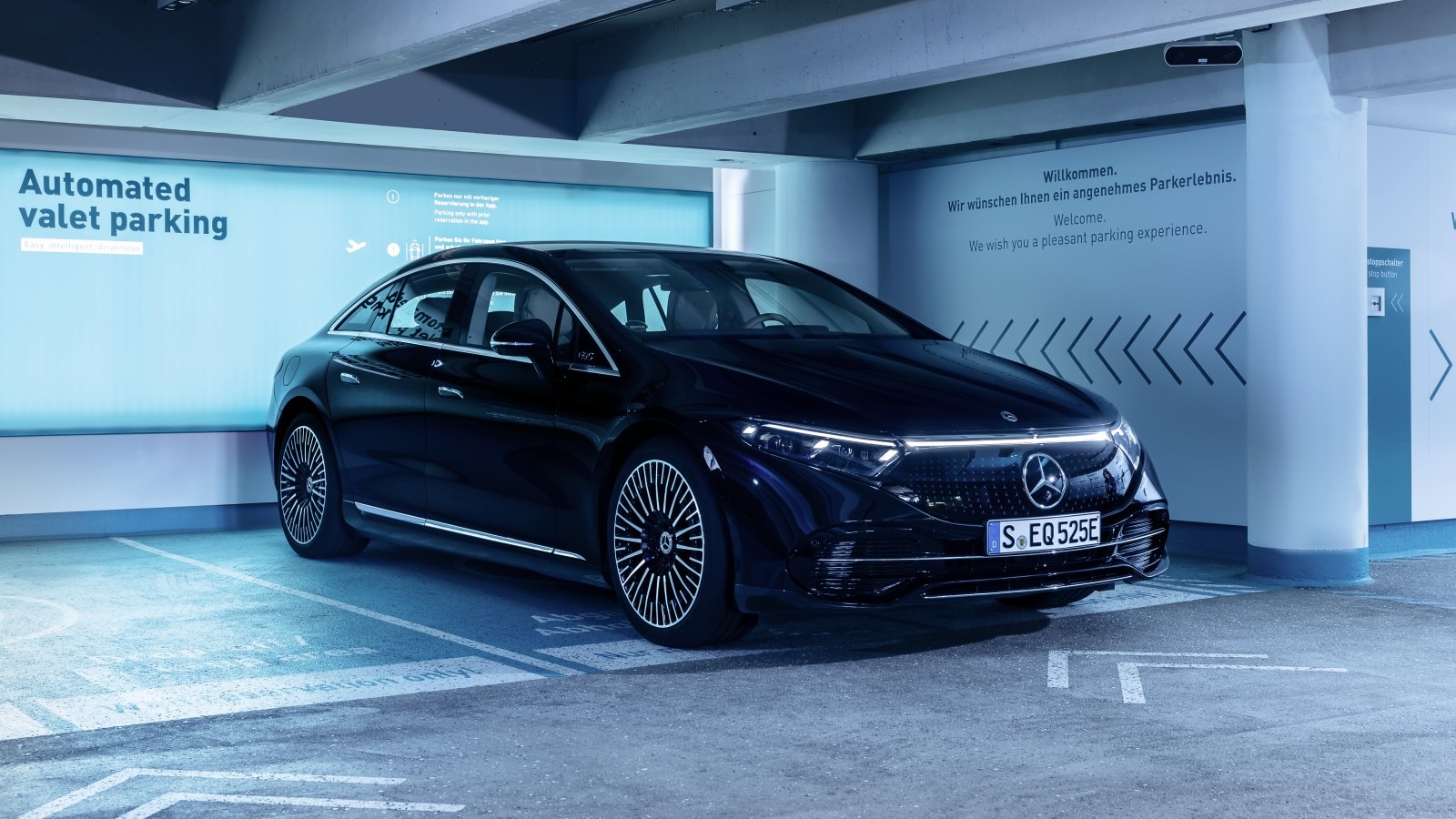
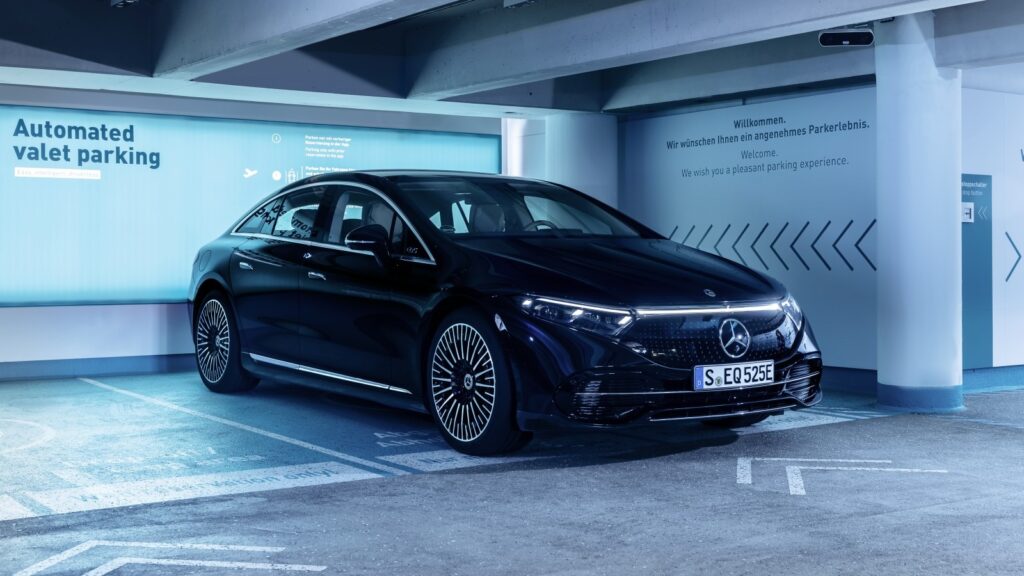
Volkswagen marked a first turning point in 2006 with Park Assist, democratising the partial automation of manoeuvres. But the real breakthrough came in 2015, when Mercedes-Benz and Bosch launched fully automated parking trials. In 2019, at the Mercedes Museum in Stuttgart, the two partners achieved a world first: a saloon car parked itself, without anyone on board, in a real car park. In 2022, this technology becomes the first SAE level 4 autonomous parking system approved for commercial use, called Intelligent Park Pilot, where the vehicle takes charge of the entire manoeuvre, without a driver, in a strictly defined environment.
How does Level 4 autonomous parking work?
Unlike conventional on-board systems, SAE 4 autonomous parking is based on a vehicle-infrastructure combination. The vehicle uses 360° sensors (cameras, radar, ultrasound and sometimes LIDAR – a perception sensor that precisely maps the environment in 3D), while the car park is equipped with fixed sensors and a supervision system.
Artificial intelligence provides dynamic mapping (SLAM), obstacle detection (pedestrians, vehicles, objects), decision-making and low-speed manoeuvring. In the event of an unforeseen event, the system must be capable of performing a manoeuvre with minimal risk, such as stopping safely.
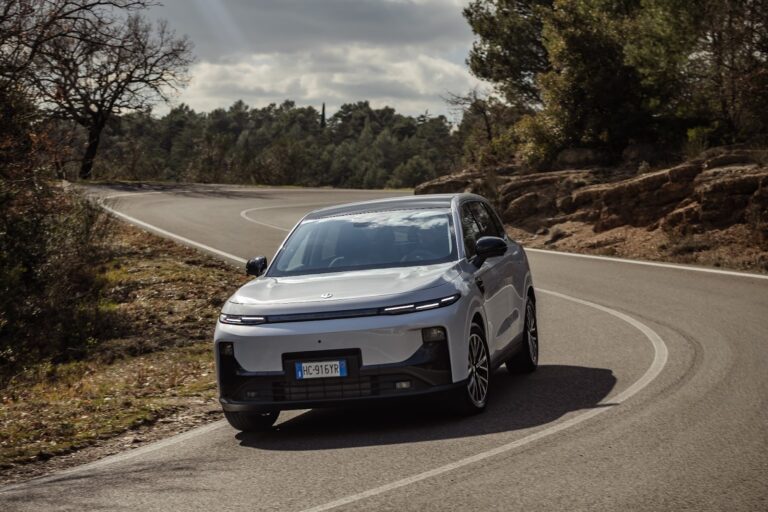
Some brands, particularly Chinese, are exploring approaches that do not require heavy infrastructure. Changan (APA 5.0) and Xpeng are banking on visual memory and on-board learning to enable the vehicle to reproduce on its own a journey already made, over several hundred metres.
Manufacturers in the driver’s seat
In the field of autonomous parking, manufacturers are moving forward at very different speeds and with very different strategies.
Mercedes-Benz and Bosch are undisputed pioneers. Their Intelligent Park Pilot system is currently the only SAE level 4 autonomous parking system approved for commercial use in Europe. Deployed in a number of car parks in Stuttgart, it enables models such as the EQS and S-Class to park on their own, without a driver on board, thanks to a specially equipped connected infrastructure.
BMW, for its part, is not offering an SAE 4 system as such, but a highly automated parking solution that is already on the market. Parking Assistant Professional, available via the BMW ConnectedDrive Store, enables remote parking from a smartphone and the memorisation of recurring journeys of up to several hundred metres. Although impressive, these functions are still classified between SAE levels 2+ and 3, as the driver remains responsible for the vehicle and the system cannot operate fully autonomously in an open environment. So this is not a prototype, but a real technology with uses that are still restricted.
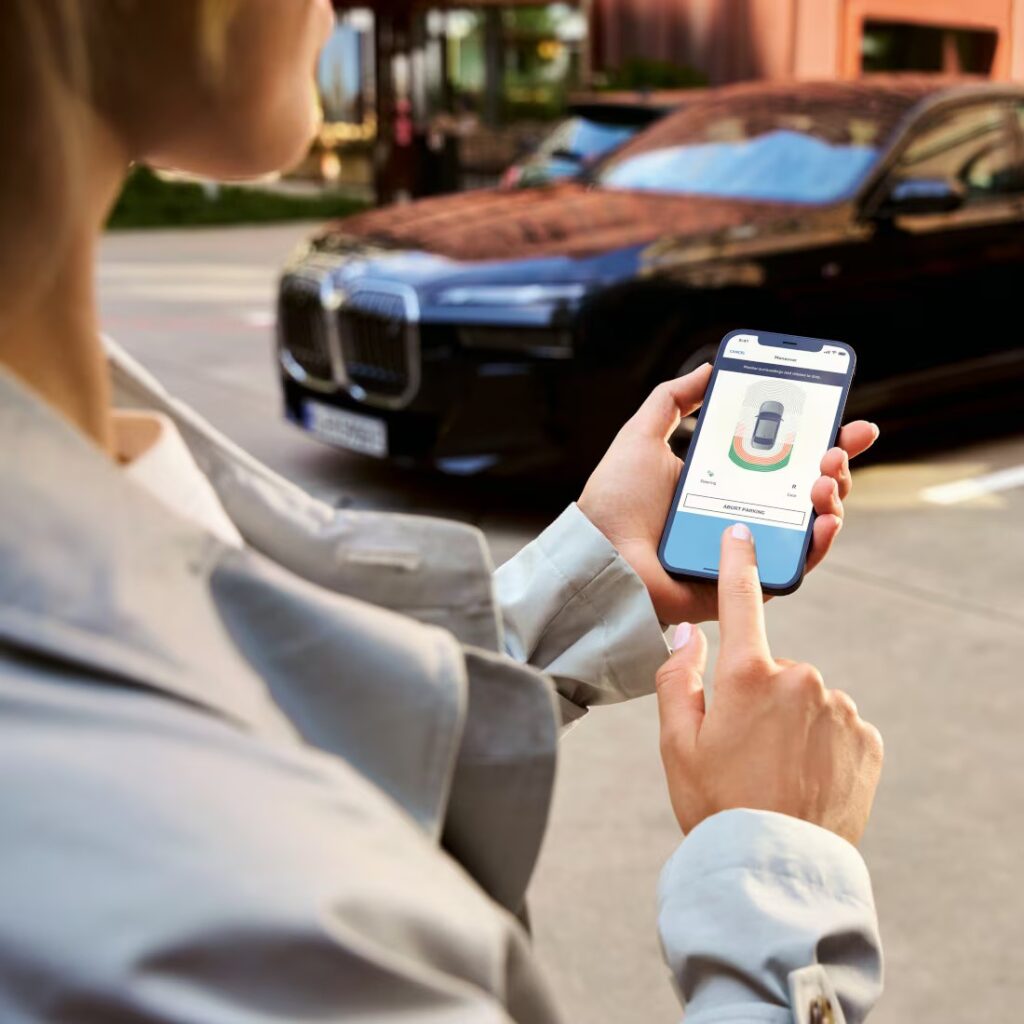
The Volkswagen Group, including Audi, is taking a gradual approach. The Park Assist Plus and Remote Park systems aim to increase autonomy in successive stages, building on existing driving aids, with the aim of evolving as regulations and infrastructures allow.
However, the fastest-growing trend is coming from China. Manufacturers such as Xpeng, BYD, FAW Hongqi and Changan are stepping up the number of highly automated parking solutions, sometimes approaching SAE 4 level, by relying on on-board artificial intelligence and HD cardless approaches. A more flexible regulatory framework and widely connected commercial car parks are enabling them to accelerate where Europe is moving more cautiously.
Finally, Hyundai, Volvo and Toyota are continuing their developments, often in partnership with specialist players such as Parkopedia, to integrate indoor navigation and intelligent car park management, key technological building blocks in preparation for the wider deployment of autonomous parking.
Is it legal? Yes… but not everywhere
The legal issue is central. In Europe, EU Regulation 2022/1426, adopted in application of General Safety Regulation 2019/2144, provides a framework for the approval of automated driving systems, including « automated valet parking », a function enabling a vehicle to park itself, without a driver on board, in a predefined, secure SAE level 4 car park. As a reminder, for the time being, use is authorised only in predefined areas, known as Operational Design Domain (ODD), such as closed or controlled car parks.
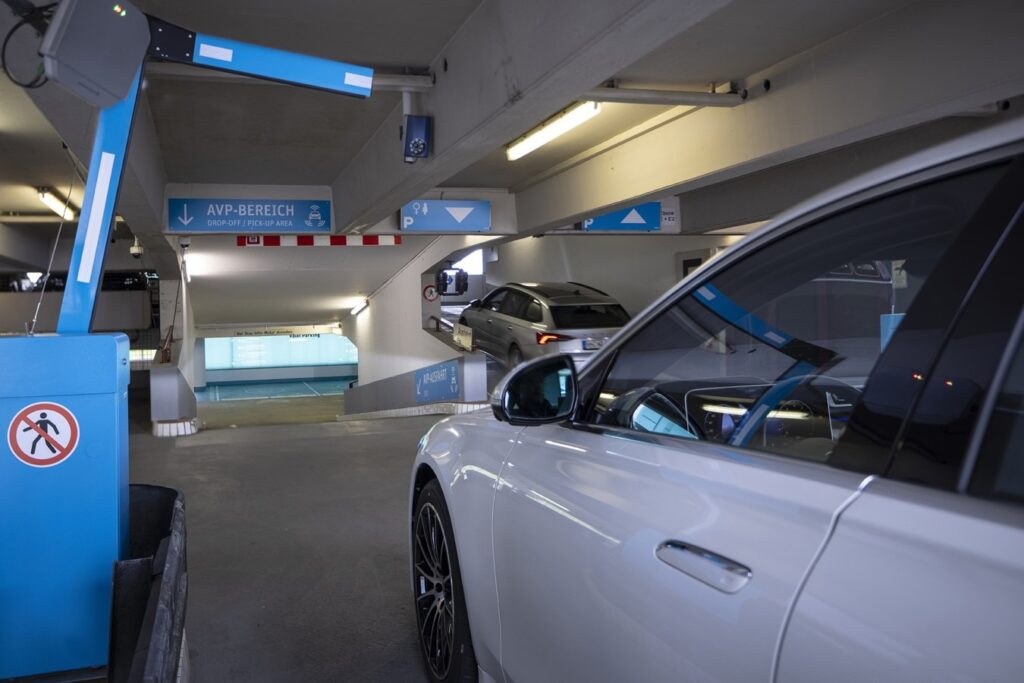
Germany is currently the most advanced country. A law passed in 2021 allows driverless driving, and the federal authority (KBA) has approved the Mercedes/Bosch system for real commercial use.
In France, the framework exists but remains more restrictive. The decree of June 2021 and the Mobility Orientation Law (LOM) authorise self-driving vehicles in geolocated areas, mainly for experiments or specific services. In practice, no autonomous SAE 4 parking is authorised on the public highway in 2026.
Is it possible to park alone in the street in front of your home?
The answer is clear: no. Even if the vehicle is technically capable of doing so, autonomous driverless parking is not authorised on public roads, either in France or in most other European countries. The Highway Code requires a driver to be responsible for the vehicle on the open road, and SAE 4 systems are restricted to closed or specially equipped car parks.
Only private garages, equipped public or private car parks or compatible infrastructures can currently accommodate this type of technology.
A revolution still under control
Autonomous parking represents a major step forward, both technologically and symbolically, towards the driverless car. But its deployment remains deliberately gradual. Safety, legal liability, social acceptance and infrastructure adaptation are all challenges to be met before widespread use.
In the short term, the closed car park remains the ideal laboratory for autonomous parking. In the longer term, the whole relationship between the car, the city and the user could be redefined.