





Long confined to prototypes and technological demonstrations, eVTOLs (electric Vertical Take-Off and Landing) are gradually entering a new phase. In 2026, several aircraft are now close to commercial operation, some having already obtained partial certification or launched their first revenue-generating operations. Between urban air taxis, regional transport and medical or logistical missions, these new electric machines could transform air mobility over the next decade. Here are the eight eVTOLs that are currently the most advanced, according to their level of industrial and regulatory maturity.
But before an eVTOL can actually carry passengers, it must obtain aeronautical certification, a long and complex process overseen by national and international regulatory authorities. The main authorities include the FAA (Federal Aviation Administration) in the United States, the EASA (European Aviation Safety Agency) in Europe, the CAAC (Civil Aviation Administration of China) in China, and the UK CAA (Civil Aviation Authority) in the United Kingdom. Other countries are also beginning to define their own regulatory frameworks for integrating these new aircraft into urban airspace. At present, only a few projects appear to be close to commercial operation.
Joby S4
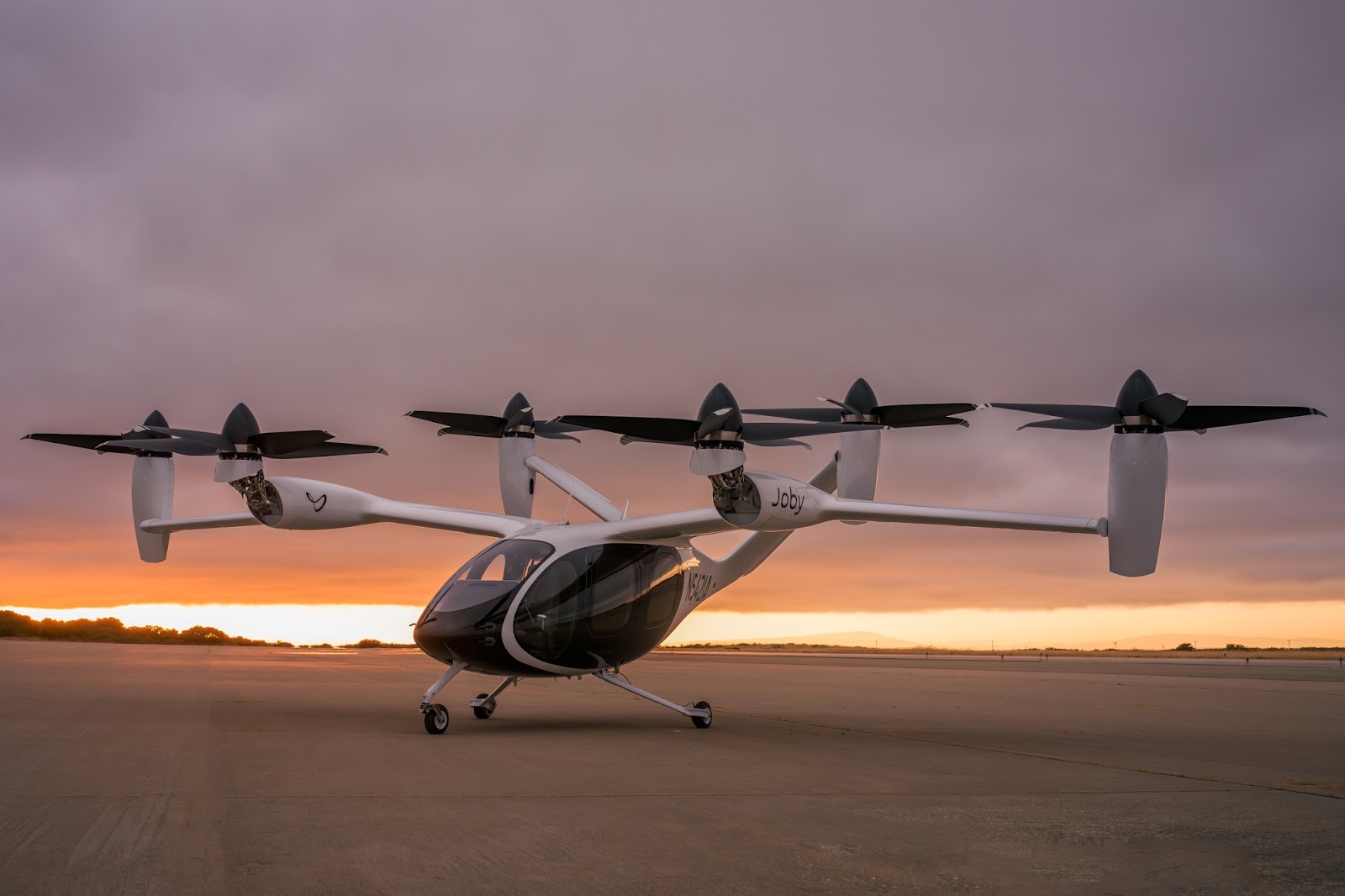
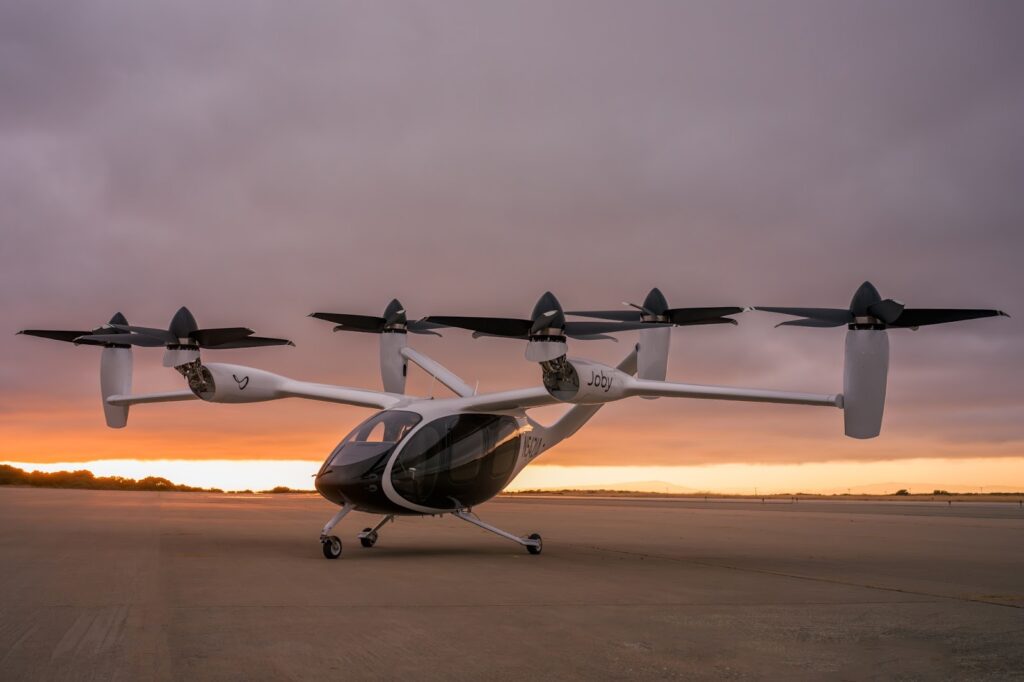
The Joby S4, developed by the American company Joby Aviation, is now considered to be the most advanced eVTOL programme in the United States. The aircraft is in Stage 4 of the FAA certification process, i.e. around 90% of the regulatory route.
This electric air taxi can carry four passengers and a pilot, with a top speed of around 241 km/h and a range of up to 240 kilometres. It has six electrically-powered tilting rotors, offering both vertical lift like a helicopter and horizontal propulsion, to cut through the air like an aeroplane. The airframe is made of lightweight composites to optimise range and reduce noise, a critical factor for urban flights.
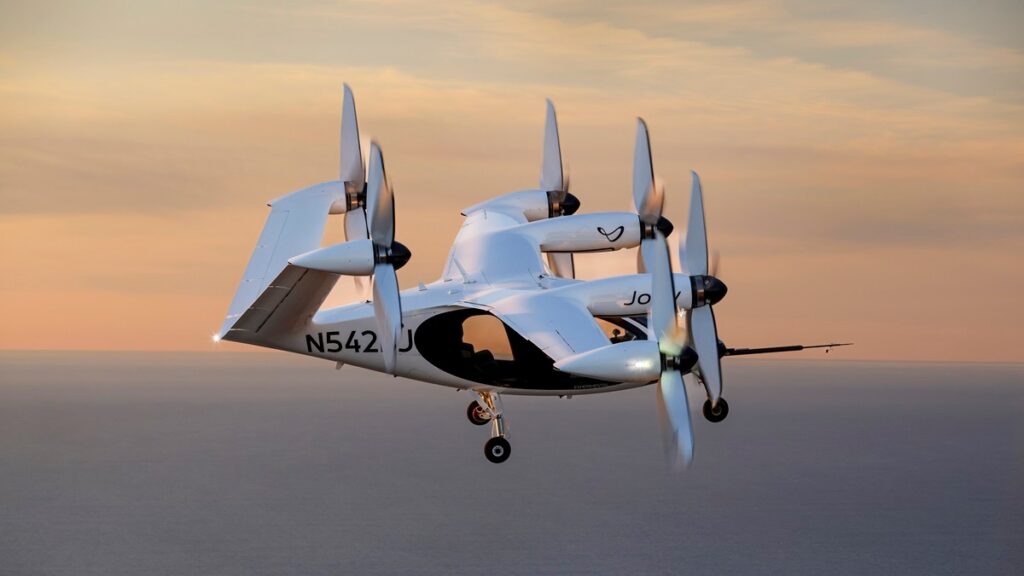
The manufacturer plans to launch its first commercial operations in Dubai this year. The programme benefits from substantial industrial support, notably from Toyota ($400 million), and has an order book of almost 3,000 aircraft, worth several billion dollars.
Archer Midnight
American start-up Archer Aviation is developing the Midnight, an eVTOL designed primarily for urban air taxi services.
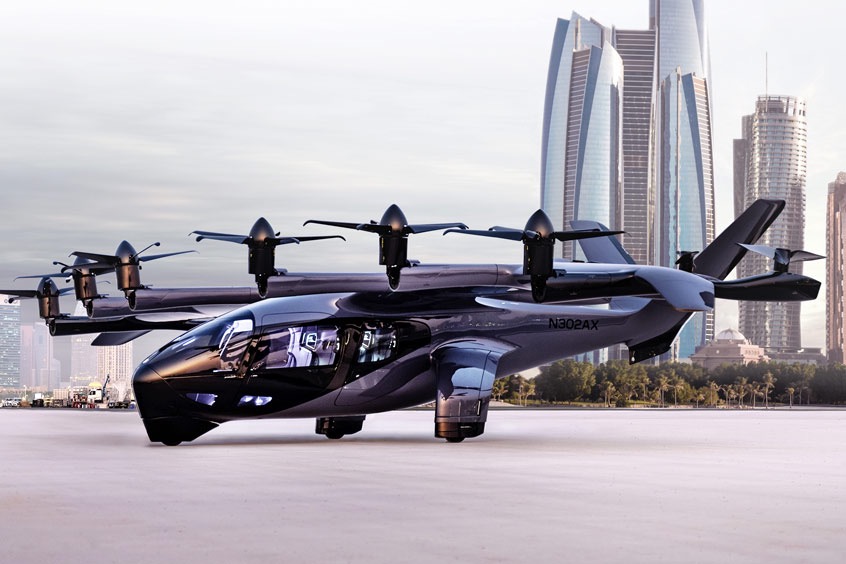
The aircraft can carry four passengers and a pilot, with a maximum speed of close to 240 km/h and a range of around 160 kilometres. It has four main electric rotors with tilting thrusters, and a modular battery that can be quickly replaced for continuous operation.
Archer plans to launch its first commercial operations in the United Arab Emirates and the United States from 2026. The programme is supported by several industrial partners, including Stellantis, and has an order book of more than 700 aircraft, including an agreement with United Airlines.
EHang EH216-S
The EHang EH216-S, developed in China, is an exception in the industry. Unlike most of its competitors, the aircraft operates without a pilot on board.
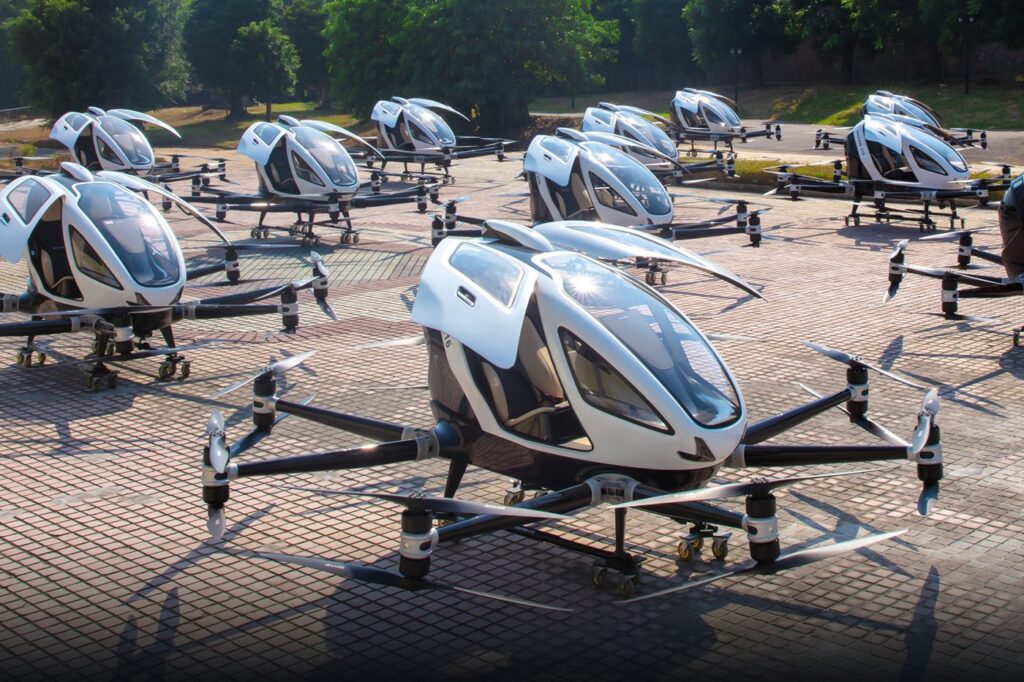
source: EHang
Capable of carrying two passengers, it has a top speed of around 130 km/h and a range of around 35 kilometres, making it ideal for short urban journeys.
In 2023, the aircraft received type certification from the Civil Aviation Authority of China (CAAC). In 2025, a number of profitable commercial operations have already been carried out in China, notably in the field of air tourism.
The manufacturer claims more than 1,100 orders and pre-orders for this model.
Lilium Jet
The Lilium Jet, developed in Germany, takes a different approach. Where most eVTOLs target short urban journeys, this aircraft is aimed more at fast regional connections between cities.
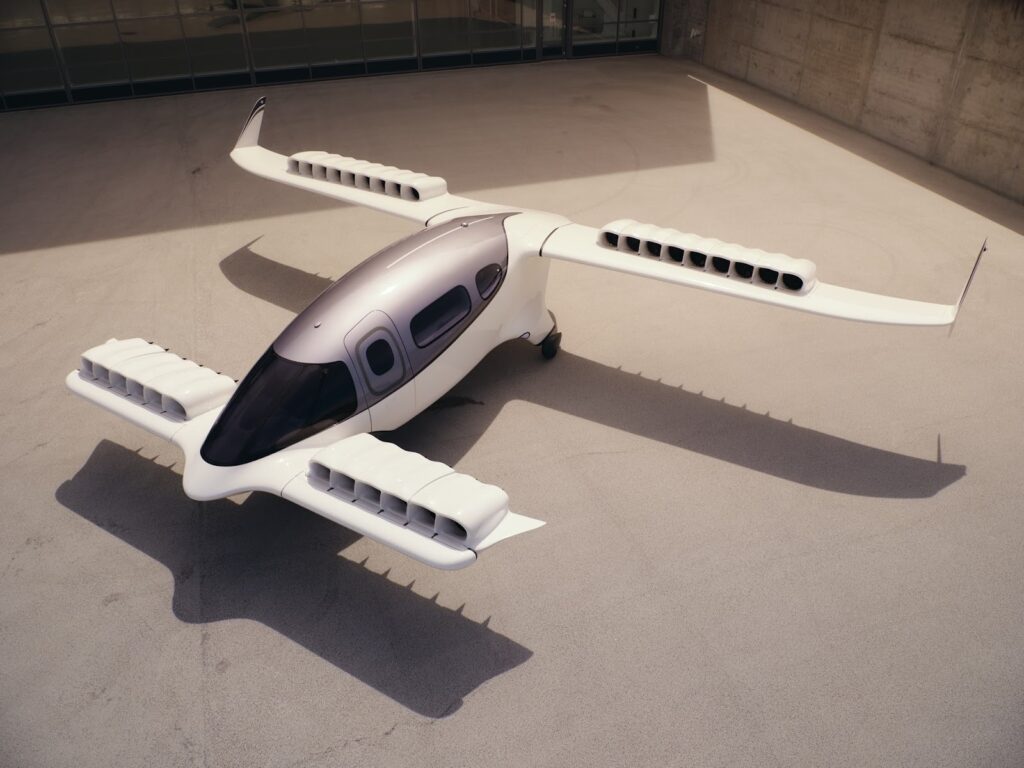
The aircraft can carry six passengers and a pilot, with an estimated top speed of 280 km/h and a range of up to 250 kilometres. The manufacturer has chosen to add 36 tilting ducted fan motors, making it completely electric and silent.
The programme is aiming for European certification by EASA, and several agreements have been signed with potential operators, including Saudia and Lufthansa.
However, the programme has experienced a number of financial difficulties in recent years, which could push back its entry into service to 2027, according to several sources.
Beta Technologies ALIA
American company Beta Technologies is developing the ALIA, an aircraft designed for several uses: passenger transport, medical missions or freight transport. The reason: electric propulsion with tilting rotors and a modular architecture that can be adapted to several configurations.
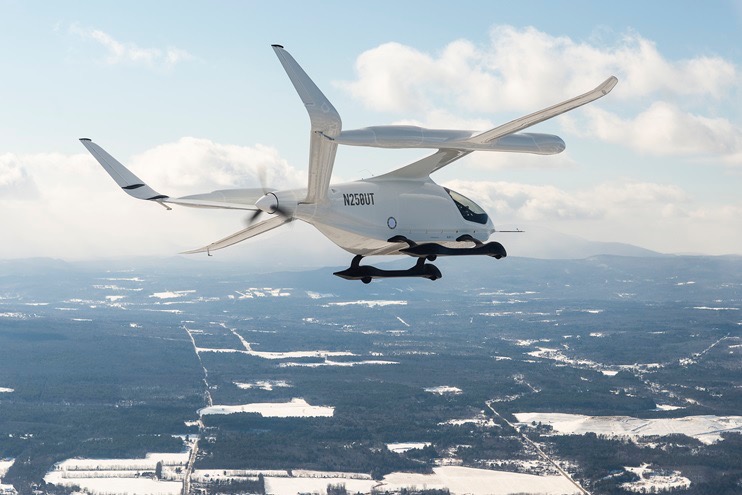
The eVTOL can carry five passengers and a pilot, with a maximum speed of around 278 km/h and a range of over 400 kilometres, making it one of the most enduring aircraft in its category.
The programme has contracts with UPS and the US Air Force, and could initially be used for logistics or medical missions.
Vertical Aerospace VX4
In the UK, Vertical Aerospace is developing the VX4, an eVTOL designed for urban passenger transport. Its design (four main rotors and two horizontal engines) enables silent, safe flights thanks to a redundant fly-by-wire system.
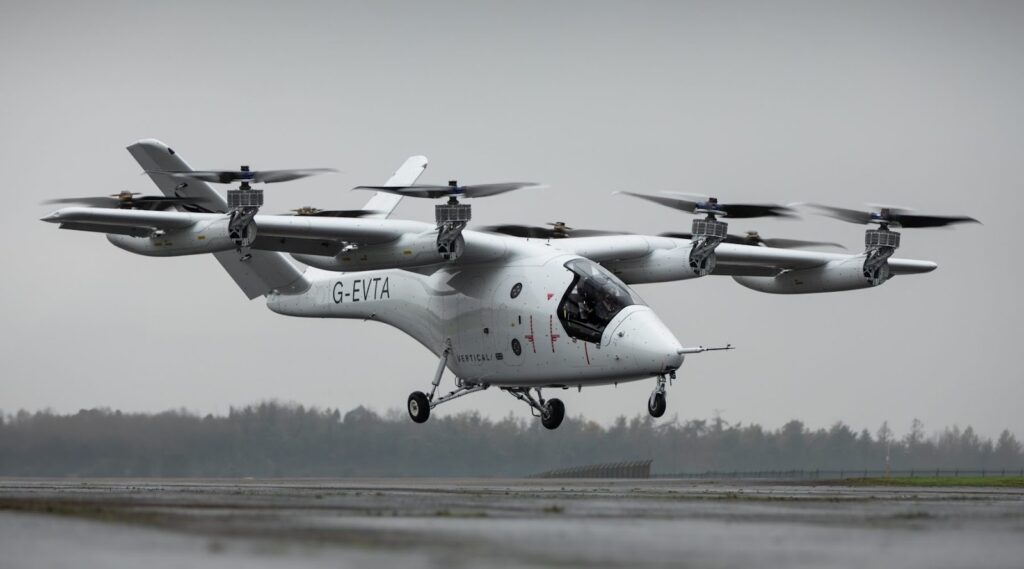
In terms of capacity, the aircraft can accommodate four passengers and a pilot, with a maximum speed of around 200 km/h and an estimated range of 160 kilometres.
The programme has the support of several airlines, including Virgin Atlantic and American Airlines, which have signed preliminary agreements for the future operation of these aircraft.
Eve Air Mobility
Eve Air Mobility, a subsidiary of Brazilian aircraft manufacturer Embraer, is also developing its own eVTOL for urban air mobility.
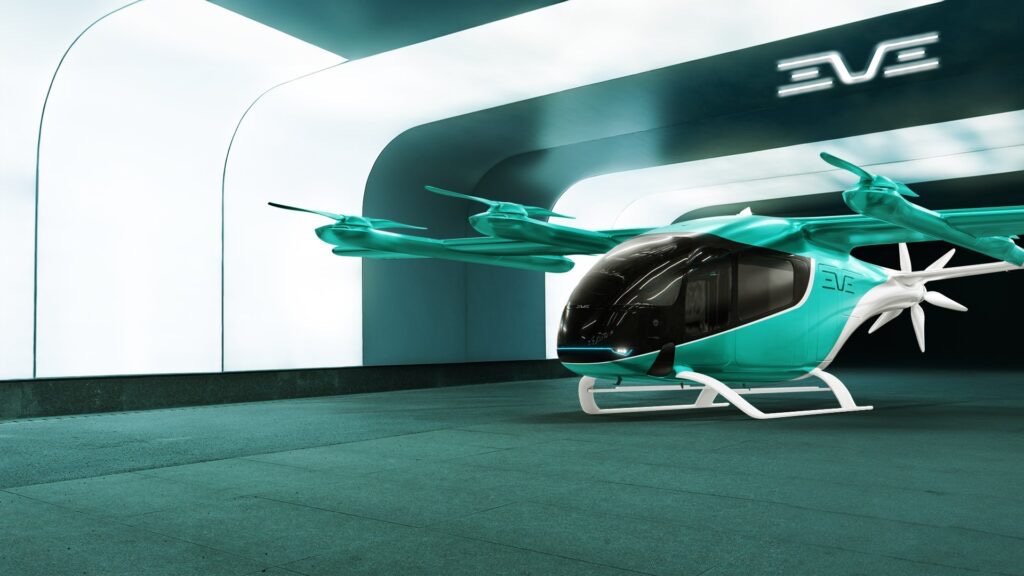
Comprising 4 electric rotors, the aircraft can carry four passengers and a pilot, with a speed of around 180 km/h and a range of around 100 kilometres.
The programme has a particularly strong order book, with more than 2,800 letters of intent signed by international operators. The challenge now is to build the appropriate infrastructure and get it up and running.
Wisk Aero Gen6
The Gen6 embodies the future of autonomous eVTOLs. Backed by Boeing, it is designed to operate without a pilot on board, thanks to a remote supervision system and advanced artificial intelligence. Twelve distributed rotors provide lift and propulsion, with multiple redundancies for safety.
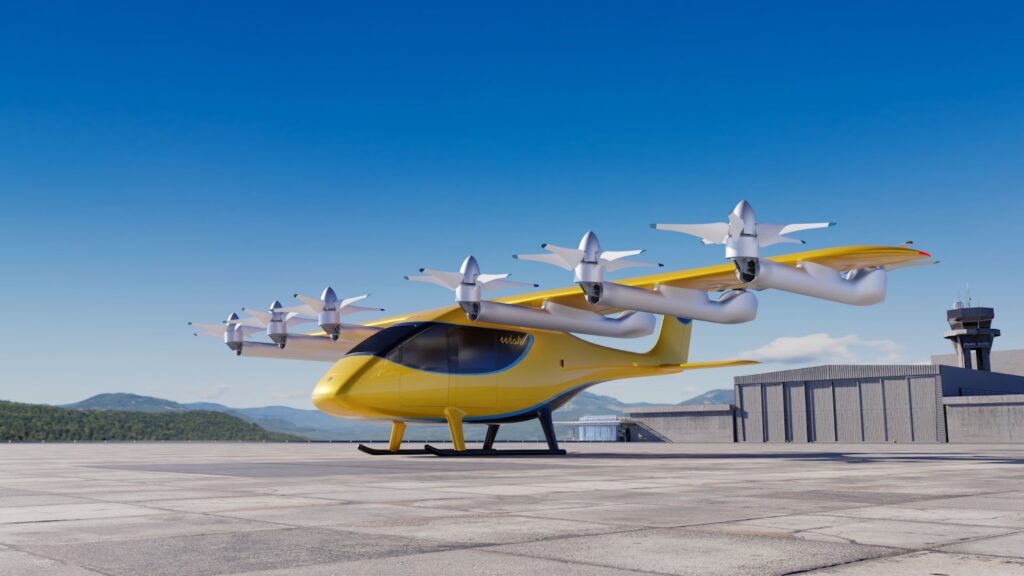
The Gen6 can carry four passengers, with a top speed of around 160 km/h and a range of around 100 kilometres.
The programme is still in an advanced testing phase, and could pave the way for a new generation of autonomous eVTOLs in the years to come.
A promising industry… but still fragile
While technological progress is rapid, the eVTOL industry still faces a number of major challenges.
Regulatory certification is a long and costly process, and several projects have already experienced major delays. Some programmes are also facing financial difficulties, in a sector that requires several hundred million dollars of investment every year.
In this context, only a few players, particularly those with solid industrial partners or significant funding, could achieve sustainable commercial exploitation.
Despite these uncertainties, 2026 marks a key milestone: for the first time, several eVTOLs are moving closer to full-scale commercial use, paving the way for a new form of air mobility.