



The French electric car market is reaching a new milestone. Sales volumes are rising significantly, certain models are establishing themselves firmly at the top of the sales charts, and the market share continues to exceed a quarter of all new registrations. Yet despite this momentum, some consumers remain sceptical.

A clear improvement, but in a challenging market
The figures for April 2026 confirm that the genuinely positive trend observed over the past few months is continuing.
With 36,216 registrations, electric car sales have risen by 41.8% year-on-year and now account for 26.2% of the market, according to data provided by industry players.
In the first four months of the year, the market has seen cumulative sales of over 148,000 electric vehicles, compared with around 100,000 during the same period in 2025. However, this increase must be put into perspective straight away.
The global car market, meanwhile, remains relatively stable (-0.26%).

Models that are finally shaping the market
This shift in scale is evident in the sales figures.
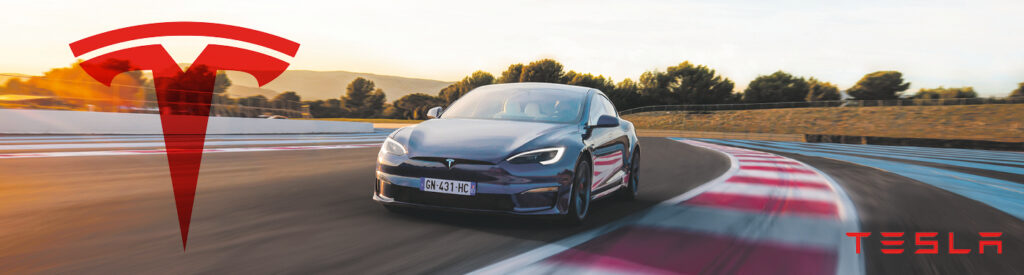
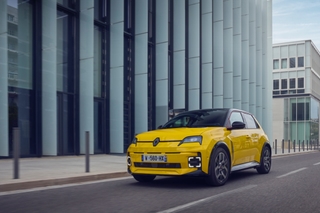
In April, the Renault 5 topped the market with 3,418 registrations. It was ahead of the Renault Scénic E-Tech, with 2,114 units, and the Citroën ë-C3, which recorded 1,611 units. The Tesla Model Y, long the market leader, slipped to fourth place with 1,456 units.
This ranking shows that the electric vehicle market is no longer driven solely by a handful of premium or high-profile models. More affordable vehicles are beginning to drive the market, with sales volumes reaching significant levels.
Another interesting point is that French models now occupy a prominent position at the top of the rankings, reflecting a rebalancing of the industry and the market.

Growth largely driven by
This acceleration is not spontaneous. It is the result of a combination of very specific factors.
According to AAA Data and industry analysis, this growth is primarily due to a fall in prices across several segments, with some city cars seeing price reductions of around 10% to 12%.
This is also due to the rapid expansion of the range, with over 180 models now available, compared with just over 110 two years ago.
Added to this are public policies, which continue to play a decisive role, whether through incentives, energy-saving certificate schemes or social leasing schemes.
This point is key to understanding the market: growth is happening, but it remains partly driven by external factors.

The crucial role of fleets
Another driving force, often less visible, plays a significant role in this trend: businesses. According to data published by AAA Data, company fleets are accelerating their transition, driven by a combination of tax incentives and regulatory requirements.
They now account for a growing proportion of electric vehicles, with figures well above those seen among private individuals.
This trend has a major indirect effect: by rapidly replacing their vehicles, fleets are feeding the second-hand market, which in turn facilitates the wider adoption of electric vehicles over time.

Private individuals remain cautious
But whilst the figures seem to suggest that things are moving in the right direction for the world of electric mobility, a study carried out last January by the Institut Mobilités en Transition and IDDRI challenges this view.
French people who still drive petrol or diesel cars aren’t ruling out electric vehicles, but they aren’t switching over in droves either.
Their stance is more nuanced: they are waiting for assurances.
According to the findings of these interviews, which were conducted in four major French cities (Paris, Bordeaux, Saint-Étienne and Dijon), the price of a new EV remains a key factor, as do range, charging facilities and the resale value of their electric vehicles.
This discrepancy helps to explain some of the current dynamics of the market. Demand exists, but it is most evident when economic conditions become favourable, particularly in the context of social leasing schemes.
It should also be noted that these interviews were conducted before the rise in fuel prices caused by the conflicts in the Middle East
A transition that is well underway, but not yet self-sustaining
The French market is therefore in a transitional phase. Electric vehicles are gaining ground, driven by more competitive models, proactive government policies and the leading role played by businesses.
However, it does not yet rely entirely on households’ own choices. This is what creates the current paradox: volumes are rising sharply, but the transition remains dependent on external factors.
Key takeaways
Electric cars are increasingly establishing themselves as a major player in the French car market. Sales figures are strong, the range of models is growing, and the momentum is clearly building.
But this growth remains limited. It still depends on prices, subsidies and regulatory constraints. The real shift will come when these factors become secondary.