
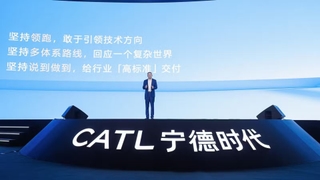

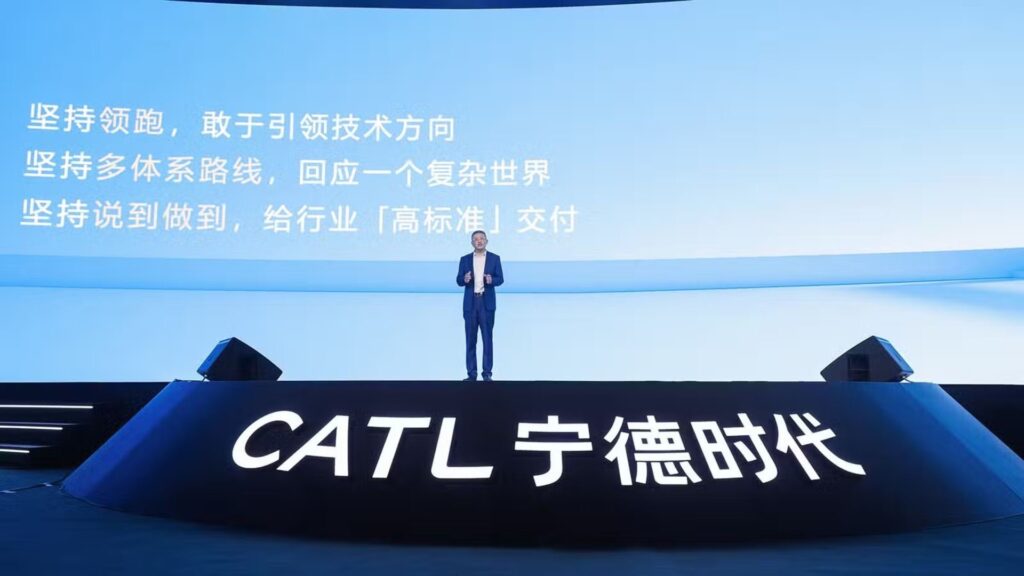
At its Super Technology Day held on 21 April 2026 in Beijing, the world’s leading battery manufacturer made a series of major announcements that are sure to redefine the standards for electric vehicles. Ultra-fast charging, record-breaking range, new sodium-based chemistry… In a single conference, the Chinese group laid the foundations for a new generation of electric vehicles, offering far superior performance and potentially much greater affordability.
A charging time that finally comes close to that of a combustion engine
There were three announcements on the agenda, but the one that made the biggest impression was undoubtedly the third generation of the Shenxing LFP battery.
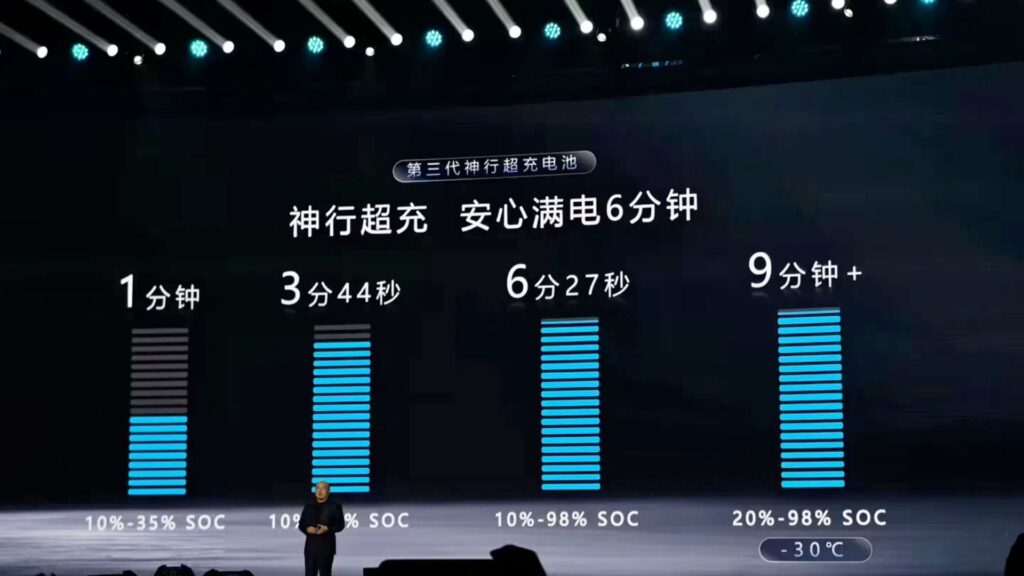
Whilst it’s commonly thought that charging an EV is still a tedious and time-consuming ordeal, that’s now a thing of the past, once and for all. On paper, the figures are almost hard to believe, as CATL (Contemporary Amperex Technology) claims a charge from 10% to 80% in 3 minutes and 44 seconds, and up to 98% in just 6 minutes and 27 seconds. The global leader clearly wants to impress, which is why the symbolic 1-minute mark allows for a 25% recovery in battery range. At this rate, even a coffee break at a motorway service station becomes too long.
At the conference, it was revealed that performance remains robust even under extreme conditions. At -30 °C, it would take around 9 minutes to go from 20% to 98%.
And if there’s one criticism that often comes up regarding battery wear caused by ultra-fast charging, that’s a thing of the past. CATL claims over 90% of the battery’s capacity remains after 1,000 fast-charging cycles – that’s impressive.
With performance levels like these, electric cars are clearly starting to overcome one of their main drawbacks: charging time.
Up to 1,500 km of range: another impressive feat
But CATL didn’t stop at charging. The group has also tackled the issue of range head-on. With its new “Qilin” battery and, in particular, its so-called “condensed material” version, the manufacturer claims an energy density of 350 Wh/kg. This figure exceeds current standards, which generally range between 250 and 300 Wh/kg for high-end batteries.
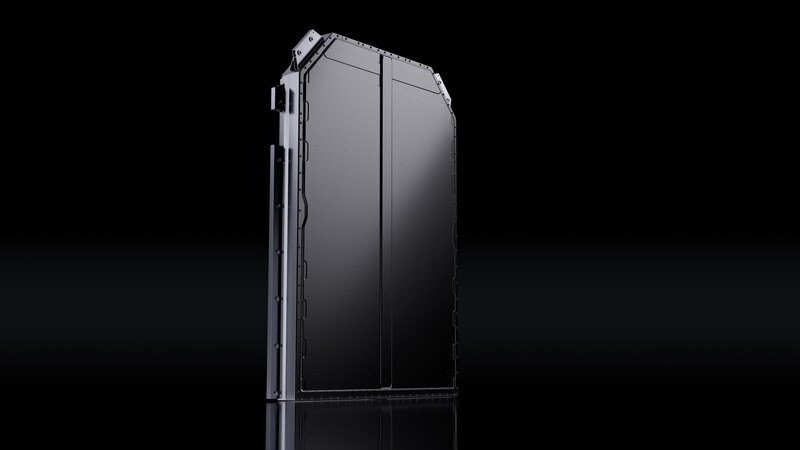
The result: a claimed range of up to 1,500 km for a saloon, and over 1,000 km for an SUV. To put that into perspective, imagine driving from Paris to Rome or Paris to Vienna without needing to recharge your vehicle.
Although these announcements are breathtaking and cement CATL’s position as a leader in the battery sector, Robin Zeng, CATL’s founder, has no intention of stopping there: “The limits of electrochemistry are still far from being reached, and the possibilities of materials science are still far from being exhausted.”
These figures obviously need to be taken with a pinch of salt, as they are often based on the Chinese CLTC cycle, which is more optimistic than the European WLTP. But even with a realistic adjustment, the increase remains considerable.

Sodium-ion technology is finally becoming a commercial reality
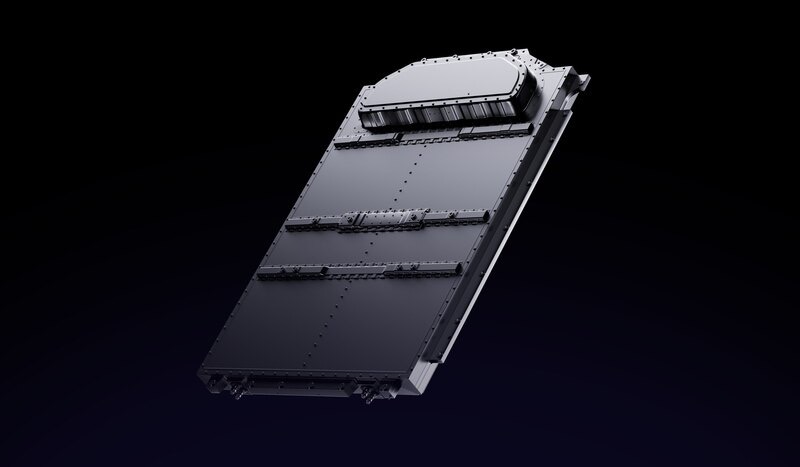
Another announcement that takes a technology out of the theoretical phase: this is likely to mark the practical arrival of sodium-ion batteries. Indeed, with its new technology, dubbed Naxtra, CATL is no longer talking about prototypes, but about mass production from the end of 2026.
The principle is simple: replace lithium with sodium, a material that is far more abundant, less expensive and less susceptible to geopolitical tensions.
Whilst the benefits mentioned above are clearly good news for the industry, the planet and motorists in general, other technical features mean that Naxtra technology is being widely praised:
- Production costs are around 30% lower
- Better resistance to cold (down to -40 °C)
- Enhanced security
In terms of performance, the energy density stands at 175 Wh/kg, which is close to that of current LFP batteries. This is sufficient to achieve a range of between 400 and 600 km, depending on the model.
Are electric cars finally becoming more affordable?
Given that the battery currently accounts for between 30% and 40% of the cost of an electric vehicle on average, a 30% reduction in the cost of this component could therefore lead to a 10% to 15% reduction in the final price.
On a car costing €20,000, this represents a potential saving of over €2,000. It is a significant factor in making electric vehicles more accessible.
Whilst this represents a tangible revolution for China, the situation in Europe is more complex. This is because, between tariffs on Chinese vehicles, regulatory constraints and the conditions attached to the eco-bonus, some of these benefits may never reach consumers directly.
The most likely scenario remains a gradual adoption by European manufacturers, with these technologies being integrated locally by the end of the decade.
A comprehensive strategy that confirms China’s dominance
Beyond the technical announcements, what CATL demonstrates is a perfectly structured strategy. The group is not relying on a single technology, but on several:
- LFP for ultra-fast charging
- Qilin for high density and battery life
- Sodium-ion for cost and durability
As if that weren’t enough, add to that the fact that CATL is undertaking a massive expansion of its infrastructure in China, with tens of thousands of charging stations, and is developing a battery-swapping service, which is scheduled for 2028.
If you hadn’t realised it yet, we are witnessing the rise of a player that doesn’t just want to follow the market, but to define it. Almost instant charging, battery life on a par with – or even better than – that of internal combustion engines, falling costs… All the historical barriers are starting to come crashing down at once. And whilst China is accelerating, Europe remains held back by its industrial and regulatory constraints.