


BMW has reached a new milestone. In a press release, the German manufacturer announced that it had developed four major innovations. These include the Parking Assistant Professional and the BMW Digital Key. At a time when urban traffic and parking are becoming increasingly complex, the three-letter brand is offering solutions that combine advanced automation and digital control, simplifying the daily lives of drivers and paving the way for increasingly connected mobility.
Redesigned parking assistance
The first innovation is called « Parking Assistant Professional », and it is no longer simply a parking aid. With it, the car becomes a real digital co-pilot capable of parking and getting out of the vehicle autonomously, even in confined spaces.
What’s more, according to the press release, thanks to the My BMW app, the driver can steer the car remotely over a distance of just a few metres, making manoeuvres in tight car parks much less stressful and even, let’s face it, a little exciting.
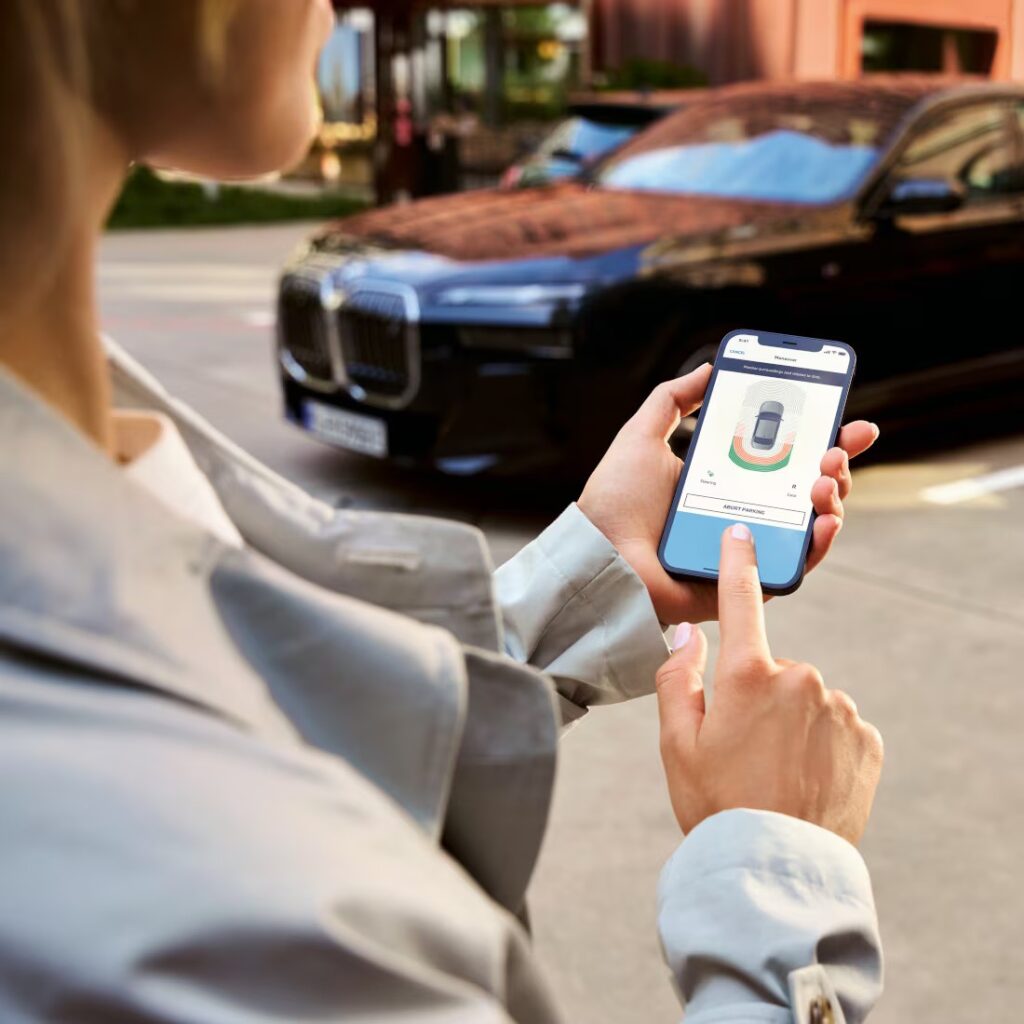
The system has a memory that allows it to store up to ten 200-metre journeys, making it easy to repeat frequent routes, such as the entrance to a garage or parking outside the workplace. This feature illustrates BMW’s commitment to intelligent automation, an area that is close to the technologies needed for electric and autonomous vehicles. By reducing the stress of manoeuvring and optimising the use of space, Parking Assistant Professional indirectly contributes to improving fuel efficiency and the overall experience of EV vehicle users.
BMW Digital Key: the smartphone replaces the physical key
The second innovation is the Digital Key. It is based on a simple principle: transform the driver’s smartphone or connected watch into a secure digital key, directly linked to the vehicle. In practical terms, this key is stored in the My BMW application, but also in the phone’s Secure Element, a protected zone comparable to that used for contactless payments.
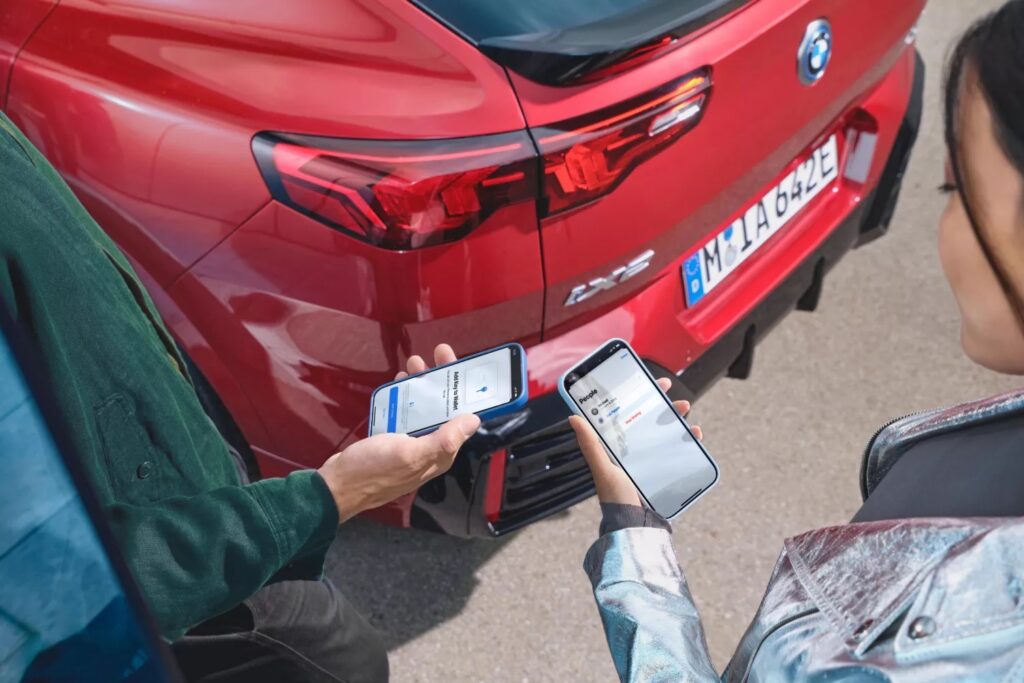
As the user approaches, the car automatically recognises him or her, unlocking the car automatically and starting it as soon as the smartphone or watch is inside the vehicle. And with Digital Key Plus, the experience goes even further: the car is able to locate the user precisely and anticipate his or her arrival. The vehicle unlocks without any action whatsoever, simply when the driver approaches it, offering a near hands-free experience.
Sharing the key is also entirely digital. Up to 18 users can receive a key via the application, with customisable rights. BMW makes it possible, for example, to limit speed, restrict certain functions or give temporary access, a particularly relevant use for lending the vehicle or family use.
Impact on drivers and the market
These innovations go beyond mere convenience. Parking becomes safer and less stressful, while dependence on a physical key gradually disappears. Drivers benefit from a personalised, flexible experience, from shared access to repeated parking manoeuvres.
In sector terms, these developments are part of the global transformation of the automotive industry. BMW is combining connectivity, automation and electrification to meet consumer expectations and urban constraints. With more than 1.6 million electric vehicles sold to date and continued growth in the EV market, the German brand is demonstrating that it is still one of the driving forces behind global mobility.
These developments are part of a wider strategy of transition to electric vehicles, with the aim of making BMW a major player in electromobility. By 2030, the brand expects 50% of its global sales to be electric vehicles, and will have more than 25 EV models on the market, covering all segments from SUVs to premium saloons. These innovations are not isolated: they are part of an ecosystem in which connectivity, automation and electrification reinforce each other.
Outlook and conclusion
With the Parking Assistant Professional and the Digital Key, BMW confirms its strategy of intelligent automation and digital mobility, placing the driver at the centre of a fluid and secure experience. These innovations transform the car into a connected hub, directly in line with the brand’s objective of strengthening its electric range and digital services.
At a time when electrification is becoming an imperative for all major brands, BMW is showing that connectivity and automation are not just gadgets, but central elements in supporting the energy transition and offering a premium user experience. Future EV models will benefit from these technologies, making driving safer, more comfortable and resolutely forward-looking.