

With just a few months to go before the commercial launch, scheduled for late 2026, Dubai has just completed construction of a “vertiport” dedicated to electric air taxis, located near the international airport. In effect, a fully-fledged urban infrastructure is taking shape, designed to connect the city’s major hubs in a matter of minutes. A project which, in addition to introducing a new mode of transport, aims to make the sky a new functional layer of the metropolis.
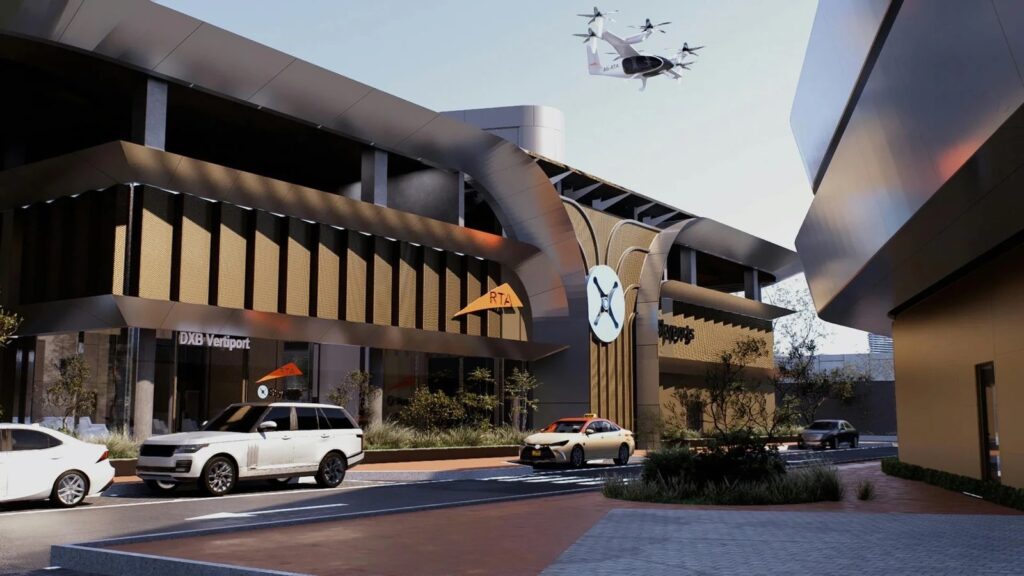
One station completed, a network currently being rolled out
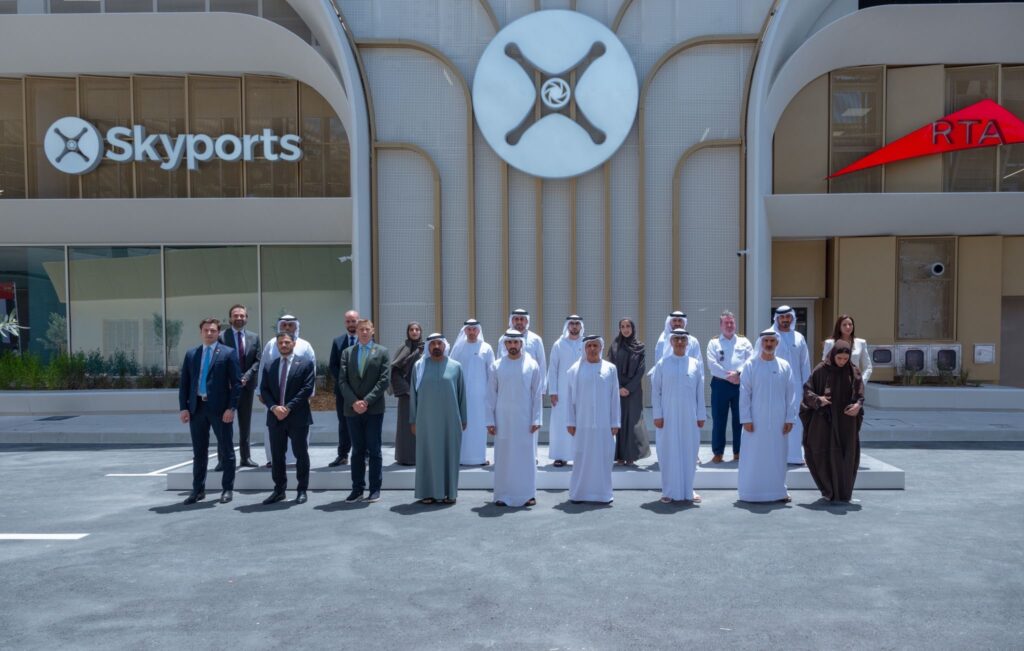
The first person to inspect the site was the Crown Prince of Dubai himself, Sheikh Hamdan bin Mohammed bin Rashid Al Maktoum. Following this visit, the Prince announced on his LinkedIn account: “The station is ready and forms part of a wider network comprising Downtown, Palm Jumeirah and Dubai Marina, which will be completed by the end of this year.”
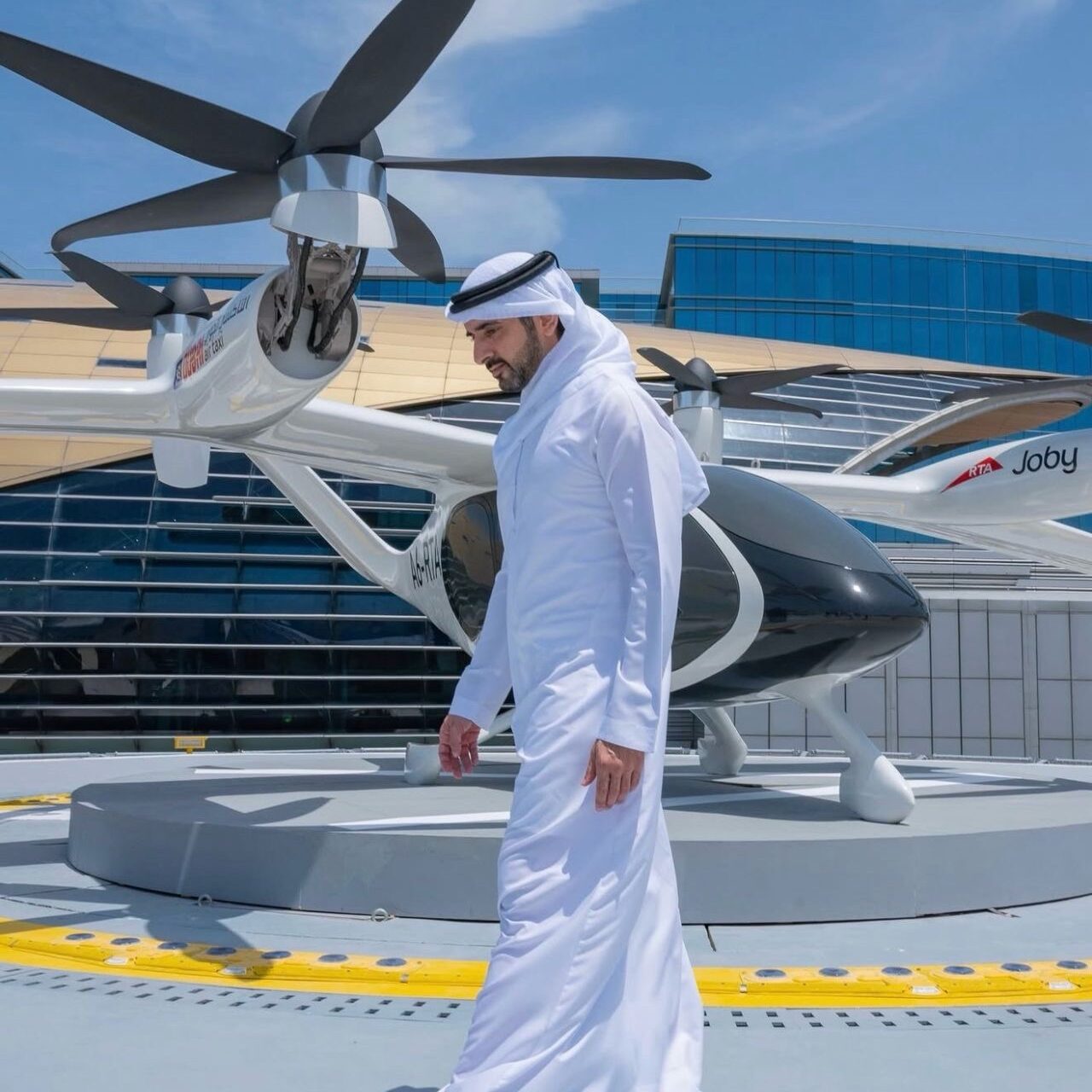
But what exactly does this involve? This station, built near Dubai International Airport (DXB), covers a total of 3,100 m² spread over four floors and two landing pads. Electric mobility goes hand in hand with charging, so it incorporates electric charging systems and all the passenger reception areas. Its target capacity is announced as 170,000 passengers per year and around 42,000 annual movements.
However, this first vertiport is just one part of a wider network. The initial network comprises four strategic hubs: DXB International Airport, Downtown, Dubai Marina and Palm Jumeirah. These four locations are all situated within a radius of 10 to 35 kilometres, a layout designed to facilitate short, frequent and cost-effective connections.
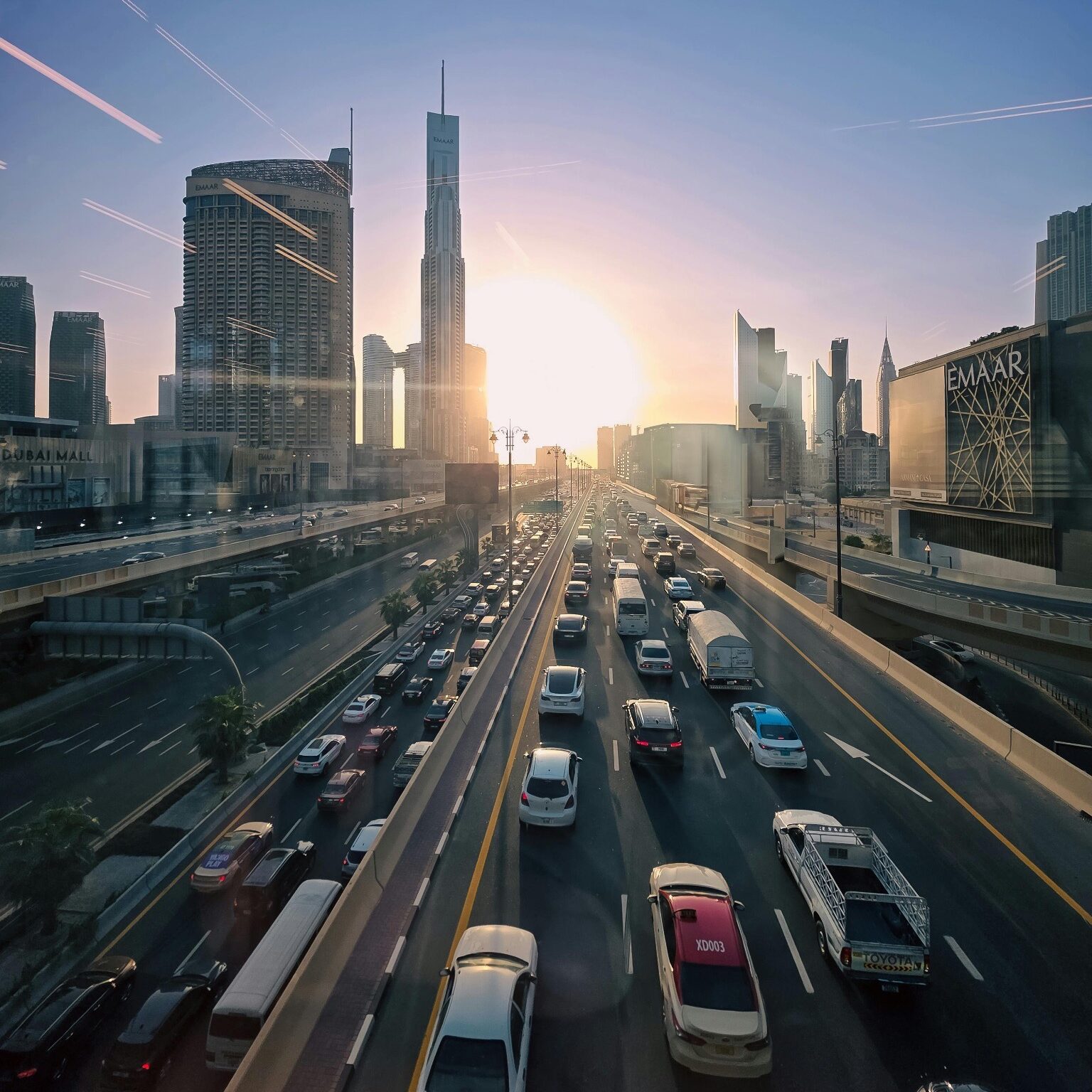
Ten minutes where the journey used to take forty-five
The figure that perhaps best sums up the project’s ambition is this: the journey between the airport and Palm Jumeirah, which takes around 45 minutes by road during rush hour, would be reduced to around ten minutes by air. That represents a potential saving of 20 to 35 minutes per journey, depending on traffic conditions.
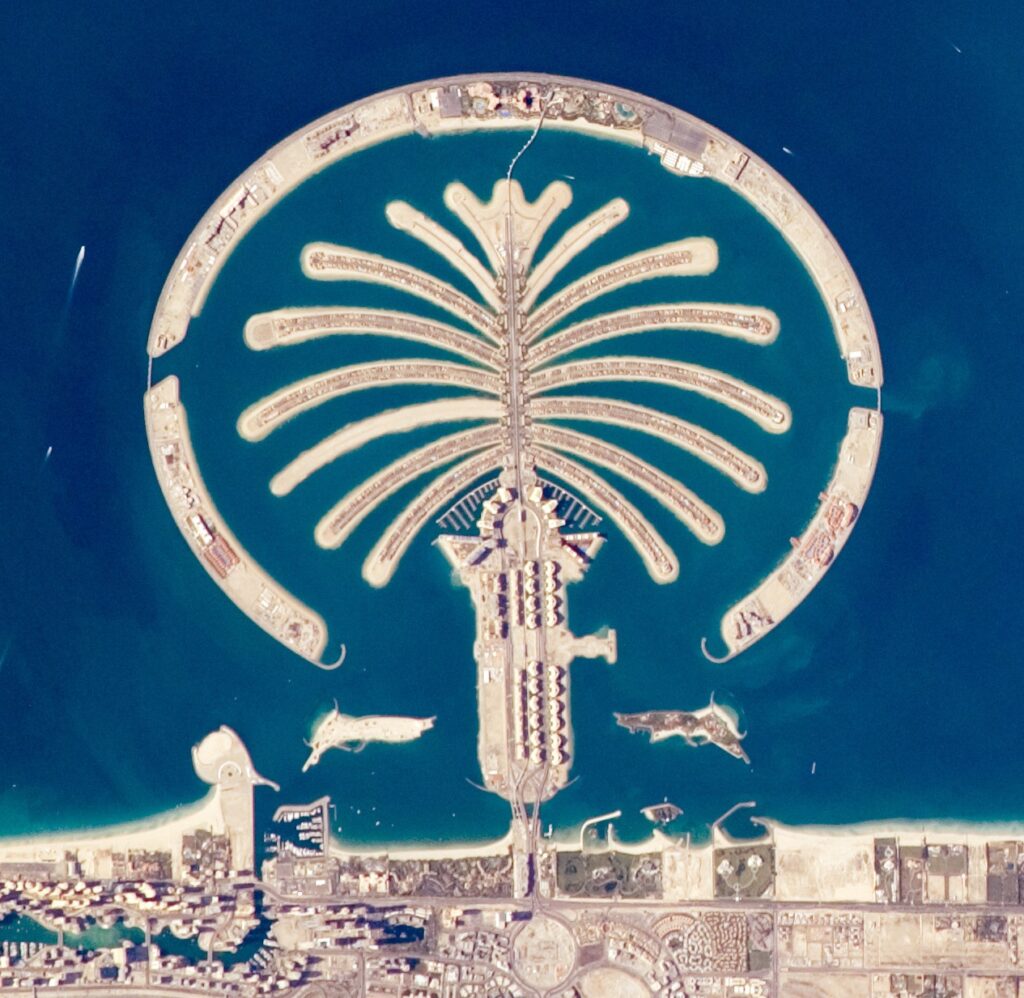
Scaling this up to the network level, analyst Mahmood Abdulla, a specialist in UAE infrastructure, estimates in a projection – which he describes as illustrative – that this time saved would amount to between 57,000 and 100,000 hours per year for all users. In monetary terms, he puts the figure at between 8.5 and 30 million AED per year (equivalent to approximately 2.1 to 7.5 million euros per year). So, although these figures are not official data, they provide a concrete measure of the economic stakes involved.
We have already examined the various innovations in clean mobility in Dubai, and this fact is often highlighted: Dubai treats time saved as an economic value in its own right.
The Joby S4, the network’s flagship model
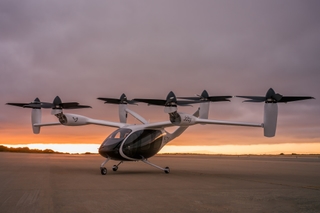
The aircraft selected to operate this network is the Joby S4, developed by the American company Joby Aviation. It is an eVTOL (electric Vertical Take-Off and Landing) with six tilting rotors, capable of reaching a cruising speed of 320 km/h, requiring no runway for take-off and producing very little noise. In terms of capacity, the aircraft can carry one pilot and four passengers, the equivalent of a ‘standard’ road taxi.
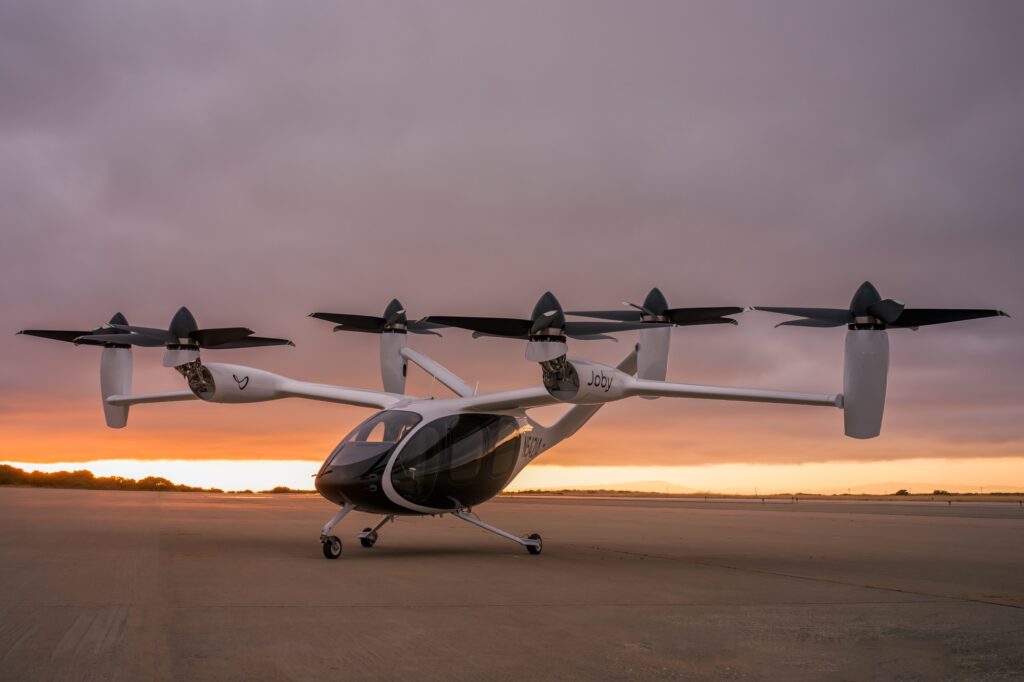
A brief overview of the brand: founded in the US, Joby Aviation is now regarded as the most advanced eVTOL programme in the US in terms of certification, with significant industrial backing, including from Toyota, which has invested $400 million in the company. As for the choice of Dubai as the first market for commercial operations, it is no coincidence: the city offers a favourable regulatory framework, identified premium demand, and a clear political commitment.
A comprehensive, shared ecosystem
The key strength of the Dubai project lies in the simultaneous development of its various components. Indeed, the infrastructure, the regulatory framework, the industrial operator and the property partners were all brought on board at the same time, with the aim of developing the project and moving it forward as quickly as possible.
To prove that these ideas, which may seem utopian, are not, what better way than to illustrate them with concrete examples? The Roads and Transport Authority (RTA) oversees the operational side. The General Civil Aviation Authority (GCAA), the Dubai Civil Aviation Authority and Dubai Air Navigation Services (DANS) oversee airspace and flight authorisations. Skyports Infrastructure manages the design and operation of the vertiports. And on the property side, players such as Emaar, Atlantis Resorts and Wasl Group are involved in the project, which anchors the stations in areas with very high concentrations of premium traffic.
This multi-tiered ecosystem ensures that the project does not depend solely on a technological breakthrough, but on coordination between regulators, operators and developers. It is precisely this integrated delivery model that sets Dubai apart from other major cities, which are still working to define their regulatory frameworks.
Dubai: a testing ground for urban air mobility
With the completion of this vertiport, Dubai has become one of the very first cities in the world to have a permanent commercial infrastructure dedicated to electric air taxis.
However, there are still a few hurdles to overcome, such as the launch for the general public; indeed, whilst tests are currently underway, no commercial flights are yet available. What is certain is the roll-out schedule, which indicates that the service will be available to the public by the end of the year.
So, beyond innovations that look increasingly promising on paper, one question arises: can a city manage a third layer of transport infrastructure above its roads and railways, just as it already manages its buses and underground network? We’ll find out by the end of 2026.