

The highly anticipated Ferrari Luce, the Prancing Horse’s first fully electric supercar, will be officially unveiled at the end of May. It’s a car that looks like a risky gamble. In the supercar market, electric vehicles are struggling to win over customers seeking thrills and a sensory experience, despite record-breaking performance and acceleration. Faced with this wait-and-see attitude, manufacturers must adjust their strategy or pursue very different plans.
Ferrari and Lamborghini: heading in opposite directions
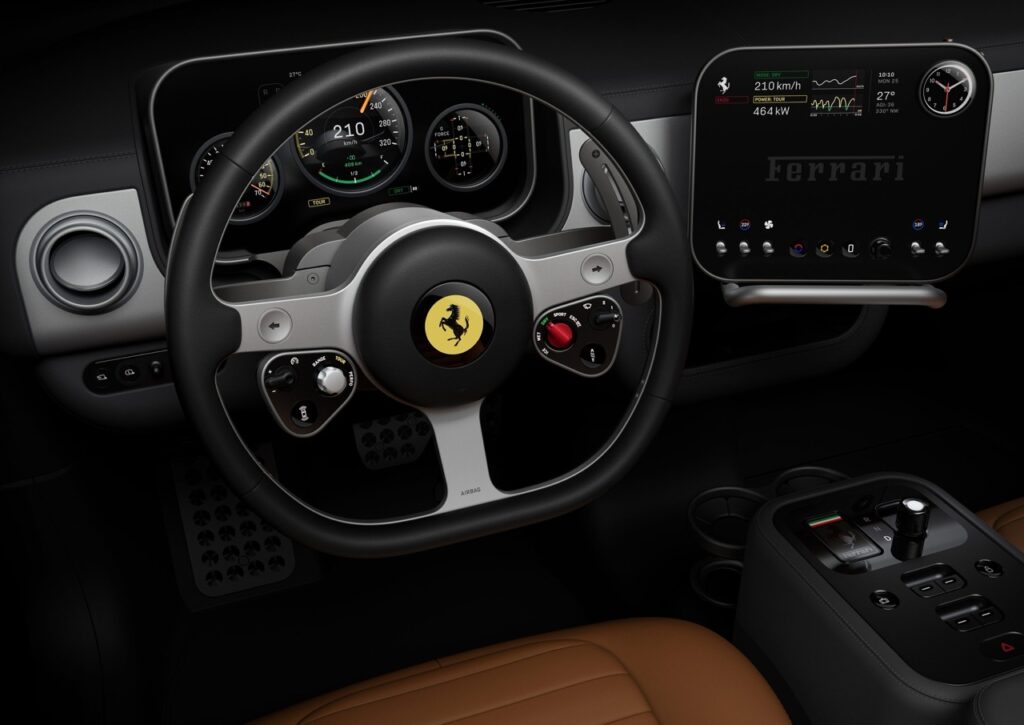
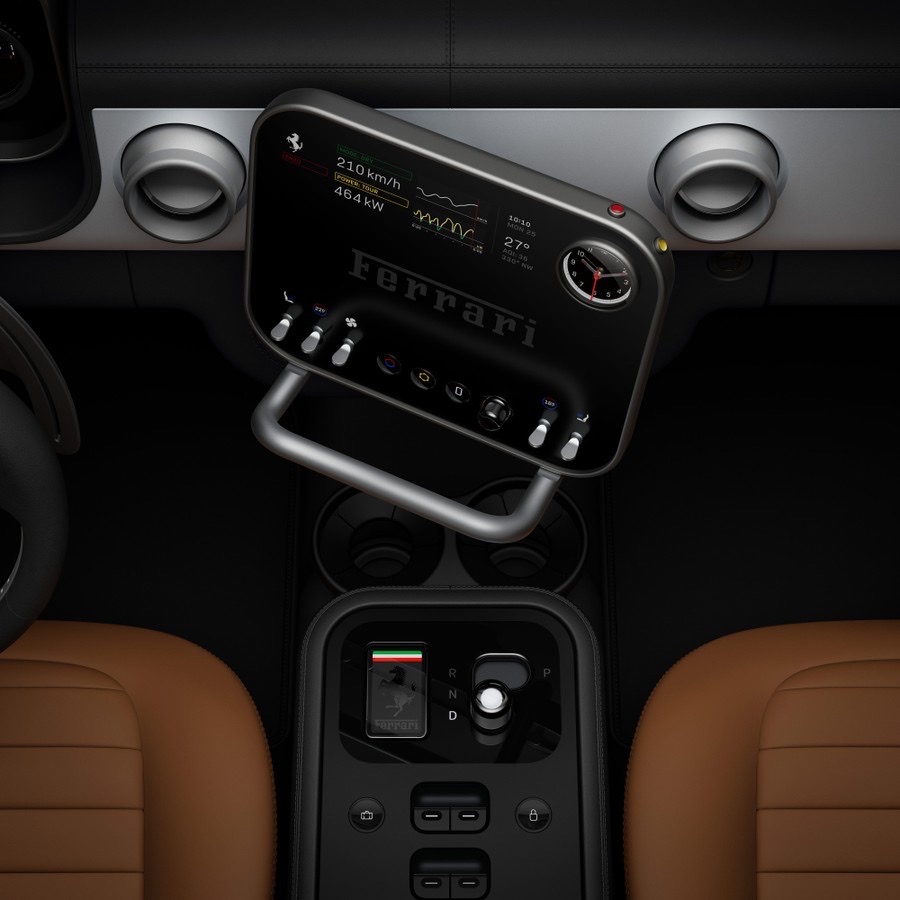
On 25 May in Rome, Ferrari will officially unveil the Luce, a fully electric supercar. With an output of 725 kW (around 1,000 hp), it promises a top speed of 309 km/h and blistering acceleration from 0 to 100 km/h in 2.5 seconds. Furthermore, the car will be powered by four electric motors fed by a high-capacity battery (122 kWh) and feature independent rear-wheel steering. Beyond its promising performance, fans of the brand are eagerly awaiting this reveal, having already seen a few photos of the completely innovative dashboard, designed by a former Apple designer.
In contrast, Lamborghini, the Prancing Horse’s long-standing rival, has just announced the suspension of its all-electric programme, which was due to power its future 2+2 Lanzador. The reason? “Investing heavily in a fully electric vehicle when neither the market nor customers are ready is a costly ‘hobby’ and financially irresponsible,” argues Stefan Winkelmann, CEO of Lamborghini, who prefers to focus on plug-in hybrids.
As a symbol of this wait-and-see market for electric supercars, the two iconic brands are therefore taking very different paths. Which one will come out on top?
Power outputs unattainable for combustion engines
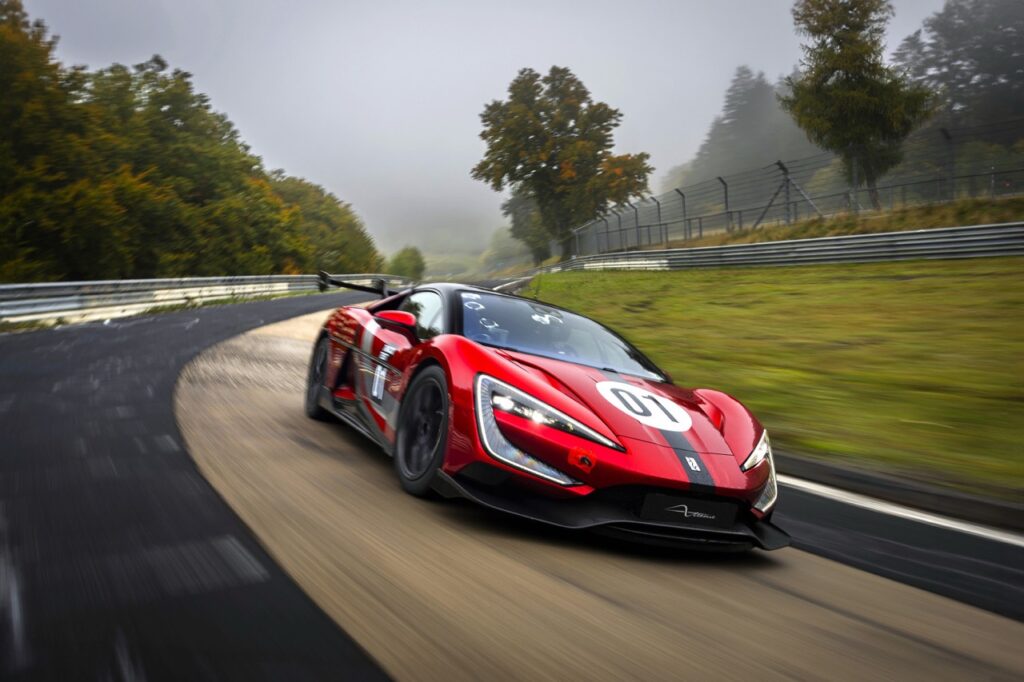
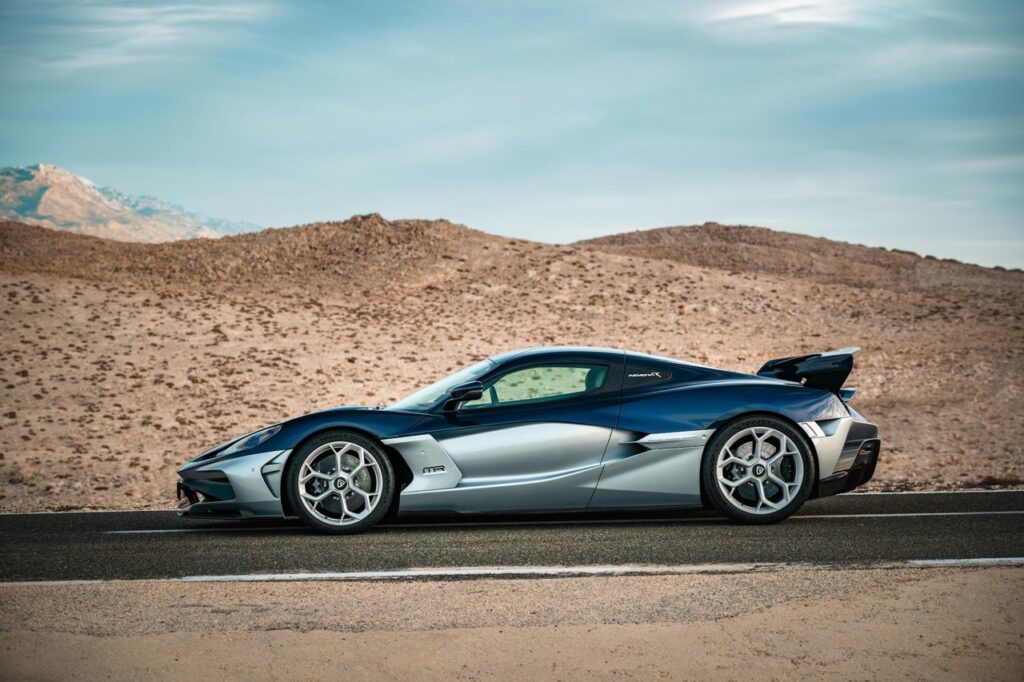
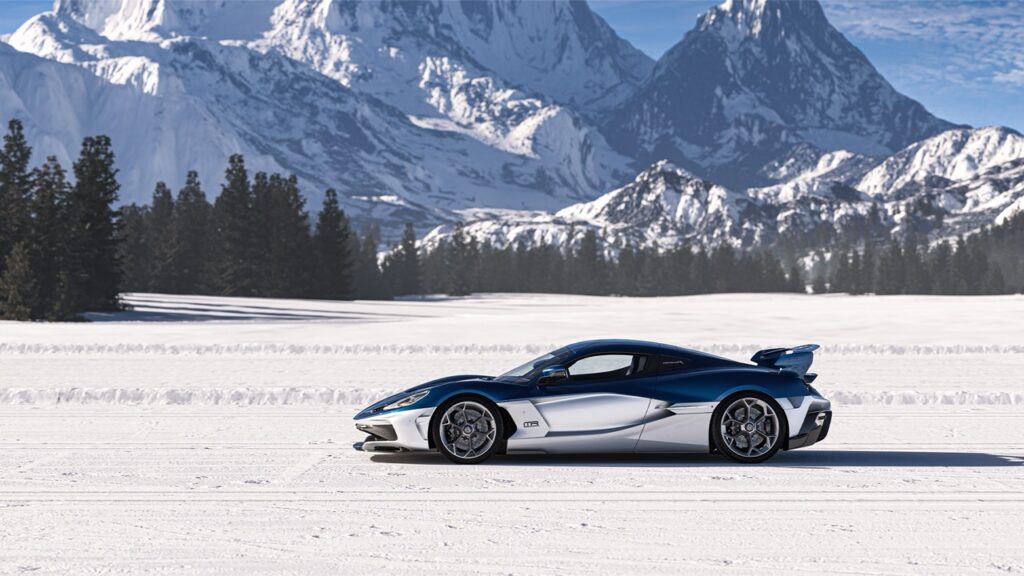
It’s hard to say which strategy will prevail, but electric vehicles have been shaking up the supercar world for several years now. Amid stricter regulations on CO2 emissions and major technological advances, the young Croatian manufacturer Rimac Automobili made a breakthrough in 2020 with the Nevera: a 2,000 hp electric hypercar that has become a benchmark with its acceleration from 0 to 100 km/h in under 2 seconds. More recently, the Chinese luxury brand YangWang (BYD) broke the world speed record with the U9 Xtreme: 496 km/h, 6 km/h faster than the Bugatti Chiron Supersport 300+, the ultimate supercar with its 1,600 hp quad-turbo W16 engine.
When it comes to pure sportiness, electric technology has a lot to offer. It relies on one key advantage: immense, instant torque. A catapult-like effect from a standing start, power that can exceed 2,000 hp, or electronically controlled all-wheel drive powered by independent electric motors. Thrills on the track (or on the road in GT racing) therefore seem guaranteed, but electric cars struggle to convince when it comes to long-term performance (low range) and chassis agility (excess weight due to the batteries). Not to mention the absence of the sound and vibrations that characterise racing cars and delight their owners.
Porsche, Lotus and BYD lead the way
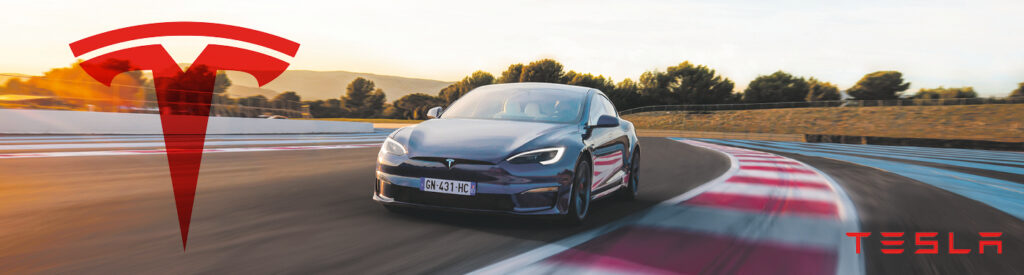
In the race against Tesla (Model S Plaid), Porsche launched its Taycan in 2019, notably its powerful Turbo S variant (775 hp and 0-100 km/h in 2.4 seconds, for 2.3 tonnes), which got off to a successful start, but sales have been plummeting for several months, prompting the German manufacturer to backtrack on the development of its future 100% electric supercars. The next 718, conceived as the ‘electric 911’, has also been put on hold.
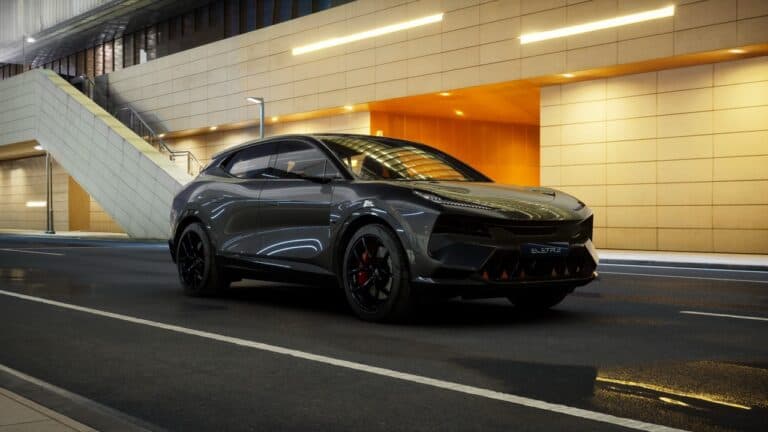
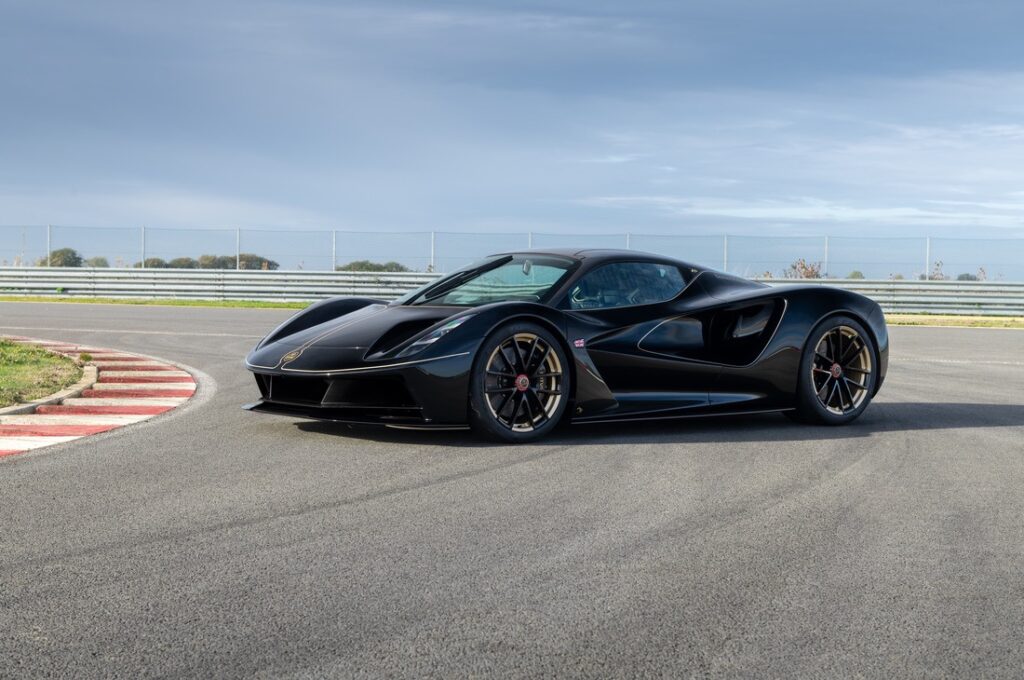
A symbol of the revival of the British brand Lotus, which is benefiting from the electric vehicle expertise of its Chinese owner Geely, the Evija hypercar delivers 2,000 hp whilst keeping its weight down to 1,600 kg. With only 130 units produced, it serves as a showcase for the rest of Lotus’s electric range: the Eletre and the Emeya.
Chinese giant BYD is not to be outdone with its luxury brand, Denza. Its upcoming Z coupé embodies the Chinese supercar designed to rival the legendary Porsche 911. Following the unveiling of a concept car at the 2025 Shanghai Motor Show, BYD is expected to launch the Z in three versions, including a convertible and a track-focused model.
Lexus and Alpine are gearing up, whilst McLaren and Aston Martin are biding their time
The strategies are not the same for other manufacturers expected to enter this sector. As for Lexus, the luxury brand within the Toyota group, the LFA – the supercar from the 2010s (V10 engine) – is set to make a comeback with a fully electric powertrain. The full details have not yet been revealed. Finally, Alpine is preparing an electric A110, a replacement for the combustion-engine coupé, featuring a 70kWh battery and an 800V architecture. Its expected performance figures are 0 to 100 km/h in 3.5 seconds and a top speed of 270 km/h.
Among the established supercar manufacturers lagging behind, McLaren is in no hurry to develop an electric range and is instead focusing on optimising its Artura hybrid. Aston Martin and Bentley are biding their time and monitoring market developments with a view to 2030. Meanwhile, Bugatti (which has electrified the Tourbillon) is guided by the strategic decisions of its owner Mate Rimac, whose Nevera takes pride of place in the catalogue.
When performance depends as much on the software as on the mechanics
From a technological perspective, electric supercars outperform their combustion-engine counterparts, but the spec sheet alone is not enough to win over discerning and passionate customers. And sales are failing to take off.
Adopting different strategies, manufacturers are focusing their efforts more on hybridisation, on-board artificial intelligence and remote adjustments. For their future models, they are forming partnerships with tech firms to develop cutting-edge software and electronics, such as Sony with Honda or Mercedes with NVIDIA. Potential buyers, for their part, are waiting to see how these technologies perform in competitive settings before taking a closer interest.