
Ahead of the Beijing Motor Show, which begins next week, the Volkswagen Group is making its ambitions clear: to make China the centre of its transition to electric vehicles. With a ‘In China, for China’ strategy, the German manufacturer aims not only to catch up, but above all to establish itself as a technological leader in the world’s largest car market.
A strategy dictated by the size of the Chinese market
When it comes to electric vehicles, Volkswagen’s (re)positioning is no small matter. The group is, in fact, lagging significantly behind in the world’s largest market. China now accounts for nearly 60% of global electric vehicle sales, with over 8 million EVs sold last year. By way of comparison, Europe stands at around 3 million units and the United States at around 1.5 million.
In this context, the Group’s local strategy becomes vital. VW Group CEO Oliver Blume stresses: “It is essential to strengthen our presence in China to secure our global competitiveness.” Three years ago, we launched our ‘in China, for China’ strategy to fully harness the innovation potential of the Chinese market. The Volkswagen Group is well on its way to establishing itself as a global driver of technological innovation in the automotive sector.”
An unprecedented sales drive
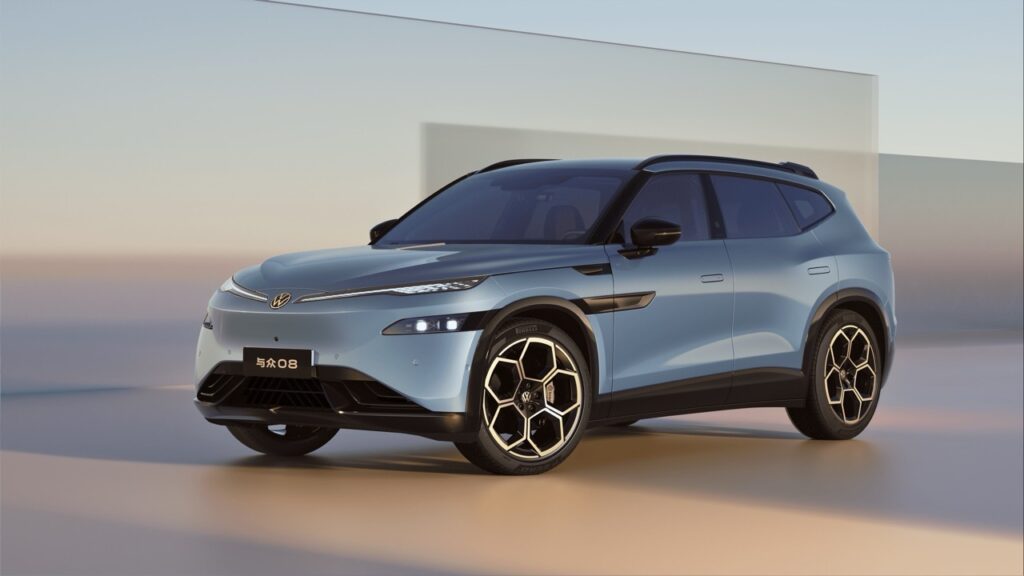
Volkswagen has therefore announced a particularly aggressive launch schedule to make up for lost ground. More than 20 new electrified models (BEVs, PHEVs, EREVs) will be launched this year, amounting to a new vehicle launch every two weeks. In Beijing, the German group is unveiling four world premieres.
This acceleration puts the group on a par with local leaders such as BYD (15 new models in 2025), Xpeng and NIO, which have built their success on rapid development, continuous innovation and numerous product launches. However, it could also be seen as a forced response by VW, which is simply falling into line with this competitive pressure.
A new generation of locally designed vehicles
At the heart of this transformation lies a strong focus on localisation in development. In just 36 months, Volkswagen claims to have completely revamped its range for the Chinese market.
It has to be said that the first-generation ID didn’t quite hit the mark. Among the criticisms from China and Europe were: unintuitive interfaces, recurring software bugs (and yet software plays a major role in the value proposition) and a user experience that fell short of that offered by competitors.
These difficulties are largely down to delays at Cariad, the group’s software division, which has suffered a string of setbacks and forced Volkswagen to postpone several strategic projects. Yet, in a Chinese market where the digital experience has become central (multiple screens, voice assistants, smartphone integration), this shortcoming has severely hampered the brand.
Reducing development time from 48 to 24 months
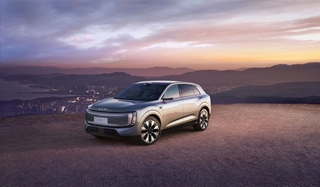
The flagship models of the new ID generation are the ID UNYX (co-developed with Xpeng) and the ID AURA (produced by FAW-Volkswagen). They feature a dedicated electronic architecture known as CEA (China Electronic Architecture). The aim is to design EVs with fewer (and more centralised) control units, faster OTA updates, advanced integration of ADAS and infotainment systems, and to offer Level 2+ driver assistance, automated city navigation and autonomous parking. These are all features in which Chinese competitors are already well advanced and which help to build customer loyalty.
Every vehicle in the VW Group will be developed within 24 months (compared with the usual 36 to 48 months), a crucial reduction in the development cycle needed to compete with local players.
From the affordable electric JETTA to the high-tech premium AUDI
To reach as wide an audience as possible, the VW Group plans to cover all market segments:
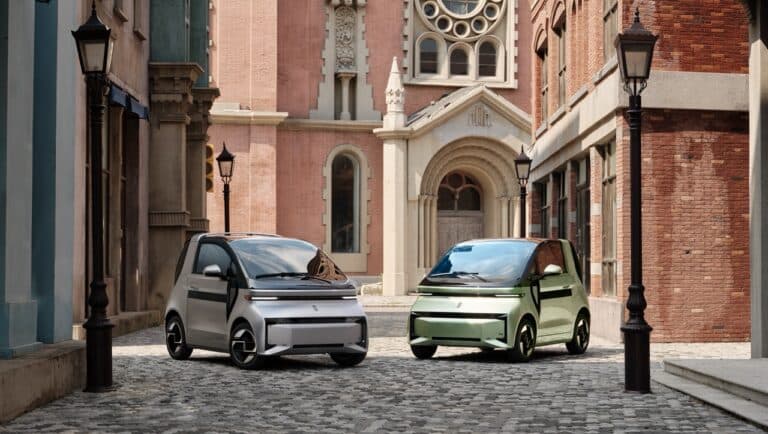
– Entry-level models under the JETTA brand, which is unveiling a concept in Beijing aimed at making electric vehicles more accessible, priced below €15,000 and even from €10,000 for the most basic models.
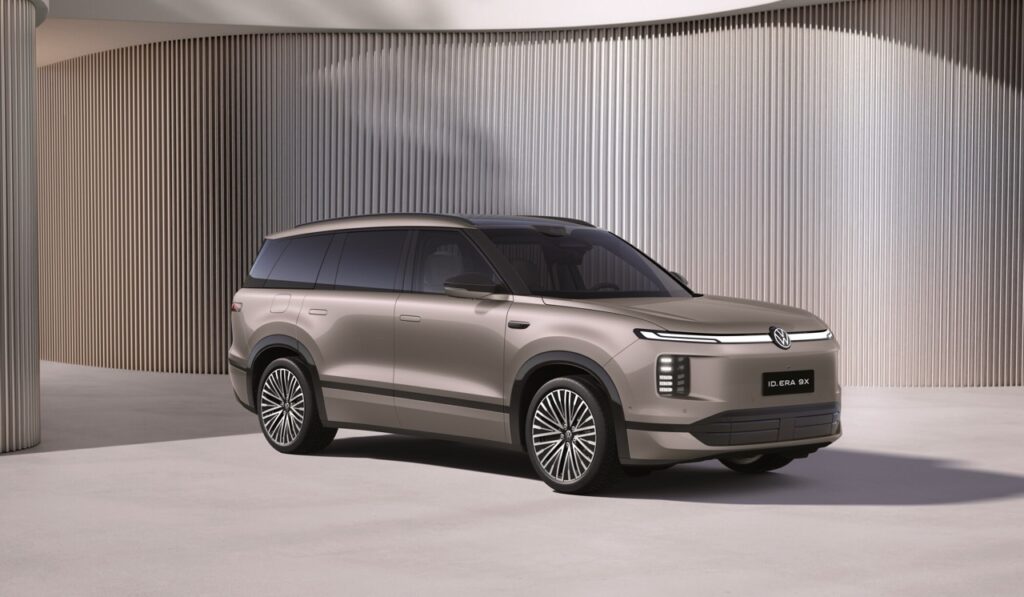
– The core of the market, embodied by Volkswagen’s new ID range, featuring models tailored to customer expectations (advanced connectivity, digital interfaces and distinctive design).
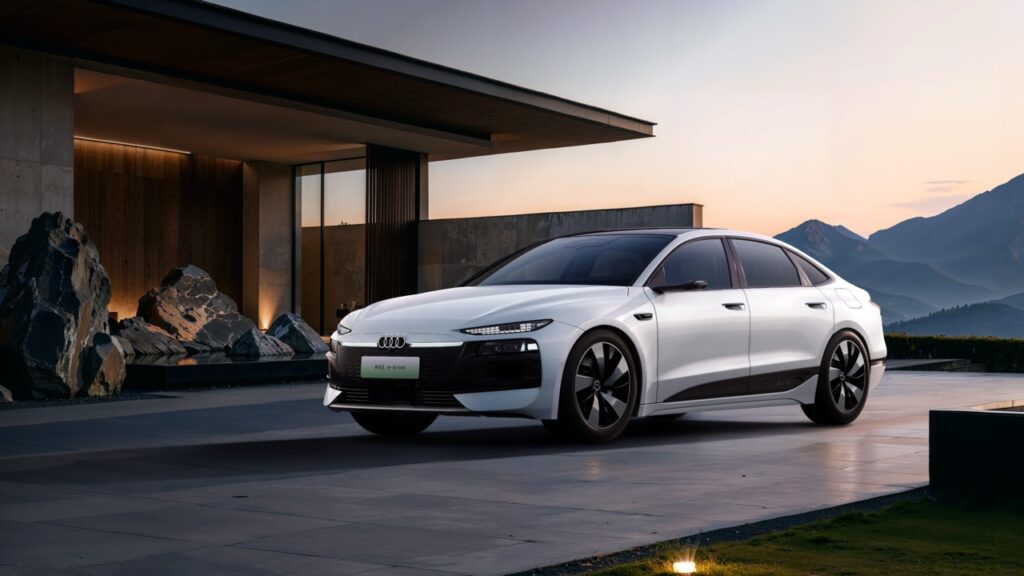
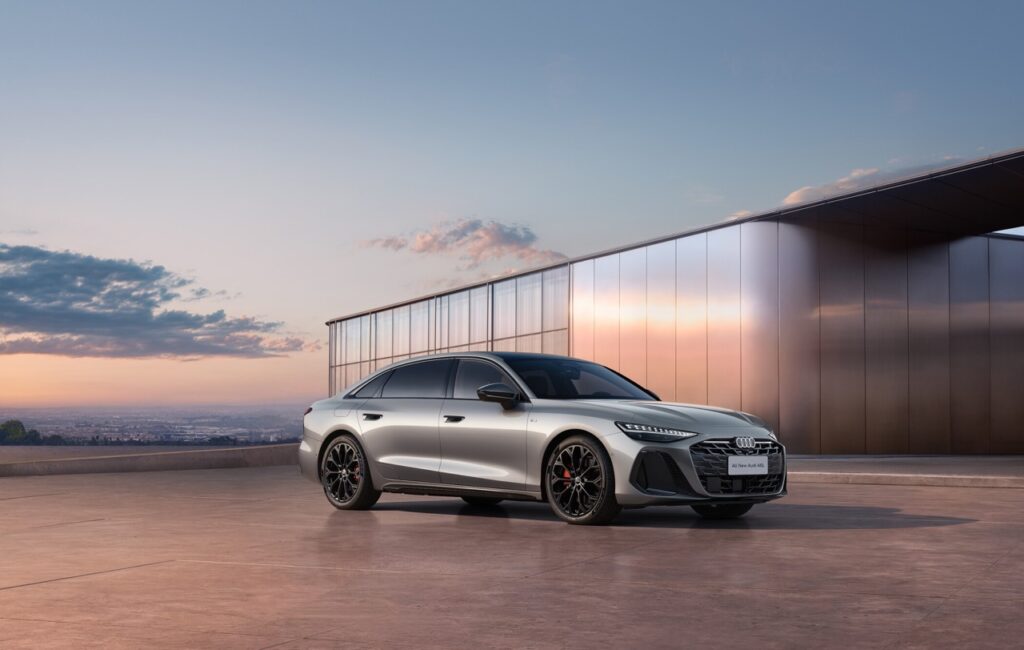
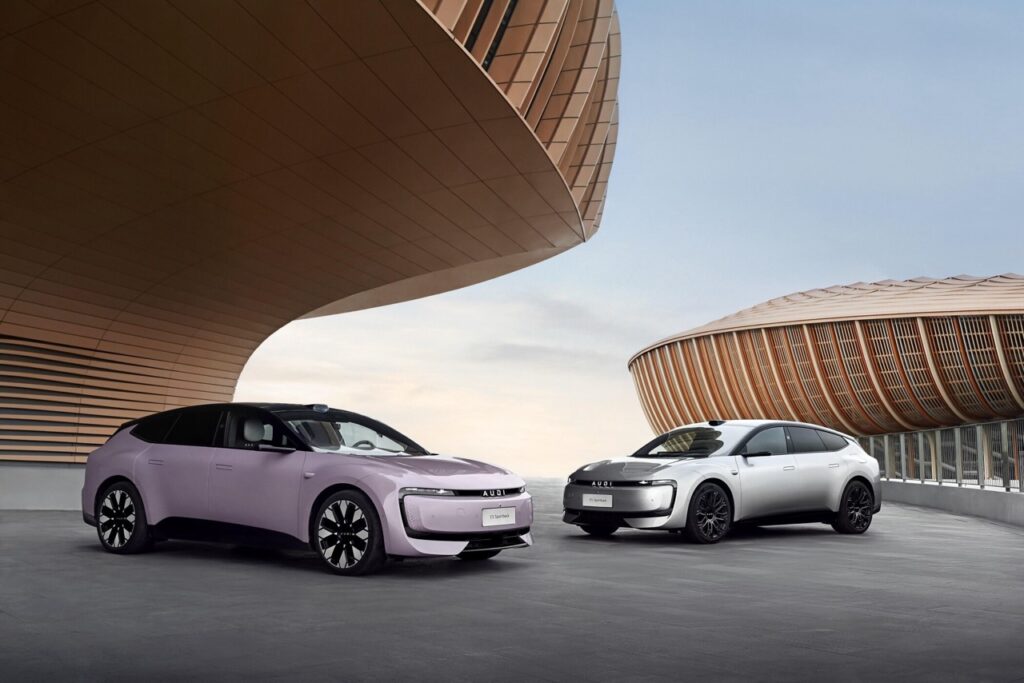
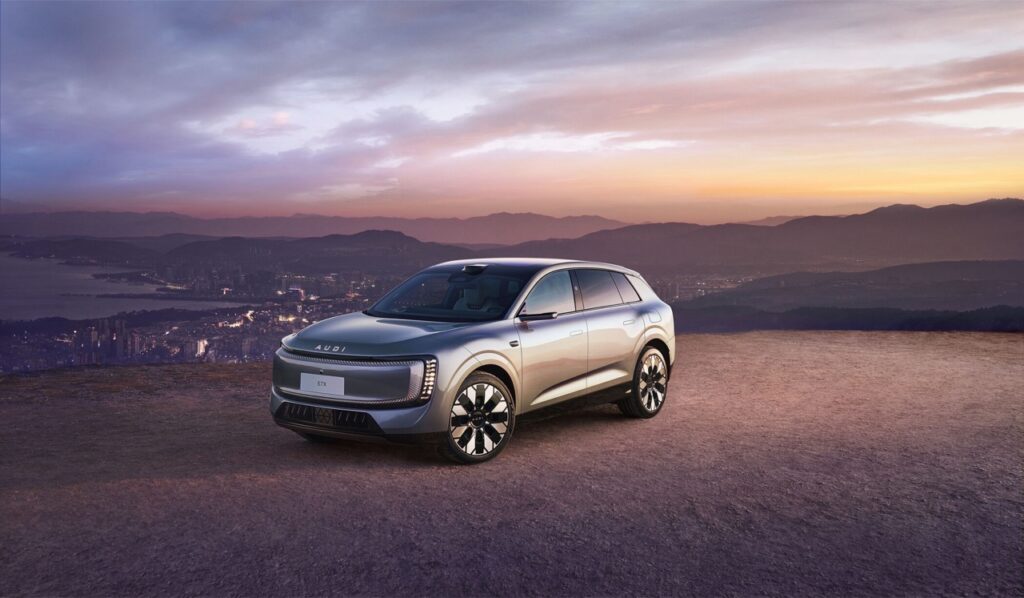
– The premium segment, reserved for the Audi and AUDI brands (a new entity launched specifically in China), featuring luxury saloons such as the Audi A6L e-tron, the AUDI E5 Sportback (voted Car of the Year in China) and the AUDI E7X1. These models are unlikely to be launched in Europe. The electric premium segment is experiencing dynamic growth (+30%), driven by tech enthusiasts.
The battle over software and autonomous driving
Beyond vehicles, Volkswagen is investing heavily in technologies such as advanced Level 2 ADAS systems (semi-autonomous driving), the ‘Navigate on Autopilot’ function in urban areas, and automated parking. These systems have been developed in collaboration with CARIZON, a joint venture specialising in intelligent driving.
The VW Group hopes to catch up with local leaders such as XPeng and Huawei, which are well ahead in the field of urban assisted driving in particular. Another growth driver for Volkswagen is the development of its own SoCs (systems on a chip), which enable the refinement of software, given that such software accounts for nearly 30% of an EV’s value.
A global challenge for Volkswagen
This push in China (‘Innovation Lab’, where the automotive hierarchy is being redefined) extends far beyond the local market. The success of this electric vehicle strategy will determine the group’s ability to remain competitive against Tesla, which remains the global leader in terms of brand image, and against Chinese manufacturers who are steadily gaining ground (BYD has become the world’s number one in terms of volume).
The Volkswagen Group is changing its approach by strengthening its strategic partnerships and decentralising decision-making. Or how a long-established manufacturer is no longer setting the pace and is attempting to reinvent itself at the speed of new entrants.