


In its newstrategicplanfor the future, the Renault group will belaunching 36models worldwide over thenext 4 years. While aiming to remain abenchmark amongEuropeanmanufacturers, theFrenchfirm is alsoseeking toconquerthe most promising foreignmarkets : India,South Korea andLatin America. The group is aiming tosell 2 millionvehicles a year by 2030, abandoning the production of 100% combustion-powered cars and concentrating on hybrids, electric cars and electric cars withrangeextenders.

The end of an era. Renault is to stop producing cars with combustion engines, and from now on will produce only electrified vehicles. Following on from the electric Twingo, which goes on sale in a few weeks’ time, no fewer than 36 models will be launched over the next 4 years, across the Renault, Dacia and Alpine brands. The aim is to sell 2 million vehicles a year worldwide by 2030.
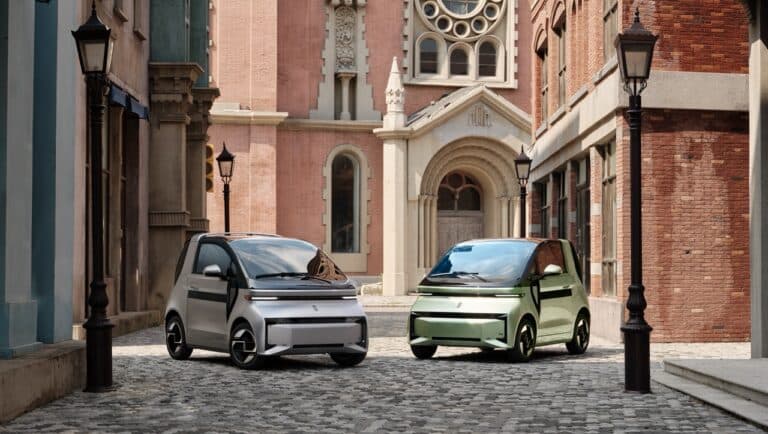
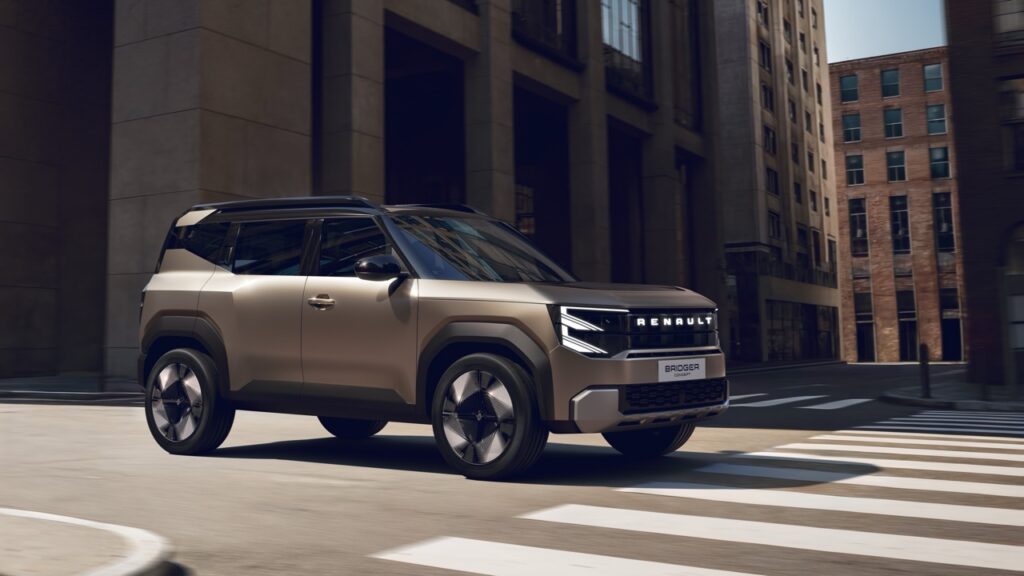
Renault Bridger Concept, the new pocket-sized adventurer
Of all these new models, 22 will be produced for Europe, 16 of them electric. The other vehicles will be hybrid or electric with extended range. Fourteen multi-energy vehicles will be reserved for the international market, starting with the Renault Bridger, whose concept evokes a small, agile and very squared-off adventurer, less than 4m long, with a large boot and plenty of space on board. Faced with competition from China in particular, we need to keep pace interms of innovative technology andcustomer experience, » explains François Provost, CEO of Renault Group. Our aim is to retain 80% of our customers over the 10-year life cycle of our cars.
An ever more digital and intelligent cockpit
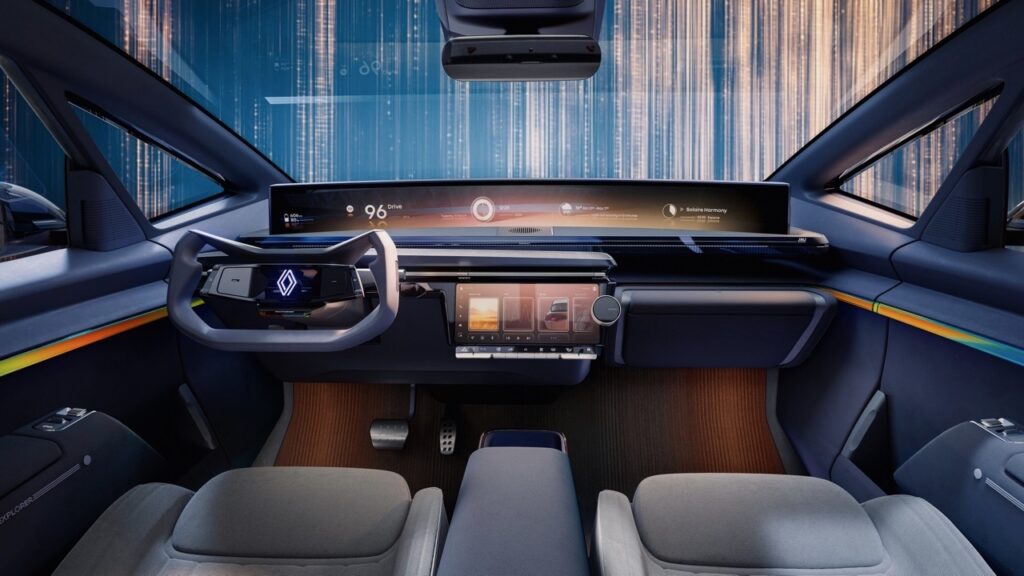
This ambition is reflected in the new R-Space cockpit, which will gradually be fitted to all Renault models. Designed with the driver and passengers in mind, it features a panoramic curved screen spanning the entire width of the dashboard. Digital, connected and assisted by artificial intelligence, this interface is intuitive and as ergonomic as using your smartphone. Renault is also stepping up its collaboration with Google for its operating system, already recognised as the best on the market. In terms of safety for young drivers, for example, it will be possible to activate an integrated alcohol ignition interlock device.
New platform for long-rangeelectric cars
At industrial level, the plan is being successfully implemented with the inauguration of a new RGVE Medium 2.0 electric platform. Capable of producing vehicles in the B+ to D segment, with an 800 V architecture that enables ultra-fast recharging times. It will offer an electric range of up to 750 km WLTP and up to 1,400 km in Range Extender EV version. The versatility of this technical base means it can be used to assemble a wide range of body styles, including saloons, SUVs and coupes, with front-wheel drive, rear-wheel drive or electric motor models with range extenders. These are all advantages and possibilities that should convince consumers who are reluctant to take the plunge into electric technology.
400 in savings per car per year
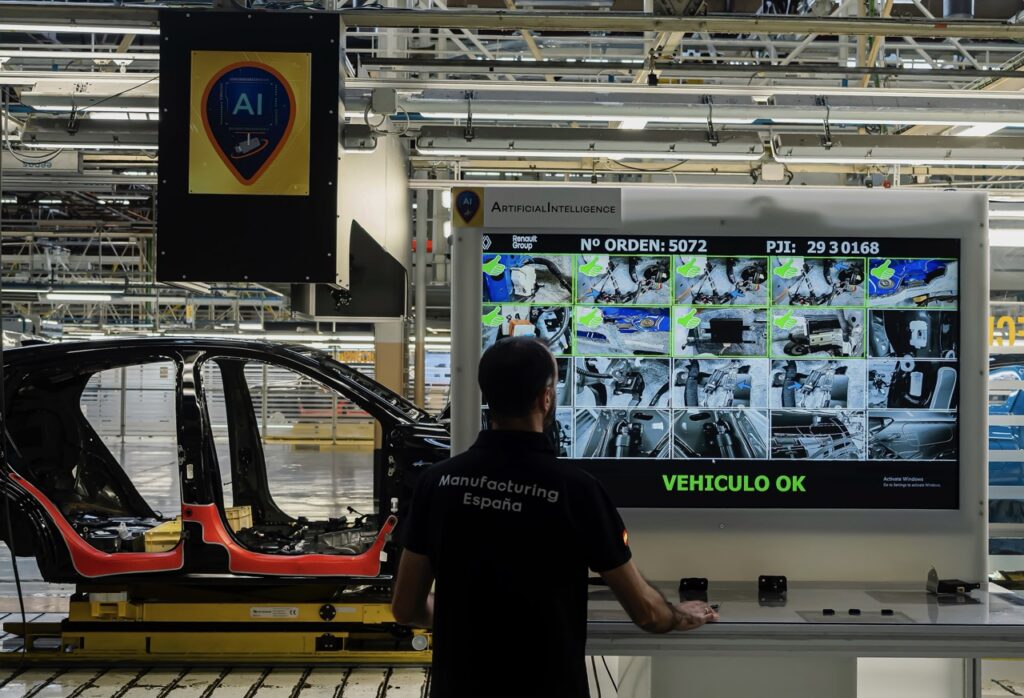
Renault is also promising to reduce production costs by €400 per car per year, which could be passed on to customers in the final bill. These savings will be achieved by
– optimising industrial processes (accelerated automation on production lines, maximising the re-use of available parts),
– by reducing the number of parts per car (by 30% on average),
– using AI and digital twins to reduce development time and the number of heavy industrial operations
– In factories, 300 humanoid robots (from Wanderkraft) will help workers to carry out the most physical tasks on the production line. This is a first in the automotive industry.
In addition, the development time
International development
To achieve operating margins of 5 to 7% of sales per year and an annual cash flow of €1.5 billion, the Renault group’s CEO is counting on Europe but is also targeting new growth markets (50 million units per year): India, South Korea and Latin America. On the other hand, the French group will not be seeking to establish itself in North America (USA, Canada), a market that is insufficiently electrified.
Dacia Striker, the coupé crossoverfor under €25,000
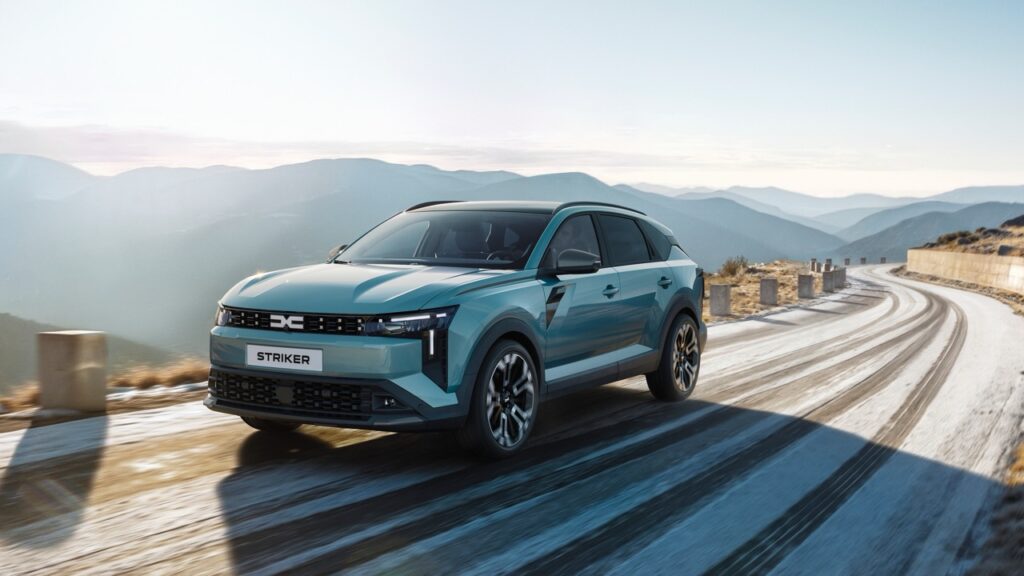
With over 10 million sales since 2004, Dacia is continuing to electrify its range with the launch of its new Striker model. This is an imposing crossover (4.62 m long) with fairly high ground clearance and a coupé-like profile. It is powered by hybrid, 4×4 hybrid and LPG engines. Produced in Turkey, the Striker will be launched in 2027 at prices starting from €25,000, making it a perfect complement to the successful Bigster and Duster SUVs. The best value brand on the market will also be offering 4 100% electric cars by 2030.
Alpine prepares the electric » A110
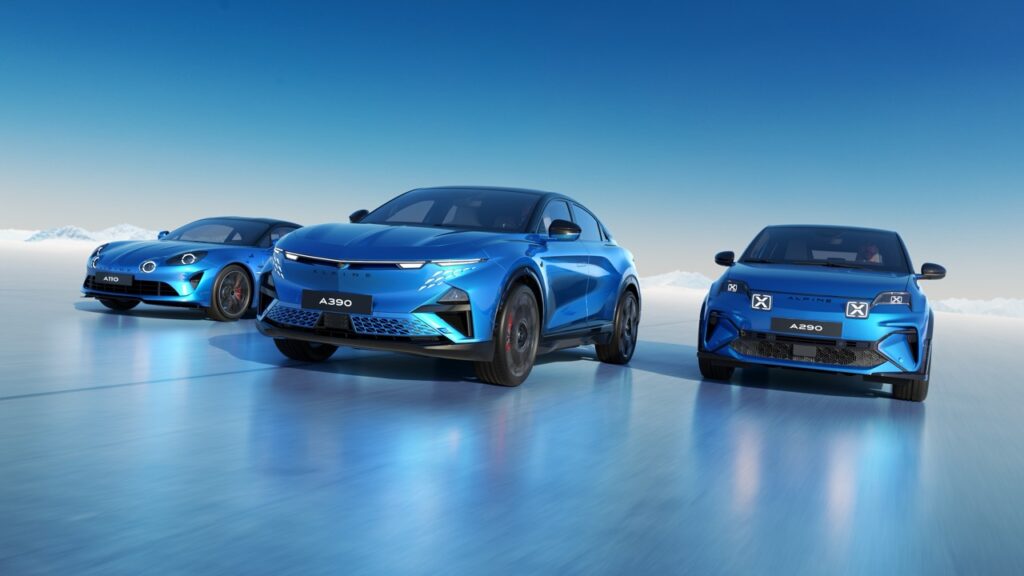
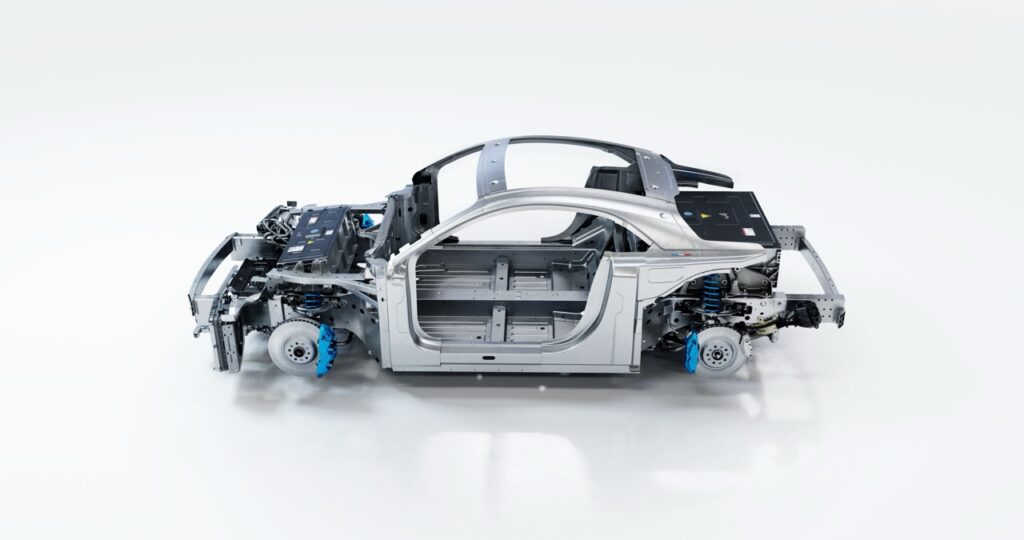
In addition to the A290 and A390 models already on the road, Alpine is continuing to develop the replacement for the A110, which will be 100% electric. Lightness, agility and driving pleasure are the priorities, promises the brand, which is unveiling the architecture of its future sports car based on the APP (Alpine Performance Platform) EV platform. The aluminium chassis will house two spaces for the battery packs, so as to distribute the weight balance (40% at the front and 60% at the rear). Dynamic performance will be optimised by an electronic management module (which acts on aero, power and torque) while retaining the Alpine Torque Vectoring software that improves roadholding in bends.
More advanced electric motor
Building on its expertise, the Renault group will also equip its future models with the 3rd generation electric motor (EESM). A rare-earthless wound-rotor motor, it develops 275 bhp, i.e. 25% more power, and offers greater efficiency, particularly on motorways. E-Tech hybrid technology (HEV) will also see further developments beyond 2030, with less powerful and less expensive engines.
Serving customers
Almost nine months after taking up his post, CEO François Provost intends to make the Renault group a benchmark in Europe with a broad range of desirable and competitive electrified cars, without neglecting the potential for growth in new markets. In the face of aggressive competition from Chinese manufacturers, he is betting above all on the service that his vehicles will provide to customers in terms of clean, accessible mobility tailored to their needs.