




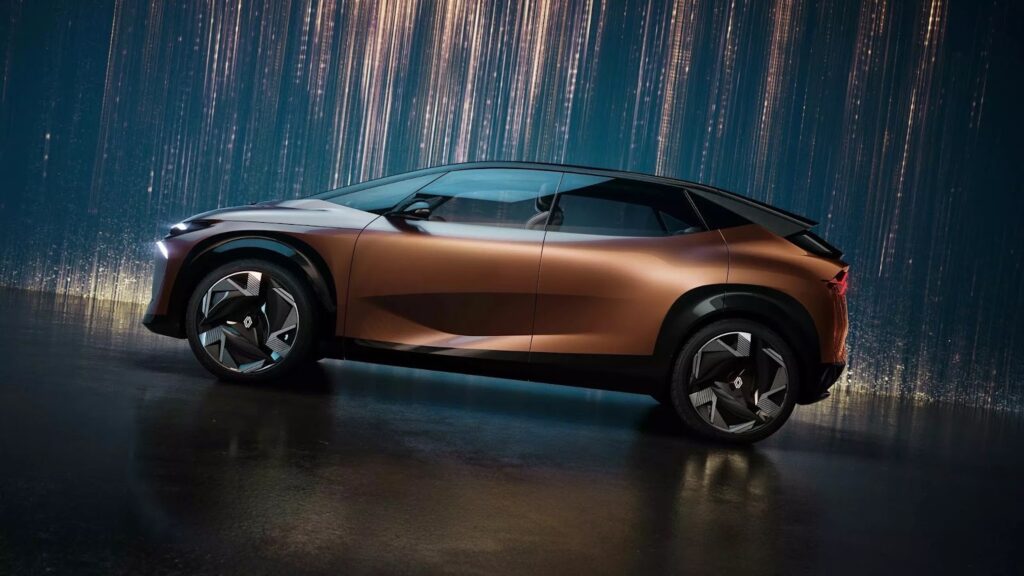
At the presentation of its new FutuREady strategic plan on 10 March 2026, Renault did more than just announce its industrial ambitions for the end of the decade. The French manufacturer also unveiled an unexpected concept car: the Renault R-Space Lab. More a rolling laboratory (hence the name) than a production vehicle, it is designed to explore what Renault calls « cars for living ». Behind this experimental approach lie a number of technologies and design ideas that could inspire the brand’s next generation of electric models, including a certain Mégane.
A concept unveiled at the heart of the FutuREady strategic plan
We were expecting to see just two prototypes: the Renault Bridger Concept, an electric 4×4 designed to explore the family SUV segment, and the Dacia Striker, a concept estate designed for the Romanian brand. The surprise was complete this morning, when the R-Space Lab was also presented. Renault’s objective is clear: to provide a concrete illustration of the group’s vision for the next decade.
With 12 new models planned in Europe between now and 2030 and a further 14 for international markets, the carmaker wants to speed up its transformation while placing greater emphasis on the on-board experience. The R-Space Lab is tasked with testing new ideas for interior architecture, safety and digital interfaces.
A return to the MPV’s roots
Visually, the concept is surprising in its proportions. At 4.50 metres long, the R-Space Lab is midway between the compact Renault Mégane E-Tech Electric (4.21 m) and the Renault Captur urban SUV. But unlike these models, its design adopts a very pronounced single-volume silhouette, with a windscreen that protrudes well forward and a continuous glass surface that stretches from the bonnet all the way to the rear window.

This stylistic choice is in keeping with Renault’s historic tradition of family vehicles centred on space and modularity. In fact, the concept’s name is a direct reference to the Renault R-Space Concept, which was presented in 2011 and foreshadowed several design elements of the Renault Scenic IV launched five years later. Once again, Renault could use this prototype to test the proportions of a future generation of more spacious electric models, potentially somewhere between a compact and an MPV.
The cabin as a real living space
But the heart of the project is not in the exterior design. The R-Space Lab has been designed around a simple idea: to transform the interior of the vehicle into a modular living space, capable of adapting to the daily needs of families.
The front passenger seat thus becomes a truly multifunctional element. It integrates the front and curtain airbags directly into its structure, freeing up space in the dashboard. The glovebox can be transformed into a shelf, a storage space for a bag or even a footrest. The seat can also slide backwards, allowing the front passenger to interact face-to-face with the occupants seated in the rear.
The rear, we’re talking about it, we’re there. Renault has come up with three independent sliding seats, Renault Espace style, combined with a panoramic glass roof.

A giant screen that goes right through the windscreen
Now it’s time to move on to the technological side of things, where the concept also introduces a number of digital innovations that could rapidly move into production.
The most spectacular is the OpenR Panorama system, a giant curved screen that extends across the entire width of the windscreen. Inspired by the interface of the Renault Scénic Vision concept, this solution aims to merge instrumentation and infotainment into a single display surface.
The prototype also adopts a yoke-type steering wheel combined with steer-by-wire steering, i.e. with no direct mechanical link between the steering wheel and the wheels. This system, already used on some models, allows greater freedom in the design of the cockpit.

Security rethought thanks to artificial intelligence
The R-Space Lab also serves as a testing ground for new safety systems. For example, the concept features a device called Safety Coach, which uses sensors and algorithms to analyse driver behaviour.
In particular, the system can detect signs of drunkenness using integrated tactile sensors, while providing personalised recommendations via on-board artificial intelligence. The aim is to create a permanent interaction between the car and its driver in order to improve road safety.
A possible glimpse of the electric Mégane of 2028
Although Renault insists on the experimental nature of the project, a number of clues suggest that some of the R-Space Lab’s ideas could inspire production models. The proportions of the concept, for example, could herald a future generation of longer electric compact cars, at around 4.40 to 4.50 metres.
Several observers are already talking about a possible second generation of the Renault Mégane E-Tech Electric around 2028, which would adopt proportions closer to those of a compact MPV in order to improve passenger space.
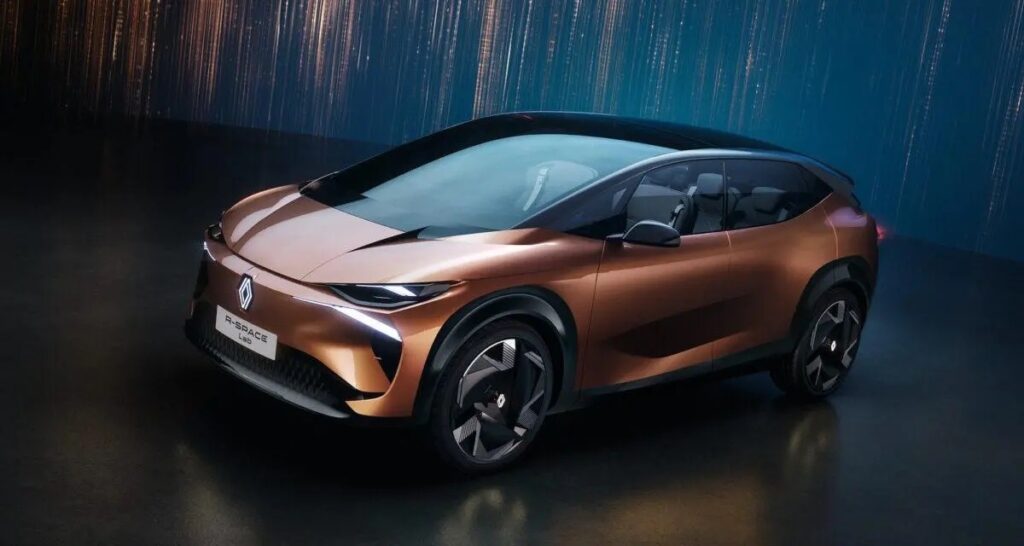
Although the R-Space Lab will never be marketed as such, it could well herald a new generation of Renault electric vehicles in which the passenger compartment will become the heart of innovation.