
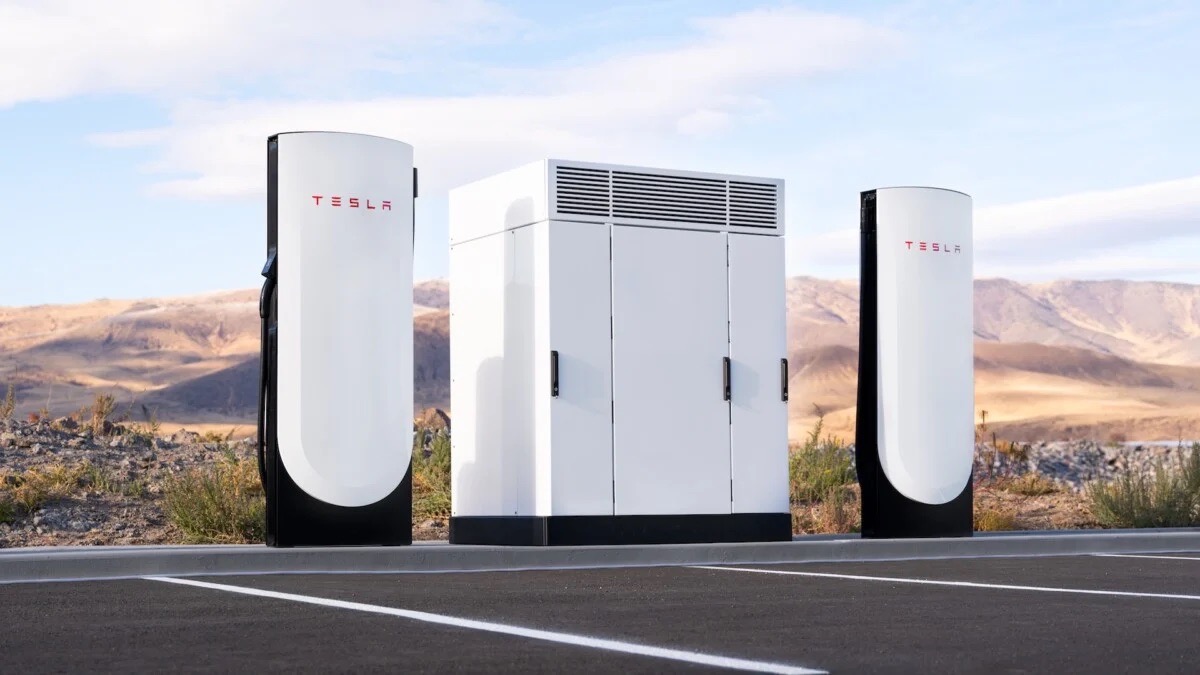






Tesla continues to innovate, not with a car or a battery, but with a new way of charging our electric vehicles. The American manufacturer has just unveiled a new generation of charging stations, dubbed the ‘Folding Unit Supercharger’. It’s a solution that’s as simple as it is original: prefabricated, foldable stations that drastically reduce installation costs and time.
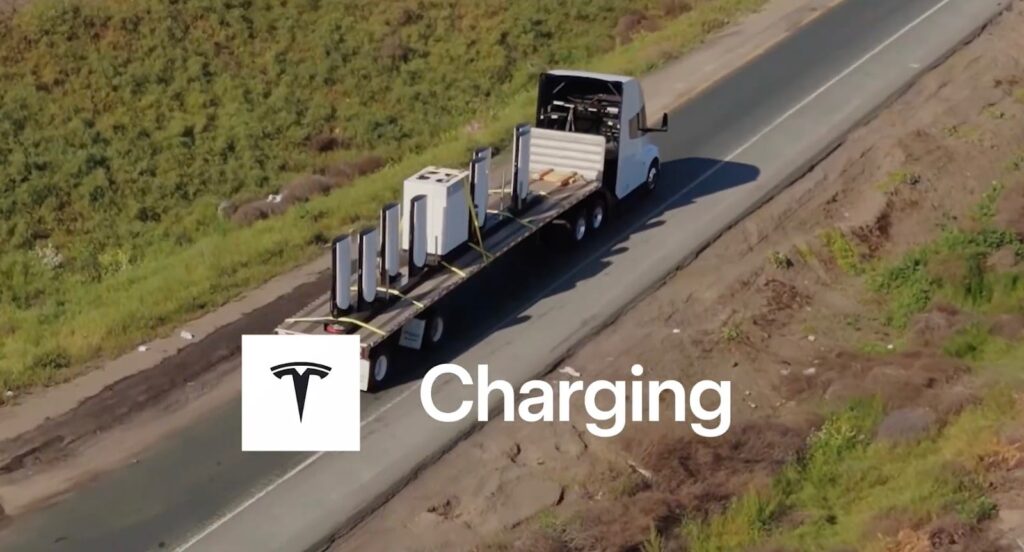
A foldable terminal for faster delivery and lower costs
In fact, Tesla is not only seeking to improve the power output of its charging stations, but also to rethink how they are deployed. These new V4 Superchargers come as factory-assembled units that can be transported in a folded state and then deployed directly on site.
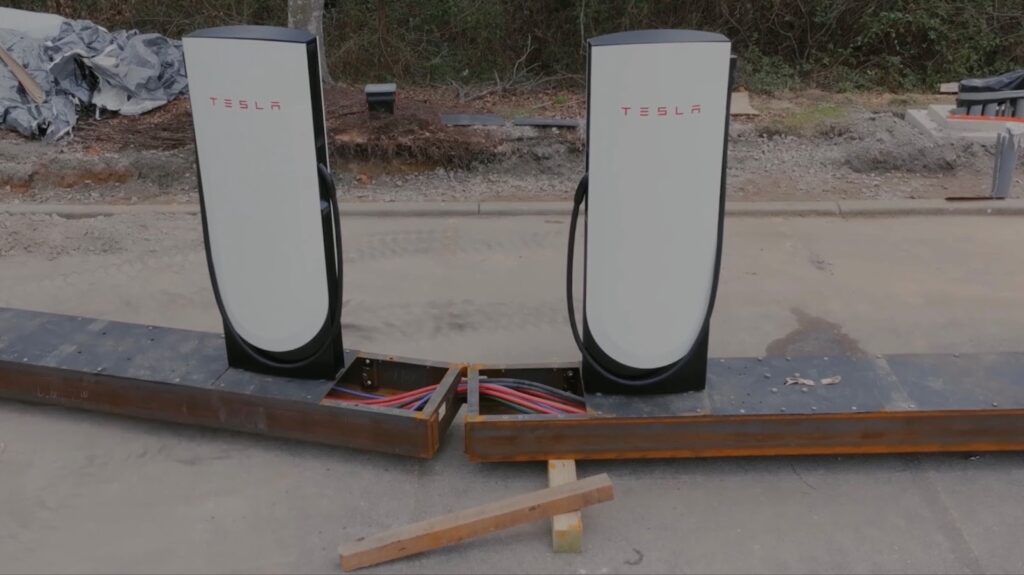
In practical terms, each unit features eight charging points and sits on a hinged metal base. Once on site, the structure is simply unfolded, as the cables have already been installed beforehand.
This choice significantly simplifies on-site operations, with less electrical and civil engineering work required. As a result, Tesla reports a cost reduction of around 20% and installation times cut in half. In an industry where the race for profitability is constant, the American firm has made a major breakthrough.
Optimised logistics to roll out more charging points
It’s not just the installation that’s being rethought – the entire supply chain is being overhauled. Thanks to this foldable design, two units can be transported on a single lorry, allowing for up to 33% more charging points per delivery.
In practice, this makes it possible to increase the number of charging points deployed across the country whilst reducing transport costs – a major challenge as Tesla continues to rapidly expand its network. Indeed, by way of comparison, the older prefabricated units allowed up to 12 charging points to be transported per lorry, compared with up to 16 with this new generation.
Another notable development is that these stations require less human intervention. Once installed, they can be commissioned without the need for a dedicated technician, which further reduces lead times and costs and simplifies operation.
Up to 500 kW: a significant boost in performance
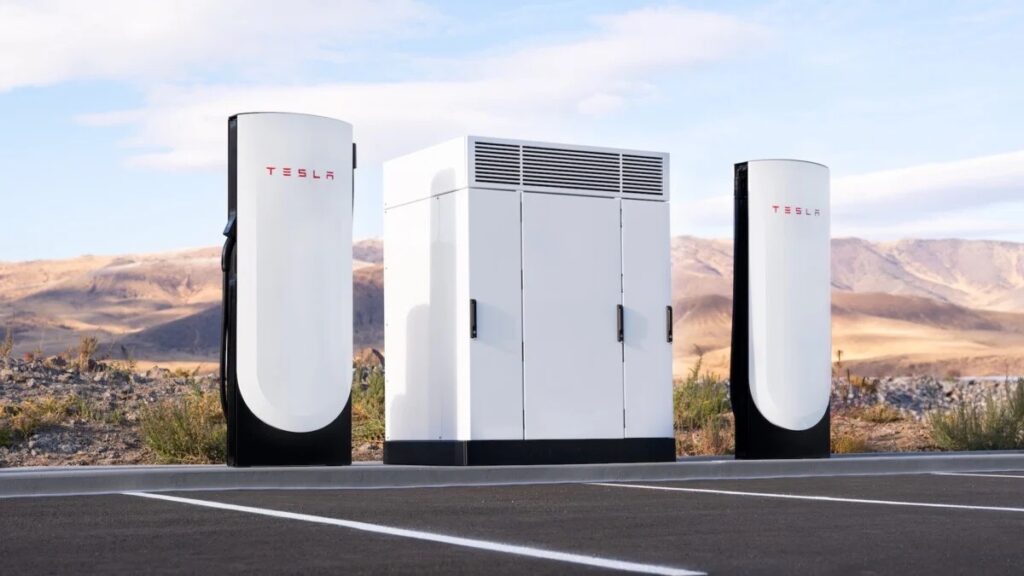
As the design evolves, so does the power output. These new Superchargers are based on V4 technology, capable of delivering up to 500 kW of power – double that of the previous V3 stations, which were limited to 250 kW.
This expansion is a direct response to market developments, with electric vehicles increasingly capable of handling fast charging, particularly on 800 V architectures. In practice, this further reduces charging times and improves the user experience on long journeys. Each V4 cabinet can power up to eight charging points.
A strategic lever to accelerate the Tesla network
With this innovation, Tesla is not only seeking to improve its technology, but also to address a key issue: the speed at which its network is rolled out.
Today, the manufacturer already has several thousand stations worldwide, with a network comprising over 75,000 charging points. With the rapid rise of electric vehicles, the issue is no longer just the performance of the charging points, but their availability.
In this context, these foldable Superchargers appear to be a direct response. By reducing costs, installation times and complexity, Tesla is enabling itself to open new stations more quickly, and, of course, the quality of the infrastructure is becoming ever more efficient.
A new approach to charging infrastructure
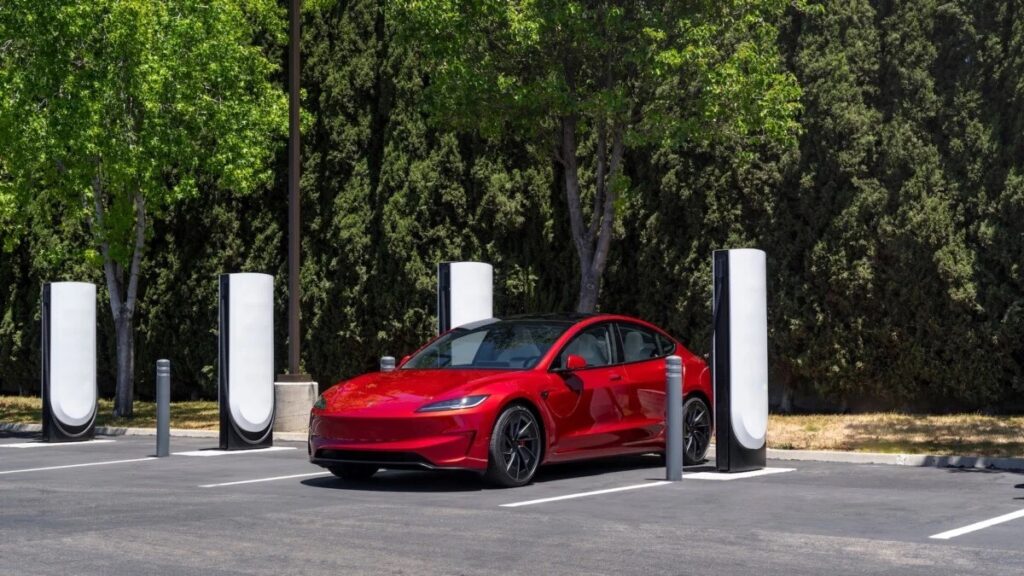
Tesla is changing the way it approaches charging. Until now, innovation has mainly focused on the power output and technology of charging stations. From now on, it will also focus on their industrial design and deployment.
In practice, this approach could set a precedent. For in a market where all manufacturers are stepping up their efforts in the electric vehicle sector, the ability to rapidly roll out a charging network is becoming a key competitive advantage.
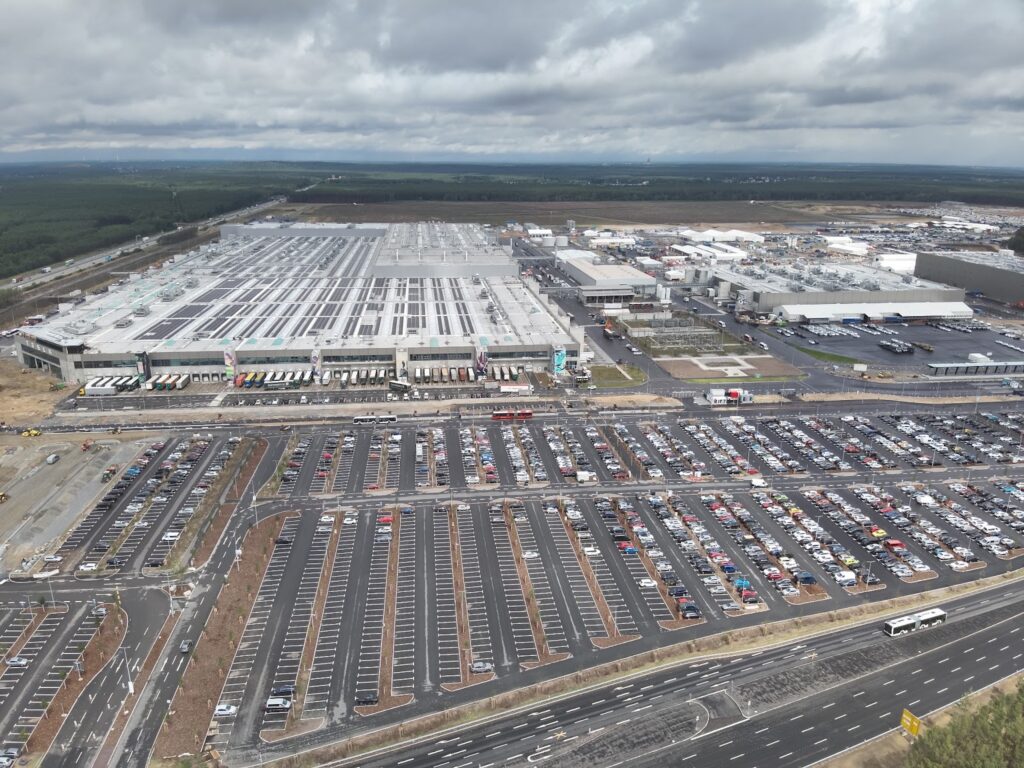
The first European trials are already underway at the Berlin Gigafactory. According to several sources, the first roll-outs in France are expected to take place in the second quarter of 2026, targeting major motorways (A6, A7, A10) – a timetable that would help ease pressure on the network ahead of the summer holiday rush.