
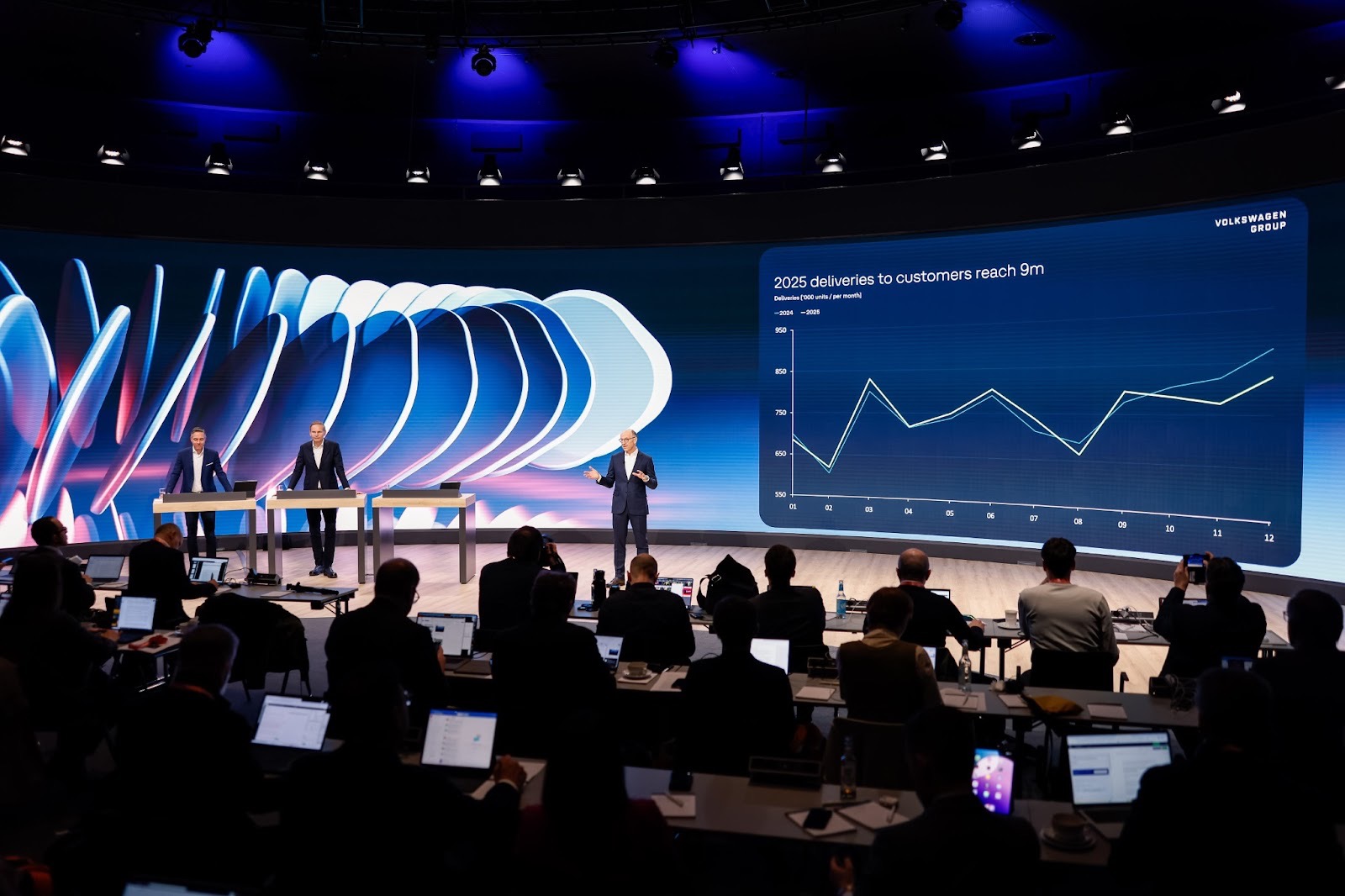



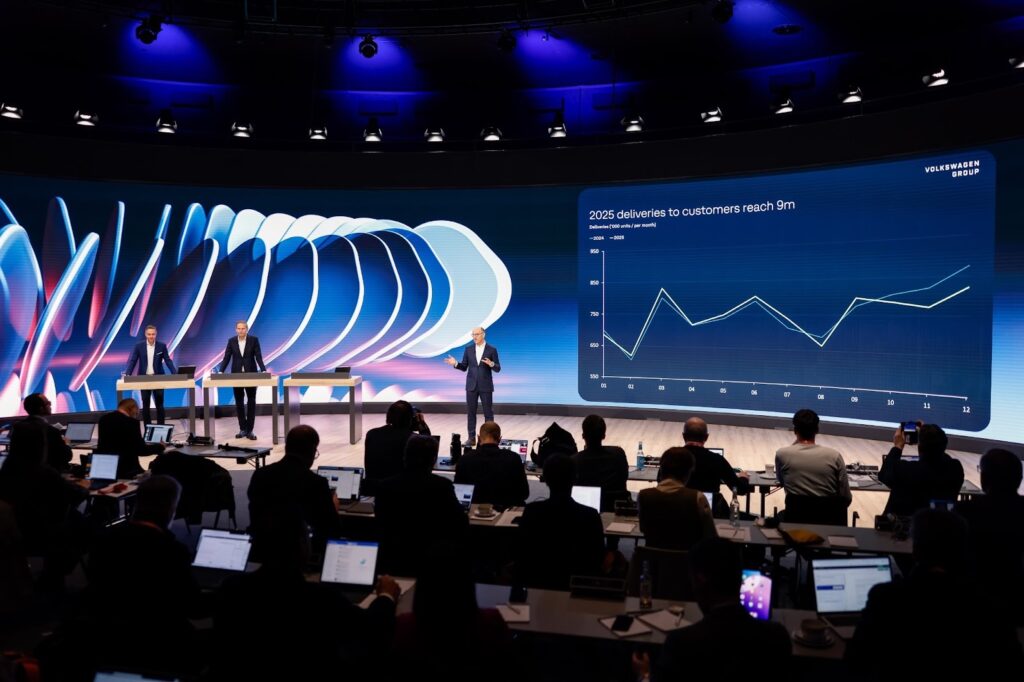
The Volkswagen Group took advantage of its Annual Media Conference 2026, held on March 10 in Wolfsburg, to unveil its 2025 financial results and detail the progress of its industrial transformation. Chief Executive Oliver Blume and Chief Financial Officer Arno Antlitz drew a mixed picture: the German giant remains one of the world leaders in electromobility, but the energy transition is weighing heavily on its profitability. With 4 million 100% electric vehicles delivered worldwide, the group also announced a shock measure: 50,000 job cuts in Germany by 2030.
Solid volumes but profitability under pressure
In financial terms, 2025 is a perfect illustration of the transition phase that Volkswagen is going through. The company recorded sales of €321.9 billion, down slightly on the €324.7 billion recorded in 2024. Worldwide sales also remained at a high level, with 9 million vehicles delivered over the year.
But profitability deteriorated sharply. Operating income fell by more than 50% to €8.9 billion, compared with €19.1 billion a year earlier. The operating margin fell to 2.8%, its lowest level since Dieselgate in 2016. Oliver Blume insisted on making it clear that 2025 is « a year of financial resilience but margins under pressure. »
This fall was mainly due to exceptional charges of €9 billion, linked to a number of factors:
- 5 billion to adapt Porsche’s electric strategy
- 3 billion linked to US tariffs
- 1 billion spent on internal restructuring
Despite this pressure on profits, the automotive division’s net cash flow reached 6.4 billion euros, up 24% year-on-year.
Volkswagen confirms its place in global electromobility
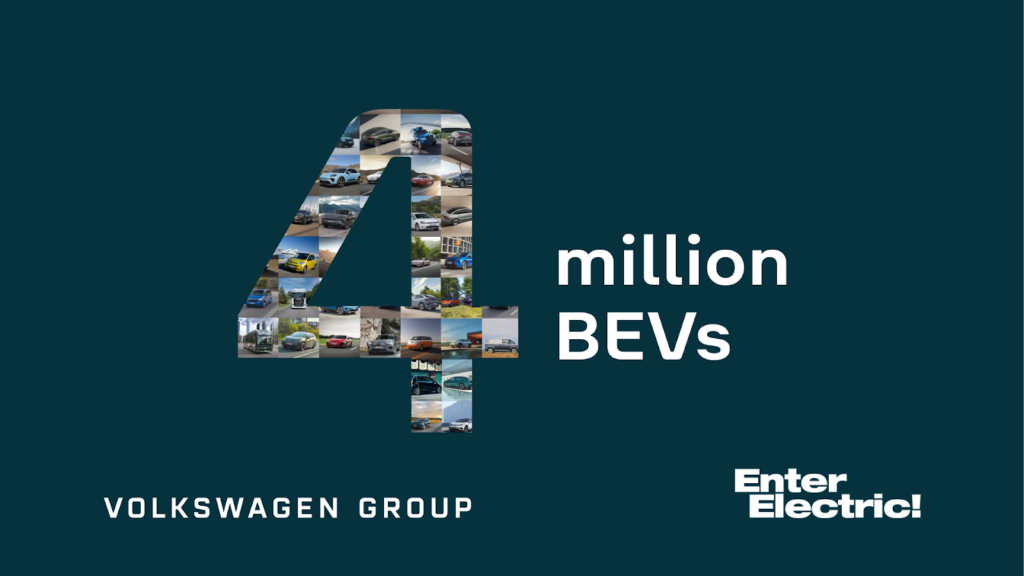
Despite the worrying figures, Volkswagen sent out a clear message: the BEV strategy remains intact. A few days before the conference, the Group announced that it had delivered a cumulative total of 4 million 100% electric vehicles worldwide (Top 5 worldwide and Top 1 in Europe).
The conference also revealed, or at least confirmed, that over the last two years the Group has launched almost 60 new models, around a third of which are fully electric. The Group’s BEV range now exceeds 30 models for passenger cars, plus the electric trucks and buses produced by its industrial subsidiary TRATON, which includes Scania and MAN.
Slowing down is not an option for the group, and the product offensive will continue. Volkswagen is planning more than 20 new models for 2026, around half of which will be 100% electric. Among them is a strategic project for Europe: the Electric Urban Car Family, a new generation of four affordable electric city cars designed to democratise electric mobility in the entry-level segment.
At the same time, the Group is preparing several new electric models specifically developed for the Chinese market, which has become the centre of gravity of the global energy transition.
50,000 job cuts: the social shock
But the most talked-about announcement of the conference concerned the Group’s social restructuring. In his letter to shareholders published with the annual report, Oliver Blume confirms that almost 50,000 jobs are expected to be cut in Germany between now and 2030 within the Volkswagen Group.
This decision goes well beyond the social plan already negotiated in 2024 with the powerful German trade union IG Metall. Back then, an agreement provided for 35,000 job cuts at Volkswagen.
And while originally only Volkswagen was to be affected, this time several brands are likely to be involved: Audi, Porsche and Cariad.
The unions are sure to be in the news, but management has insisted on a « socially responsible » approach, based mainly on voluntary redundancies, early retirement and internal redeployment.
Future Packages: the plan to restore profitability
To emerge from this transitional phase, Volkswagen is focusing on a vast internal efficiency programme called Future Packages. The objective is clear: to achieve annual savings of more than €6 billion by 2030, using a number of industrial levers.
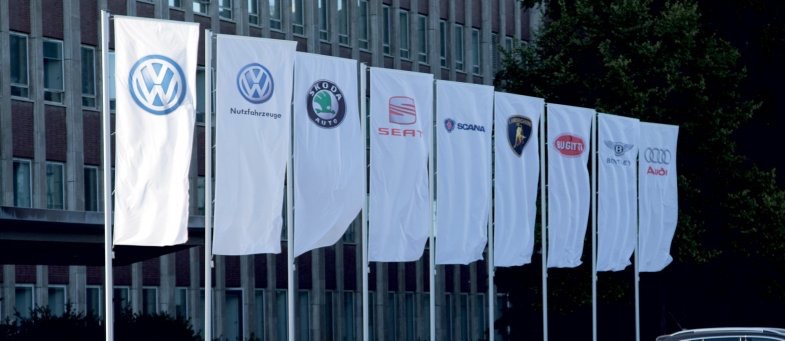
In particular, the Group plans to simplify its vehicle range, improve the productivity of its factories and strengthen synergies between its various brands. As a reminder, the Volkswagen Group catalogue comprises several brands, each with its own positioning: Volkswagen, Audi, Škoda, Cupra, Porsche and many others.
For management, 2025 therefore represents a temporary low point, before an expected recovery from 2026 onwards thanks to the renewal of product ranges and efficiency gains.
A more difficult electricity transition than expected
While Volkswagen maintains its ambition to become a « Global Automotive Tech Driver » by 2035, the conference also shows that the energy transition is shaping up to be more complex than expected.
The group has to deal with a number of simultaneous challenges:
- the rise of Chinese manufacturers such as BYD and Geely,
- the slowdown in demand for electric vehicles in Europe,
- trade tensions with the United States.
The electricity transition has a price
With 4 million electric cars delivered, Volkswagen is proving that it now has one of the largest BEV offerings on the world market. However, the announcement of 50,000 job cuts is a reminder that the transformation of the automotive industry into a more energy-efficient sector will require far-reaching industrial change.
For Volkswagen, the next few years will be decisive. It remains to be seen whether the forthcoming launches will enable the Group to restore its margins and remain the leader it is today.