

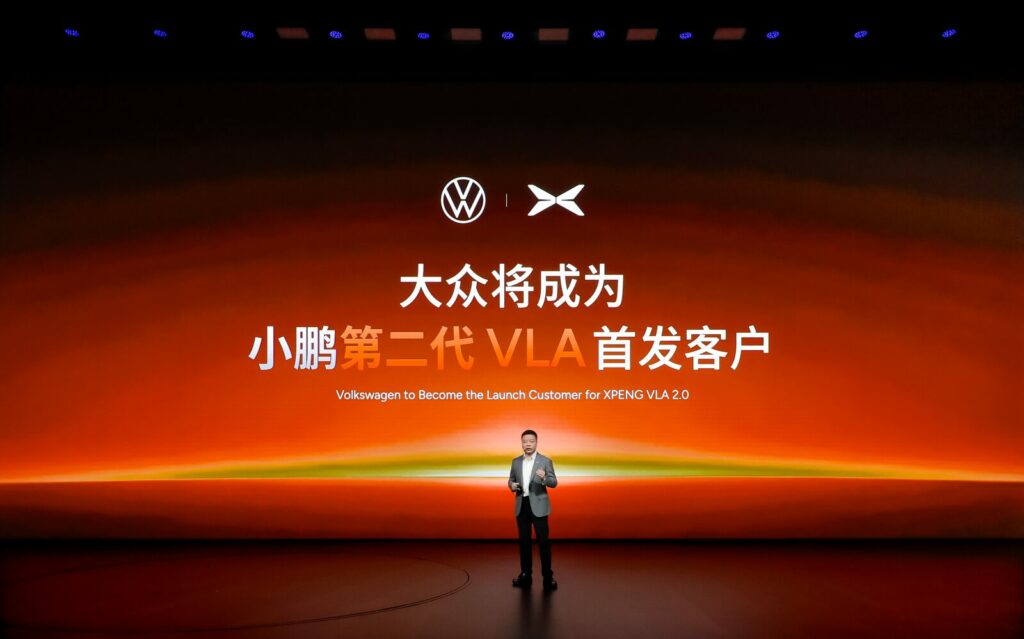
On 1 March 2026, via an official press release and an internal memo from He Xiaopeng dated 24 February, XPeng Motors announced that global delivery of its second-generation intelligent driving system, VLA 2.0, will begin in 2027. In this global roll-out, Volkswagen is confirmed as the first launch partner in the Chinese market.
A change in architecture: from sequential pipeline to end-to-end AI
The big news behind this announcement, apart from the fact that worldwide deliveries of its intelligent driving system will begin in 2027, is that VLA 2.0 (Vision-Language-Action) marks a major conceptual break with traditional in-vehicle systems. Traditionally, automated driving architectures operate according to a three-stage logic:
- Perception (Vision)
- Translation into intermediate language
- Decision/Action
The problem with the so-called ‘traditional’ model is that it creates latency, like a translator between the eye and the foot on the brake pedal.
With version 2.0, XPENG breaks this pattern: the vision goes directly to the action, without passing through an intermediate language stage. The system creates what some describe as « implicit tokens »: a computer language internal to the AI that enables faster, smoother interpretation of driving situations.
This approach is expected to offer a number of operational advantages:
- Drastic reduction in processing times
- More real and more human reactions
- Ability to manage complex scenarios without detailed HD maps
- Dynamic recognition of road signs, gestures or changes in context
Public road tests and « drive anywhere » capabilities
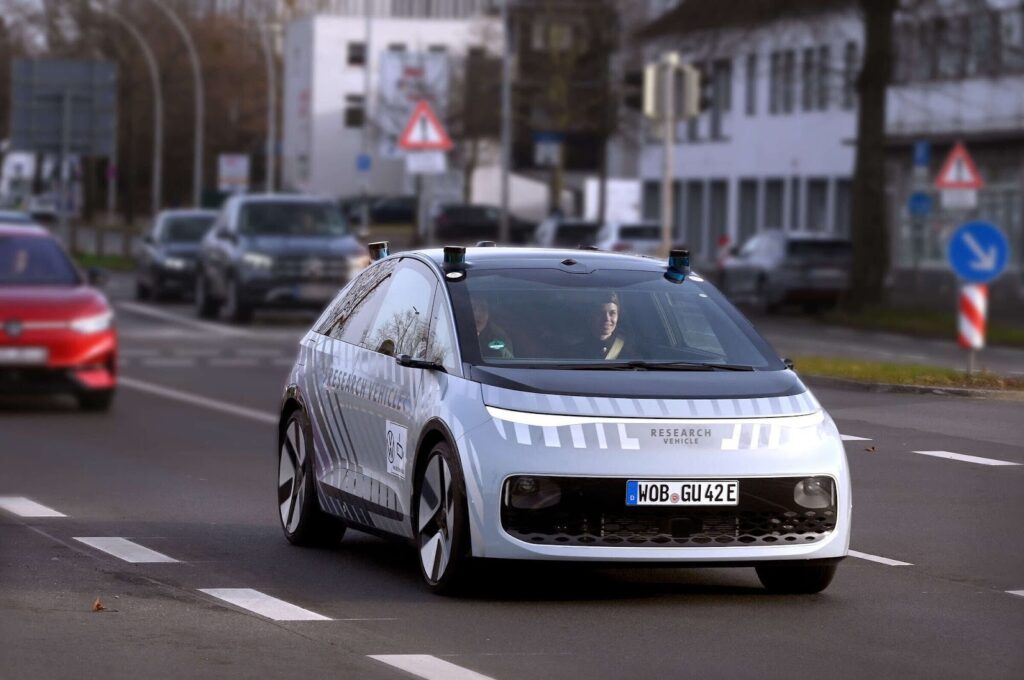
The first vehicles equipped with VLA 2.0 have begun testing on open roads in China, with public trials scheduled for later in 2026. According to various statements by the Chinese brand, the system is now capable of handling difficult environments:
- heavy urban traffic
- narrow lanes
- irregular or unmapped roads
- standstill starts and complex interactions
Based on early test data, XPENG claims that VLA 2.0 delivers a ~23% improvement in driving efficiency, with peak hour performance in Guangzhou comparable to that of experienced human drivers, and significantly better than traditional Level 2 systems.

Hardware power: the Turing chip, the heart of the reactor
To operate and be so promising, the VLA 2.0 relies on the Turing AI chip designed in-house by XPENG, capable of delivering up to 2,250 TOPS (trillions of operations per second) per unit in the most powerful versions.
This massive computing power means that very large AI models can be run directly in the vehicle, without relying on the cloud. It is this on-board power that guarantees ultra-fast reactions – essential when you need to anticipate an unpredictable cyclist or a pothole in a fraction of a second.
Volkswagen, a strategic and now historic partner
The announcement that Volkswagen is now the first launch partner for VLA 2.0 on the Chinese market sends out a strong signal.
Firstly, it is a symbolic milestone: it is the first time that a major historic Western manufacturer has adopted an advanced autonomous driving platform developed by a Chinese manufacturer to equip its own vehicles.
Secondly, the agreement is not limited to simple software integration. Volkswagen will also be adopting the proprietary Turing AI chip developed by XPeng Motors, the computing heart of the VLA 2.0. In other words, the system’s hardware and software architecture will be based directly on the XPENG technology ecosystem.
And it’s worth remembering that this partnership didn’t come out of nowhere. In 2023, Volkswagen invested around $700 million to acquire a 4.99% stake in XPENG, as part of a wider agreement to jointly develop electric vehicles for the Chinese market. This stake means that the German manufacturer already has a direct interest in the industrial and technological success of its partner.
Objective: total autonomy within 1-3 years
He Xiaopeng, Managing Director of XPeng, confirmed: « XPENG’s VLA 2.0 is the first version designed to achieve fully autonomous driving and will evolve at an unprecedented rate. We expect full autonomy to arrive within one to three years, making autonomous driving a natural part of people’s daily journeys. »
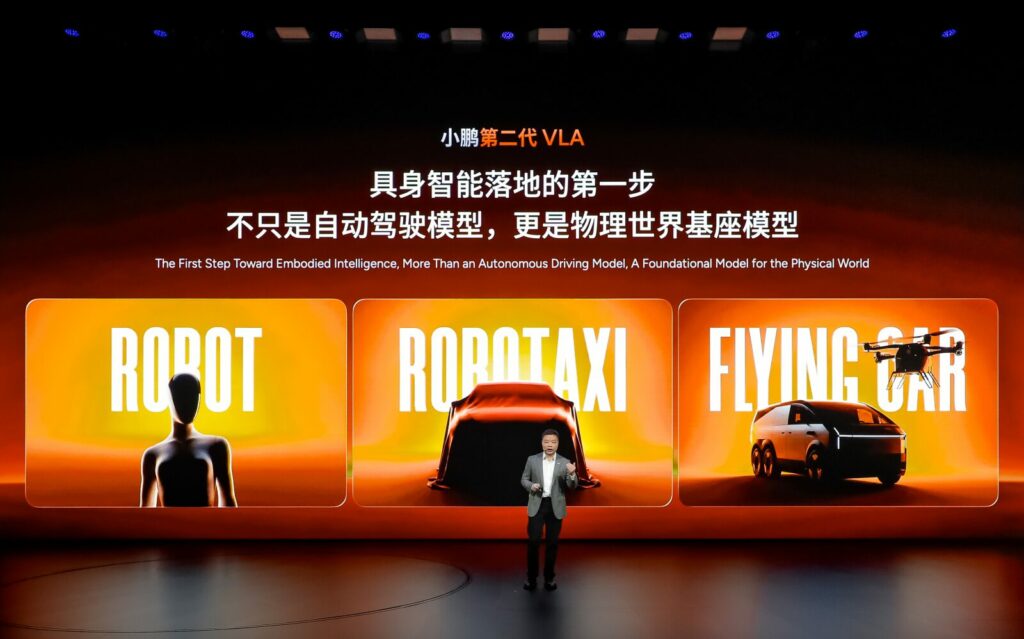
This ambition is part of XPENG’s wider « Physical AI » strategy, in which the same AI model could eventually power other platforms operating in real environments:
- humanoid robots
- modular flying vehicles
- autonomous mobility services
A turning point for automotive AI
With a plan for global deployment in 2027 and a major Western carmaker already committed to the technology in China, XPENG is entering a new phase of expansion. The alliance with Volkswagen could become a textbook case in the industry: a traditional carmaker boosted by Chinese on-board intelligence technology.
It remains to be seen whether the VLA 2.0 will really be able to compete with the autonomous systems promised by Tesla, Waymo and other technology players.