



In the run-up to the municipal elections in March 2026, electric mobility is no longer an abstract concept relegated to national debate. It is taking to the streets, public car parks and neighbourhood discussions, becoming a concrete lever for local politicians. Between citizens’ expectations and regulatory obligations, candidates have a strategic electoral argument at their disposal: respond to a tangible concern while modernising their region’s energy trajectory.

Strong, measurable public expectations
According to a study published on 13 February 2026 by Environnement Magazine, 68% of voters consider mobility to be a key factor in improving their quality of life. Noise, pollution and air quality remain priority concerns, particularly in urban and suburban areas. This expectation is coupled with a demand for action: in its guide « 5 actions pour agir localement » (5 actions for local action), Avere-France points out that nearly 6 out of 10 French people expect more public action on climate change, and 8 out of 10 want mayors to have more power to steer this transition.

As Pascal Hureau, President of the Fédération française des associations d’utilisateurs de véhicules électriques (FFAUVE) and a local councillor, points out: « Driving electric means reconciling freedom with the environment, and 98% of EV drivers say they are satisfied with their vehicle. Elected representatives must support this movement over the next term of office, and the public must choose those who will take the right decisions on the ground.
What clearly changes for citizens is that when the energy transition takes shape in their local community, it ceases to be an abstract debate. As Antoine Herteman, President of Avere-France, points out: « In a national context that is often perceived as far removed from day-to-day concerns, the community remains the first level of trust and action.

Electric mobility is an area where political promises can be quickly put into practice. The installation of a dozen or so conveniently-located charging points, the renewal of a municipal fleet with zero-emission vehicles, or the introduction of local subsidies for the purchase of vehicles are immediate signs of a willingness to take action. It is in this context that associations such as FFAUVE stress the importance of choosing elected representatives who are aware of the real challenges of electromobility.
Five concrete levers identified by Avere-France
On 13 February, Avere-France, the national association for the development of electric mobility, set out in its official guide the priority actions available to municipal teams to embody this transition. The association illustrates the recommendations with concrete operations already launched in France:
- Action 1: Installation of recharging points open to the public
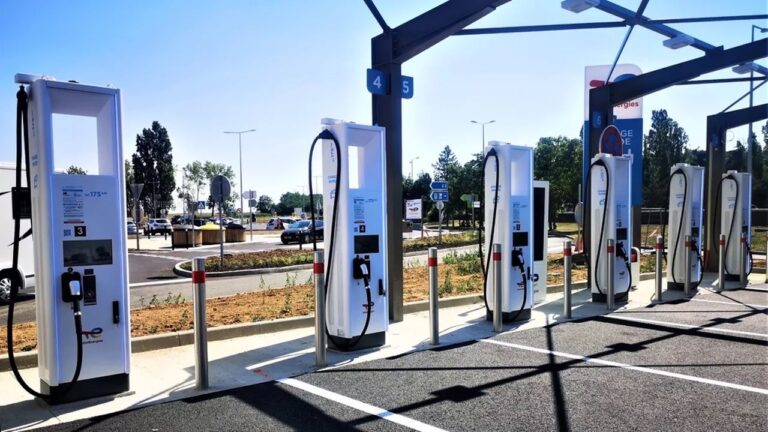
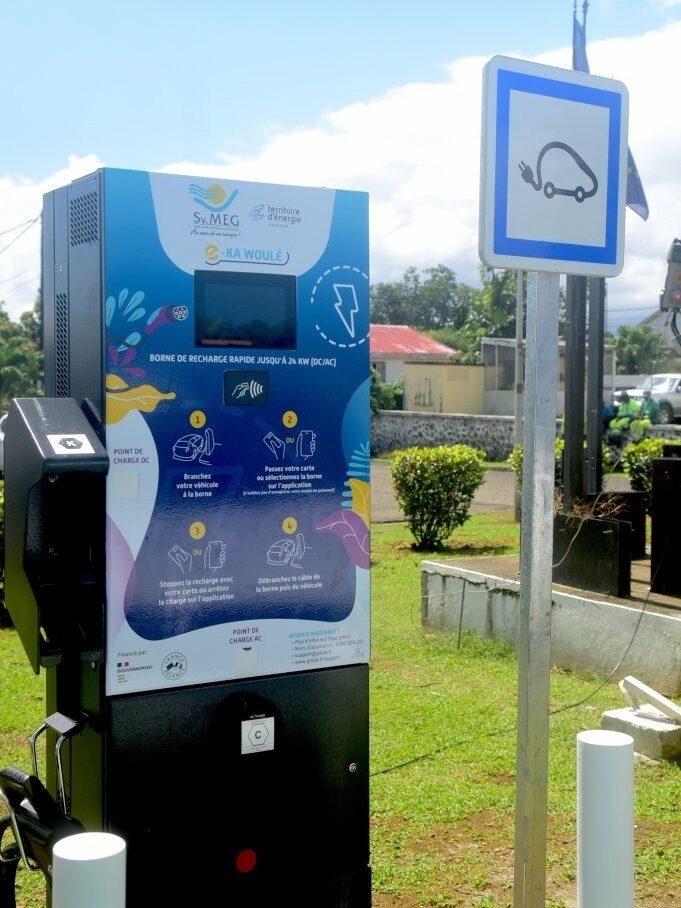
- With almost 185,000 charging points already in service and a target of 400,000 by 2030, local authorities can have a direct impact on the accessibility of electric vehicles. The V model in Guadeloupe, which has installed 113 charging points financed to 80% by France Relance, illustrates how public partnership enables rapid and harmonised deployment. The Advenir programme helps local authorities to finance the installation of on-street charging points,
- Action No. 2: Electric car-sharing solutions
- Initiatives such as « Lulu » in Meurthe-et-Moselle show that it is possible to reduce the number of private vehicles, while offering an economical and ecological solution. Between 2020 and 2022, Lulu vehicles were reserved more than 8,000 times by almost 2,000 users.
- Action 3: Introduce free parking or other benefits for electric vehicles
- The city of Reims offers two hours’ free parking for electric vehicles, a measure that is simple to implement and has a direct impact on the cost of mobility. Lyon combines free parking with modulated tariffs for internal combustion vehicles, illustrating how incentives and regulation can coexist.
- Action n°4 : Electric shuttle for passenger transport
- The Val d’Ille-Aubigné Community of Communes operates a free electric shuttle service linking four rural communes to the local TER station. The service has recorded an average of 170 journeys per month since its launch, with a tangible impact on reducing the use of private cars.
- Action 5: Promote sustainable urban logistics
- Sustainable urban logistics: programmes such as InTerLUD+ support local authorities in organising the distribution of goods in towns and cities using electric or low-emission vehicles, reducing emissions and improving the efficiency of logistics flows.

Legal obligations reinforce the need for action
These recommendations are not just suggestions. They are a response to the legal obligations imposed on local authorities, which will gradually have to include quotas of electric vehicles in their fleets and guarantee minimum access to public recharging. As Antoine Herteman, Chairman of Avere-France, points out: « The electrification of mobility is not an abstract injunction, but an opportunity for local authorities, in both urban and rural areas.
For the candidates, the key lies in their ability to translate the energy transition into visible and measurable actions. For transport energy transition specialists, the municipal teams that are able to coordinate these actions with the intermunicipal and energy syndicates will have a tangible advantage with the electorate.
Conclusion
In 2026, when mayors are up for re-election in France and the French overseas territories, electric mobility is emerging as a key factor. Candidates who are able to realise these ambitions will have a powerful electoral lever at their disposal: they will be responding to strong public expectations, while making tangible improvements to the quality of daily life.