

The news has just broken. Dubai’s transport authorities have revealed the locations of the first four stations of the Dubai Loop, an underground transport project developed with The Boring Company. It’s an announcement that puts this network of ultra-fast tunnels firmly on the map, and gives an idea of the scale of an infrastructure that is intended to be as much an economic lever as an urban one.
Four initial stations in the heart of the city
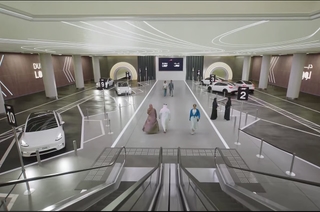
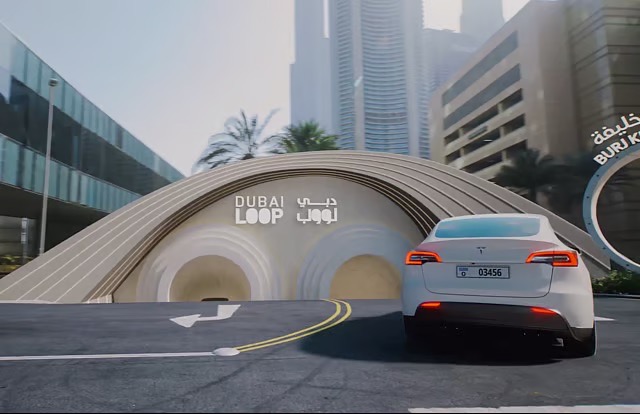
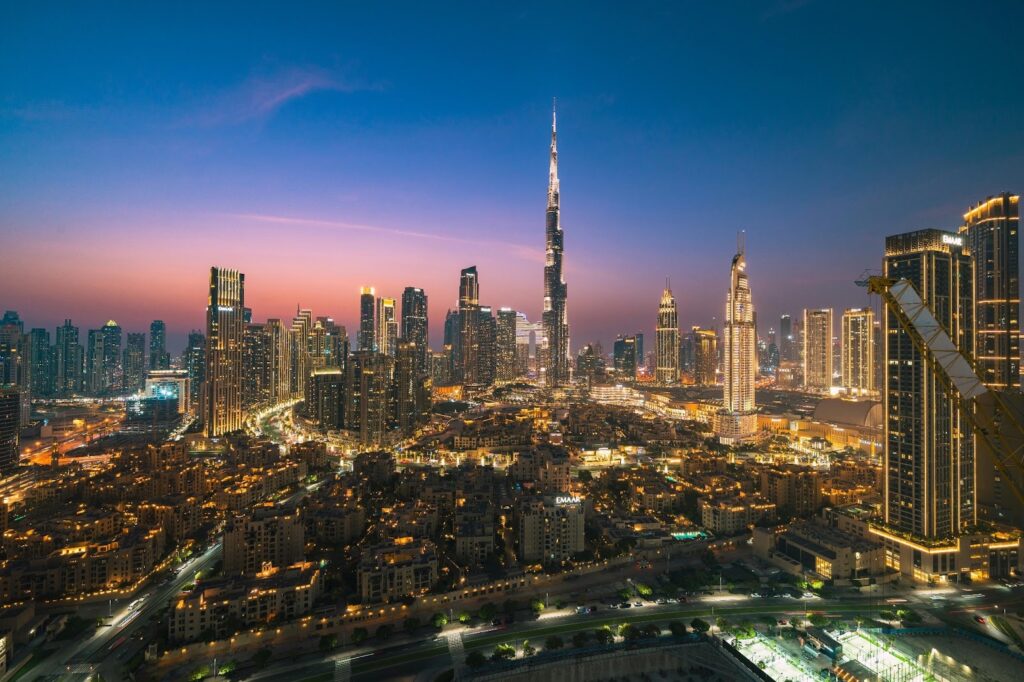
The first access points for the Dubai Loop have been officially announced by the Roads and Transport Authority (RTA). The four inaugural stations will be located at Burj Khalifa, DIFC 2, the Zabeel Dubai Mall car park and ICD Brookfield Place.
A choice that is far from trivial. These sites concentrate tourism, offices, shops and commuter flows. In short, where congestion costs the most in terms of time and productivity. The Dubai Loop targets these high-density areas as a priority.
A tunnel, not a metro
Contrary to what you might think, the Dubai Loop should not be confused with a conventional underground metro. Here, there are no trains, no platforms and no compulsory stops. This is because the system is based on tunnels specifically built to accommodate autonomous electric vehicles, such as Tesla Model Ys. These road infrastructures will not be accessible to the general road network.
So what shape will this new-generation tunnel take? What we do know is that they will be between 3.6 and 3.9 metres in diameter, depending on the section. The first phase will cover 6.4 kilometres, before a gradual extension that could eventually reach 22.5 kilometres. The final network will comprise 19 stations, linking the Dubai World Trade Centre, the DIFC financial district and Business Bay.
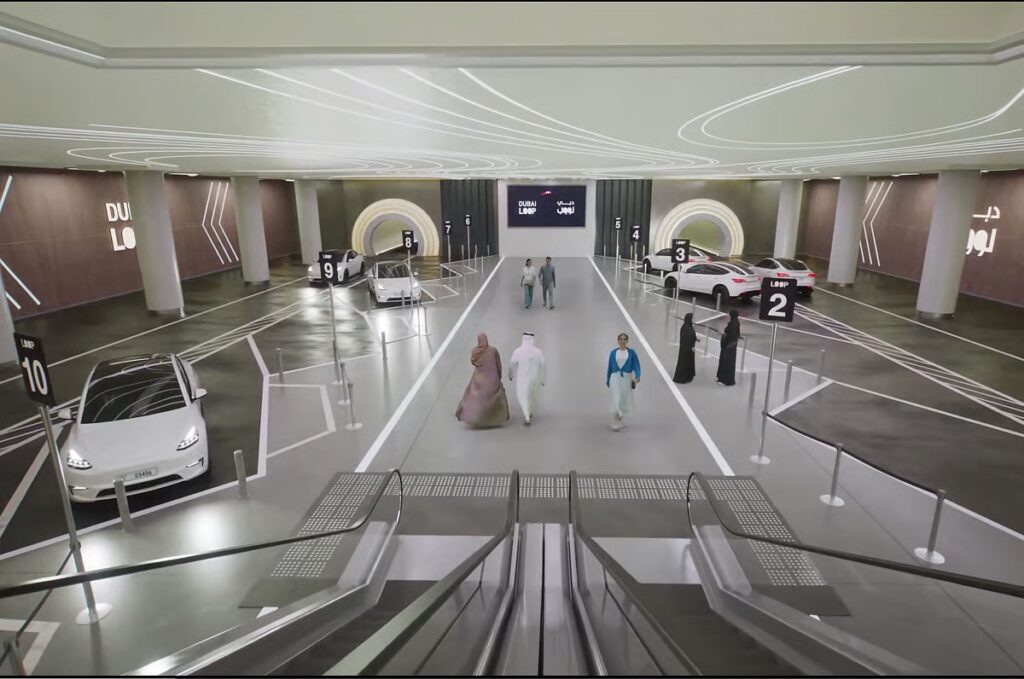
So how does it work for users? From one of the stations, users select their destination using an application connected to the Roads and Transport Authority network. They will then be allocated an autonomous electric vehicle. These driverless vehicles will travel in dedicated tunnels, completely independent of surface road traffic. Once engaged, they will travel directly to the destination station, without any intermediate stops, at speeds of up to 160 km/h. The result: journey times estimated at between two and five minutes, compared with thirty to forty minutes on the surface at peak times.
A long-standing project, now a reality
First announced in 2024, then confirmed at the World Governments Summit in 2025, the Dubai Loop is being developed in partnership with the American firm The Boring Company.
The cost of the first phase is estimated at around 565 million dirhams, while the entire project could represent an overall investment of close to two billion dirhams once the entire network has been rolled out. This is a substantial sum, but it is presented as lower than that of equivalent heavy infrastructures, thanks in particular to the absence of expropriations and the minimal impact on the surface area.
A tool against congestion, but also against loss of productivity
As well as being a technological innovation, the Dubai Loop has a clear economic rationale. According to several analyses based on work by the OECD, urban congestion can account for up to 1 to 2% of lost GDP in major cities.
By moving part of the traffic underground, Dubai hopes to recover up to 0.3 to 0.5% of productivity, or billions of dirhams a year. The promise is not just to drive faster, but to make travel predictable, reliable and independent of surface hazards. Of course, underground hazards are not impossible, but with autonomous driving technologies, they can be reduced.
A key component of Dubai’s smart city strategy
The Dubai Loop is fully in line with the emirate’s smart city strategy, which aims to make Dubai a global benchmark for sustainable mobility, artificial intelligence and intelligent infrastructure by 2040.
The system will be based on autonomous electric vehicles, controlled by AI, with on-demand routing and reservations integrated into the RTA’s applications. The stated objective is clear: to achieve 50% autonomous journeys and enhance complementarity with other modes of transport, including soft mobility.
In urban terms, the stakes are just as high. By avoiding the consumption of surface land, Dubai is preserving the value of its central areas, limiting urban fragmentation and completing projects such as The Loop, the 93 km air-conditioned pedestrian and cycle path.
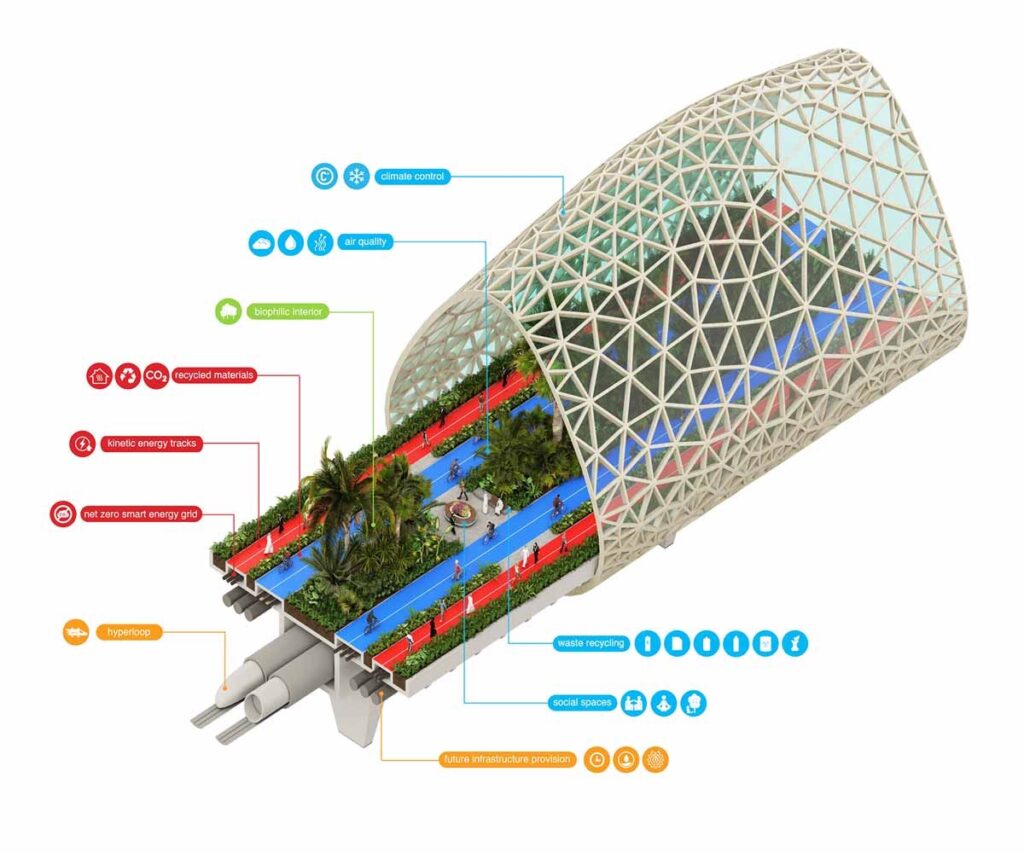
More than transport, a choice of urban model
With the Dubai Loop, the city is betting on invisible, fast and scalable mobility, capable of improving with technology.
The unveiling of the first stations marks a decisive step: the project is moving away from forward-looking rhetoric and moving towards implementation, confirming the Emirate’s desire to treat mobility not as a problem to be managed, but as a competitive advantage to be built.