


Whilst the automotive industry is accelerating its shift towards electric vehicles, Lamborghini appears to be taking a much more cautious approach. Between the widespread adoption of hybrid technology, the continued use of internal combustion engines and the shelving of the all-electric Lanzador project, the Italian brand is primarily seeking to preserve what defines its identity: emotion, performance and exclusivity.

Cor Tauri: the initial plan for a phased electrification programme
The official turning point dates back to 2021. That year, Lamborghini unveiled its “Cor Tauri” roadmap, billed as the biggest investment plan in the brand’s history. Over €1.5 billion is set to be invested over four years to gradually transform the range.
The strategy is therefore organised into three very clear stages:
- firstly, to celebrate internal combustion engines with commemorative ranges and exclusive models;
- and then make plug-in hybrid vehicles the norm;
- and then launch the first fully electric Lamborghini in the second half of the decade.
At the time, Stephan Winkelmann, the brand’s CEO, described this transition as a “change of direction made necessary by a radically changed landscape”, whilst promising to remain “true to our DNA”. And it is probably this statement that best sums up Lamborghini’s current strategy.

A range that is now almost entirely hybrid
From an industrial perspective, Lamborghini has indeed delivered on a large part of its roadmap. The Revuelto has become the brand’s first production V12 plug-in hybrid supercar, with a combined power output of 1,015 hp. The Urus SE, the electrified version of the manufacturer’s flagship SUV, has also joined the range. Even the Huracán’s successor, named Temerario, now features a plug-in hybrid powertrain based on a twin-turbo V8.
In fact, Lamborghini is now electrifying all its strategic pillars. But this shift towards hybridisation is not a sudden break with the past. On the contrary, it is being used as a means of preserving the performance and character of the models whilst meeting regulatory requirements.

The Fenomeno Roadster, the perfect embodiment of Lamborghini’s strategy
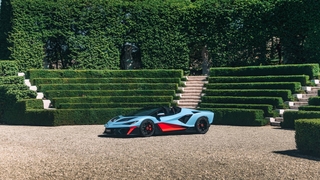
Unveiled at the second edition of the Lamborghini Arena, the Fenomeno Roadster almost single-handedly encapsulates the Italian manufacturer’s current vision.
Only 15 units will be produced. This is clearly an ultra-high-performance model, featuring a naturally aspirated 6.5-litre V12 engine combined with three electric motors, delivering a total output of 1,080 hp.
The manufacturer describes it as “the most powerful open-top car ever created by Lamborghini” and the expected result is spectacular:
- 0 to 100 km/h in 2.4 seconds;
- 0 to 200 km/h in 6.8 seconds;
- a top speed of over 340 km/h.
But beyond the figures, it is the message sent by Lamborghini that is particularly interesting. The Fenomeno Roadster does not represent a break with the brand’s historic DNA. On the contrary, it uses this heritage to justify the move to hybridisation. The V12 remains central, the driving experience is still the focus, and the electric powertrain primarily serves to enhance performance.
Stephan Winkelmann describes it himself as: “the purest expression of our brand’s values: visionary design, uncompromising performance and absolute exclusivity.”

The real challenge of going 100% electric: preserving the Lamborghini spirit
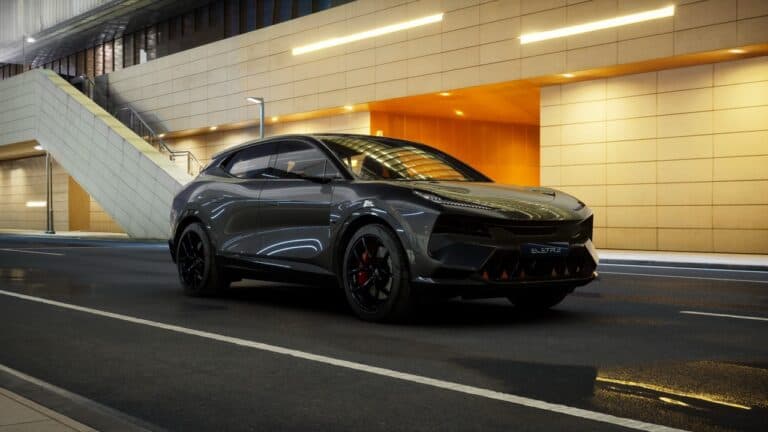
And this is precisely where the strategy begins to shift. Initially, Lamborghini had planned to launch its first all-electric model before the end of the decade with the Lanzador project, a concept unveiled in 2023. The vehicle was expected to deliver over one megawatt of power, equivalent to around 1,340 hp.
But since 2025, the manufacturer’s stance has shifted significantly. Stephan Winkelmann now acknowledges that demand for a fully electric Lamborghini remains extremely low among the brand’s customer base. In an interview with The Sunday Times, he even explains that:
“Investing heavily in the development of fully electric vehicles when the market and customers aren’t ready would be a costly exercise.”
The executive goes even further, explaining that Lamborghini customers are primarily seeking “the thrill” and “the visceral sound” of combustion engines. Lamborghini’s problem is not merely technical or regulatory. It is, above all, symbolic and emotional: a Lamborghini must be fast, of course, but also dramatic, raw and distinctive.
The plug-in hybrid as a transitional phase
In this context, the plug-in hybrid appears to be a much more reassuring solution for Lamborghini. Indeed, the manufacturer can:
- reduce emissions;
- comply with European standards;
- to improve performance whilst retaining the internal combustion engines that are part of the brand’s identity.
Even the Lanzador project may ultimately abandon its all-electric design in favour of a plug-in hybrid system. Stephan Winkelmann sums up this reasoning very simply: “Plug-in hybrids offer the best of both worlds.”

In Sant’Agata Bolognese, the future no longer seems to lie in a radical revolution, but rather in a controlled transition. Lamborghini is electrifying its models, yes, but without sacrificing the sound, the thrills and the exclusivity that still define the brand’s driving experience. And today, the plug-in hybrid clearly stands out as the best compromise the Italian manufacturer has found to maintain this balance.