


Japan began its energy transition in transport 20 years ago. And while the development of 100% electric cars is well advanced, it is more complicated. Domestic manufacturers are betting on a gradual transition: hybrids, PHEVs, hydrogen and, more timidly, BEVs. The result: a very solid industry, advanced battery R&D, but slower-than-expected adoption by the general public.

A clear national strategy… but a multi-pronged one
Japan has ambitious targets for electromobility. Carbon neutrality is to be achieved by 2050. With this in mind, the country has adopted a greenhouse gas reduction target of -60% by 2035 (compared with 2013) as an intermediate step.
With the aim of boosting the uptake of electrified vehicles, the government is supporting the transition through a range of incentives. The State has introduced direct subsidies for buyers of electric vehicles. These subsidies can be as much as €5,200 per vehicle, to boost sales in relation to the American and European markets. These amounts are intended to stimulate sales in the face of slow adoption of EVs, despite targets of 100% electrified passenger cars by mid-2030 and carbon neutrality by 2050.
In addition, the Japanese Ministry of the Environment is providing a 30% subsidy (up to 100 million yen, or around €552,000) for companies to install solar panels and batteries, indirectly boosting electromobility via green energy.
In short, the Japanese government is encouraging its compatriots and businesses to change the mobility industry towards a cleaner source of energy, through a variety of support measures.
Electromobility in Japan: BEVs stagnate, hybrids reign supreme
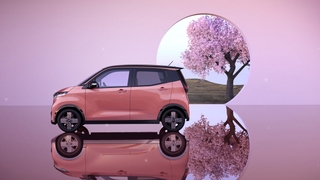
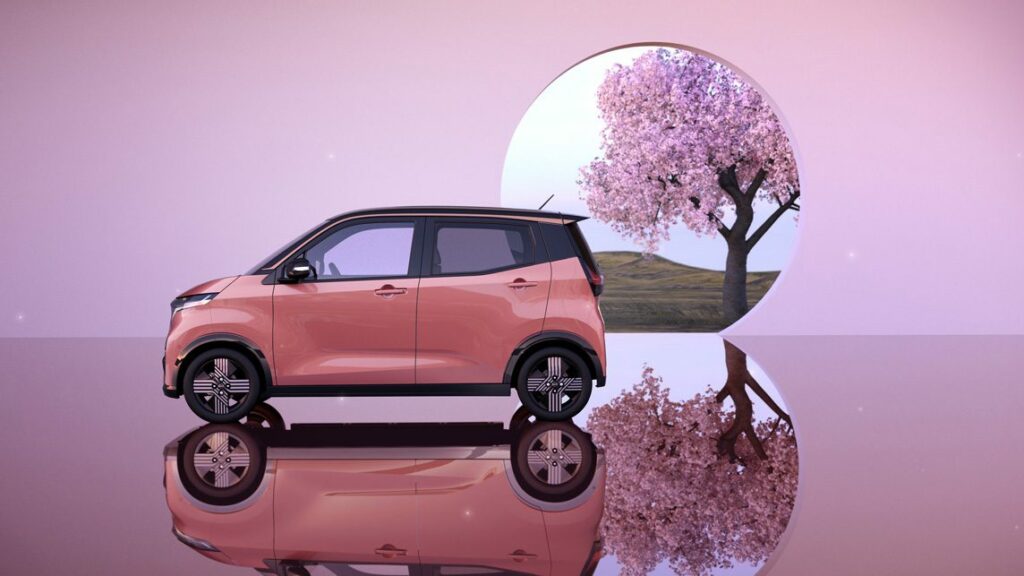
The penetration of 100% electric cars (BEVs) remains low in Japan, at around 3-4% of new sales in 2024 according to several observers, with a marked drop in volumes: only 54,224 BEVs sold, compared with 86,762 in 2023. Nissan dominates this relatively unprofitable segment thanks to the Sakura kei car (22,926 units, despite a 38% drop), followed by Tesla (around 5,000 units) and BYD, which surprised by outselling Toyota (2,223 vs 2,038 units for the €35,000 bZ4X).
Hybrids (HEV / PHEV): dominant segment
Non-rechargeable hybrids (HEVs) and rechargeable hybrids (PHEVs) are the vehicles that dominate the market, thanks in particular to the help of its global manufacturer Toyota. The overall market for EVs (BEV+PHEV) has fallen by 33% to 60,000 units in 2024, with HEVs more than making up for this thanks to subsidies maintained at 850,000 yen (~€5,200).
The land of the rising sun is aiming for 100% electrified new car sales (BEV, PHEV) by mid-2030 and carbon neutrality by 2050, but the conversion is not progressing as well as it should, due to a lack of competitive BEV offerings, affordable prices and, above all, infrastructure. Without acceleration, local manufacturers like Toyota risk losing ground to Chinese imports.
Infrastructure: accelerating deployment, but uneven coverage
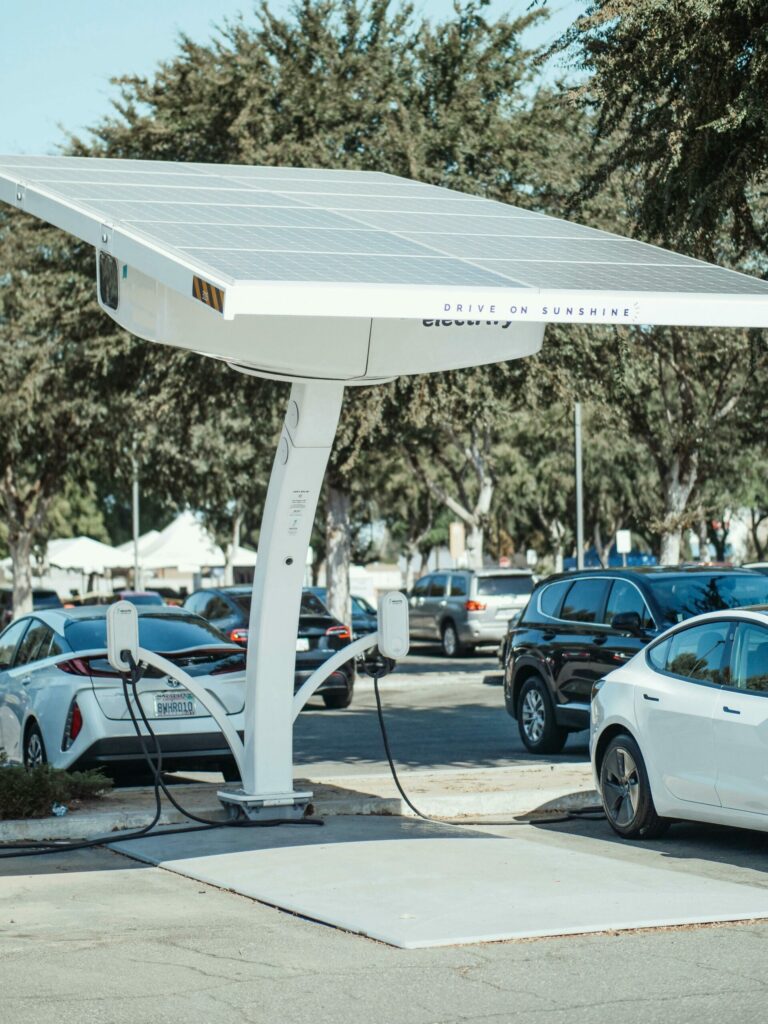
We’ve been talking about it: the Japanese recharging network is developing well, but not fast enough to allow BEVs to make the most of their potential. However, motorway operators (NEXCO) and utilities (TEPCO, ENEOS), which are public service companies, as well as municipalities, are multiplying the number of fast and AC stations.
In December 2025, according to the latest estimates, Japan will be stagnating at around 30,000-31,600 public EV charging points (including 8,200 fast ones), with an almost zero year-on-year growth rate of just over 0%, held back by the low take-up of BEVs and high costs. These figures are low, and a long way from the 300,000 connectors targeted by 2030.
Of the rapid charging points installed, only 60% exceed 50 kW, and the ratio of 1.7 charging points/100 km (2021) remains meagre compared with China (35 charging points/100 km) or France (8.4 charging points/100 km).
Coverage remains uneven, with rural areas, building car parks and some residential areas still lacking easily accessible solutions. Japan needs to go through a capillarity stage before BEVs become a mass-market option.
Infrastructure: accelerating deployment, but uneven coverage
Manufacturers: Toyota in the lead, Nissan a pioneer, the others on the move
- Toyota: national and international hybrid champion. The brand is adopting a cautious BEV strategy, although 2026 seems to be a turning point, with major investment in solid electrolyte batteries (R&D, partnerships).
- Nissan: with its Leaf model, Nissan has paved the way for the BEV made in Japan. Now the brand must step up a gear in the face of global competition.
- The other manufacturers, influential both nationally and internationally (Honda, Mazda, Subaru, Mitsubishi, Suzuki), are opting for a variety of strategies. Some are opting for hybrids, while others are stepping up the pace on BEVs.
Players in battery production :
Panasonic, GS Yuasa and Toshiba dominate the history of lithium-ion cells and packs in Japan: Panasonic the world leader (Gunma 2028 gigafactory, target 150 GWh/year by 2030 with Toyota/Nissan for $6.97 billion invested), GS Yuasa (develops batteries for Mitsubishi, Boeing 787, 90% of the world’s motorbikes), Toshiba (SCiB™ sustainable fast charge). The trio benefits from subsidies ($2.4 billion in 2024) to boost national production in the face of China.

Images
Solid-state: a strategic challenge. Toyota and its partners (Idemitsu in particular) are launching pilot projects and investing in the industrialisation of solid-state electrolytes, which could provide a thermal and safety advantage for hot and demanding markets. But industrial mass production is still some way off.
Infrastructure & energy :
NEXCO, TEPCO, ENEOS and regional utilities are deploying fast charging points on motorways and at city stations. Local and foreign suppliers of chargepoints (ABB, Siemens) are working together to develop the largest possible number of chargepoints.
Brakes: why Japan isn’t exploding with BEVs
- A strong hybrid heritage: present on the market for over 20 years, consumers know and trust hybrids. In fact, these vehicles enable people to adopt reduced fuel consumption without relying heavily on infrastructure. And manufacturers have understood and capitalised on this preference.
- Partial infrastructure: the network is making progress, but actual availability (charging points close to homes, building car parks, motorways) remains insufficient to reassure all BEV buyers to take the plunge.
- Costs and supply chain: BEV + expensive cooling systems/batteries weigh on the price of vehicles, which are inevitably more expensive than hybrids.
- Cautious industrial strategy: the major groups are favouring a multi-technology approach (hybrid + hydrogen + BEV) rather than switching straight to pure BEV. This cautious approach is holding back the growth in BEV volumes.
Technologies to watch: solid-state and hydrogen
Japan is banking heavily on solid-state battery technology, as it offers several key advantages: it is less sensitive to heat, making it more suitable for hot climates; it has a higher energy density and is potentially safer due to its more stable chemistry. Toyota is investing heavily in this technology with Idemitsu Kosan. If these efforts lead to industrial mass production by the end of the decade, Japan could regain a clear industrial advantage over global competition in the battery sector.
At the same time, the country is maintaining a robust strategy in favour of hydrogen fuel cell vehicles (FCEV), positioning this technology as a credible solution, particularly for heavy vehicles and specific uses where range and recharging are essential.
Conclusion – a Japanese balance, not a blind race
The speed of transition is twofold for Japan, which is following a different logic. Here, electromobility is being built up in stages, hybrids first, then BEVs, with a technological race on batteries that can change everything. The end of the decade will tell whether the gamble on solid-state technology and the ramp-up of industrial production will have transformed this organised strategy and the power of mobility.