
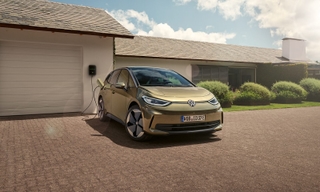

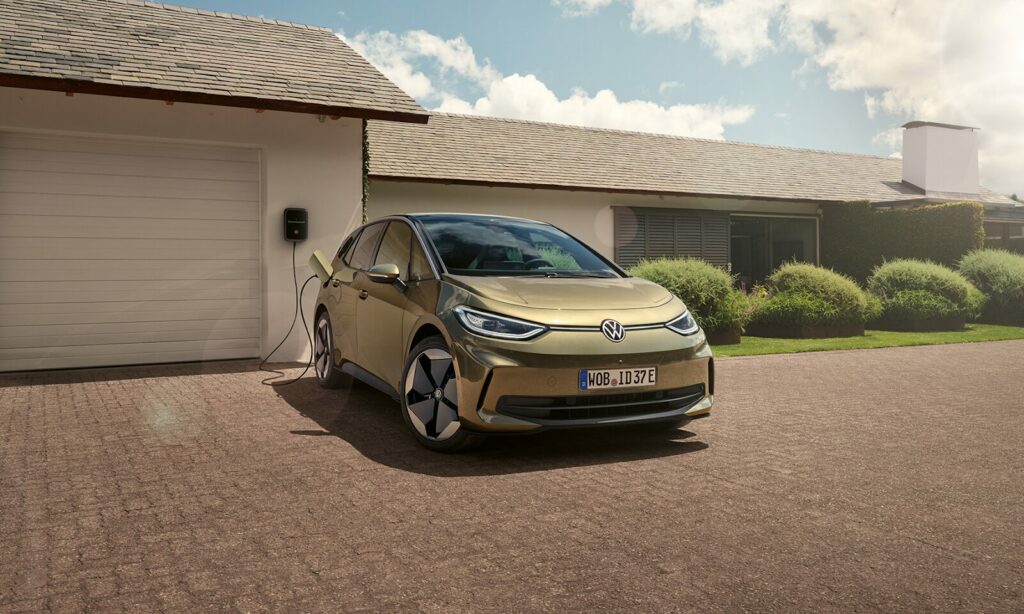
Access to electric mobility is becoming easier in France thanks to an unprecedented increase in Energy Savings Certificates (EEC). Since 13 February 2026, in partnership with EDF, the Group has been offering up to €6,890 in subsidies for the purchase or long-term leasing of 100% electric vehicles from its brands (Volkswagen, Audi, CUPRA, Škoda and VW Commercial Vehicles). This offensive comes at a time when the ecological bonus will be abolished in July 2025 and replaced by a system based on CEE.
A stronger system for private individuals
Volkswagen Group France announced on 13 February 2025 that it has increased its support for the CEE scheme. The amount of grants for private individuals has been increased to a maximum of €6,890 for households on the lowest incomes, i.e. €1,290 more than in 2025, no less.
The new tiers are now as follows:
- 3,450 for income in excess of €26,300 reference tax income (RFR) per unit
- 4,600 for modest incomes (RTS between €16,301 and €26,300 per part)
- 6,890 for low-income households (income less than or equal to €16,300 per unit)
This aid is automatically applied at the time of purchase or lease, with no additional administrative formalities for the customer at dealerships in the VW Group France network. This simplification will make it easier for the French to buy an EV, as the bureaucratic red tape involved in accessing this public support is regularly criticised.
Strict but consistent eligibility criteria
To qualify for these enhanced CEE incentives, vehicles must meet a number of criteria:
- Eco-score greater than or equal to 60/100: this environmental indicator measures the CO₂ impact of the vehicle’s production and use.
- Catalogue price under €47,000 incl. VAT (excluding options)
- Weight less than or equal to 2.4 tonnes
- Compliance with the Coup de Pouce standard or the European bonus: the latter recognises vehicles whose production and battery cells are manufactured in the European Economic Area.
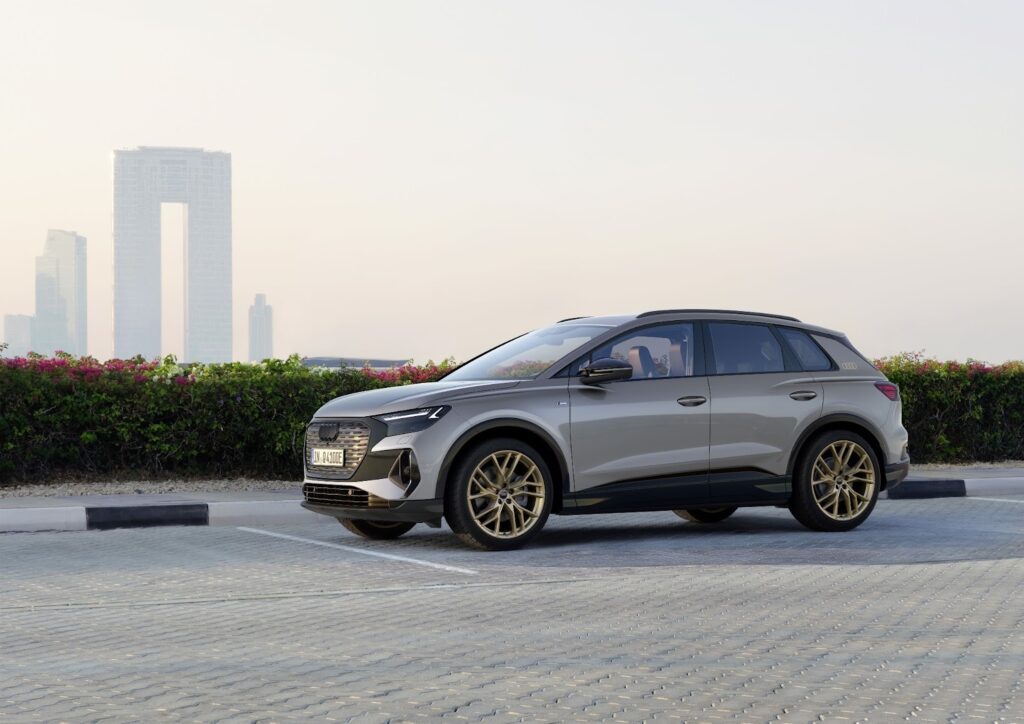
The European bonus is a central element of the scheme. It enables vehicles assembled in Europe with European batteries, such as the Volkswagen ID.3 and ID.4, the Audi Q4 e-tron or the Škoda Enyaq, produced in Zwickau or Emden and fitted with cells manufactured in Sagunto or Brunswick, to be promoted.
An immediate impact on real prices
The effect of this increased support is immediate and perceptible on the effective price of electric vehicles. Here are a few concrete examples:
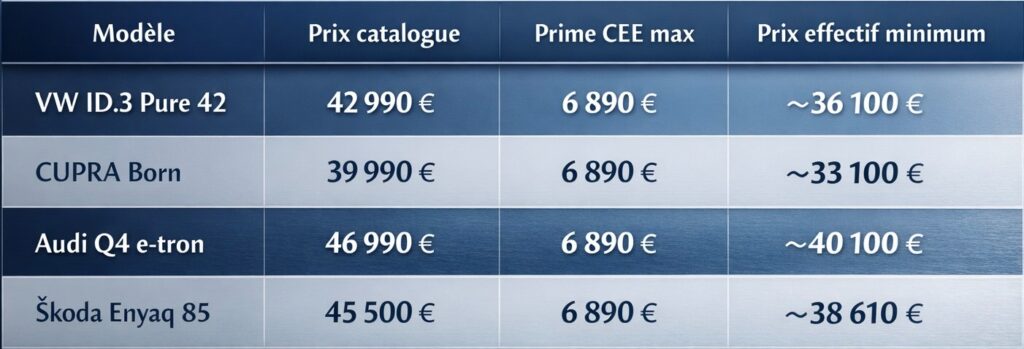
A low-income household can therefore reduce the price of a popular electric vehicle by more than 15%, a particularly significant gain at a time when direct public subsidies have been cut.
In addition to support for private individuals, the new enhanced CEE scheme also offers attractive amounts for businesses and local authorities:
- Private vehicles (companies): up to €575
- Light commercial vehicles (fleets of more than 100 vehicles): up to €4,890
A strategic response to the end of the ecological bonus
The increase in EWC bonuses comes at a time when the aid landscape is undergoing radical change. In July 2025, the historic ecological bonus was abolished in France, replaced by a system of bonuses linked to energy saving certificates managed by energy suppliers such as EDF.
Since then, support for the purchase of an electric vehicle has been heavily dependent on the price of CEE certificates, as well as on the eco-score and European origin of the components. This transformation was presented by the French government as a sustainable solution for maintaining support for electric vehicles while keeping public spending under control.
Conclusion
By massively increasing its CEE incentives with EDF, Volkswagen Group France is playing a strategic role in transforming the ecosystem of support for electric mobility in France. The scheme is seen as a response to the abolition of the ecological bonus, while promoting European industrial production and making electric vehicles more affordable for households, businesses and local authorities. It’s a strategy that could serve as a model for other manufacturers in the months to come.