


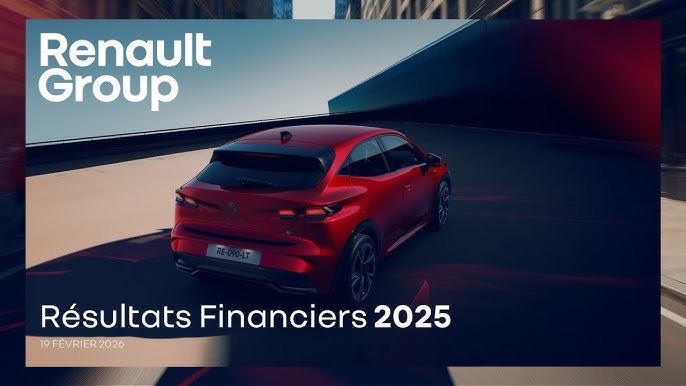
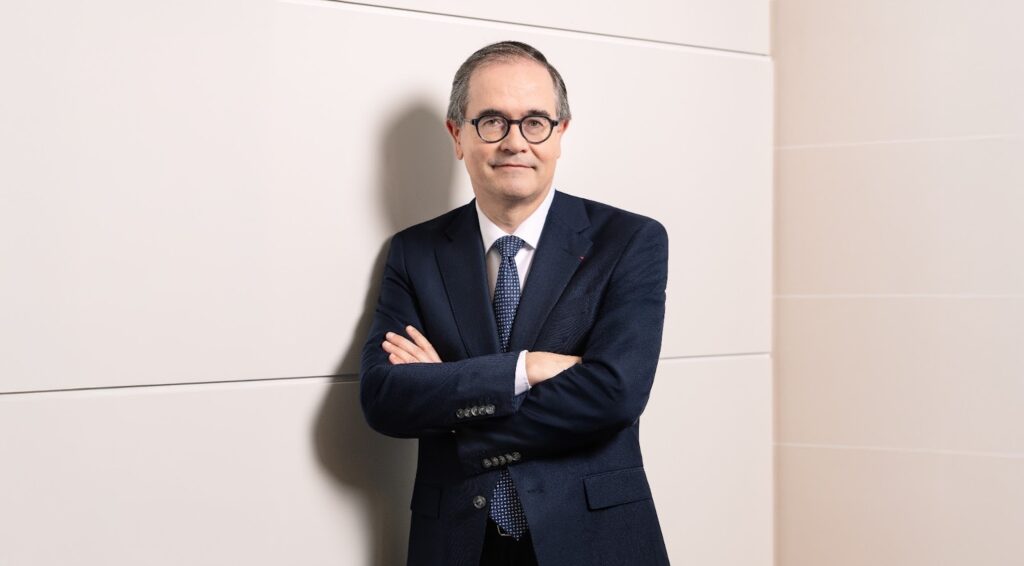
On 19 February 2026, Renault Group presented its financial results for 2025 during an online conference call with journalists and analysts. The message from François Provost, CEO, and Duncan Minto, CFO, was clear: 2025 remains a solid year in a market under pressure, but 2026 promises to be more cautious, due to the price war and industrial reorganisation.
A solid 2025 performance in a deteriorated environment
François Provost began by emphasising the context: 2025 is part of a more difficult global market, marked by increased competitive pressure, particularly in the electric segment, where Asian carmakers are gaining more and more ground. « The 2025 results, against a difficult market backdrop, demonstrate the commitment of our teams to delivering a consistent performance of the highest order in the automotive industry », he said.
In financial terms, the Renault Group still expects an operating margin of 6.3% in 2025, down on the record level of 7.6% achieved in 2024. In terms of operating profit, the CEO has announced a year-on-year decline of around 14.8%. Finally, in terms of sales, the Group sold 2,336,807 vehicles worldwide in 2025, up 3.2% on the 2,264,815 units sold in 2024. Nevertheless, the Group remains one of the most profitable generalist carmakers in Europe.
The CEO of Renault Group described a particularly tense environment:
- Intensification of price wars on electric vehicles, with Asian players on the offensive.
- Slowdown in the European retail market.
- Underperformance in the light commercial vehicle (LCV) segment.
Against this backdrop, Renault is highlighting the resilience of its post-restructuring model: reducing fixed costs, refocusing the range and ramping up platforms dedicated to electric vehicles.
2026: a cautious approach and lower margins expected
And if 2025 has been more discreet, this may also be the case for 2026. Renault Group executives have been much more cautious for the current year.
Renault anticipates an operating margin of around 5.5%, down on 2025. This is justified by the Group, which cites an environment that remains « complex », marked by international economic uncertainty and ever-increasing pressure on prices. But while this estimate gives us an idea of how the brand is approaching this year, we will have to wait for the new strategic plan, due on 10 March 2026.
Palencia: a strong signal on industrial electricity allocation
Before the March strategy, however, it was during the Q&A session of this video conference that the most strategic announcement was made.
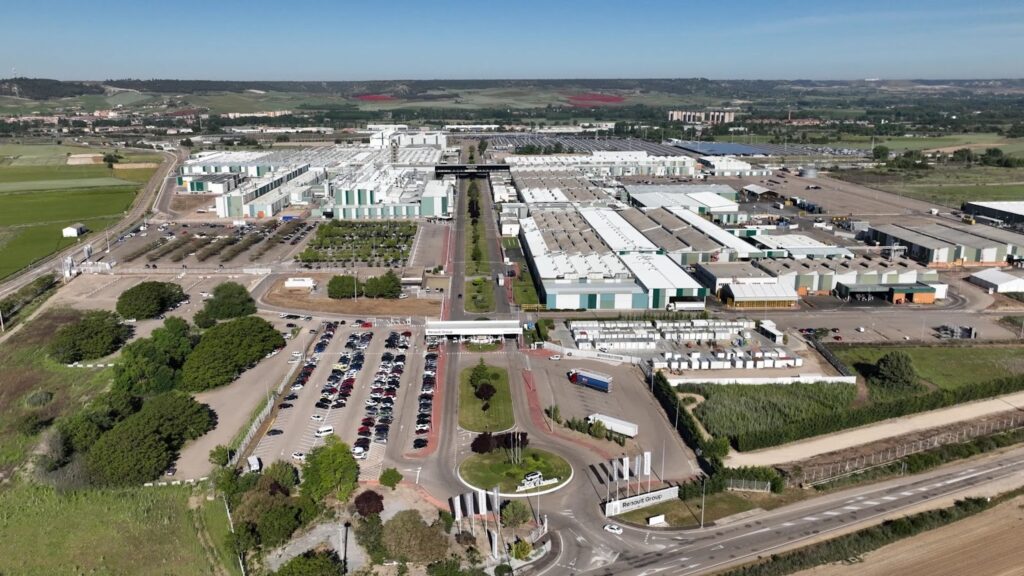
Asked about the industrial allocation of future electric models, François Provost said: « We need to find the competitiveness, find the economic equations, so no final decision has been taken, but in terms of industrial allocation, it is natural to use Palencia as a reference for the renewal of the C and D segments, including electrics.
This statement clearly places the Palencia plant at the heart of the Group’s future industrial strategy for the compact C and D segments, including electric vehicles. Currently dedicated mainly to the Captur, the Spanish plant could become a pillar of mid-range electric production, with a current capacity of around 250,000 units per year and the potential to ramp up production.
European competitiveness and rebalancing of sites
Palencia was chosen because of its industrial competitiveness. Spain has lower labour costs than France, and benefits from recent social agreements that favour flexibility. The agreements signed in recent years between Renault and the Spanish trade unions, particularly at the Valladolid and Palencia sites, allow for more flexible working hours and shifts, greater versatility among employees and better control of production costs.
This move is also a continuation of the geographical specialisation undertaken since the Renaulution plan. Until the recent launch of the new Twingo in Slovenia, the French plants at Douai and Maubeuge were the Group’s only European sites dedicated to 100% electric models, while Spain had become the hub for hybrid models, including the Austral, Espace and Rafale.
According to our colleagues in « Les Echos », Palencia is set to be the site of the group’s next medium and large electric family models from 2028.
A profitable group in strategic transition
The main conclusions of this teleconference are twofold. Renault remains profitable in a difficult environment, but is entering a more cautious phase. The expected fall in margins in 2026 reflects a realistic anticipation of future tensions. At the same time, the potential allocation of the C and D electric segments at Palencia marks a structuring step: the industrial shift towards electric vehicles is now fully integrated into the group’s strategy.
The 10 March plan will set out this roadmap, which aims to ensure profitable growth in the second half of the decade.