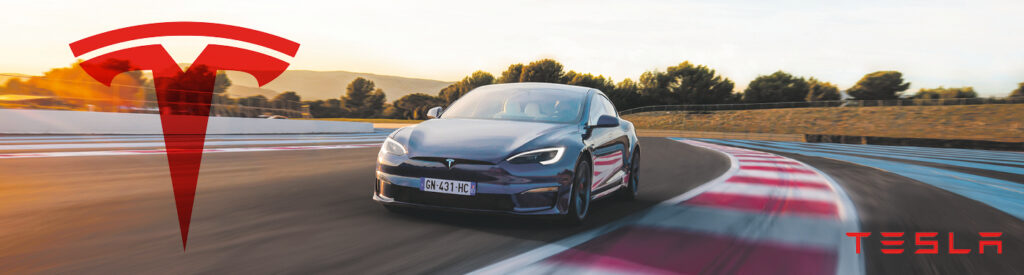

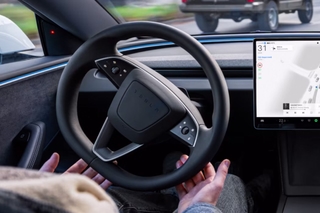
Since 1 December, Tesla has been transforming 10 of its French centres into autonomous driving showcases, managed by FSD (Full Self-Driving) in « supervised » mode. Until 31 December 2025, curious onlookers will be able to discover this technology, which is still banned in Europe.
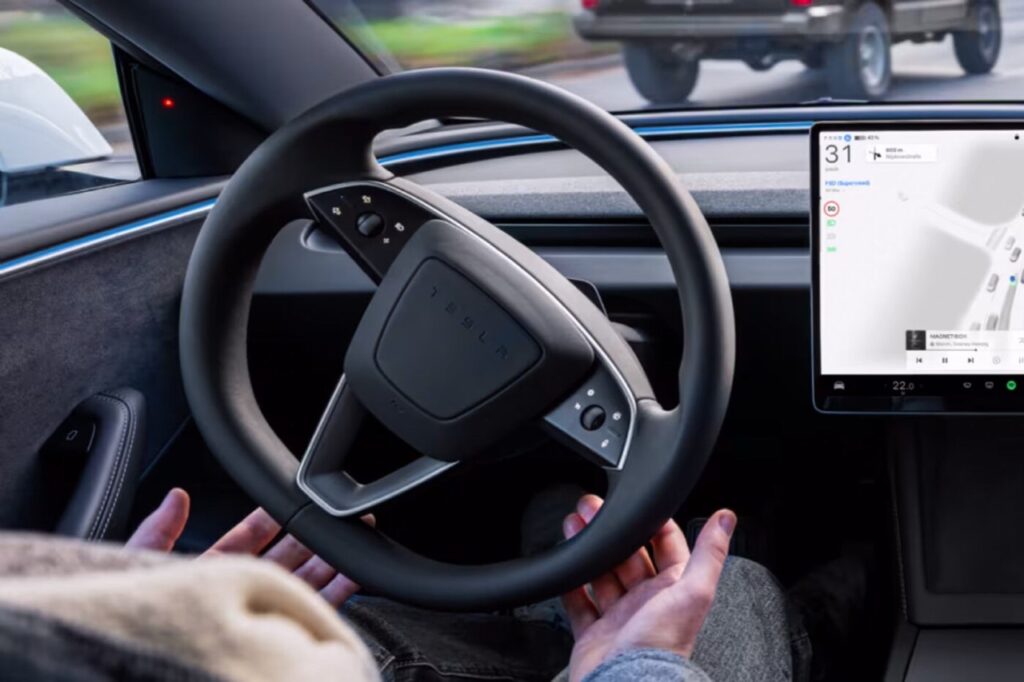
Tesla FSD: the technology that challenges European roads
This autonomous ride through French cities is possible thanks to a technology that the American firm has been developing for over 9 years. In 2025, the most recent high-performance version is v14, based on the « vision only » approach: eight high-resolution cameras and a powerful on-board computer analyse the environment in real time via a neural network. The big innovation is that this motor intelligence does not use radar.
In practical terms, to get from trip A to trip B, the driver enters a destination via the screen, which generates an itinerary with suggested lane changes, motorway exits and bends. The FSD follows this route, selecting the right forks and adjusting in real time (detours, road closures). The system therefore manages steering, acceleration, braking, lane changes, intersections and pedestrians, mimicking human decisions based on billions of kilometres accumulated in the United States.
However, it remains classified as level 2 according to the SAE (Society of Automotive Engineers) classification of automation levels, which ranges from 0 to 5. It requires constant human supervision, with the driver remaining legally responsible.
Where can you test the SDF as a passenger?
It’s the announcement of the end of the year: Tesla is opening its centres from 1 to 31 December 2025 for supervised test drives in France. In all, more than 10 Tesla Centres across France will be open to the more curious. Nantes, Bordeaux, Paris-Est, Lille, Cannes, Toulouse, Marseille, Strasbourg, Paris-Nord and Lyon-Est: these are the locations selected by Elon Musk’s brand.
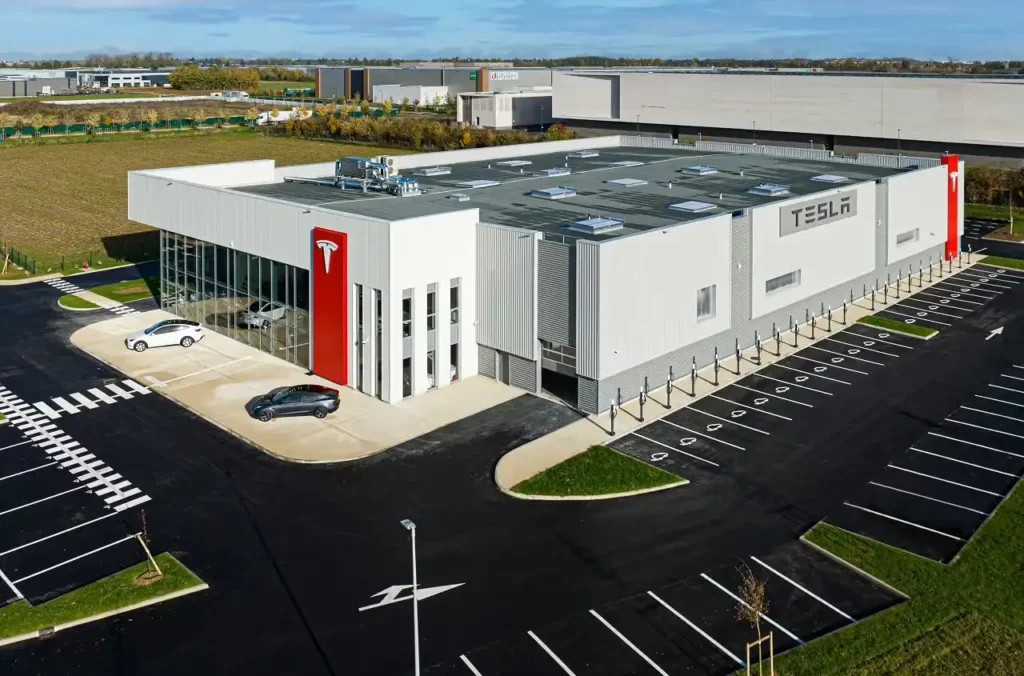
Registrations can be made via the Tesla France website, in limited time slots, with an employee at the wheel for the entire duration. The scheme will run in Europe (Italy and Germany) until 31 March 2026.
A typical test route
With the aim of proving that this technology, which makes drivers reluctant, is effective and reliable, each session reproduces a home-work journey. The car will drive through dense urban areas, roundabouts and the ring road, but will also wander along suburban roads and high-traffic areas to test stressful everyday scenarios. The FSD will be piloting these stages alone (insertions, priorities, pedestrian crossings), under immediate supervision. It is expected to take around 20-30 minutes around the Tesla Centre.
When will this be authorised?
In France and Europe, full approval for customer use is based on the DCAS/UNECE R171 phase 3 regulation. This regulation, which recently came into force on 22 September 2024, authorises lane changes and manoeuvres initiated by the system under human supervision.
At present, no European territory has authorised this technology. Nevertheless, Tesla is trying to convince the RDW, which is the independent Dutch authority for all motorised vehicles. The American brand is targeting February 2026 in the Netherlands and hopes to extend the technology to other countries in late 2026/early 2027. Elon Musk is lobbying hard, criticising the « obsolete » rules, despite a number of changes (e.g. France banning « fully autonomous » advertising).
For everyone, these journeys offer a unique opportunity to observe technology on our roads, in the face of our markings, our signage and our very European way of driving. All of which will fuel the debate on the real role that autonomous driving will play in tomorrow’s electrified mobility.