
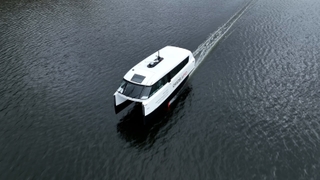
At the end of January 2026, a Swedish electric ferry set the world record for the longest voyage ever made by an electric ship, by sailing almost 300 kilometres from Gothenburg to Oslo. But beyond the symbolic performance of the Candela P-12, this crossing above all marks a strategic breakthrough: that of maritime electrification that can be operated without heavy infrastructure.
A record, but above all a commercial demonstration
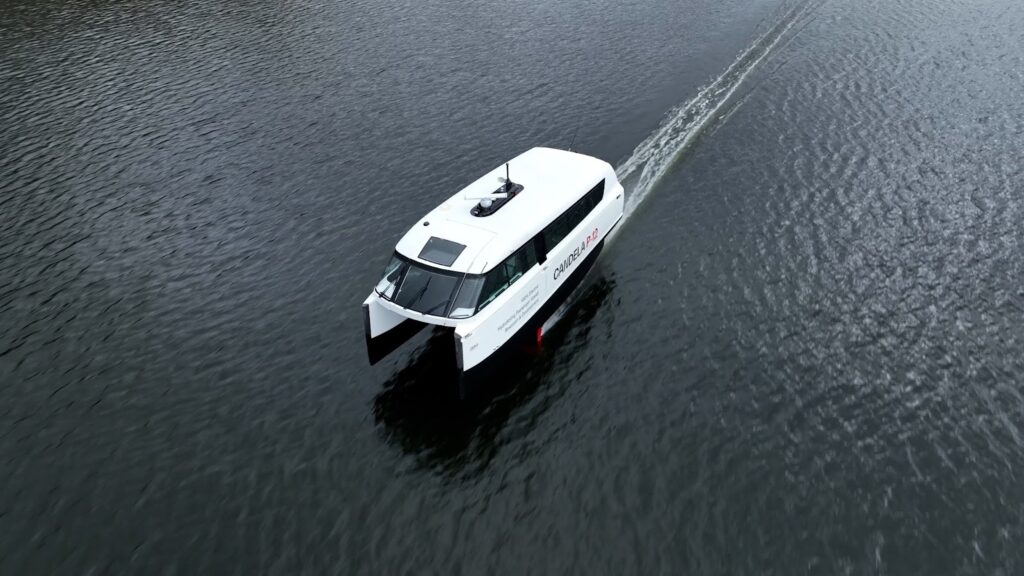
The journey took place over three days, between 30 and 31 January 2026, along the coasts of Sweden and Norway. In total, the boat, which can carry up to 30 seated passengers plus a captain, covered 160 nautical miles (296 km), with simple stops made at public quays to demonstrate recharging, without a dedicated megawatt station or battery exchange.
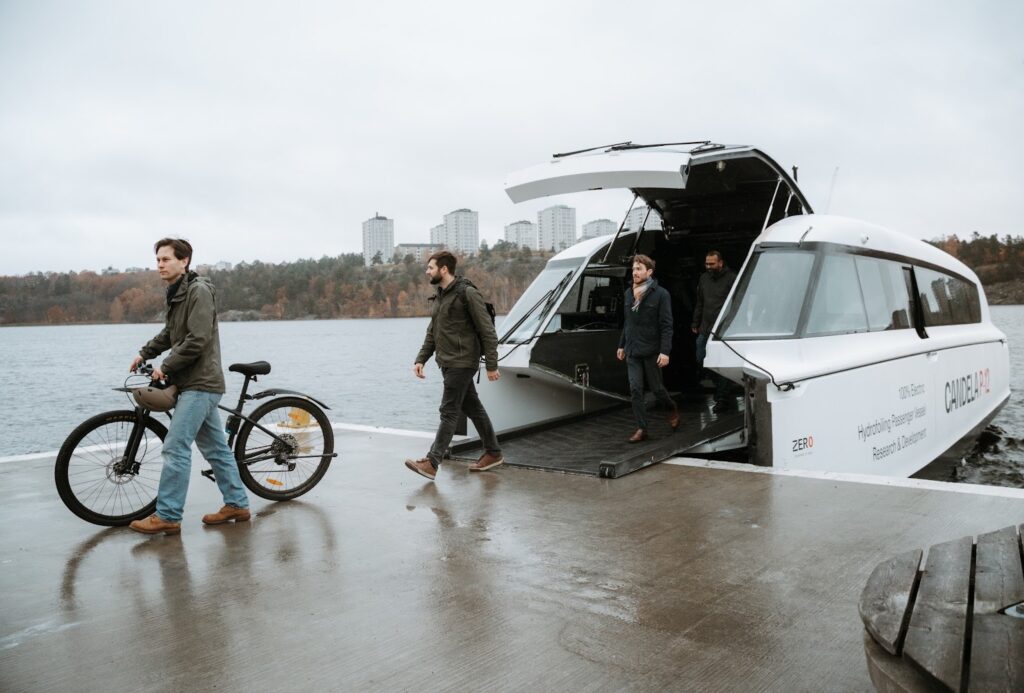
At the helm of the operation was Gustav Hasselskog, founder and CEO of Candela Technology. For the Swedish entrepreneur, the message of this event is not just about performance:
« Charging infrastructure is the hidden cost of electrifying conventional ships. In many cases, building multi-megawatt chargers costs as much as the ships themselves. Our breakthrough is that the P-12 charges quickly and can operate anywhere.
The figures back up this claim. The total energy cost of the trip was no more than 200 euros, or around 0.12 €/km, with three to four partial recharges of 20 to 60 minutes via conventional DC charging points (150 to 350 kW).
The secret: flying over water
The Candela P-12’s performance is the result of a radically different architecture to traditional ferries. The ship is based on hydrofoils controlled by artificial intelligence, capable of lifting the hull from 50 centimetres to one metre above the water at speeds of up to 16 knots. The result is simply stunning in every way:
- 80 to 90% less consumption,
- virtually no wake,
- silent navigation,
- and a massive reduction in seasickness (up to -90% according to Candela).
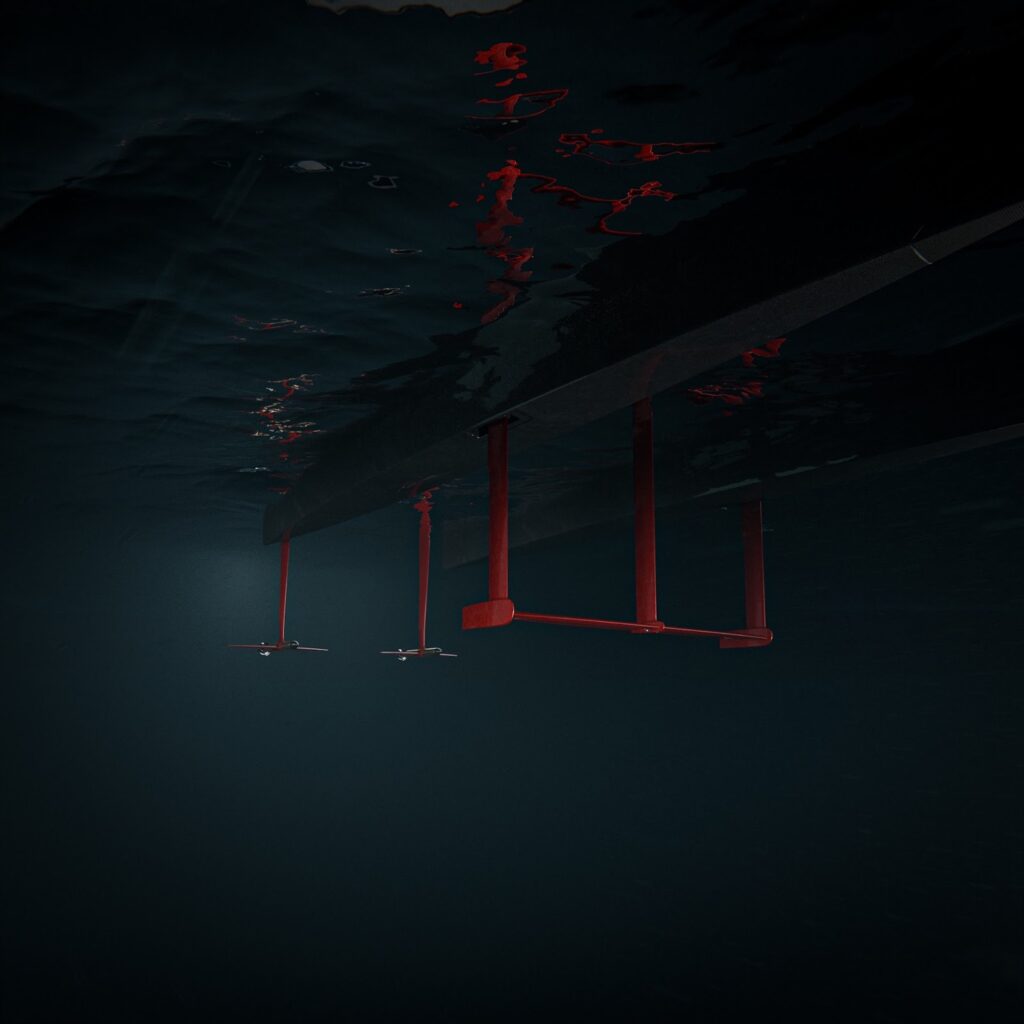
The Candela P-12 is a true racing car of the seas, powered by two C-POD electric motors developing up to 340 kW continuously, fed by a lithium-ion battery with a usable capacity of around 336 kWh. This performance is comparable to that of a traditional thermal ferry, with a cruising speed of 25 knots and peak speeds of 30 knots, but with a zero environmental footprint in use.
An already credible business model
Priced at €1.7 million, the Candela P-12 costs no more to buy than an equivalent diesel ferry. On the other hand, its operating costs are up to 50% lower, thanks to simplified maintenance and an obviously derisory energy cost, thanks to electric power.
Obviously, this economic equation changes the game for local authorities and shipping operators. Whereas some countries rely on heavy, bulky and expensive recharging infrastructures, or on battery exchange systems costing hundreds of millions of euros, Candela offers a more accessible approach that can be deployed immediately.
Scandinavia: laboratory for flying electric ferries
This is no stroke of luck for the Nordic brand, since the Candela P-12 has already been integrated into public transport projects, notably around Stockholm. There, it links the island of Ekerö to the city centre of the Swedish capital in 25 minutes, compared with almost an hour by bus.
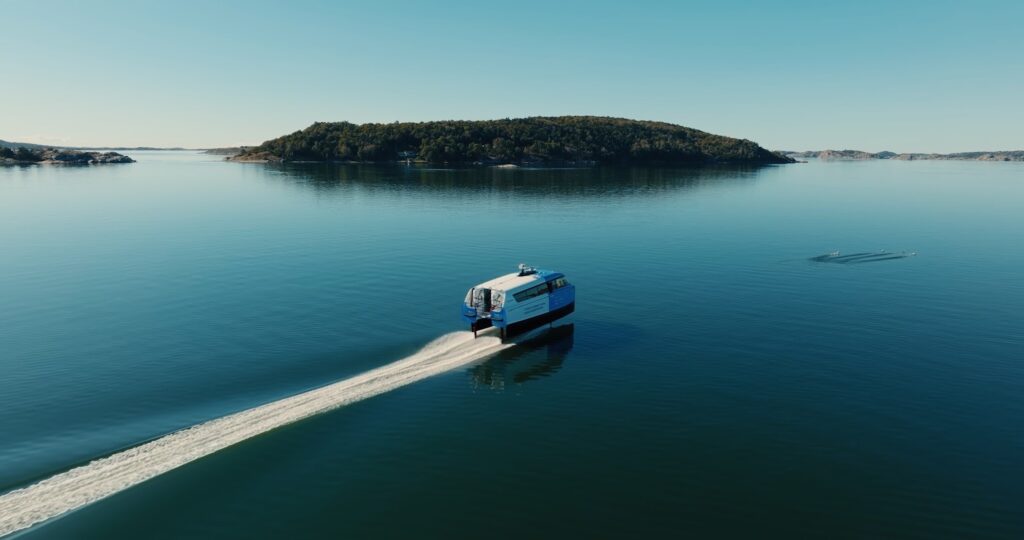
What’s more, in neighbouring Norway, several local authorities are testing the P-12 on short coastal routes – a necessity for this country, which is aiming for 50% zero-emission ferries by 2025. The electric hydrofoil ferry is thus becoming a strategic tool for reconciling mobility, the environment and geographical constraints.
Towards clean shipping on a daily basis?
This record is more than just a technological achievement for Candela. It validates a concept that is destined to become more widespread: electric ferries capable of providing regular services of up to 50 nautical miles, with controlled costs and a minimal environmental footprint.
At a time when the International Maritime Organisation is aiming for carbon neutrality by 2050, the Candela P-12 shows that this transition is achievable without any loss of quality.