


As we know, range remains the number one obsession of electric car drivers, holding back the spread of all-electricity. Faced with this challenge, a number of innovative solutions are emerging to offer greater freedom of movement. Among them, Far-A-Day is relaunching the concept of an external battery trailer, promising up to 300 km of extra range.
Autonomy, the number one obstacle for motorists
The number 1 obstacle to the adoption of an electric car for motorists remains range. According to a recent study by Avere-France, 65% of drivers cite the fear of running out of battery before reaching their destination as the main obstacle to buying an EV. According to Connaissance des Énergies, the average range of EVs currently on the road in France is around 350 km in real-life conditions. A figure that is constantly rising, but one that hardly reassures those who are planning long journeys or frequent trips outside built-up areas.
Far-A-Day: an innovative approach to pushing back the boundaries
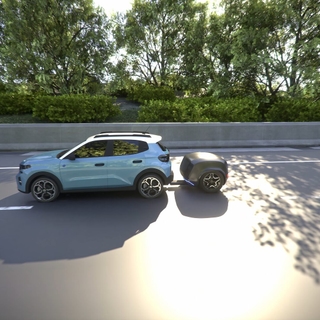
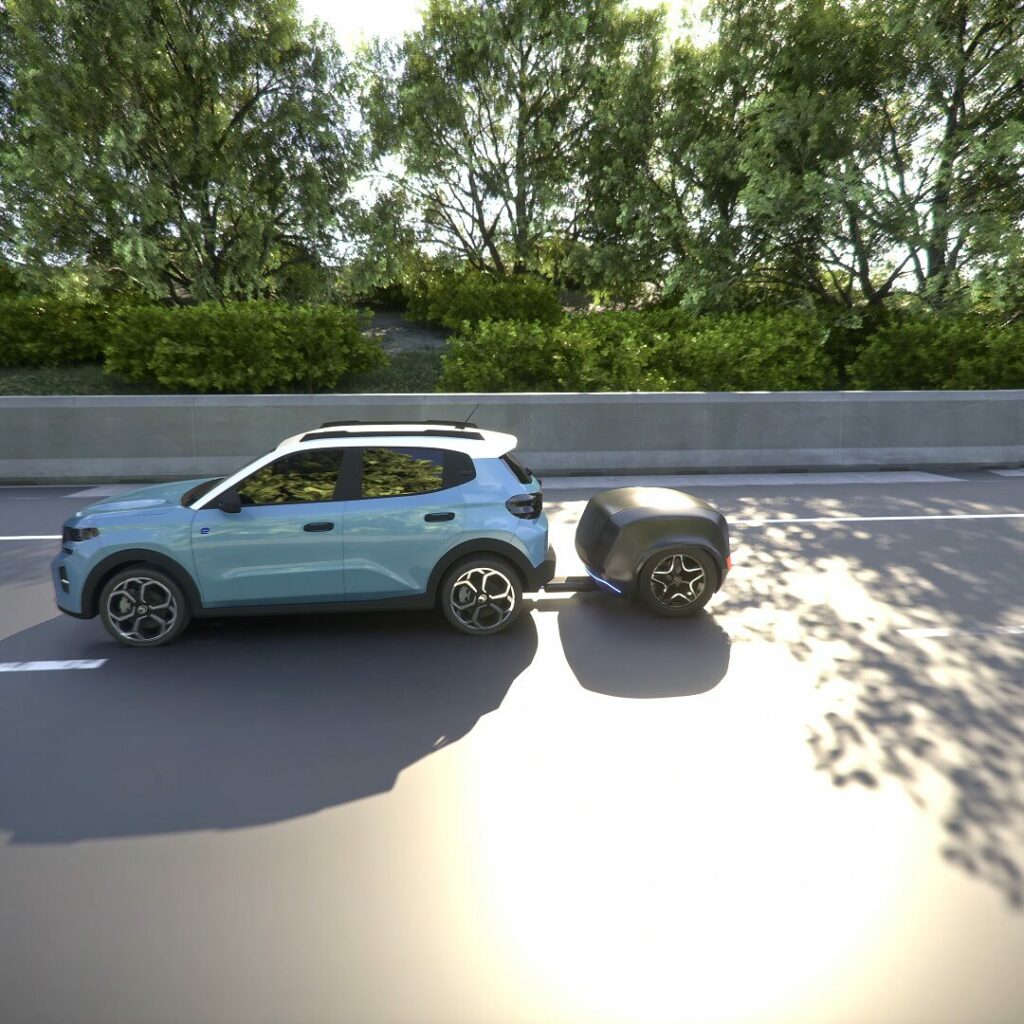
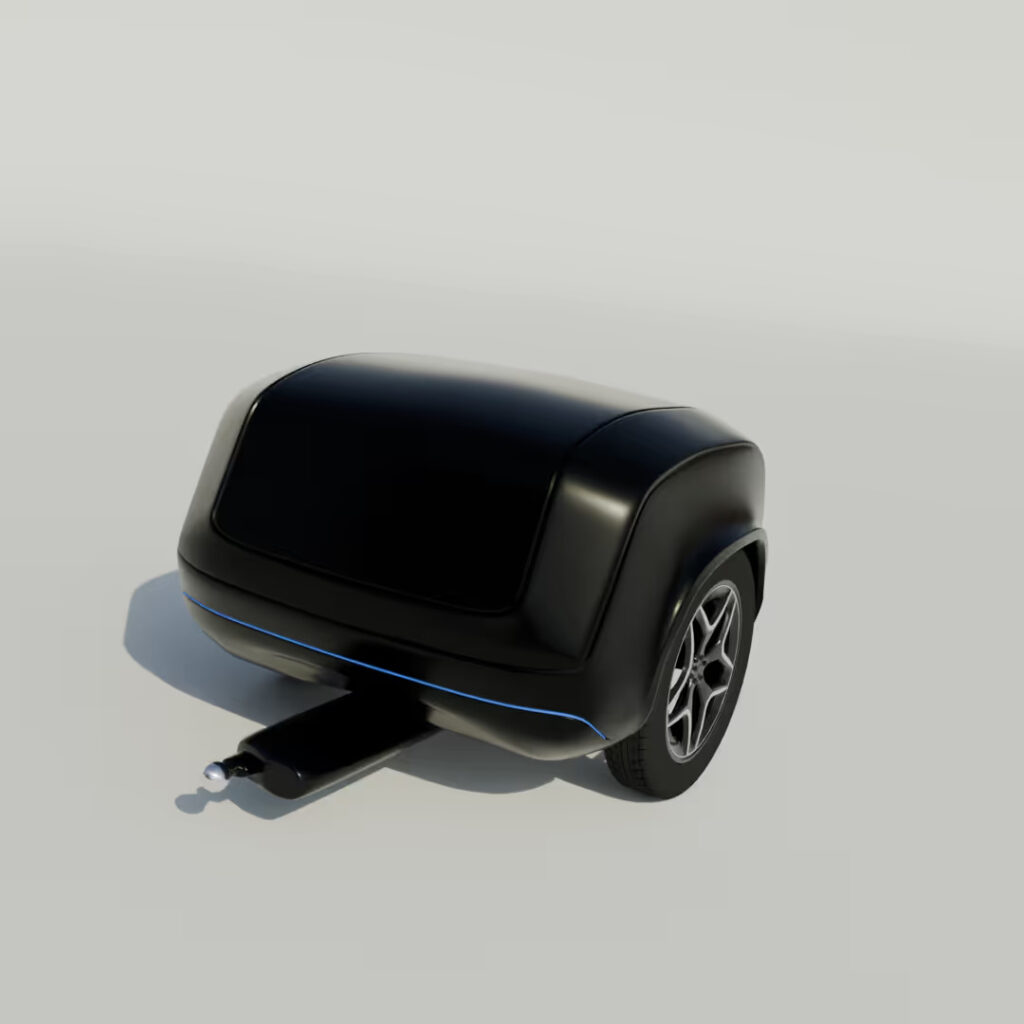
In the face of this scepticism, a number of innovative solutions are emerging to increase autonomy ever more effectively. Following the failure of EP Tender two years ago, French start-up Far-A-Day has recently revived an innovative concept. The idea is simple: a 60 kWh external battery trailer capable of adding up to 300 km of range. It’s no less simple to use: motorists go to a swap station specially designed for this service, book their equipment in advance using a mobile app, and in less than two minutes, without having to leave the passenger compartment, a battery trailer is attached. Once connected, it supplies the vehicle’s main battery while driving.
A solution designed for all vehicles
Far-A-Day aims to transform the way we think about long EV journeys. Arthur Darde, CEO, points out: « The Far-A-Day trailer is not just a battery extension, it’s a revolution in the user experience, making it possible to travel further without compromise, on vehicles that are often ill-suited to towing. » In fact, this Far-A-Day battery trailer is designed to be compatible with the majority of electric vehicles authorised to travel on the motorway. All you need to do is install a towbar specific to each vehicle model, incorporating a custom-developed electrical connection. Weighing in at just 500kg and offering considerable energy capacity (60kWh more range), the device promises to broaden the range of uses for EVs, particularly in regions where recharging infrastructure is still limited.
A network of swap stations for greater efficiency
The French company has announced that, with more than 200,000 km covered by validated prototypes using patented technology developed over several years of R&D, it plans to set up a network of swap stations in France. From next year, a pilot Paris-Bordeaux corridor will be put into action. As part of this far-reaching ambition to change carbon-free mobility, Far-A-Day hopes to open 30 stations by 2027, covering 80% of long-distance journeys in France.
Other players come into play
This technology is not an isolated approach. For several years now, the market has seen the emergence of a number of bold players, all looking for answers to the public’s expectations:
- Ample, with its interchangeable modular battery system, entered into a partnership with Stellantis in December 2023, beginning active deployment for certain models such as the Fiat 500e in Madrid from 2024.
- In 2023, Ford filed a patent for an innovative emergency battery positioned on the roof of the vehicle, a simpler solution that is still at the conceptual stage.
- In November 2025, EV Clinic will unveil an additional universal 18 kWh battery, capable of connecting to the high-voltage circuit of EVs and compatible with several brands.
A promising future for electric mobility
With Far-A-Day’s concrete promise to extend drivers’ freedom of movement, electromobility could reach a new level in the next few years. It remains to be seen whether vehicles that are not approved for towing can be adapted, and whether the business model will find its audience. These innovations illustrate that sustainable mobility is not just about a battery, but about an intelligent ecosystem that adapts to the needs of motorists.