



The 2025 Formula 1 season, which has just come to a close, will go down in history as McLaren driver Lando Norris clinched his first-ever world title after a thrilling championship. For the British team, it was a historic triumph, but behind the celebrations, another major turning point is taking shape: the end of ‘classic’ engines and the start of a reinforced hybrid era, from the 2026 season.
A revolution under the bonnet
The single-seaters will continue to be powered by a 1.6-litre V6 turbo engine, as they are today, but with a radically altered energy/power split. The central element of this change? Electric power will triple from around 120 kW to around 350 kW, or 475 bhp, via the MGU-K system. In practical terms, the electrics will be able to provide almost 50% of the total power.
The old MGU-H unit is a small motor that converts the heat from the exhaust gases into electrical energy to help the car go faster. The 2026 rules do away with this part. But even without it, the car becomes simpler and more efficient: thanks to the other hybrid systems, every time the car brakes or accelerates, it can recover much more energy than before, up to 8.5 MJ per revolution, almost double that of current systems.
Total power preserved
Obviously, these innovations are being produced with the clear aim of maintaining performance, and therefore enhancing the spectacle that is motor racing. With these changes, the overall power of the 2026 engines remains extremely high, with an estimated total of just under 1,000 bhp (combustion + electric).
What has changed is the reduction in engine power. Its power has been slightly reduced to around 400 kW, compared with 550 kW at present.
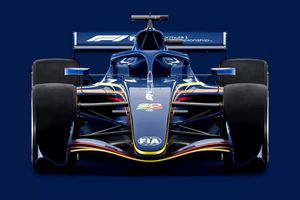
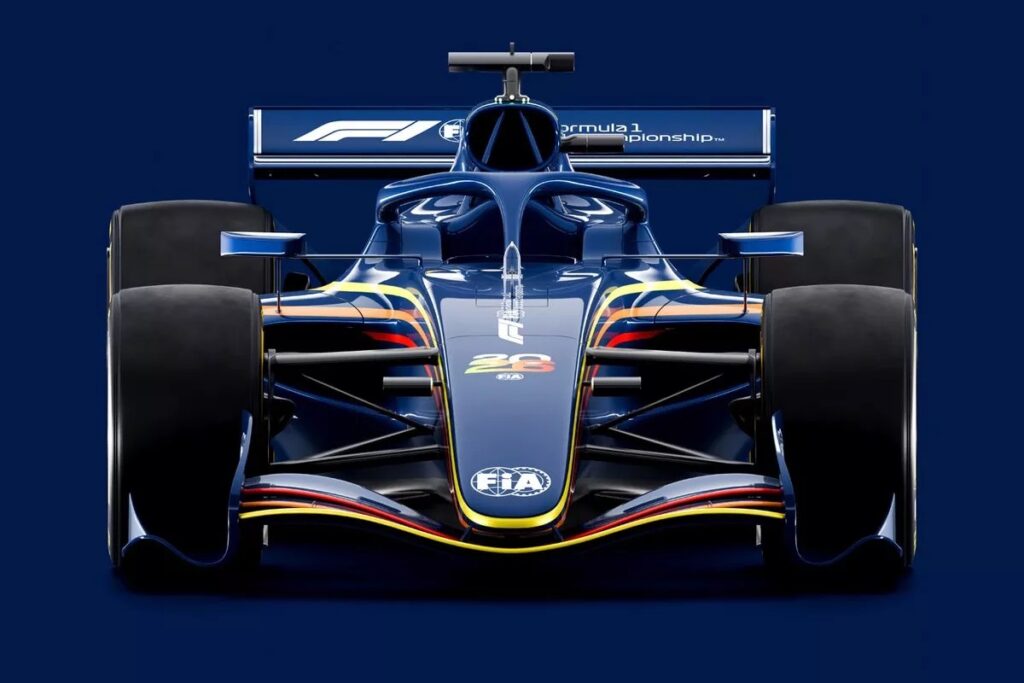
Other innovations modifying the car itself will appear as early as next season. The aerodynamics of the single-seaters are being extensively modified, with a clear objective: to reduce drag, limit excessive downforce and improve fuel efficiency.
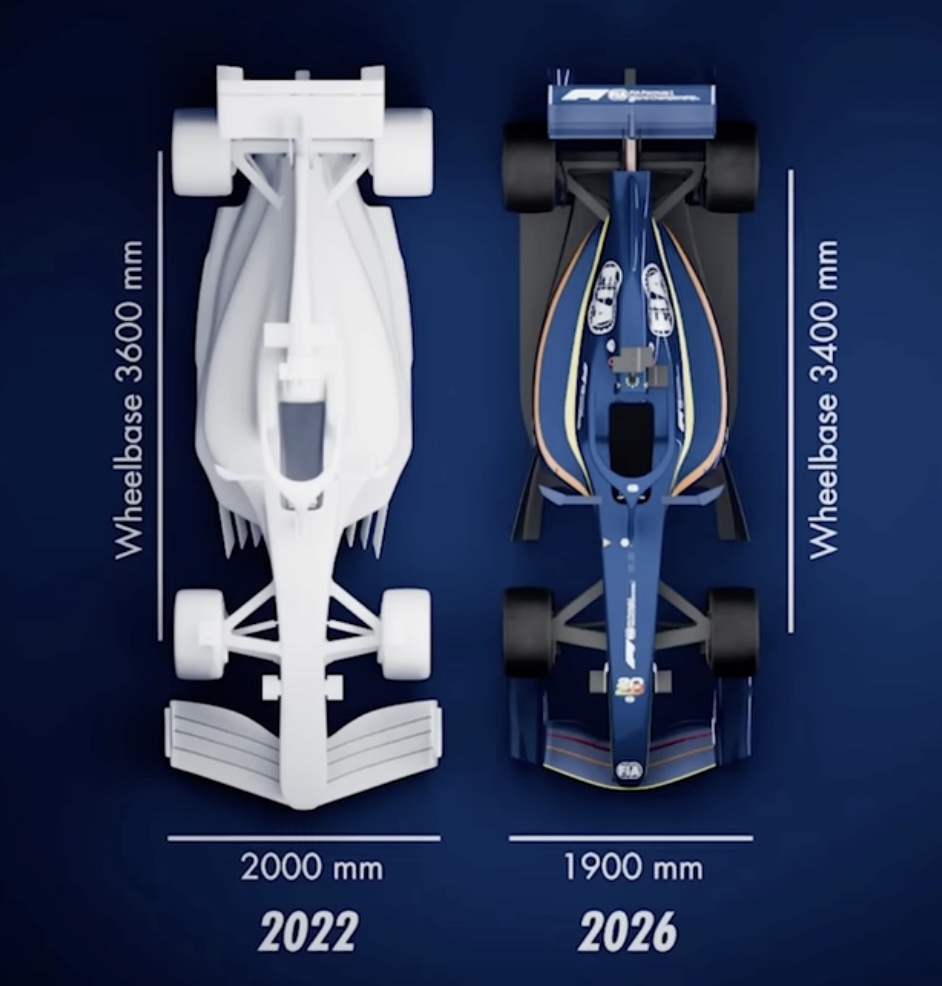
To illustrate this, the F1 cars of 2026 will be more compact and lighter, with a reduction in width (1.90 m compared to 2 m today) and wheelbase, according to the latest FIA guidelines. But the real revolution comes from the introduction of active aerodynamics, a first on this scale in the recent history of the sport. The single-seaters will have two distinct aerodynamic modes:
- a low-drag mode for straight lines,
- a high downforce mode for cornering and braking.
The aim of these changes is to make the Grands Prix more competitive and more exciting for drivers and spectators alike.
Following initial tests, Mercedes has revealed that the 2026 single-seaters could reach top speeds of up to 400 km/h. That’s quite a feat when you consider that the speed record so far has been held by Valtteri Bottas at the 2016 Mexican Grand Prix, when his car reached 372.6 km/h.
An economic objective for manufacturers
The 2026 regulations are not just about performance, but also about rationalisation. By simplifying several vehicle components, the FIA intends to drastically reduce development costs. This move makes Formula 1 more attractive to new engine manufacturers, by lowering the technological entry barrier. As a result, Audi has officially joined the grid, Ford is making a comeback by joining forces with Red Bull Powertrains, and Cadillac is also set to become an engine manufacturer in 2029. The elite of motor sport is thus opening up to renewed, more diversified and sustainable competition.
Sustainable fuels and the ecological transition
But the revolution doesn’t stop at power. In fact, these hybrid engines will be powered by 100% sustainable fuels, and the amount of petrol is reduced from the 100 to 110 kg needed today to 70 to 80 kg.
Produced from non-fossil sources, these fuels will be based on advanced biofuels or synthetic drop-in fuels, meaning that they can be used directly in engines without major modifications. They will drastically reduce carbon footprints while remaining compatible with current engine architecture.

A strategic turning point for F1
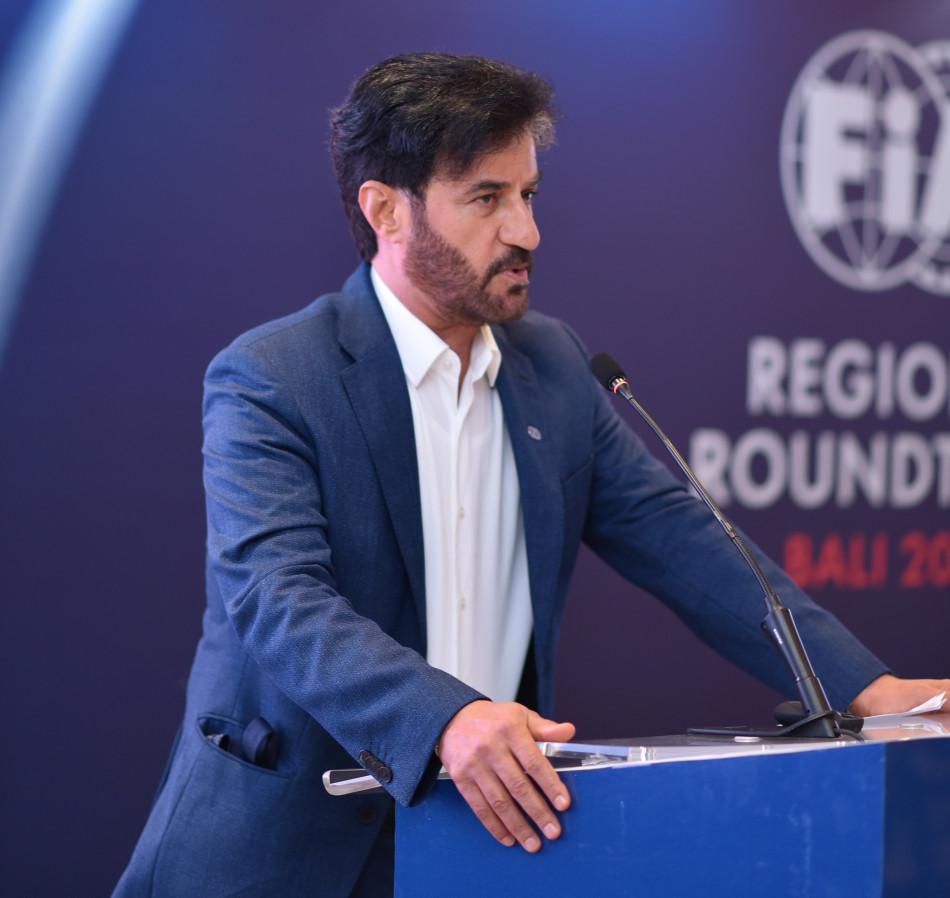
Mohammed Ben Sulayem, President of the FIA, justifies this strong choice to increase the proportion of electric power in F1 engines:
« The FIA continues to push innovation and sustainability across our motorsport portfolio. The powertrain regulations for 2026 are the most visible example of this. »
This technological shift shows that Formula 1 is no longer content to be a showcase for the performance of the world’s best engine engineers: it is foreshadowing the future of global mobility, where electrification and sustainability are becoming the norm. Mercedes, Red Bull Powertrains, Honda and Audi are using the championship as an extreme testing ground.
This overhaul is part of a wider environmental ambition: to achieve carbon neutrality by 2030. This « Net Zero Carbon » objective, set by the FIA and F1, is based on three pillars: the use of 100% sustainable fuels, the reduction of emissions over the entire lifecycle of the races and the compensation of residual impacts.
F1 reinvents its DNA
With the abolition of the old MGU-H, more electric power, optimised energy recovery and the use of sustainable fuels, Formula 1 is reinventing itself.
The 2025 season therefore concludes with two victories: Lando Norris’, and that of a Formula 1 team entering a new era, ready to demonstrate that the future of motor sport is hybrid… and sustainable.