

Isuzu, the century-old Japanese manufacturer best known for its robust commercial vehicles and heavy goods vehicles, is preparing to take a major step towards electrification. With 2026 shaping up to be a pivotal year, the company is rolling out an ambitious roadmap combining electric pick-ups, hydrogen buses and new EV development infrastructures, all in line with its low-carbon industrial strategy.
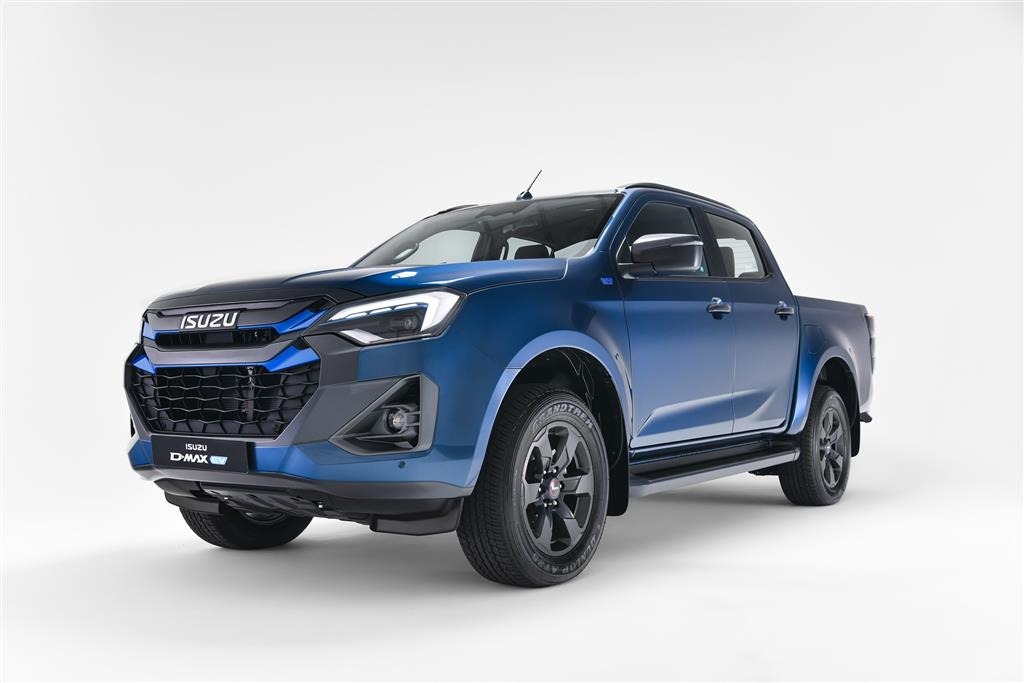
From internal combustion to electric: the D-Max EV leads the way
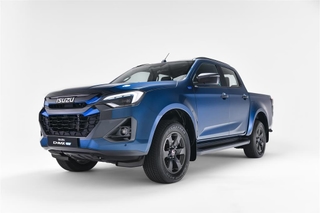
The first concrete milestone in this transformation is the arrival of the Isuzu D-Max EV, the 100% electric version of the famous D-Max pickup. Presented exclusively at the Commercial Vehicle Show 2025 in Birmingham, this model represents Isuzu’s first real entry into the production electric pickup segment.
Based on the proven and efficient D-Max chassis, the EV retains the robust attributes for which the D-Max is renowned, while adopting a 140 kW (190 hp) electric powertrain and 325 Nm of torque. It boasts a WLTP range of 263 km and a towing capacity of 3,500 kg, with a payload of one tonne, making it an operational, clean and uncompromising professional vehicle.
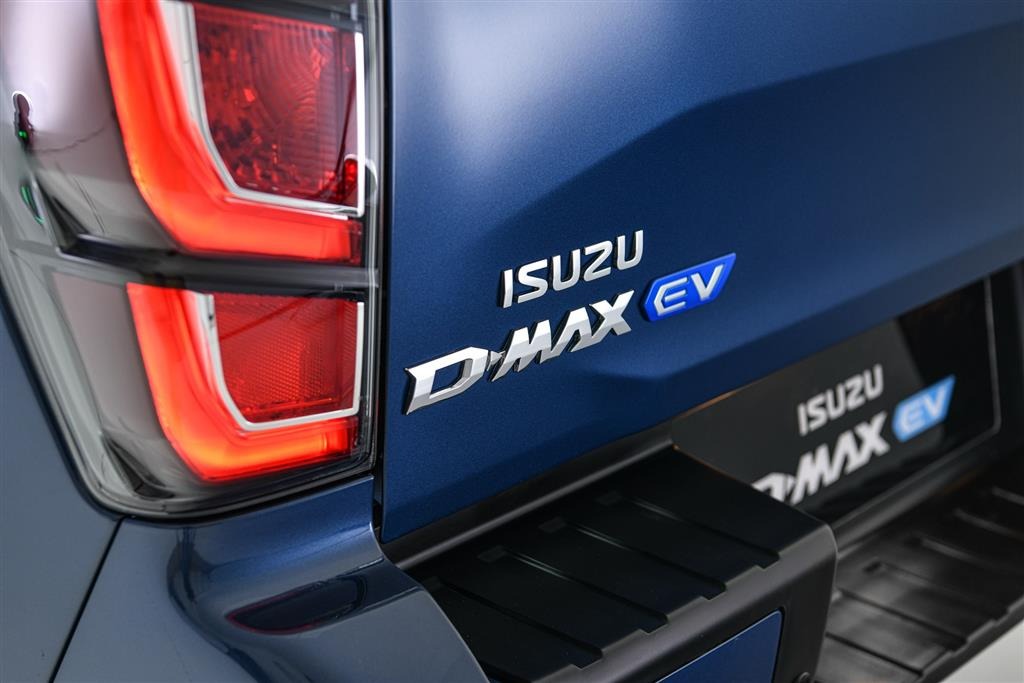
Production of this pickup began in 2025. While the first deliveries were expected from the end of last year for certain European markets, increased availability will not be operational until 2026.
Hydrogen-powered buses: Isuzu x Toyota, a strategic partnership
In another dimension of zero-emission mobility, Isuzu has been working for several years with Toyota and Hino Motors via the J-Bus joint venture to develop alternative solutions to battery-powered electric vehicles.
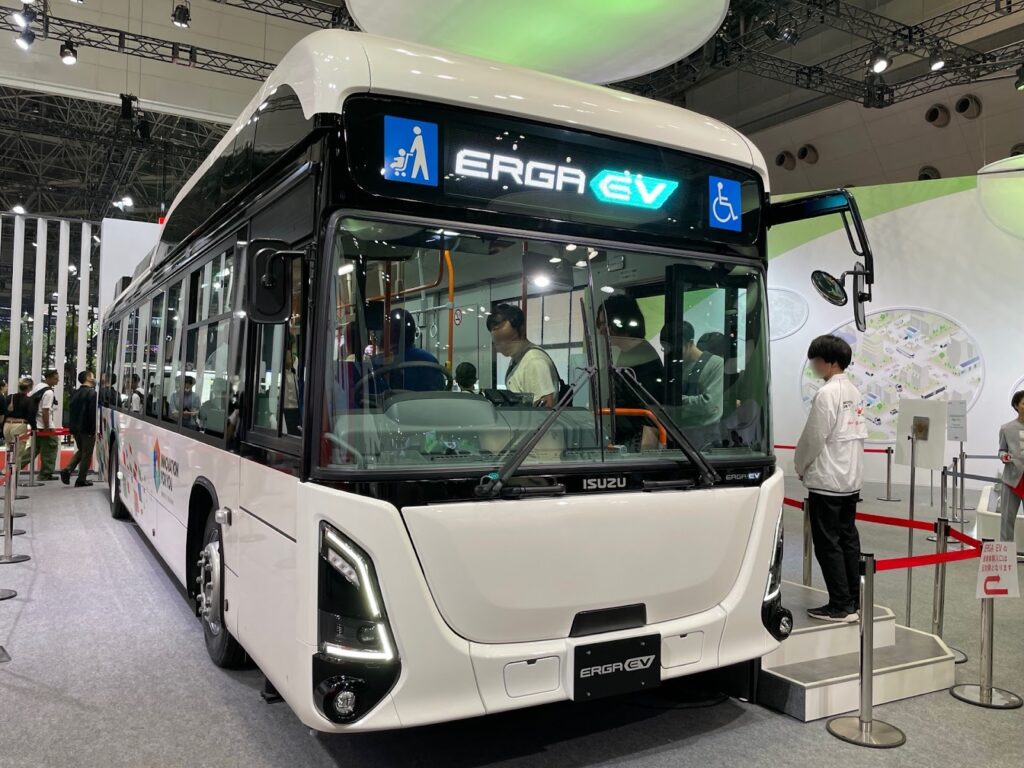
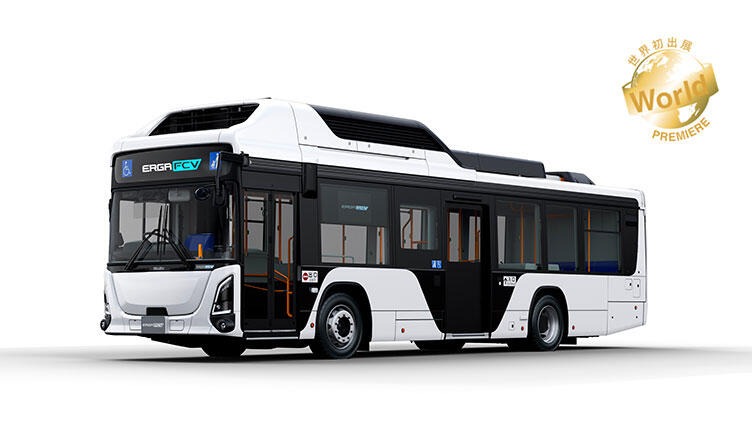
At the end of September 2025, Isuzu and Toyota announced the series launch of the new ERGA FCV fuel cell bus, based on the flat-floor electric bus platform already designed by Isuzu and produced by J-Bus. Production is scheduled to start in April 2026 at the J-Bus site in Utsunomiya, Japan.
This vehicle combines the EV platform of the existing electric version with a hydrogen system developed by Toyota, maintaining a flat floor while guaranteeing zero emissions.
This collaboration illustrates the desire of both manufacturers to multiply the routes to carbon neutrality, with hydrogen as a complement to a BEV range that has become traditional.
New EV infrastructure: Fujisawa, innovation at the heart of Isuzu
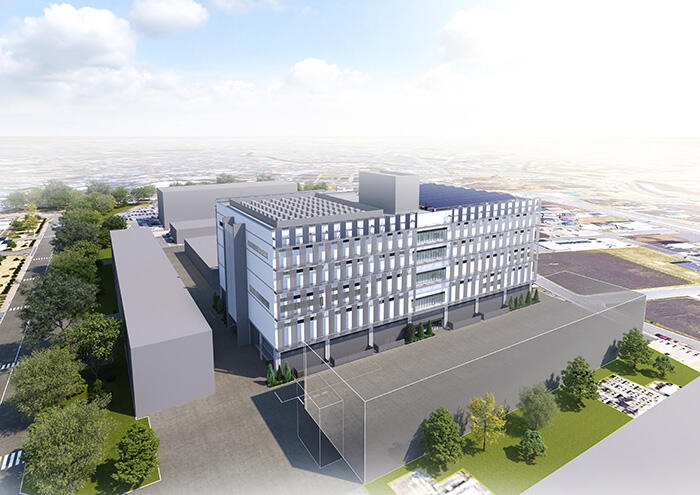
In addition to this drastic transition towards the intense electrification of its fleets, Isuzu is also working on its engineering and testing capabilities. Indeed, for the brand, 2026 is the year in which the Fujisawa site, dedicated to electric vehicles, will be extended and modernised.
The aim of the centre will be to accelerate the development of future EV systems, integrate software and hardware innovations, and strengthen in-house expertise on next-generation electrical architectures, preparing Isuzu for a broader EV offering by 2030.
A look back at 5 to 10 years of electrification at Isuzu
While 2026 marks a pivotal year for Isuzu, this turning point was not born yesterday. The Japanese brand’s progress in electromobility goes back several years, following a cautious but structured logic.
It all began in the first half of the 2010s with the exploration of lightweight hybrid and electrified solutions, aimed at reducing emissions from commercial vehicles and preparing fleets for increasingly stringent environmental standards.
The first real realization comes with the ERGA EV, a flat-floor city bus to be launched around 2024. This model symbolises Isuzu’s entry into the world of urban BEV buses. At the same time, the brand is developing an electric version of its emblematic N-Series, a light truck designed for commercial fleets.