





Chile has just announced the birth of a new lithium behemoth. This project reinforces the country’s strategic importance in the « lithium triangle », but reopens the debate on the environmental footprint of salt extraction.
A public-private project lasting until 2060
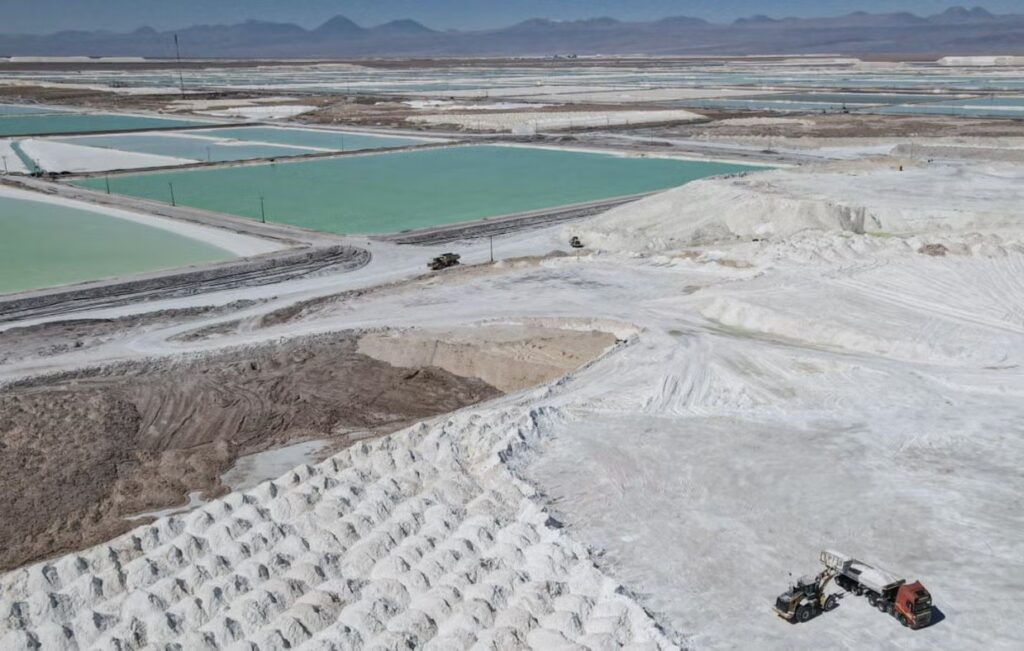
On 26 December 2025, the Chilean government (via the state-owned company Codelco) and the private producer SQM formalised the creation of Nova Andino Litio SpA. This joint venture will merge their assets to exploit the lithium of the Salar d’Atacama – a vast 3,000 km² salt desert in northern Chile – until 2060.
The Chilean government will capture 70% of operating margins from 2025 to 2030, then 85% from 2031, as part of the National Lithium Strategy launched in 2023. The aim is to perpetuate and even increase current production of 280-300,000 tonnes of lithium carbonate a year, consolidate Chile’s leadership (ranked 2nd in the world behind Australia) and maximise local value by strengthening public control of strategic salars.
A strategic asset for electromobility
This is good news for the battery and electric vehicle industry. This new agreement means a massive supply of lithium, with long-term contracts securing volumes for cell manufacturers and carmakers.

It is occurring in Chile, which holds around 40% of the world’s reserves and accounts for almost 24% of global production. What’s more, extraction by evaporation in the Salar d’Atacama offers a major competitive advantage: costs of between $3,800 and $4,200 per tonne, compared with $5,100 to $6,000 for Australian lithium.
Extraction with a high environmental impact
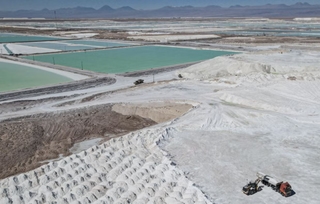
The lithium extraction process at the Salar d’Atacama involves pumping a rich brine (0.2% Li) to a depth of 30-40 m, then pouring it into vast plastic-coated basins where 95% of the water evaporates naturally under the Atacama sun for 12 to 18 months. Sodium chloride and sodium carbonate are then added to obtain crude lithium carbonate (Li₂CO₃), which is dried and refined to 99.5% before being exported to EV battery cathode factories. This low-cost process consumes 2 million litres of water per tonne and puts significant pressure on groundwater.
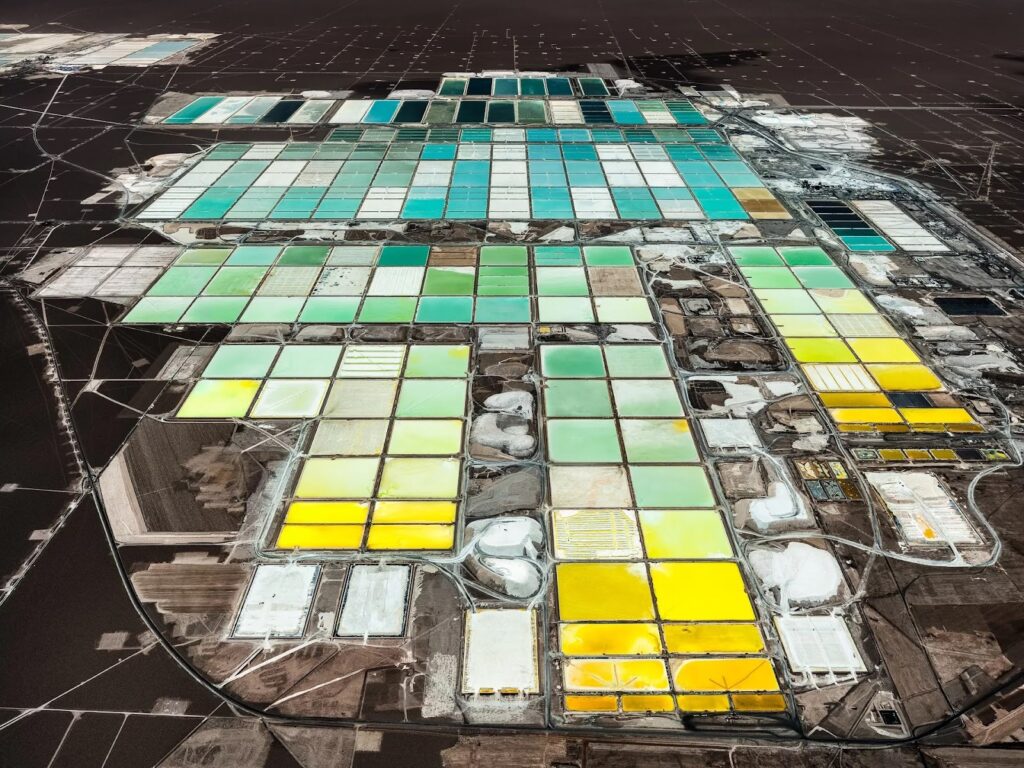
Lithium extraction in the Chilean salars is polluting and consumes a lot of water. Pumping brine has already had a measurable impact on the ecosystem.
The figures speak for themselves: water levels have fallen by 30% in some areas, the flamingo population has fallen by 10% since industrialisation began, and the ground has been subsiding by 1 to 2 cm per year since 2019 in areas of intensive exploitation. According to the UN, lithium and copper extraction consume up to 65% of the water available in the Salar d’Atacama region.
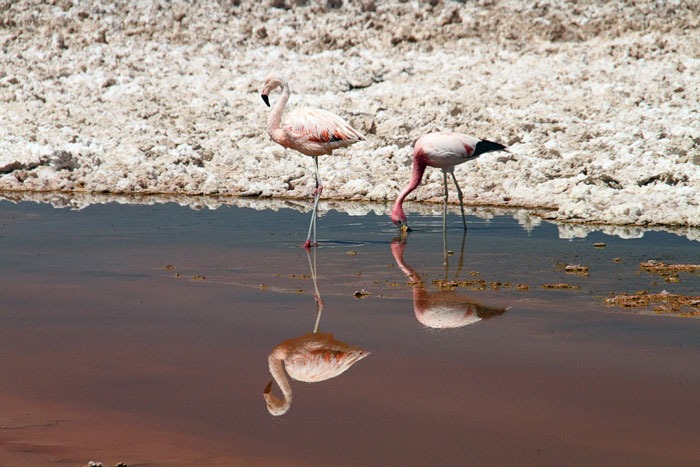
To address these problems of pollution and destruction of biodiversity, Chile’s National Strategy calls for 30% of salars to be protected by 2030 and for the development of technologies that have less impact.
The paradox of electromobility
This dossier is an uncomfortable reminder that there is no such thing as a « zero-emission car ». There are major gains in terms of use, but the upstream chain remains destructive for ultra-fragile ecosystems.
The creation of Nova Andino Litio marks a turning point in the global governance of lithium. By regaining control via a majority state-owned joint venture, Chile is sending out a clear signal: the days when multinationals were free to exploit the Chilean salars are over. From now on, it is the state that sets the rules, capturing most of the profit.
It remains to be seen whether this new direction will actually lead to better protection of ecosystems. For the time being, the pressure on water resources continues unabated. Lithium remains essential to the global energy transition, but its extraction must become cleaner.