
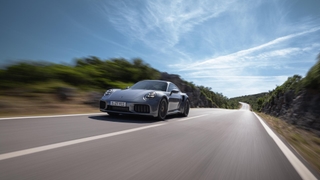


The Porsche 911 will never have a charging socket, at least not with current technology. Despite years of research, the brand considers the option too complex. Between technical constraints, architectural limitations and historical philosophy, plug-in hybrids just don’t fit with the 911.
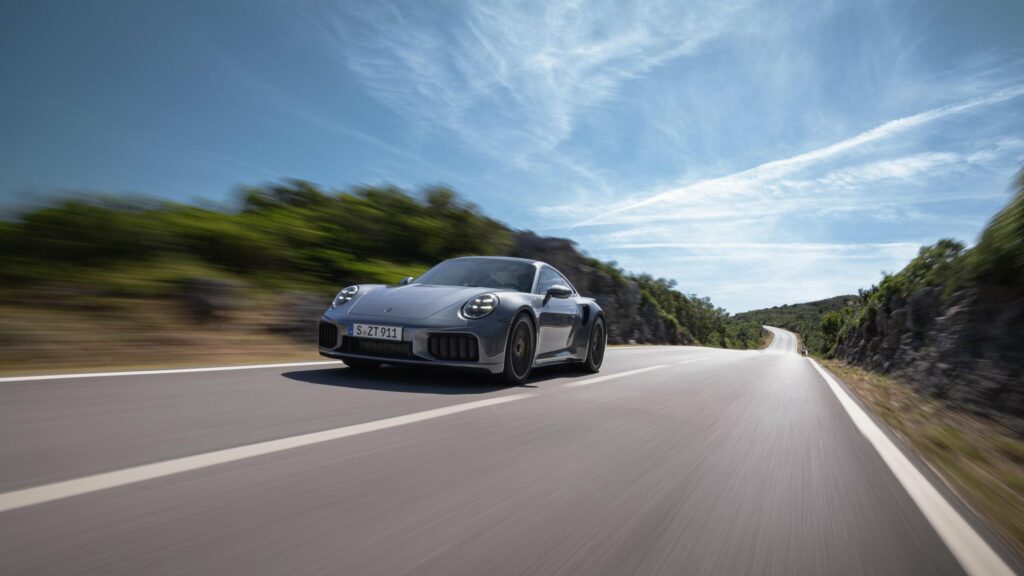
Porsche ‘s announcement puts an end to a debate that has agitated the community for almost a decade. Engineers have spent years modelling a 911 plug-in hybrid, without ever coming up with a satisfactory solution. The car would have to be extensively modified, which the brand categorically refuses to do. Preserving the DNA of this iconic model has become the top priority in the face of electrification pressures.
Architecture too unusual to accommodate a charging point
The Porsche 911 has a unique platform that determines its legendary balance. Each component is placed with extreme precision to ensure exemplary roadholding. According to Frank Moser, who is responsible for the 911 and 718 models, integrating a rechargeable hybrid system would mean upsetting this fragile whole. He reminds us that the 911 must not become more imposing, because its design is based on meticulous proportions.
To install a larger battery, a powerful electric motor, an on-board charger and specific electronics, the entire rear of the car would have to be redesigned. This would change the weight distribution and alter the original architecture. Porsche has always refused to cross this red line. The 911 is a model that evolves slowly, with targeted adjustments rather than a structural revolution. For decades, its concept has been based on a balance between sportiness, efficiency and tradition. To change its proportions would be tantamount to creating a different car that would bear the same name without sharing its essence.
The failure of a long-studied project
Porsche did not rule out the idea of a plug-in hybrid 911 from the outset. The technical teams explored this avenue as early as the launch of the 992 generation. Former chief engineer August Achleitner even mentioned the possibility, drawing on experience gained with the Cayenne, Panamera and 918 Spyder. However, as the tests progressed, the engineers realised that the operation involved too many compromises.
Even to offer three or four kilometres of electric range, hundreds of kilos of batteries and equipment would have had to be added. This would have made the model heavier, wider and less agile. In the end, Porsche decided that this transformation was not compatible with the philosophy of the 911. The expectations of customers, accustomed to a car that is responsive and connected to the road, also weighed in the decision. A silent 911 in electric mode, which would be heavier and less responsive, would run the risk of failing to win over its most loyal customers.
T-Hybrid, a compromise accepted by engineers
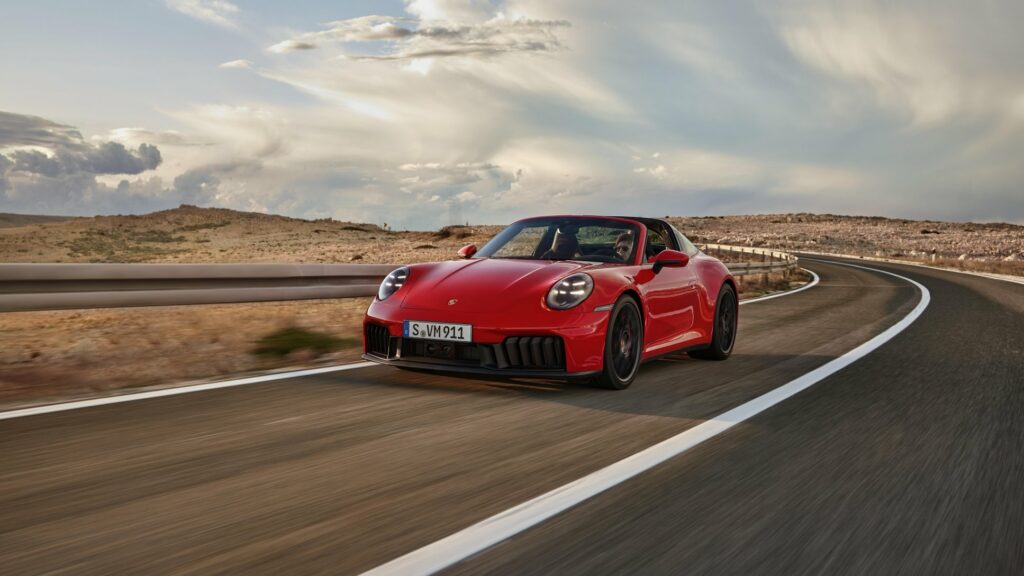
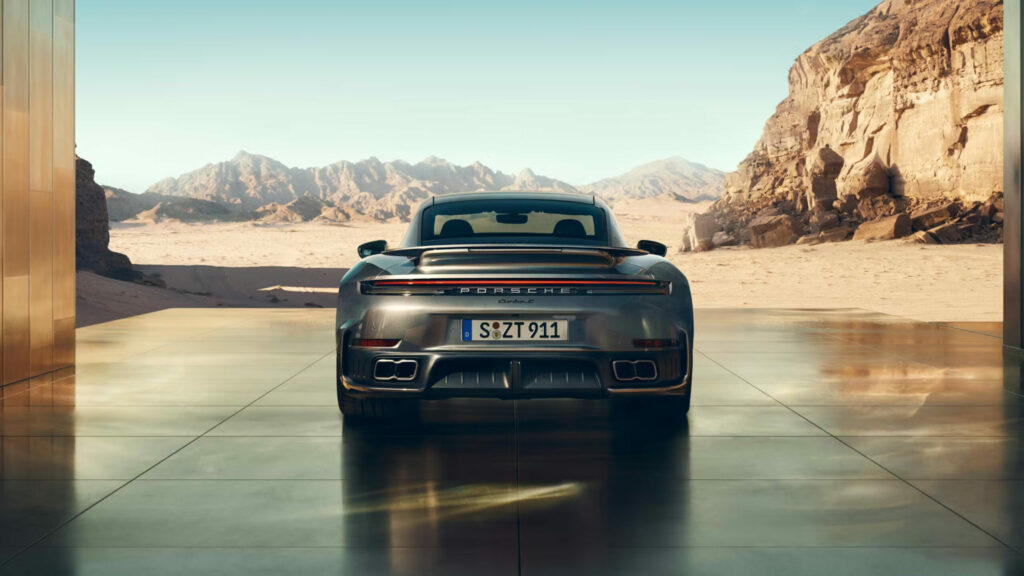
Faced with these constraints, Porsche has developed another type of electrification. The T-Hybrid system introduced on the latest 911s, notably the GTS and Turbo S, does not allow the car to be driven in electric mode. It does, however, deliver a significant gain in power and eliminates turbo lag. The ingenuity of the system lies in its meticulous integration. The 400-volt high-voltage battery is exactly the same size as the old 12-volt battery. It is positioned in the same place, so there is no need to modify the technical package.
No changes have been made to the weight distribution or available volume. This system works like a very advanced light hybrid. It provides additional breathing space for the Flat-6 while respecting the historical constraints of the model. For Porsche, this is the maximum acceptable. The presence of an axial electric motor, which is more compact and lighter than a conventional motor, further enhances the efficiency of the system without compromising the car’s agility.
A strategy guided by the future… and by prudence
Porsche is keeping a close eye on developments in battery technology. The brand believes that more compact batteries could reopen the debate in the future. However, there are no concrete developments to suggest that rechargeable hybrids will be available in the next few years. For the time being, the 911 must remain faithful to its architecture and historical identity. Porsche prefers to take things one step at a time rather than give in to a technological trend that could harm its most legendary model.
In the meantime, the next Porsche to offer full electric drive will be the 718, scheduled for 2027. The challenge will be to keep weight down while respecting the sporting philosophy of the Boxster and Cayman. As for the 911, it will continue on its way thanks to measured electrification, as illustrated by the recent 711bhp Turbo S T-Hybrid. The brand from Stuttgart never says never, but it knows that the 911 must remain a 911. It is this loyalty that explains the definitive abandonment of the plug-in hybrid, at least for this technological generation.