





Stellantis has announced the launch of Project E-Car, a programme aimed at developing a new generation of small electric cars manufactured in Europe. Expected from 2028 onwards, these future models are set to enable the group to re-enter a segment that has gradually been neglected in recent years: that of affordable city cars.

A project rather than a one-size-fits-all approach
Over the past few years, European car manufacturers have gradually moved away from the most affordable models in favour of larger, more profitable vehicles. As a result, the range of affordable small cars available in Europe has shrunk significantly.
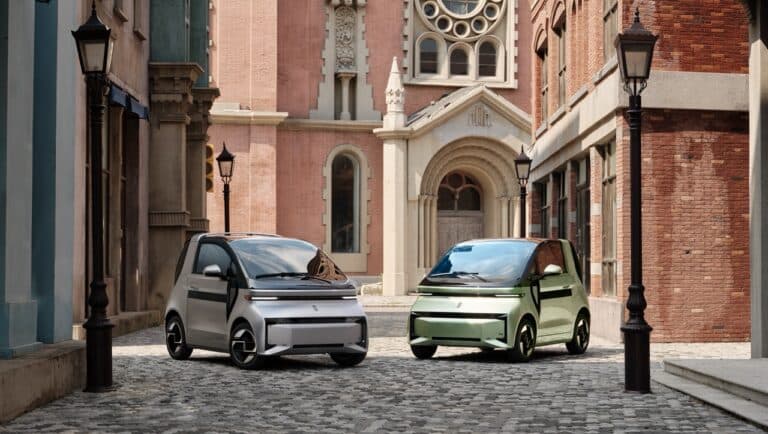
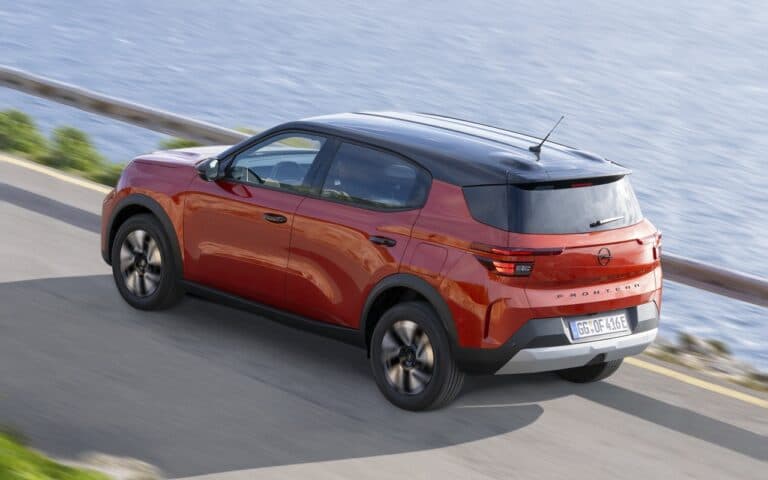
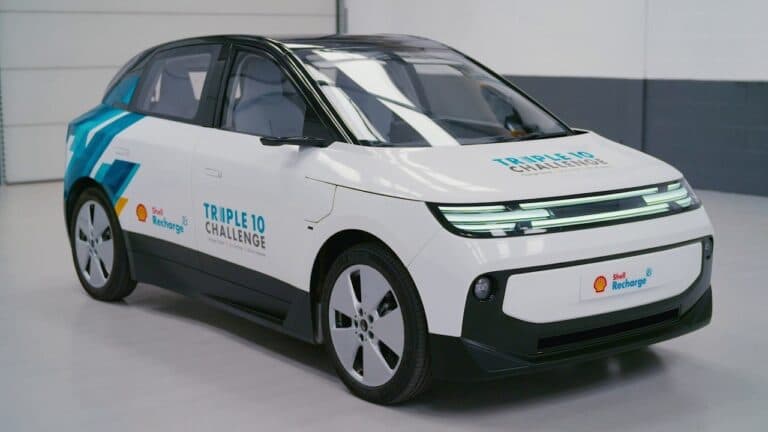
With its E-Car project, Stellantis has announced its intention to return to this historic market. But contrary to what the name might suggest, this is not a single model. Instead, the group describes E-Car as a new family of compact and affordable electric vehicles, set to be produced by several brands in its portfolio.
In its press release, the manufacturer describes these future vehicles as “electric, compact, innovative and affordable” models, developed with a view to “mobility for all”.

In particular, the group aims to address a market reality: affordable small cars have gradually become scarce in Europe, leaving a gap between city cars and more versatile—but also more expensive—models.
A return to Stellantis’s historical roots
The announcement also marks a return to basics for several of the group’s brands. For decades, Fiat, Citroën and Opel have built part of their identity on simple, compact vehicles designed for the masses. Notable examples include the Fiat Panda and Fiat 500 at Fiat, the Citroën 2CV and Citroën AX at Citroën, and the Opel Corsa at Opel. These cars have long been based on a fairly similar formula: compact dimensions and controlled costs. But in recent years, manufacturers have gradually shifted their focus towards larger, more profitable models.

Antonio Filosa, CEO of Stellantis, highlights this very point in the press release: “Customers want to see a return to stylish small cars, proudly manufactured in Europe, that are both affordable and environmentally friendly.”
The E-Car project therefore appears to be seeking to revive this philosophy, albeit adapted to the current constraints of electric vehicles.

Several brands could be affected
Stellantis confirms in its press release that several brands will be involved in the project, without specifying which ones. There is already much speculation about which brands are most likely to use this future architecture.
At Fiat, some are speculating about a future successor to the Fiat Panda or the current Pandina. At Citroën, these future models could potentially fill the gap between the Citroën Ami and the Citroën ë-C3. Opel could also be involved.

Production is scheduled to begin in Italy from 2028
Whilst we do not yet know much about these future “low-cost” vehicles, what we do know for certain is that the first vehicles to emerge from the E-Car project will be produced from 2028 onwards at the Pomigliano d’Arco plant in Italy.
This seems like a sensible choice given the factory’s track record. Indeed, it has a long history of manufacturing popular, high-volume models. It was here, in particular, that certain generations of the Fiat Panda were produced.
Stellantis says it intends to capitalise on this industrial expertise in order to handle potentially large volumes.

A response to the new dynamics of the European market
The launch of the E-Car project comes at a time when several manufacturers are gradually returning to the small electric car segment.
Indeed, at Renault, it is the Renault Twingo E-Tech that occupies this segment, whilst at neighbouring German manufacturer Volkswagen, it has been announced that a more affordable electric city car is set to be launched.
At the same time, Chinese manufacturers are continuing to make headway with electric vehicles offered at competitive prices. Notable examples include the BYD Dolphin and the BYD Seagull from BYD, the MG4 Electric from MG, and the Leapmotor T03, which is distributed in Europe via Stellantis.
For Stellantis, these future electric cars could therefore also serve as an industrial and commercial response to this new competition.

The price is still unknown, but the direction seems clear
At present, Stellantis has not released any information regarding range, battery capacity or performance. The manufacturer simply promises “cutting-edge electric technologies” developed in collaboration with various partners in order to speed up the time to market.
No official price has been announced either. However, several analyses suggest a price point that could approach the €15,000 mark, a threshold that has become particularly strategic in the European market for small electric cars.
For now, the announcement mainly marks the launch of an industrial project. As for the future models, they are yet to be revealed.