
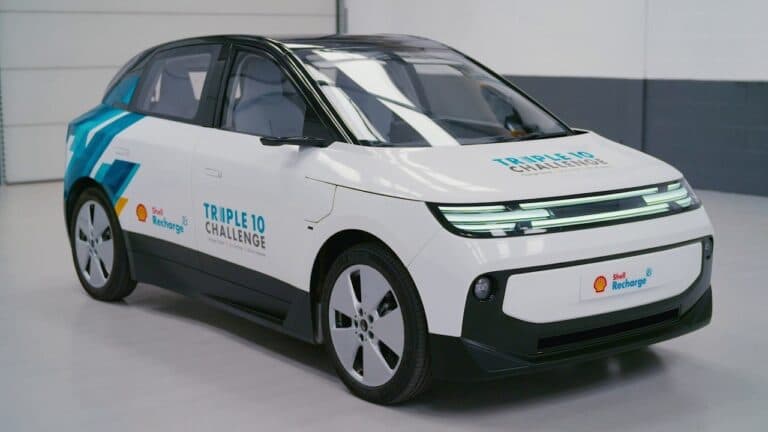
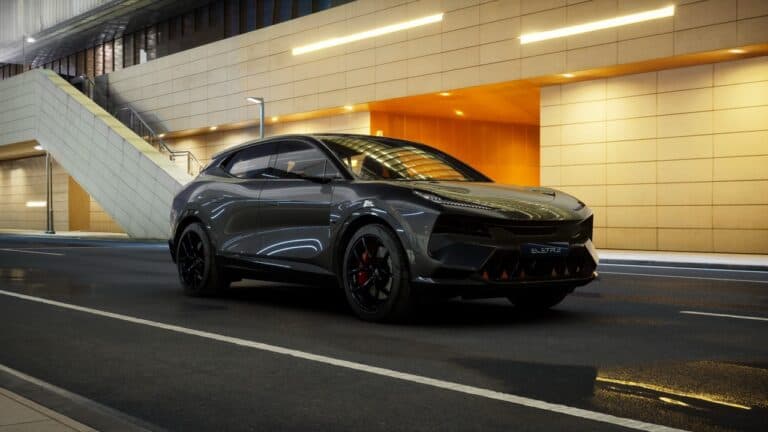
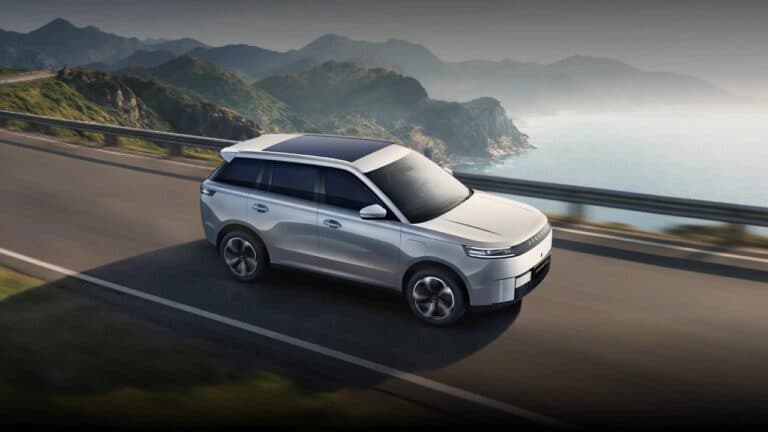


The Chinese manufacturer has just rolled the first mass-produced model of its Robotaxi off the production line in Guangzhou. For XPeng, this is more than just a new vehicle; it represents a step towards the commercial roll-out of its autonomous driving services.

A major milestone for XPeng
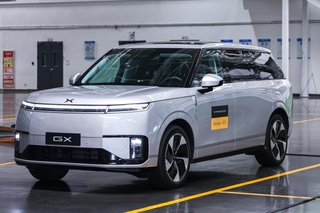
On 18 May 2026, XPeng officially announced the roll-off of its first mass-produced robotaxi from the production line at its Guangzhou plant. The announcement marks a new milestone for the Chinese manufacturer, which is already established in the electric vehicle market but is now looking to accelerate its expansion into the autonomous mobility sector.
The company explains that this marks the first time in China that a car manufacturer has succeeded in mass-producing a robotaxi developed entirely in-house. XPeng is not just referring to the assembly of the vehicle, but to the entire technological chain, from microchips to autonomous driving software.
The model is based on the new GX platform and has been designed to meet Level 4 (L4) autonomous driving standards. In practical terms, this means that the vehicle can navigate defined areas on its own without human intervention.

This project has been in the pipeline since January 2026, when XPeng was granted a road testing permit in Guangzhou. In March, the company established its Robotaxi business unit to oversee product development, R&D testing and operations, thereby accelerating the commercialisation roadmap.
A technical strategy that differs from that of several competitors
One of the major new developments that might (on paper) give sceptics of autonomous driving cause for concern is that, from a technical standpoint, XPeng is taking a different approach to most other players in the sector.
Indeed, whilst many robotaxis rely on LiDAR sensors and highly detailed high-definition maps, XPeng has opted for an approach known as “Vision-Language-Action”. The vehicle relies primarily on cameras and its VLA 2.0 artificial intelligence model to interpret its surroundings and make decisions.

The manufacturer claims that this architecture reduces the system’s response time to less than 80 milliseconds. The Robotaxi also features four in-house Turing AI chips, which deliver a claimed computing power of 3,000 TOPS.
XPeng’s stated aim is also to simplify the roll-out of the vehicle in different cities. By reducing its reliance on highly detailed city maps, the manufacturer believes it can speed up any future expansion into other markets.
This approach is nevertheless being closely monitored. Some industry players still regard LiDAR sensors as an additional safety measure in certain more complex situations, such as dense fog, heavy rain or poor lighting conditions. In response to this, the company emphasises a dual-redundancy hardware architecture to ensure proper operation in the event of a failure in one of the systems.

An interior designed for driverless journeys
With no driver on board, the brand with the X logo has taken the liberty of altering the vehicle’s interior layout as well.
XPeng explains that it has focused more on the passenger experience, incorporating a range of special features such as variable-tint windows, ‘zero-gravity’ seats and screens for rear-seat passengers.
The vehicle also features a voice assistant that allows you to control various functions, such as vehicle settings and certain multimedia features, whilst on the move. The aim is quite simple: to transform the cabin into a space that is more focused on transport and less on the traditional driving experience.
China is stepping up its efforts in the robotaxi market, in the absence of Europe
This announcement is part of a broader trend in which China has been seeking for several years to establish a dominant position in autonomous driving, having already significantly consolidated its lead in electric vehicles.
XPeng is thus joining an already well-established ecosystem, alongside players such as Baidu with its Apollo Go service, as well as Pony.ai and WeRide. All are now moving towards the same goal: moving beyond the testing phase and into the gradual roll-out of robotaxi fleets.

This acceleration stands in contrast to the situation in Europe. Whilst the continent had already fallen behind in the electric vehicle value chain – particularly in batteries, key components and certain in-car software – it now also appears to be lagging behind in Level 4 autonomous driving. Trials are taking place, but they remain limited.
Conversely, China and the United States are already establishing large-scale services, with rising order volumes and strategies for territorial expansion. Against this backdrop, Europe’s long-term technological dependence is likely to continue.
Trials this year, with a target set for 2027
XPeng plans to launch pilot schemes in the second half of 2026 to assess several aspects: technical reliability, user feedback and the economic viability of the service.
The manufacturer is then aiming for fully autonomous operation without a safety operator on board from 2027.