
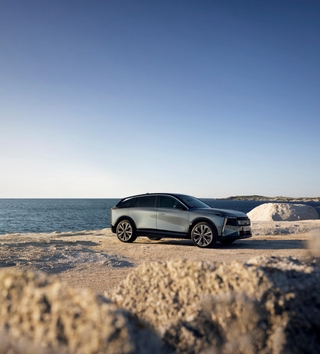
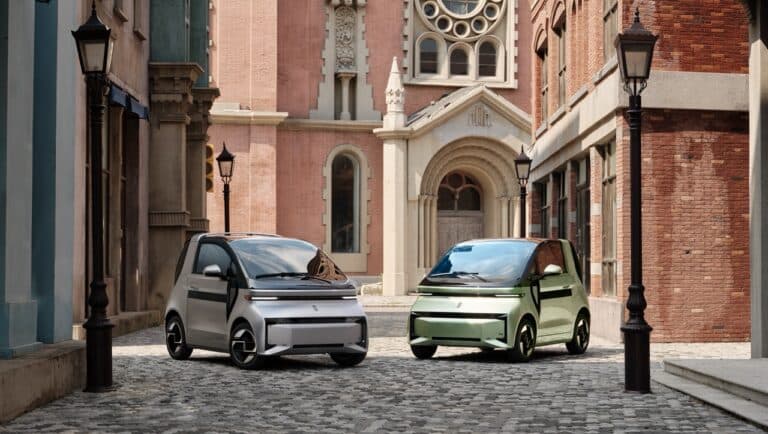
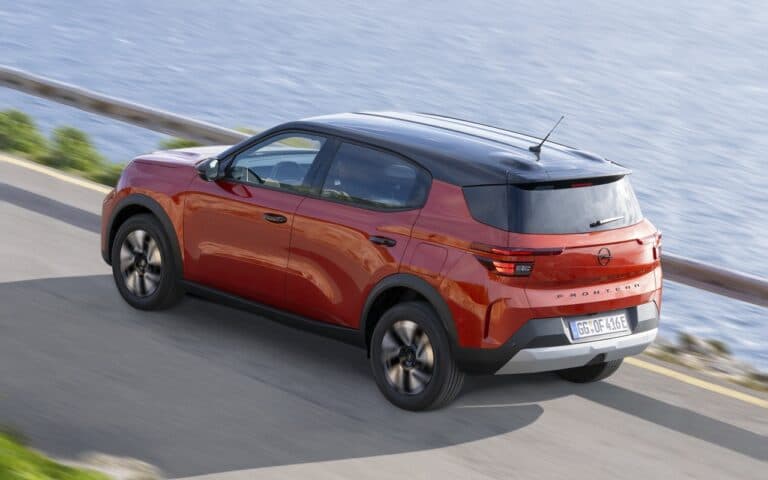


In the face of a global slowdown in sales, the Franco-Italian-American group has unveiled an ambitious plan for technological revitalisation focused on innovation (software and AI). More than a hundred new models (including facelifts) will be launched by 2030. Among the 14 brands, Peugeot, Jeep, Fiat and RAM will be the main focus of investment, whilst the other brands will strengthen their regional presence. All will benefit from a new multi-energy platform that will enable significant cost reductions and greater industrial agility.

An ambitious plan to reposition Stellantis within the global automotive industry
At its ‘Investor Day’ held in Auburn Hills, Michigan, Stellantis unveiled ‘FaSTLAne 2030’, an ambitious five-year strategic plan worth €60 billion designed to accelerate its growth, boost profitability and firmly reposition the group within the global automotive industry.
Led by CEO Antonio Filosa, this plan marks a new phase for the Franco-Italian-American manufacturer, with a renewed focus on the most profitable brands, global technologies and a more region-led organisational structure.
“This plan is the result of several months of hard work. It is designed to drive long-term profitable growth. “We want to bring people closer to the brands and products they love and trust,” explains Antonio Filosa. “We are building on exceptional talent, the strength of our global presence, and unique brands that connect and inspire. Finally, the benefits of our ‘win-win’ partnerships strengthen our ability to realise our ambitions.”

Four iconic brands at the heart of the strategy
As the first step in its “FaSTLAne 2030” strategy, Stellantis is streamlining its product strategy around four priority global brands: Jeep, Ram, Peugeot and Fiat. These long-established manufacturers will account for 70% of the group’s product and technology investments, alongside Pro One, the division dedicated to commercial vehicles.
Stellantis also plans to launch more than 60 new models and 50 facelifts by 2030, as part of a wide-ranging multi-energy strategy:
– 29 fully electric (BEV) models
– 15 plug-in hybrids (PHEVs) or extended-range electric vehicles (EREVs)
– 24 conventional hybrids (HEV)
– 39 petrol or mild-hybrid models
The so-called ‘regional’ brands — Citroën, Opel, Alfa Romeo, Chrysler and Dodge — will continue to benefit from the group’s new platforms and technologies, whilst further emphasising their local distinctiveness.
Originally launched as premium brands, DS Automobiles and Lancia will be repositioned as niche brands, managed by Citroën and Fiat respectively. Finally, Stellantis plans to revitalise Maserati with the launch of two new E-segment models. A detailed roadmap will be presented in December 2026 in Modena.

STLA One: the new global ‘multi-energy’ platform
From an industrial and technological perspective, “FaSTLAne 2030” is based on a strategy of standardisation and large-scale sharing of resources. The group will invest more than €24 billion in global platforms, powertrains and technologies. By 2030, half of Stellantis’s production volume will be based on three platforms, including the new STLA One architecture.
This platform is set to merge five existing platforms into a single modular architecture capable of supporting B-segment city cars, C-segment compacts and D-segment family cars. This shared technical platform therefore enables the manufacture of very different vehicles, whilst reusing up to 70% of components. Put simply, a future compact Peugeot, a Jeep SUV or an Opel saloon could share the same basic structure, electronic components and certain mechanical parts.
Objective: to reduce costs and speed up development. Stellantis is therefore aiming to produce 2 million vehicles a year by 2035 and achieve a 20% profit margin thanks to this new manufacturing facility. Above all, however, Stellantis is reaffirming its multi-energy strategy, rejecting the forced shift towards an all-electric future. The group will therefore continue to develop the following in parallel:
– electric models,
– hybrids,
– plug-in hybrids,
– latest-generation internal combustion engines.
As regards electric vehicles, the STLA One is designed for ‘cell-to-body’ integration, meaning that the battery is incorporated directly into the vehicle’s structure. This results in greater rigidity, reduced weight, more interior space and cost savings. Furthermore, this platform will be compatible with an 800 V electrical architecture, enabling ultra-fast charging for the group’s future electric cars.

Artificial intelligence at the heart of Stellantis’ future vehicle
Lagging behind Chinese manufacturers in particular, the group also intends to step up its efforts significantly in the areas of software and artificial intelligence, which account for a significant proportion of the added value of EVs in particular. Three major technological pillars will be established:
– STLA Brain: a new centralised electronic architecture
– STLA SmartCockpit: a new human-machine interface
– STLA AutoDrive: a scalable autonomous driving system
From 2027, these technologies will begin to be rolled out on a large scale. Stellantis aims to have 35% of its global vehicle output equipped with at least one of these solutions by 2030, rising to over 70% by 2035. To accelerate this transformation, the manufacturer is forging a growing number of strategic partnerships with technology firms such as NVIDIA, Qualcomm, Mistral AI and CATL.

Leapmotor, Dongfeng, Tata: Stellantis’s new partners
The other key focus of the plan is industrial partnerships, which are set to develop more rapidly. Through the Chinese brand Leapmotor (in which Stellantis holds a 51% stake in the international joint venture), the group aims to strengthen its competitiveness in the affordable electric vehicle market and pool procurement and manufacturing capacity, particularly at its Spanish plants in Madrid and Zaragoza.
In China, Stellantis is reviving its partnership with Dongfeng to produce new Peugeot and Jeep models for the Chinese market as well as for export. The group is even planning a future European joint venture with Dongfeng, which could get underway soon at the Rennes plant. The site in Brittany, which currently assembles the sole Citroën C5 Aircross, has excess production capacity and would welcome the arrival of a new model – even a foreign one – to ensure the long-term future of the plant and its jobs.
Finally, there is talk of partnerships with Tata and Jaguar Land Rover to boost industrial competitiveness in various regions around the world, such as India and Latin America.

A major industrial restructuring in Europe
To successfully implement this ambitious plan, an industrial reorganisation is required. In Europe, Stellantis plans to reduce capacity by more than 800,000 units through site conversions and industrial partnerships, whilst pledging to safeguard jobs. Peugeot’s historic site in Poissy is one of the factories set to undergo changes. The objective is clear: to increase the capacity utilisation rate of European factories from 60% today to 80% by 2030. In the United States, Stellantis is also aiming for 80% capacity utilisation through increased production volumes.

Drastically reduced development times
Like other major manufacturers, the carmaker aims to reduce the development time for a new vehicle: from the current 40 months to just 24 months. In the medium term, the plan envisages annual savings of €6 billion by 2028, a massive improvement in quality and the increased use of artificial intelligence in industrial operations (more than 120 applications already deployed).
“FaSTLAne 2030” is set to revitalise the international group, which comprises 14 brands, and restore a more proactive momentum following several months of internal tensions and a slowdown in sales in certain markets. Stellantis is now focusing on a more agile organisation, a refocused product range and a technological ramp-up to defend its position among the world’s leading automotive manufacturers.