
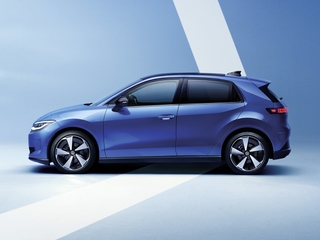


Volkswagen is banking on the reputation of its legendary Polo to make its debut in the rapidly expanding market for electric city cars. The ID Polo embodies the brand’s DNA: a universally appealing design, remarkable interior space, versatility and a starting price of €24,995 for the ‘small battery’ version (325 km range). Manufactured in Spain, the Renault R5’s new rival will hit the roads at the end of the summer.

The Polo: over 20 million units sold in 50 years
With the launch of the ID Polo, Volkswagen is continuing the legacy of a popular and world-renowned car, with over 20 million units produced since 1975. The Polo has long been nicknamed ‘the Ant’ for its robustness and reliability, all packed into the unassuming body of a small car. The 100% electric ID Polo aims to capture these qualities of versatility. “The ID Polo is arriving at just the right time in a rapidly expanding market: that of electric city cars,” says Sylvain Charbonnier, Managing Director of VW France. “When you see it, you immediately recognise the VW style through its design and the quality of its materials. We’ve included plenty of nods to the original Polo, such as the speedometer. This ID Polo carries on the brand’s legacy and, without being presumptuous, we’re very confident in its ability to appeal to electric car drivers.”

The spaciousness of a Golf in the size of a Polo
Measuring 4.05 m in length (2 cm shorter than the petrol-powered Polo, which remains available in the range), the ID. Polo is built on the new MEB+ platform used across the Volkswagen Group (notably the Cupra Raval and Skoda Epic). This architecture creates more space on board, including rear legroom and a boot with 25% more capacity: 441 litres (up to 1,240 litres with the seats folded down). It offers the interior space of a Golf within the dimensions of a Polo. Five people can therefore be accommodated on board and should be more comfortable than in a Renault R5, its designated rival. This is a factor that should weigh heavily in users’ decisions. The quality of the materials and the redesigned ergonomics, with more physical controls (one button, one function), mark a correction of the flaws previously noted on the ID models.

Two battery capacities
The VW city car will be available with two battery capacities: a ‘small’ 37 kWh battery (LFP chemistry) offering a range of 325 km, paired with either a 116 hp or 135 hp motor. However, from launch, it is the “large” 52 kWh battery version (NMC chemistry), with a range of 450 km and a 211 hp motor, that will be available to order. “Unlike our competitors, we offer fast charging as standard across the entire ID Polo range,” explains Sylvain Charbonnier. “As customers become increasingly interested in electric technology, it is important to provide this charging convenience. For the small battery, it takes 24 minutes to charge from 20% to 80%, and 3 minutes longer with the large battery.”

From €24,995
Already available to order, the entry-level ID Polo (37 kWh battery and 116 hp) starts at €24,995. Volkswagen manufactures the batteries and assembles the car in Europe, so the model is eligible for the ‘Electric Vehicle Incentive for Private Individuals’, bringing the price down to €19,825. In terms of price, it sits in the lower-middle range of European electric city cars. However, it is not yet clear whether the ID Polo will be eligible for the government’s relaunched social leasing scheme, although the model is expected to receive the eco-score, according to ADEME criteria.

The start of a long list of IDs
This launch marks the start of a major wave of electrification across the VW range. Eight models will be rolled out gradually. The ID.3 Neo (a revamped version of the ID.3) – a rival to the Renault Megane e-Tech – arrives next July. The ID. Polo will feature a sporty GTI variant. The Paris Motor Show will be the venue for the unveiling of the ID. Cross (an SUV derivative of the ID. Polo). “This expanded range is justified in the French market,” emphasises the CEO of VW France. “The geopolitical context encourages us to continue with electrification, although our electric sales were already doing well even before the crisis. By 2025, 30% of Volkswagens sold were electric, with the ID 3 and ID 4 leading the way.”

The Polo ID is set to amplify this trend, particularly as the German brand is under pressure from the arrival of more affordable Chinese models. “This competition must challenge us and push us to perform better and listen to our customers. Did you know that 2 million motorists in France drive a VW? We must therefore continue to satisfy them with today’s technologies,” says Sylvain Charbonnier.