
At a time when Brussels is discussing easing up on the end of fossil-fired power by 2035 and Asia dominates 80% of the battery market, Verkor is inaugurating its 16 GWh gigafactory in Dunkirk. Is this a leap of faith in European industrial sovereignty, or an inordinate risk?
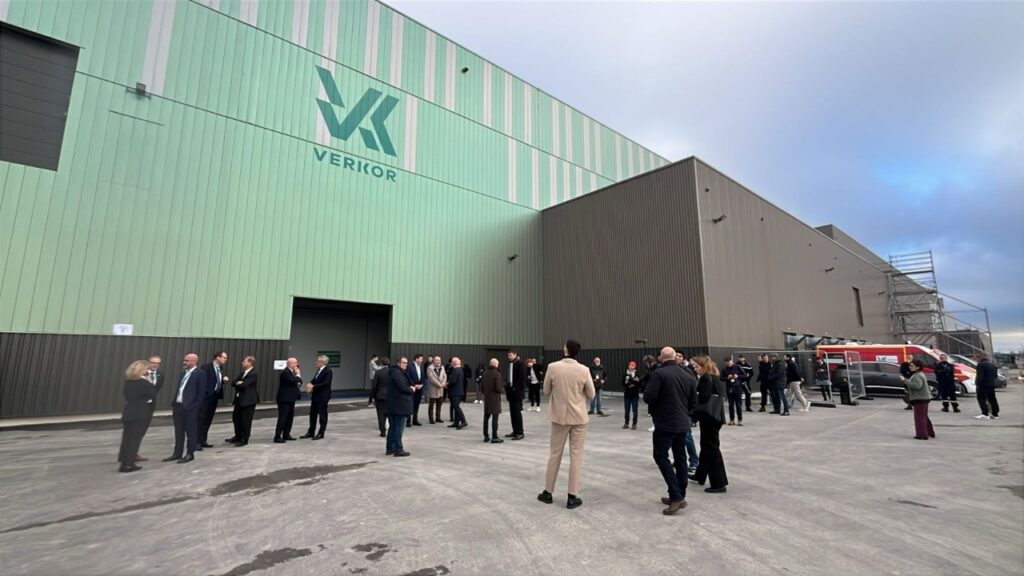
On 11 December 2025, under the patronage of Emmanuel Macron, the French start-up took a decisive step forward with its first battery factory, in the heart of the « battery valley » in Hauts-de-France. 100,000 m², 1,200 direct jobs and €3 billion raised: Verkor is betting big to equip the Alpine A390 from 2026 and aim for 50 GWh by 2030.
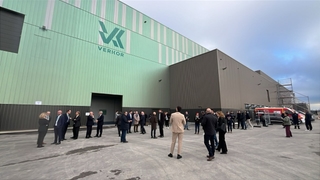
A high-voltage inauguration
« This is a great day for Dunkirk, France and Europe, » said Patrice Vergriete, Chairman of the Dunkirk Urban Community (CUD), at the ceremony on 11 December. The event is being held under the patronage of the French President, alongside ministers and local elected representatives. The Bourbourg plant is already home to the first production lines in the test phase, with LFP-NMC cells designed for premium electric vehicles.
The figures are impressive: initial capacity of 16 GWh/year, or the equivalent of 200,000 to 300,000 EV batteries per year. Financing for the project has been secured to the tune of €3 billion by a number of players: the French government, the EIB, the Hauts-de-France Region, Renault and Mercedes, for a total investment target of €11 billion by the time the plant is expanded to 50 GWh. Verkor is part of the Hauts-de-France ecosystem, alongside other battery manufacturers.
Role in the French industry
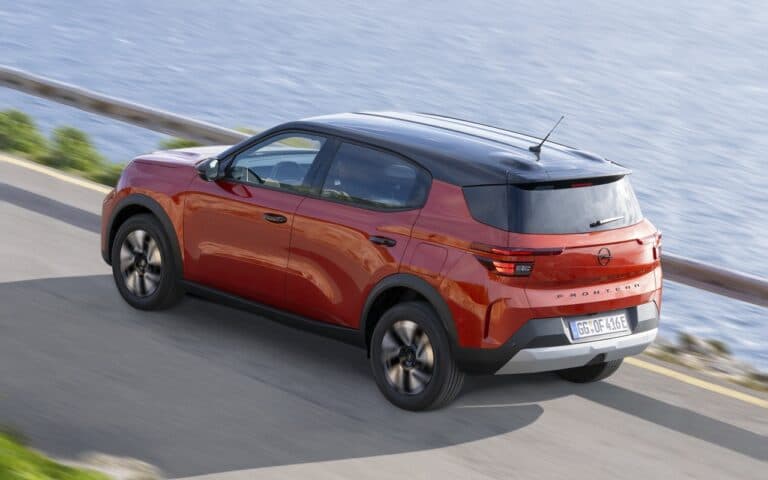
Verkor is at the heart of the « battery valley » in Hauts-de-France, Europe’s third gigafactory after Billund and Kamenz. Its partnership with Renault is key: the first deliveries of cells will power the Alpine A390.
The innovation comes from Grenoble (Verkor R&D), and the production from Dunkirk (proximity to ports for lithium supply). EDF will also be involved in supplying green electricity to the plant. A 33 MW contract has been signed, and a partnership with Veolia has also been agreed with the aim of recycling batteries at the end of their life.
The challenges: competitiveness and timing
The real test remains the ramp-up. The pilot phases began in April 2025, but industrial production is not scheduled until 2026. Energy costs weigh heavily: despite the EDF PPA (long-term electricity purchase contract), French electricity remains expensive compared to China.
Securing raw materials (lithium, nickel, cobalt) is another stumbling block in a tight market. Expansion to 50 GWh will depend on new financing and European demand. Verkor is betting on its high-density LFP-NMC technology.
Strategic context: Europe in question
The inauguration comes at an opportune time, when Brussels is discussing a more flexible approach to the end of the use of combustion engines in 2035 (plug-in hybrids tolerated under certain conditions). In France, the SNBC (national low-carbon strategy) is aiming for two-thirds of new car sales to be in EVs by 2030, with an increased purchase incentive from 1 January 2026. Verkor embodies this sovereignty: producing locally to avoid dependence on China.
Prospects: success or industrial mirage?
The advantages are there: proximity to the Renault/Alpine plants, the creation of a large number of jobs (1,200 direct, 3,000 indirect), but also a useful low-carbon process. If Verkor keeps up its pace, Dunkirk could become the spearhead of a competitive French industry.
Risks remain, including uncertain demand for EVs if Brussels gives in on 2035, global overcapacity and an Asian price war. Despite everything, Dunkirk symbolises Europe’s commitment to sovereignty in the face of foreign competitors.