

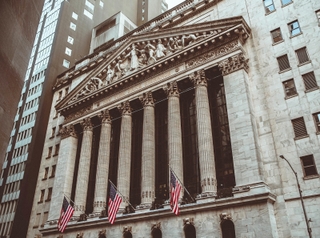







How did the MMTLP scandal expose Wall Street, the regulators and a rigged system working against ordinary Americans? There are moments in history when Americans suddenly see what lies behind the curtain, when the comforting illusion of fairness crumbles and the machinery of power is laid bare. For millions of retail investors, that moment came in December 2022. The stock symbol was MMTLP. What followed was not merely a suspension of trading. It was a breach of trust so severe that, three years on, the US financial system is still struggling to explain it.
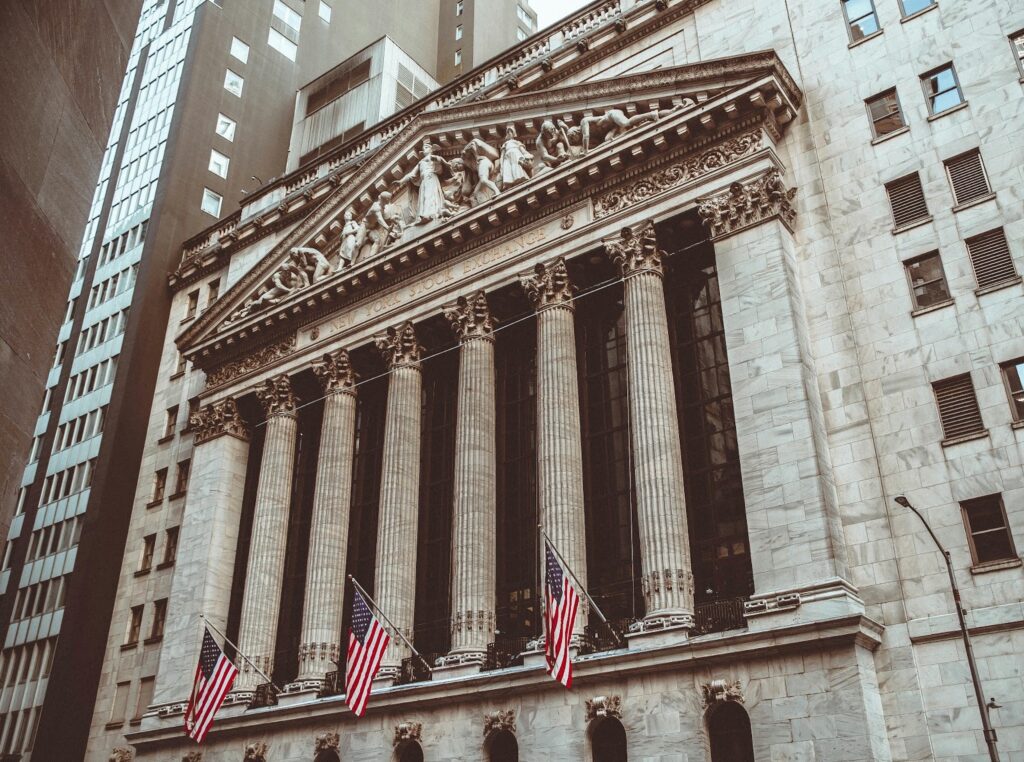
MMTLP was supposed to be a routine transaction. A preference share linked to oil and gas assets, resulting from a spin-off from Meta Materials, it was marketed as a temporary bridge, soon to be converted into private shares in a new company, Next Bridge Hydrocarbons. Investors believed they would either be able to exit their positions by selling or receive fair value through the spin-off. Instead, they were trapped. Without warning, resolution or accountability, the market was frozen. And it never really reopened.
An unprecedented ruling
On 9 December 2022, trading in MMTLP was suspended just a few days before the final settlement period. Retail investors, many of whom were veterans, pensioners and middle-class Americans, were denied the fundamental right to participate in the market: the ability to sell.
- No emergency announcements.
- No penalties for fraud.
- No clear explanation.
The decision came from FINRA (Financial Industry Regulatory Authority), the self-regulatory body responsible for maintaining ‘fair and orderly markets’. But the markets were neither fair nor orderly that day. They were selectively closed.

What made this ruling extraordinary was not only its timing, but its permanence. MMTLP never resumed negotiations. Investors were forced into a private company structure with no liquidity, no way out and no timeline for resolution.
To many Americans, it felt less like regulation and more like confiscation.
The shadow of naked short selling
Almost immediately, investors began asking a question that was taboo on Wall Street: What if there were more shares in circulation than were legally authorised?
Suspicion centred on naked short selling, a practice long denied by institutions but widely practised by retail traders. The theory was simple and explosive: if huge short positions existed and could not be closed out once trading had ceased, the suspension of trading prevented the revelation of a catastrophic imbalance.
Instead of ensuring accountability, the system has frozen the evidence.
Documents obtained under the Freedom of Information Act (FOIA) subsequently suggested that there was an internal realisation within the regulatory agencies that something was seriously amiss. Emails, timelines and internal alerts revealed that senior officials had been brought up to speed very quickly. Yet nothing was done to protect investors. Nothing was disclosed publicly. Silence became policy.
Regulators are closing ranks
As pressure mounted, investors turned to the courts. Lawsuits were filed in several federal courts, including those in Texas, Nevada, Connecticut and Vermont. The defendants were not only hedge funds, but also the very regulators responsible for oversight.
The SEC (Securities and Exchange Commission) and FINRA responded with a joint defence: procedural immunity.
The judges were asked not to assess the evidence, but to dismiss the cases on technical grounds. Time and again, the judges ruled that retail investors had no right to bring a private action. Requests for discovery were blocked. FOIA requests were refused. The evidence was sealed.
Not because the allegations had been refuted, but because there was never any opportunity to examine them. Justice was not blind. It was simply unavailable.
The human cost
Behind every stock market symbol are real people. The MMTLP community comprises:
- Military veterans who had faith in the market they had served to defend.
- Pensioners who had invested their retirement savings.
- Families who believed in American fairness and free enterprise.
For them, it wasn’t just a loss on paper; it was a life-changing event.
Some had to put off medical procedures. Others had to delay paying their university tuition fees. Many simply wanted answers. What they received instead was gaslighting: assurances that the split had been ‘successful’, that the markets were functioning as intended, and that nothing untoward had taken place.
Yet, three years on, the shares remain illiquid, the questions unanswered and the regulators unmoved.
Next Bridge: a locked door
Next Bridge Hydrocarbons, the private company into which investors were forced to invest, filed repeated disclosures revealing severe financial distress. Losses were mounting. ‘Going concern’ warnings emerged. Assets remained unexploited. There was no initial public offering (IPO). No buyback. No repayment mechanism.
Retail investors have been told to wait. To wait for value, to wait for transparency, to wait for justice. But in this system, waiting seems to be the very point.

A pattern, not a coincidence
What makes MMTLP so dangerous in this situation is that it is not an isolated case. The same themes are evident in other small-cap stocks driven by retail investors:
- Trading halts at critical moments.
- Transparency rules delayed.
- Endless extensions granted to powerful market players.
- Courts are reluctant to override regulatory immunity.
In December 2025, the SEC quietly delayed the transparency rules on short selling once again, pushing back the disclosure requirements until 2028. The message was clear: Wall Street would be protected. Retail investors would have to wait.
For many Americans, MMTLP has become the Rosetta Stone of stock market corruption – the case that explained all the others.
Why the media turned a blind eye
Perhaps the most damning aspect of the MMTLP scandal is not what happened, but the fact that the mainstream financial media – ever quick to report on celebrities’ stock picks and the craze for cryptocurrencies – have largely ignored the story.
Why? Because MMTLP challenges the narrative that US markets are the fairest in the world. It exposes uncomfortable truths about regulatory capture, institutional favouritism and the erosion of equal protection under the law. It reveals that in modern America, some investors are more equal than others.
A constitutional issue
Ultimately, the MMTLP scandal is no longer about a single action. It is about rights.
- The right to property.
- The right to due process.
- The right to transparent governance.
When regulators can drain liquidity without explanation, refuse to disclose evidence, suppress evidence and evade judicial scrutiny, the question inevitably arises: who is the market really for?
The Silent Revolt
Despite everything, the MMTLP community has not disappeared. It has organised itself. Thousands of letters have been sent to Congress. Dozens of lawmakers have signed petitions. Independent journalists have investigated the matter. FOIA battles have continued. Discussion forums, calls, dashboards and evidence submissions have multiplied.
That wasn’t mob behaviour. It was civic engagement. The sort that our system claims to encourage—until it threatens those in power.
The day the market crashed
History will remember December 2022 not merely as a trading halt, but as a turning point. The day when ordinary Americans realised that the promise of free markets no longer applied across the board.
MMTLP has shown that when losses are small, individuals are allowed to gamble. When losses threaten institutions, the game stops. And when the game stops, the referees close ranks.
The shadow cast over electric mobility
This same two-tier system, which sacrificed MMTLP retail investors to protect Wall Street, now looms over the US energy transition. Whilst the Trump administration has been advocating a ‘free market’ approach to electric vehicles since its 2025 reset, one crucial question remains: who will protect the small players when the shift to electric vehicles threatens the established giants?
The parallel is disturbing. The same regulators (SEC, EPA) that turned a blind eye to MMTLP are now overseeing massive subsidies (IRA, tax credits) and the supply chains for lithium, a critical mineral dominated by China. If MMTLP revealed that ‘some investors are more equal than others’, the battle for electromobility risks demonstrating that some transitions are freer than others.

What comes next
The story of MMTLP is still unfolding. Appeals are still ongoing. FOIA disclosures continue. Public pressure is mounting. And trust, once lost, is hard to restore.
But one thing is already certain: the myth of a fair market has not survived MMTLP.
The only question now is whether America will face up to what this has revealed, or whether it will sweep it under the carpet like so many truths before it.