



In Paris, the shift to electric transport is no longer confined to the roads. Indeed, the River Seine is gradually emerging as a new strategic corridor for decarbonising transport, whether in urban logistics, passenger transport or even tourism. Thanks to a combination of private initiatives, public investment and technological trials, electric transport is now gaining ground on the water.
River-electric logistics is becoming a feature of the Parisian landscape
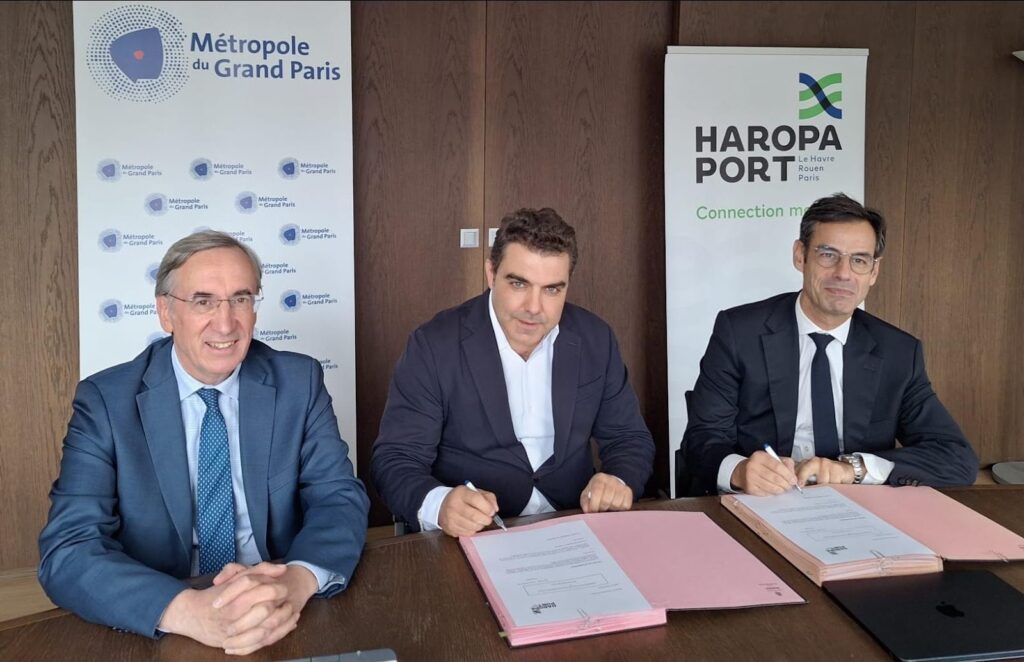
What if the next revolution in Parisian electric mobility were to come not from the roads, but from the river? One thing is certain: the movement is already well underway. Indeed, for example, since late 2025, HAROPA PORT has formalised a 15-year partnership with the start-up ULS (Urban Logistic Solutions) to develop a river and cycle logistics network in Paris.
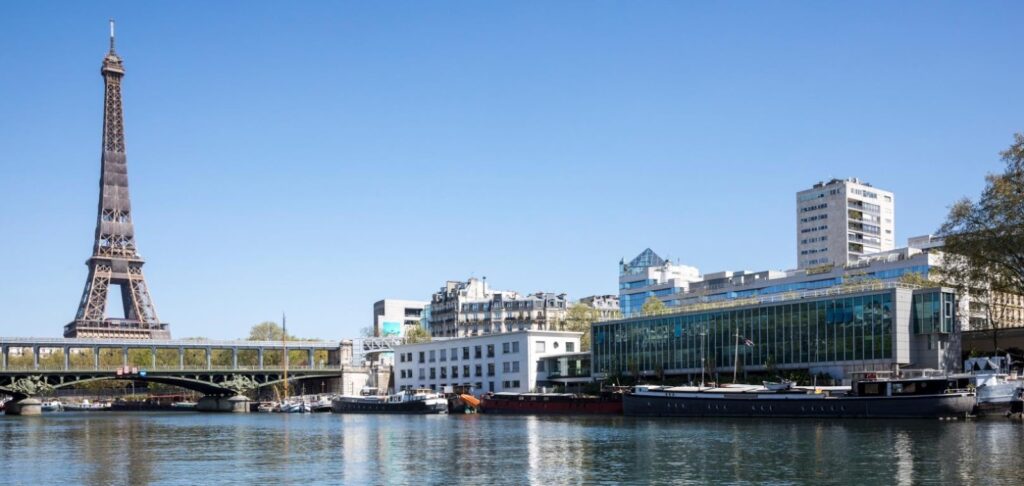
It may sound abstract put like that, but in practice it’s simpler. Goods are transported by boat between Charenton-le-Pont and strategic locations such as the ports of Javel-Bas or Gros-Caillou, before being delivered to the city centre via electric cargo bikes. According to an article in Le Figaro published in March 2026, it takes just 37 minutes to travel from Charenton to the Alexandre III Bridge, followed by a further six minutes to reach the Champs-Élysées by bike.
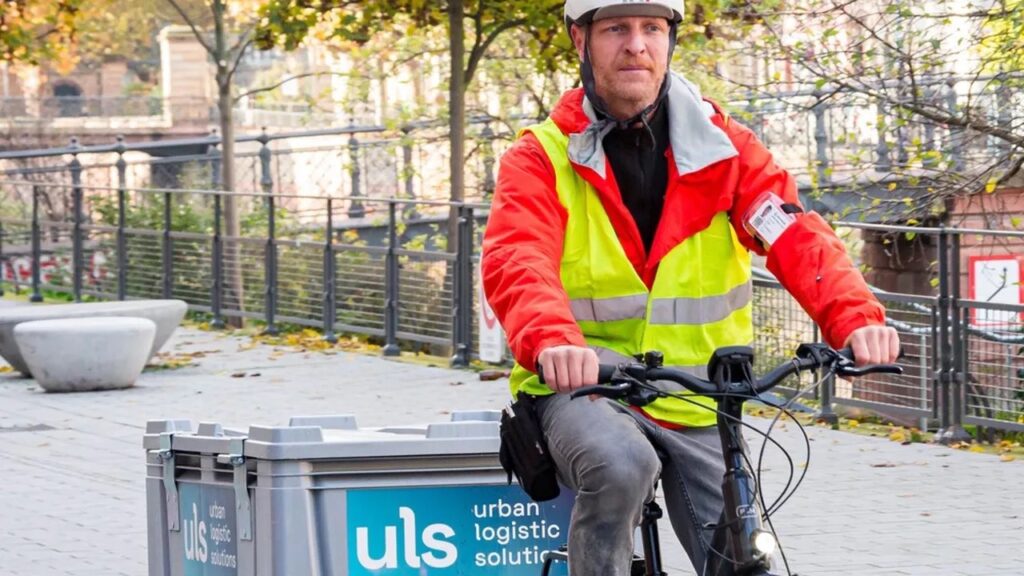
This model makes it possible to drastically reduce the use of combustion-engine commercial vehicles in urban areas, where their impact remains particularly high: in Paris, delivery vehicles (commercial vans and lorries) account for up to 40% of emissions linked to road traffic in densely populated areas, whilst also being responsible for a significant proportion of noise pollution and congestion.
In this context, ULS aims to replace up to 150 diesel lorries with this logistics system. Furthermore, the vessel used is built in modular sections in Portugal, illustrating the emergence of a genuine European value chain centred on these new forms of transport.
A regulatory framework that clearly drives towards net-zero emissions
The development of these solutions does not rely solely on private initiatives. It is, in fact, taking place within a more restrictive regulatory framework for transport, which is forcing companies to rethink their business models.
In fact, in Paris, the Low Emission Zone (LEZ) already bans the most polluting vehicles, with restrictions being gradually tightened. By 2030, the capital aims to phase out diesel almost entirely, which is why river transport is emerging as the solution.
At European level, the “Fit for 55” climate package sets a target of a 55% reduction in CO₂ emissions by 2030. At the same time, the Alternative Fuels Infrastructure Regulation (AFIR) requires the development of charging infrastructure, including for inland waterway transport.

Tourism and passenger transport are also going electric
The electrification of the Seine is not limited to freight transport. Passenger transport is also evolving rapidly.
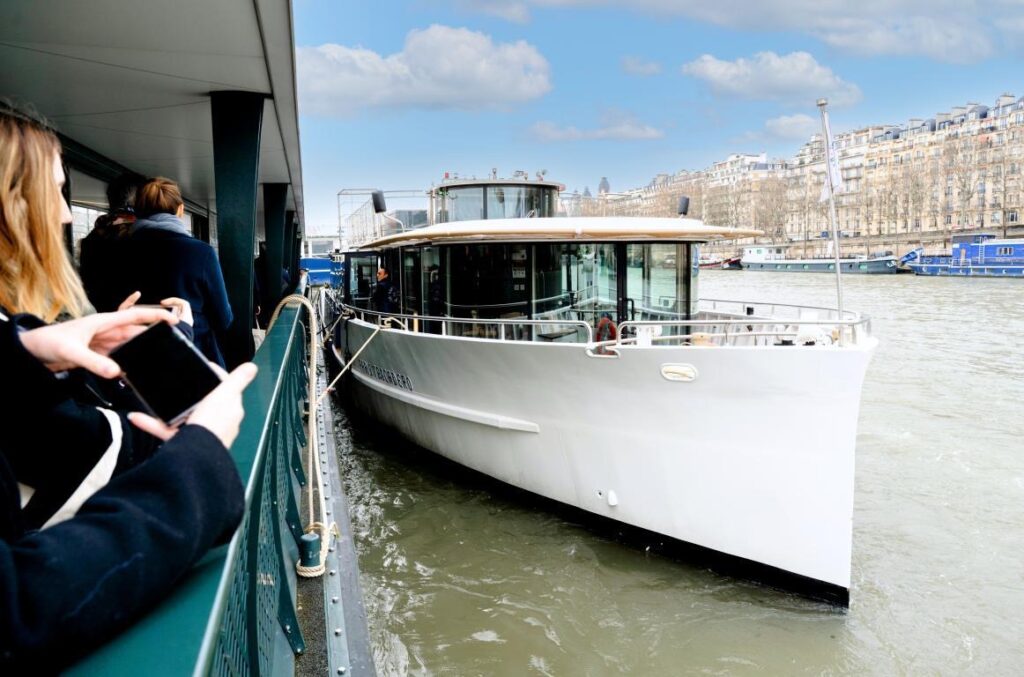
Les Vedettes de Paris, for example, have begun transforming their fleet, with the first vessel to be retrofitted to run entirely on electricity due to be ready by 2024. Each vessel is equipped with two 550 kWh battery packs, allowing for rapid recharging in around 15 minutes during stopovers. The stated aim was to achieve an 80% zero-emission fleet by mid-2025, with an estimated saving of 460 tonnes of CO₂ avoided per year per vessel. This is an ambitious target, which above all illustrates the operators’ determination to accelerate electrification, even though the actual level of deployment has not yet been officially specified at this stage.
On a different note, the event vessel La Perle Noire, launched in June 2025 at the Port of Grenelle, features an innovative electro-hydraulic propulsion system. Measuring 22 metres in length and capable of carrying 70 passengers, it is based on technology developed in collaboration with several French companies, illustrating the emergence of an industrial sector centred on electric river transport.
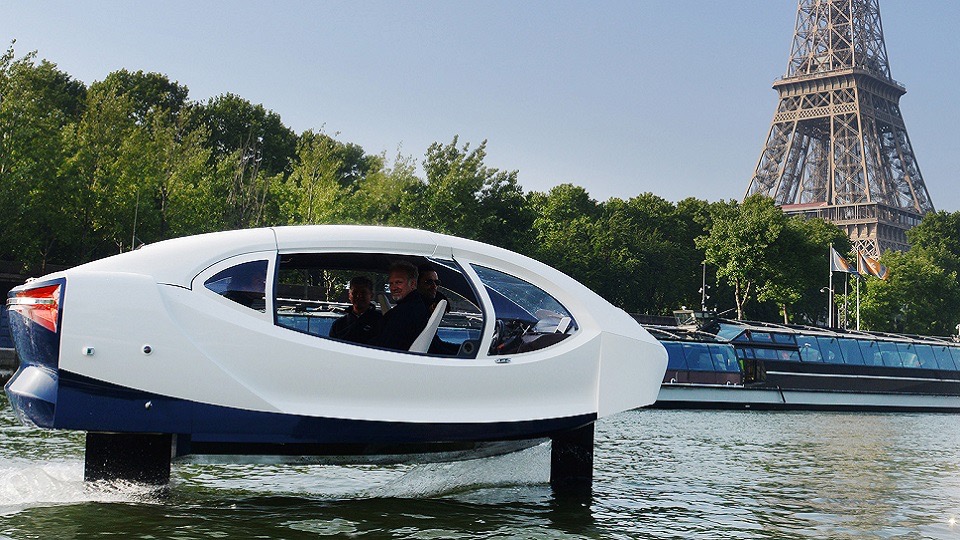
Finally, plans for flying water taxis are back in the spotlight with SeaBubbles. These electric vessels, capable of reaching 25 knots (46 km/h), could be deployed as early as 2026 with a fleet of 10 to 20 units. Several operators, such as G7 and Uber, have been mentioned, although regulatory issues are still under discussion.
Infrastructure: the cornerstone of this transformation
As with electric cars, the development of these applications depends largely on infrastructure.
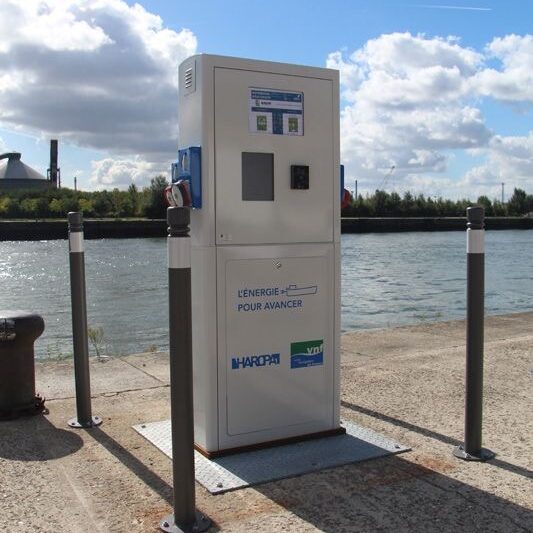
Since 2018, HAROPA PORT and Voies Navigables de France have been gradually rolling out the Borne & Eau® network, which is set to comprise 110 charging points by 2026 between Le Havre, Rouen and Paris. These stations provide both electricity (up to 63A) and water.
And as mentioned earlier, just as with land vehicles, this network of charging points is key to the development of transport modes. It will need to be expanded significantly if electric boats are to flourish.
A transformation still in progress
Whilst the number of projects is growing, the logistics of electric river transport are still in the early stages of development. The momentum is certainly there. Driven by regulatory constraints, technological innovations and changing patterns of use, the Seine is gradually emerging as a solution – albeit a niche one – for reducing CO₂ emissions.