



Why EVs outperform hybrids in America’s auto revolution
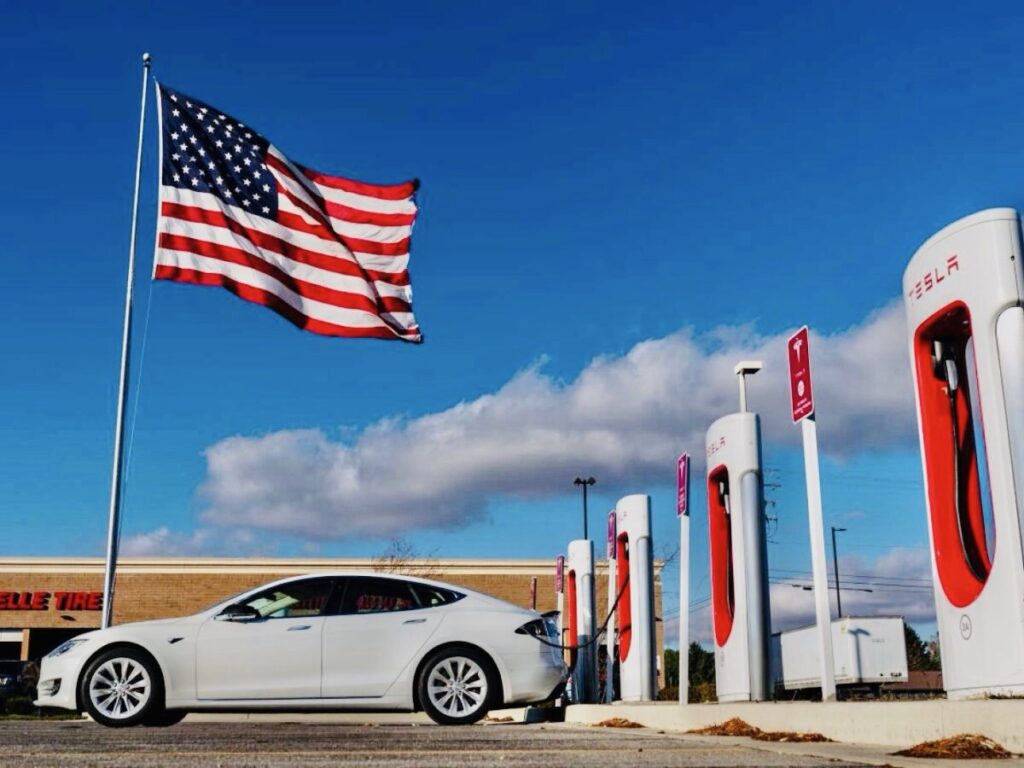
The year 2025 marks a defining moment in the American automotive journey. For decades, the internal combustion engine dominated U.S. roads, shaping cities, economies, and lifestyles. Then came hybrids an important transitional technology designed to soften fuel consumption without fully abandoning gasoline. Now, electric vehicles (EVs) stand firmly at the center of the future.
As American consumers weigh their choices between electric vehicles (EVs) and hybrid vehicles in 2025, the answer is becoming increasingly clear: fully electric vehicles are the superior choice for performance, cost efficiency, environmental responsibility, and long-term value.
Hybrids once represented progress. Today, they represent compromise.
This comprehensive comparison explores why EVs are no longer just an alternative but the dominant automotive solution for America.
The shift is no longer coming — it’s here
Five years ago, EVs were often discussed as “the future.” In 2025, they are the present.
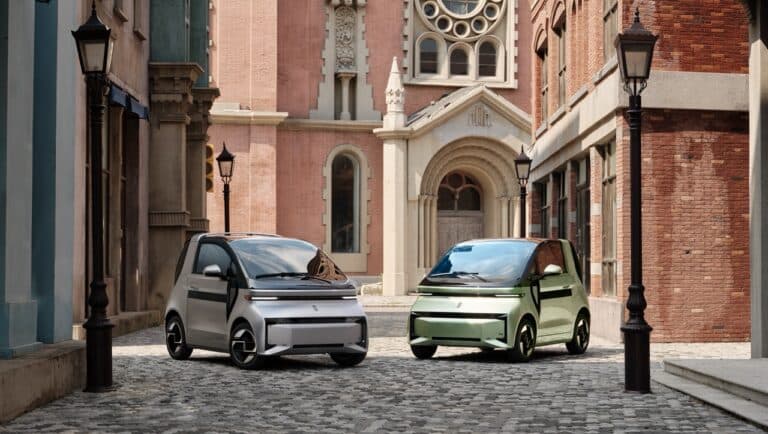
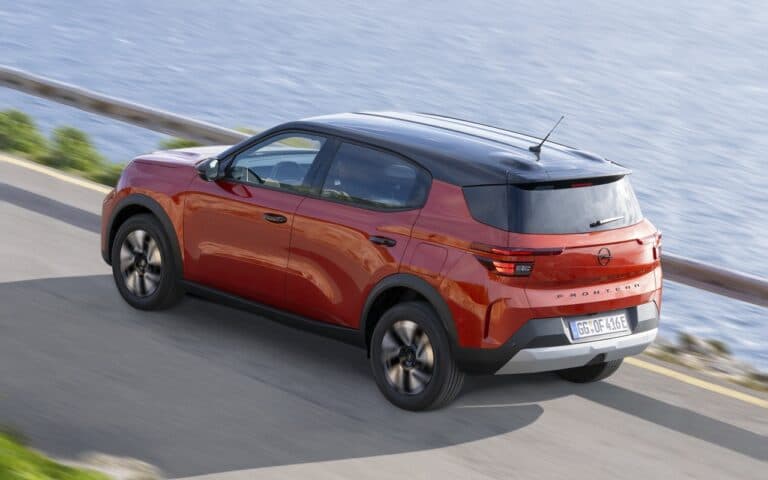
Electric vehicles are now widely available across nearly every segment sedans, SUVs, trucks, crossovers, and even performance cars. American roads are increasingly populated by vehicles that are quieter, faster, cleaner, and cheaper to operate than their gasoline-based predecessors.
Hybrids still exist, but their role has changed. What was once a stepping stone has become a technological halfway house neither fully efficient nor fully future-ready.
Purchase price: The gap is closing fast
One of the longest-standing arguments in favor of hybrids has been their lower upfront cost. In 2025, that argument is rapidly losing strength.
EV Affordability
Electric vehicles now span a wide price range, from affordable entry-level models to premium luxury offerings. Increased domestic manufacturing, improved battery technology, and economies of scale have pushed EV prices down year after year.
Additionally:
- Many EV buyers qualify for financial incentives at the point of sale
- EV leasing options are often more favorable than hybrid leases
- Operating cost savings offset higher upfront prices quickly
Hybrid Pricing Reality
Hybrids may appear cheaper initially, but they still require:
- Gasoline
- Oil changes
- Exhaust systems
- Emission-related maintenance
When the full ownership cost is considered, hybrids lose much of their pricing advantage.

Verdict: EVs are no longer expensive experiments they are competitively priced, financially rational purchases.
Total cost of ownership: EVs dominate
When Americans buy a car, the real question isn’t the sticker price it’s how much that vehicle costs over time.
EV Ownership Advantages
Electric vehicles shine in long-term ownership:
- Electricity is significantly cheaper per mile than gasoline
- Fewer moving parts mean fewer breakdowns
- No oil changes, spark plugs, timing belts, or transmission servicing
- Regenerative braking extends brake life dramatically
Over a 5–8 year ownership period, EV owners routinely spend thousands of dollars less than hybrid owners.
Hybrid Cost Burden
Hybrids still rely on internal combustion engines. That means:
- Ongoing fuel costs
- Engine wear and tear
- Dual powertrain complexity
- Higher long-term maintenance risk
Hybrids combine two systems electric and gasoline while EVs simplify ownership by eliminating one entirely.
Verdict: EVs win decisively on lifetime cost.
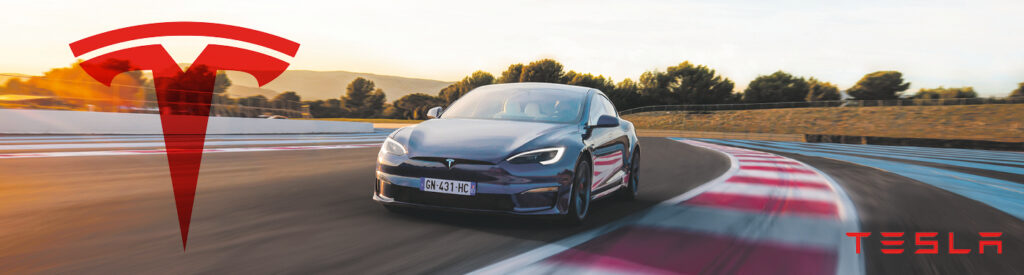
Performance: Electric is simply better.
The driving experience is where EVs completely outclass hybrids.
Instant Torque
Electric motors deliver power instantly. There is no delay, no gear shifting, no hesitation. Acceleration is smooth, silent, and immediate.
Many EVs outperform traditional sports cars in acceleration even in mainstream price brackets.
Driving Comfort
EVs offer:
- Quiet cabins
- Smooth power delivery
- Lower vibration
- Balanced weight distribution due to floor-mounted batteries
Hybrids, by contrast, still rely on gasoline engines that turn on and off, often disrupting the driving experience.
Verdict: EVs are not just cleaner they are more enjoyable to drive.

Range anxiety is a thing of the past.
One of the most persistent myths about EVs is range anxiety. In 2025, this concern is largely outdated.
Modern EV Range
Most electric vehicles today offer:
- 250–400+ miles on a single charge
- Real-world range suitable for daily commuting and long-distance travel
- Predictive navigation that factors in charging stops automatically
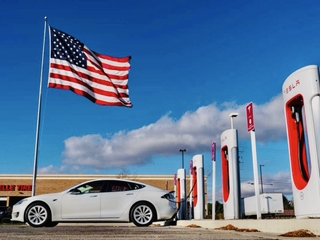
Charging Convenience
- Home charging provides unmatched convenience plug in at night, wake up full
- Public fast-charging networks are expanding rapidly
- Charging times continue to decrease with improved battery and charger technology
Hybrids avoid charging but at the cost of remaining dependent on gasoline.
Verdict: EV range is no longer a limitation it’s a competitive strength.
Infrastructure: Electric America is taking shape.

America’s charging infrastructure in 2025 is stronger than ever.
Charging Expansion
Charging stations are now common at:
- Highways
- Shopping centers
- Apartment complexes
- Office buildings
- Hotels and airports
The national charging ecosystem continues to grow in reliability, speed, and accessibility.
Home Charging Advantage
EV owners enjoy the ultimate convenience:
- No gas station stops
- No fuel price volatility
- No waiting in line
Hybrid owners still rely on gas stations—an outdated inconvenience in a modern world.
Verdict: Infrastructure growth overwhelmingly favors EVs, not hybrids.
Environmental impact: EVs lead, hybrids lag.
Hybrids reduce fuel use but they do not eliminate emissions.
Electric vehicles:
- Produce zero tailpipe emissions
- Improve urban air quality
- Reduce dependence on fossil fuels
- Align with cleaner energy generation over time
Hybrids still burn gasoline every day. They still emit pollutants. They still rely on oil.
As America transitions to cleaner energy, EVs automatically become cleaner without changing the vehicle.
Verdict: EVs are the only true solution for sustainable transportation
Maintenance & reliability: Simplicity wins
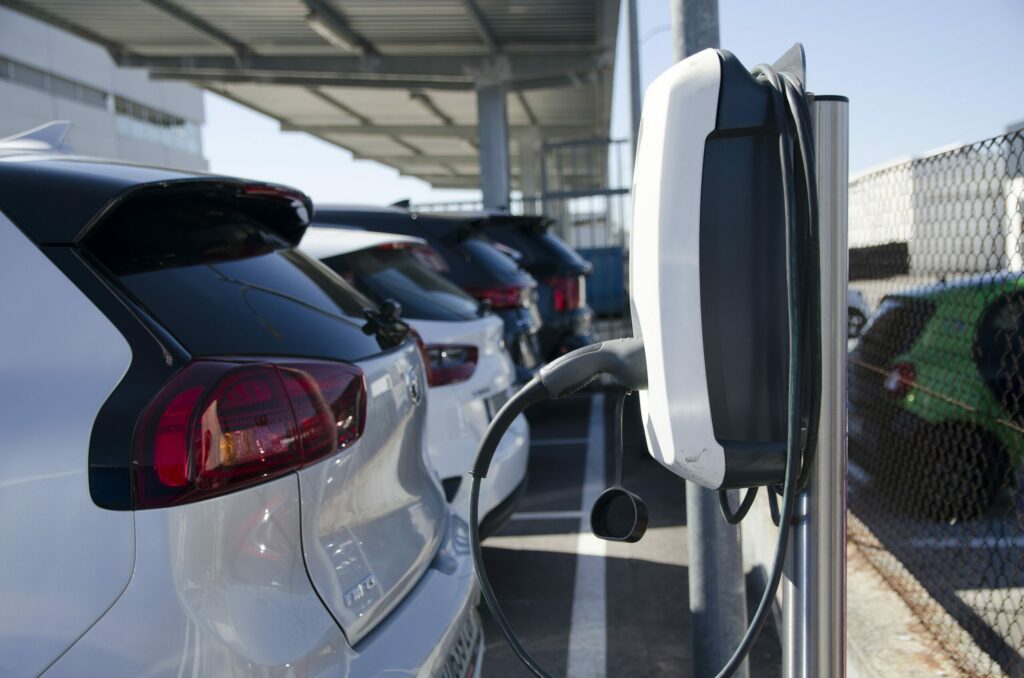
EV Simplicity
Electric vehicles are mechanically simpler:
- No engine
- No transmission
- No exhaust
- No fuel system
This simplicity translates to:
- Fewer service visits
- Lower repair bills
- Higher reliability
Hybrid Complexity
Hybrids contain:
- A full gasoline engine
- An electric motor
- A battery system
- Complex software coordination
More systems mean more potential failure points.
Verdict: EVs are easier to own and maintain.
Resale value: EV confidence is rising.
Early concerns about EV resale have faded.
Modern EVs:
- Retain value well due to strong demand
- Benefit from improved battery longevity
- Are increasingly desirable in the used-car market
Hybrids face growing competition from used EVs, which now offer better performance an lower running costs.
Verdict: EV resale confidence continues to strengthen.
Who should still buy a hybrid?
Hybrids still make sense for a shrinking group of buyers:
- Drivers without any access to charging
- Extremely remote rural users
- Buyers unwilling to change fueling habits
However, these scenarios are becoming less common each year.
For the vast majority of American drivers, EVs are now the smarter choice.
The final verdict: Electric is the clear winner.
In 2025, the comparison between EVs and hybrids is no longer close.
| Category | Winner |
| Performance | EV |
| Environmental Impact | EV |
| Maintenance | EV |
| Driving Experience | EV |
| Future Readiness | EV |
Hybrids served their purpose but that era is ending.
Electric vehicles are not a trend.
They are not experimental.
They are not niche.
They are the new American standard.
Looking ahead: The next decade belongs to EVs
As battery costs continue to fall, charging infrastructure expands, and consumer confidence grows, the momentum behind EVs is irreversible.
Hybrids will fade. Gasoline will decline. Electric vehicles will define mobility, innovation, and freedom on American roads.