



As car manufacturers gradually unveil their social leasing schemes – the third season of which begins on 16 July – Eco Motors News shines a spotlight on the eligible models. At the same time, several proposals suggest continuing this scheme in the longer term. Or how to get more than a million electric cars on the road by 2046 through a reorganisation of the system, without putting a strain on public finances. The NGO Transport & Environment offers some food for thought.

First come, first served
Orders are now open. Car manufacturers are counting on this third round of the social leasing scheme to boost their sales and increase the production of electric cars. As a reminder, 50,000 individuals or households will be able to benefit from this reduced-price long-term leasing scheme, funded by energy-saving certificates (CEE) – and therefore by energy suppliers (rather than the state budget). Places will be allocated on a first-come, first-served basis, provided applicants meet certain criteria: having a reference taxable income (based on 2025 figures) of less than €16,300, being a frequent driver (living more than 15 km from their place of work or driving more than 8,000 km a year for business purposes), and signing up to a lease of at least 3 years and 12,000 km per year.

The list is taking shape
Without waiting for the scheme to be launched on 16 July, car manufacturers have already unveiled a large proportion of their specific offers. Here is an initial list; the key features are the same across the board: long-term leasing, with no upfront payment, a 37-month term and a 45,000 km mileage limit.
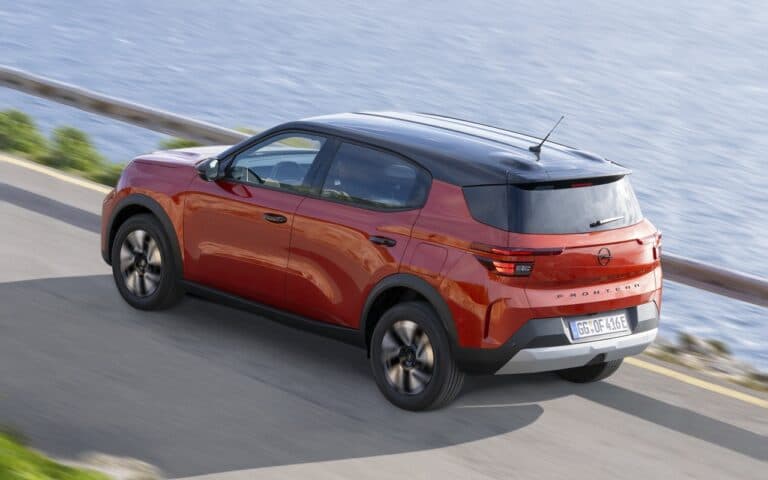
- Opel Frontera (family SUV): €99 per month (over 3 years and 45,000 km)
- Renault R4 (urban SUV): from €170 per month (Evolution trim) or €190 per month (Techno trim)
- Hyundai Inster (city car): from €139 per month
- Citroën ë-C3 (city car): from €94 per month (range: 320 km)
- Renault Twingo: €130 per month (entry-level model, range of 260 km) or €139 per month (range of 410 km)
- Fiat Panda (city car): €95/month (320 km range)
- Hyundai Kona EV (city SUV): from €189 per month
- Opel Corsa (city car): €139 per month
- Opel Mokka (city SUV): €189 per month
- Lancia Ypsilon (city car): from €195 per month
- Alfa Romeo Junior (SUV): €199 per month (400 km range)
- Peugeot e-208: €149 per month (entry-level model: 360 km range)
- Peugeot e-2008: €179 per month
- Peugeot e-308: €199 per month
Due to their late type-approval, certain models are ineligible for inclusion on this list, such as the VW ID Polo and the Cupra Raval. Another new development is that the maximum authorised weight to qualify for leasing is 1,800 kg (down from 2,400 kg previously), which excludes many family cars. However, we can expect to see trade discounts and various incentives from dealerships, which are keen to capitalise on the resulting momentum.

What if the lease were to last for 20 years?
On the sidelines of this launch, the organisation Transport & Environment offers a fresh perspective: what if this leasing scheme were to continue beyond the promised 50,000 vehicles? The NGO emphasises that this incentive scheme helps to make electric vehicles more accessible to the general public and draws on a forward-looking study to scale up the initiative. The aim is to get one million electric cars on the road through social leasing (by 2046), whilst reviewing the economic and governance conditions.

Several possible scenarios
This is because leasing, as it currently stands, is too expensive and does not offer consumers sufficient benefits, even though it supports manufacturers’ industrial activity and accelerates the uptake of these cars. Based on a study carried out with Bernard Jullien, a lecturer, researcher and specialist in the automotive industry, the organisation Transport & Environment has developed various scenarios:
- to extend the current scheme at a rate of 50,000 vehicles per year, funded in particular through energy-saving certificates (CEE). Maintaining this scheme would be costly: €10 billion over 20 years.
- to scale up operations and finance 85,000 vehicles each year (totalling 1.7 million over 20 years), by involving leasing companies more closely and extending the vehicles’ useful life to 11 years (with several successive lessees). Either the State will manage this scheme (public service delegation), or a public-private partnership will be established. Total costs over 20 years: between €9 and €13.6 billion.
- the creation of a national agency dedicated to social leasing, capable of putting 1 million EVs on the road within three years. This public car-leasing agency would account for €12.3 billion over 20 years.
- set up local cooperative car-sharing schemes on a regional basis, involving retailers, garages and stakeholders in community-based mobility: the cars are owned by the cooperative, which entrusts the management of the car-sharing scheme to local authority staff. Estimated cost over 20 years: €6.4 billion.

Funding to be determined
To finance this ramp-up, the authors of the study suggest interest-free loans, government guarantees, bringing forward revenue from the European carbon market, and mobilising public savings. It is also a question of overhauling the governance model by involving the stakeholders in the transition more closely. It remains to be seen whether, at an industrial level, manufacturers will be able to secure the necessary volumes.
Whilst the European electric vehicle market is slowly gaining momentum, looking ahead to the future of social leasing from a broader perspective will help to accelerate the electrification of the French vehicle fleet.