







The government is stepping up its efforts on charging infrastructure in multi-occupancy buildings. Roland Lescure, Minister for the Economy, announced on Tuesday 21 March 2026 on RTL that the aim is to install electric charging points at 1.7 million parking spaces in block-of-flats by 2035. This addresses one of the main barriers to the adoption of electric vehicles in France.
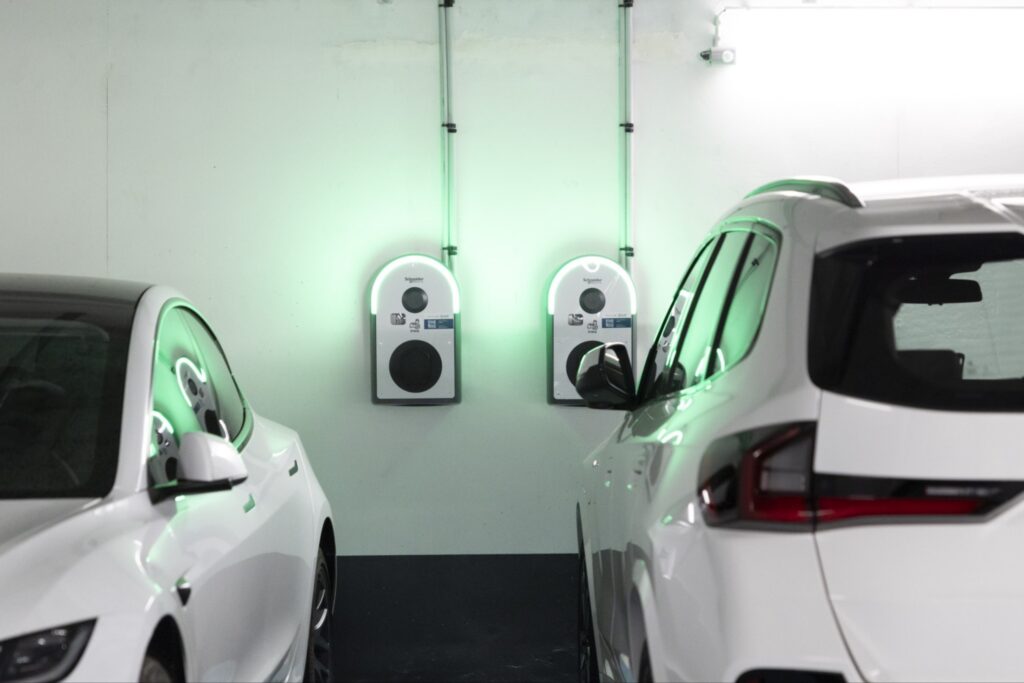
The announcement: 1.7 million seats, 1.2 million more connections
By 2035, the government aims to enable the installation of charging facilities at 1.7 million parking spaces in residential blocks. Of these, 1.2 million will be new electric charging points – that is, spaces which currently have no charging facilities.
Roland Lescure made a blunt assessment on RTL: in this matter, “the real issue” is “often charging points”. “We’re told there aren’t enough charging points. What I can tell you today is that, thanks to the Caisse des dépôts et consignations, we’re going to increase the number of charging points in apartment blocks.”
The sentence is simple. But it conveys something important: the government recognises that the issue is no longer just the vehicle itself – since electric cars already exist, their prices are falling and their range is increasing – but rather the residential charging infrastructure in apartment blocks.

Logivolt: the component that changes everything
The key mechanism is Logivolt. This subsidiary of the Caisse des dépôts not only provides grants but also advances funds to housing associations.
This is important for residents because, until now, installing charging points in a block of flats meant convincing a general meeting to approve the work, securing collective funding, and dividing the costs among owners in very different circumstances. The result: projects stalled for years, votes against the proposal, and entire blocks of flats left without access to home charging.
With Logivolt, the housing association funds the communal infrastructure without having to advance the funds. Only those owners who decide to install a charging point on their own property then pay a share of the cost. The others pay nothing. It is this model that makes voting at general meetings much simpler, because it removes the main obstacle: why should I pay for a charging point that I won’t use?
In practice, Logivolt does not install the charging points itself. The subsidiary of Caisse des Dépôts finances the communal infrastructure, then relies on approved operators to carry out the feasibility studies, construction work, connection and, subsequently, the operation of the charging points. For co-ownership estates, this is a key point: the scheme allows the project to be launched without having to advance the full amount of funds, and also allows residents to choose their own operator.

Increased support since 1 April
The minister’s announcement is part of a wider initiative. Since 1 April 2026, the grants available to housing estates wishing to install charging points in their car parks have been significantly increased. They now cover up to 50% of installation costs.
The subsidy for installing electrical infrastructure has seen its ceiling rise from €8,000 to €12,500 per building for car parks with up to 100 spaces. For car parks with more than 100 spaces, the subsidy increases to €125 per additional space, compared with €75 previously. To put these figures into perspective, for a large car park with 200 spaces, the difference between the two scales amounts to several thousand euros in additional public funding.
How is France doing when it comes to charging?
To understand why this plan specifically targets co-ownership properties, we need to look at the current state of the French network.
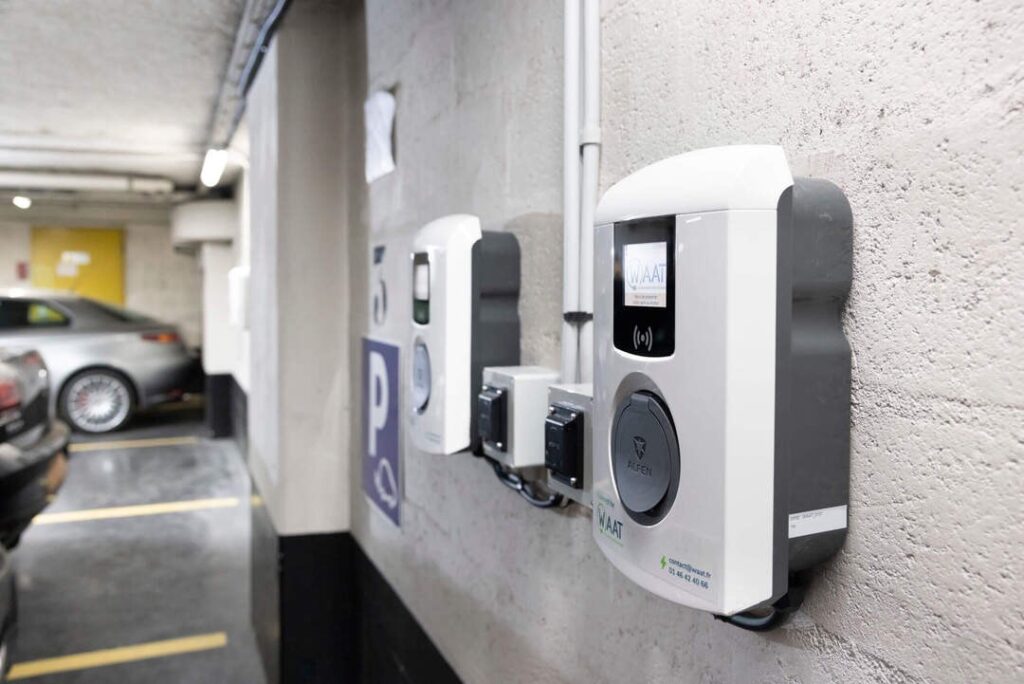
According to Enedis, by the end of 2025 there were around 185,000 publicly accessible charging points in France (municipal charging points, petrol stations, public car parks), 1.1 million in company car parks and 1.6 million at private homes.
These figures are encouraging for the development of electric mobility in France, but they mask a structural imbalance. In fact, home charging is almost exclusively limited to owners of detached houses, who can install a charging point at home without needing anyone’s permission. For the millions of French people who live in flats, the situation is radically different. Their car park is communal, decisions are not theirs alone to make, and the process is infinitely more complex. It is this gap that the government is now attempting to bridge.
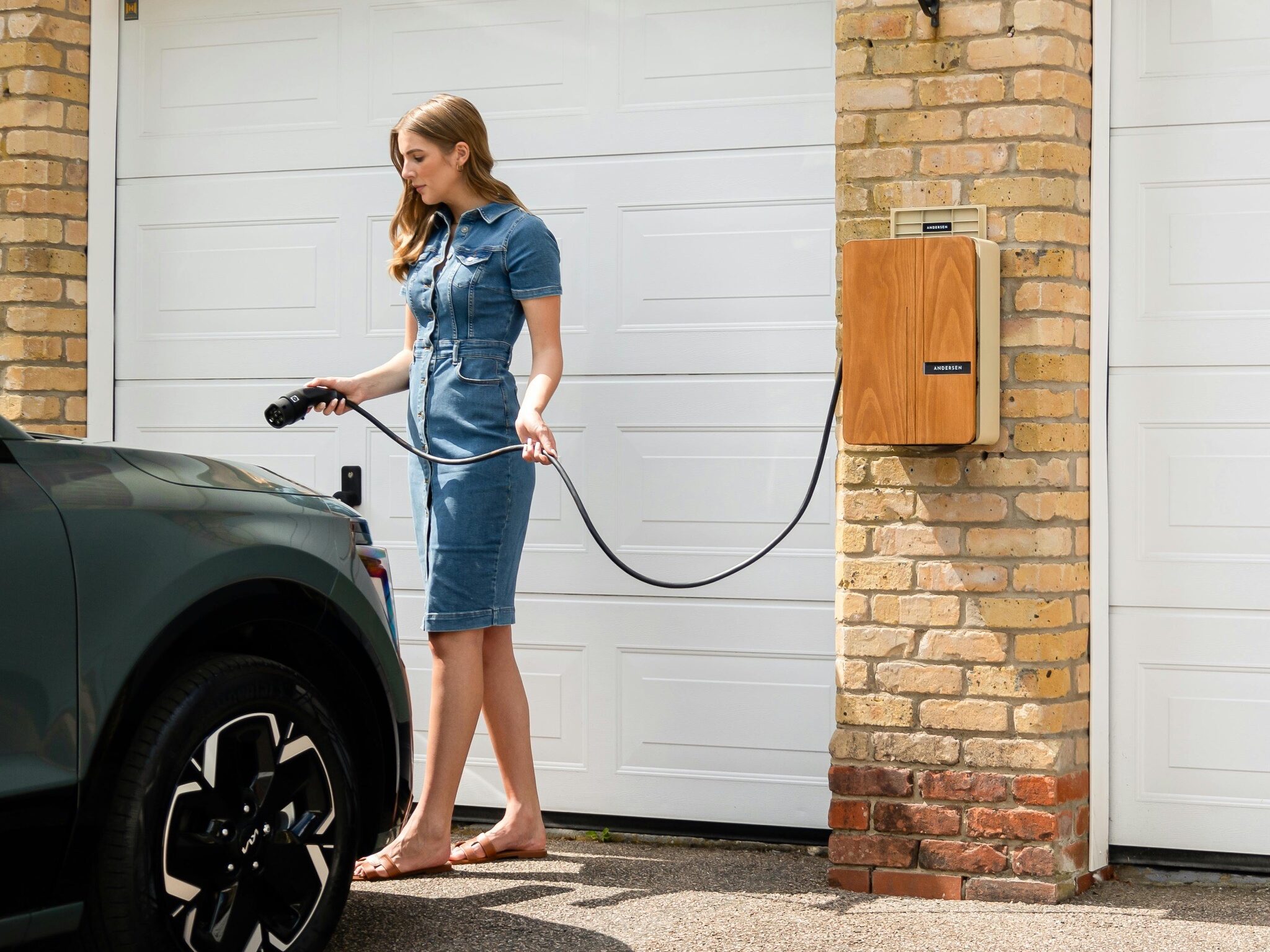
The real obstacle to the transition to electric vehicles
The lack of charging points remains, alongside range and charging time, one of the main barriers to buying an electric vehicle. And among these, home charging is a particularly significant factor: without a simple solution at home, using an electric vehicle becomes a hassle and leaves drivers reliant on the public charging network.
For residents of apartment blocks – of whom there are many in France – the plan announced by Roland Lescure will not solve everything straight away: the target of 1.7 million parking spaces by 2035 still requires convincing co-ownership associations and getting the work underway.