South Korea has passed a symbolic milestone in 2025 by exceeding a 10% market share for electric vehicles for the first time. With 220,177 registrations over the year, the market grew by 50.1% in one year, reaching a historic market share of 13.1%. This growth can be attributed to a solid industrial ecosystem and a strong cultural appetite for new technologies.
But behind this flattering dynamic, South Korea’s transition reveals a paradox: the country, the world’s 7ᵉ largest automotive producer, boasts undeniable industrial power while maintaining domestic adoption that is still measured against the most advanced European markets.

A recent but spectacular acceleration
Until the early 2020s, electric vehicles remained marginal in South Korea. By 2023, registrations had peaked at around 120,000 units (7.9% market share). Two years on, the situation has changed radically. The acceleration was confirmed throughout 2025: by 31 August, 141,986 units had already been registered (+48.4%), with a remarkable peak of 23,000 vehicles in August alone, representing 18.1% of total sales.
This increase is part of a stable automotive market of around 1.68 million vehicles sold annually. The most notable factor is the rise in sales of « eco-vehicles » (electric, hybrid, hydrogen): 813,000 units sold, representing almost 50% of the vehicle mix. This is real momentum, but still lags behind a number of European countries where electric vehicles often have a market share in excess of 20%.
Hyundai-Kia dominant but challenged
The transition depends above all on national champions. Hyundai and Kia are among the world leaders in electric vehicles, with 488,673 units exported in 2023 (242,664 for Hyundai, 246,009 for Kia).

Hyundai is investing massively: 24,300 billion won by 2025 (€16.1 billion), of which 7.9 billion will be devoted to EV production and 7.6 billion to R&D (batteries, hydrogen, autonomous driving, AI). The goal is to have 1.51 million EVs produced annually in Korea by 2030, and 3.6 million worldwide.
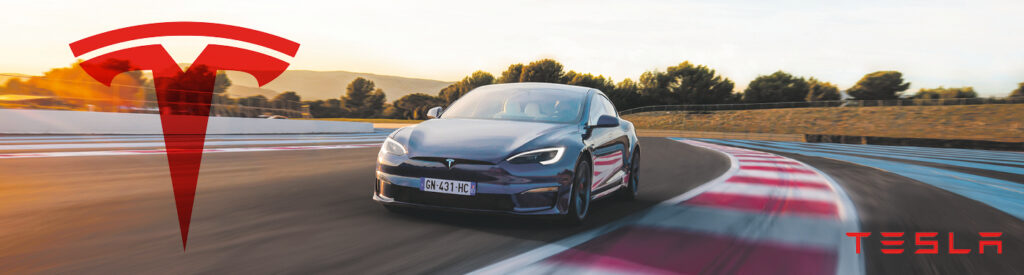
However, on their domestic market, their domination is less overwhelming than expected. In 2025, Kia will lead the way with 60,609 units (27% of the EV market), immediately followed by Tesla with 59,893 units (27%), including 50,397 Model Ys (+169.2%). Hyundai follows with 55,461 units (25%). Between them, they account for 80% of the national market.

The real upheaval comes from Chinese manufacturers: with 74,728 units sold, they will capture 42% of the EV market in 2025, compared with just 25% in 2022. This meteoric rise is reshuffling the deck and undermining the historical balance in favour of national brands.
A pragmatic public policy
The country has a well-honed strategy for transforming its vehicle fleet. Unlike some European countries, South Korea is opting for a gradual approach rather than radical bans. The government is counting on subsidies of up to 14 million won per vehicle, with the aim of reducing the effective cost by 10 million won over four years, supplemented by substantial tax exemptions.

The national plan targets a 25% market share for EVs by 2030, with annual growth forecasts (CAGR) of between 28.61% and 30.75% until 2035, putting the market at $266 billion.
Paradoxically, imports are exploding: in August 2025, they accounted for 40% of the EV market (up 100% on 2024).
Recharging: rapid progress, persistent challenges
The recharging network in South Korea is expanding rapidly. Although the figures for 2025 have not yet been revealed, the growth seen in previous years is indicative. In 2024, more than 405,000 charging points were installed, surpassing the 394,000 at the end of 2023 and the 288,000 in 2022, representing an annual growth rate of 40%, driven by national operators.

Of these, around 10 to 12% are fast chargers (i.e. around 40,000 to 48,000 units, compared with 21,000 in 2023), which have become the norm on motorways and in major cities where 82% of the population lives, such as Seoul, with its plans for 220,000 streetlight charging points by 2026.
The world-record ratio of 1.7 EVs per public charging point (compared with a global average of 10) reflects this density, optimised by « smart charging » solutions integrated by the major players to manage peaks in demand.
However, high levels of urbanisation complicate the equation. In apartment blocks, which dominate the residential landscape, access to an individual charging point remains problematic: only 94,000 domestic charging points will be available by the end of 2024 (compared with 400,000 public ones), putting the brakes on adoption by a significant proportion of the population.

Rural areas, which are a minority in terms of population but extensive, face coverage challenges despite well-equipped motorways; technical breakdowns and maintenance remain weak points.
Seoul is aiming for an additional 140,000 points by 2026 for its 4 million vehicles, but the residential mismatch still limits the potential despite a world-leading public network.
An energy mix in transition
South Korea’s energy mix remains heavily dependent on coal and gas, limiting the real environmental impact of electric vehicles. However, the country is betting on the development of nuclear power and renewable energies to improve this balance in the medium term.
At the same time, South Korea is establishing itself as a strategic pillar in the global battery chain. LG Energy Solution, SK On and Samsung SDI play a central role in international supply, positioning the country as a « global battery hub » and a technological leader in the sector.
Barriers to adoption
As elsewhere in the world, a number of structural obstacles remain. In South Korea, the high purchase price despite subsidies remains a major obstacle, as does the impossibility of shared charging and growing commercial pressure from Chinese imports.
The Korean paradox
The Asian country produces 4.1 million vehicles a year. Exports of eco-vehicles are worth $25.8 billion (+11%), including $14.8 billion for hybrids alone (+30%), testifying to the industry’s international competitiveness.
South Korea is therefore exporting massively, while domestic adoption is growing steadily, but is still limited to 13.1%, well below the 20% figure seen in Europe.
Massive investment is continuing, infrastructure is progressing and demand is growing steadily. Professional fleets and leasing are promising levers. It remains to be seen whether this industrial power will translate into a sustainable shift in the domestic market between now and 2030-2035, reconciling the country with its status as world leader.