
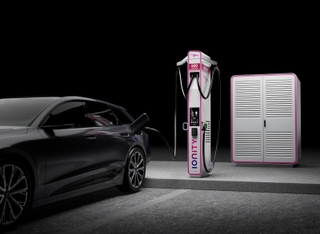


The IONITY European ultra-fast charging network has just announced a major step in the deployment of its infrastructure: the activation of its first Alpitronic HYC1000 « megawatt » charging systems in France, while reaching 6,000 high-power charging points (HPC) across Europe. This is the perfect response to the growing number of electric vehicles on the road.
Alpitronic HYC1000 « megawatt »: powerful and flexible charging technology
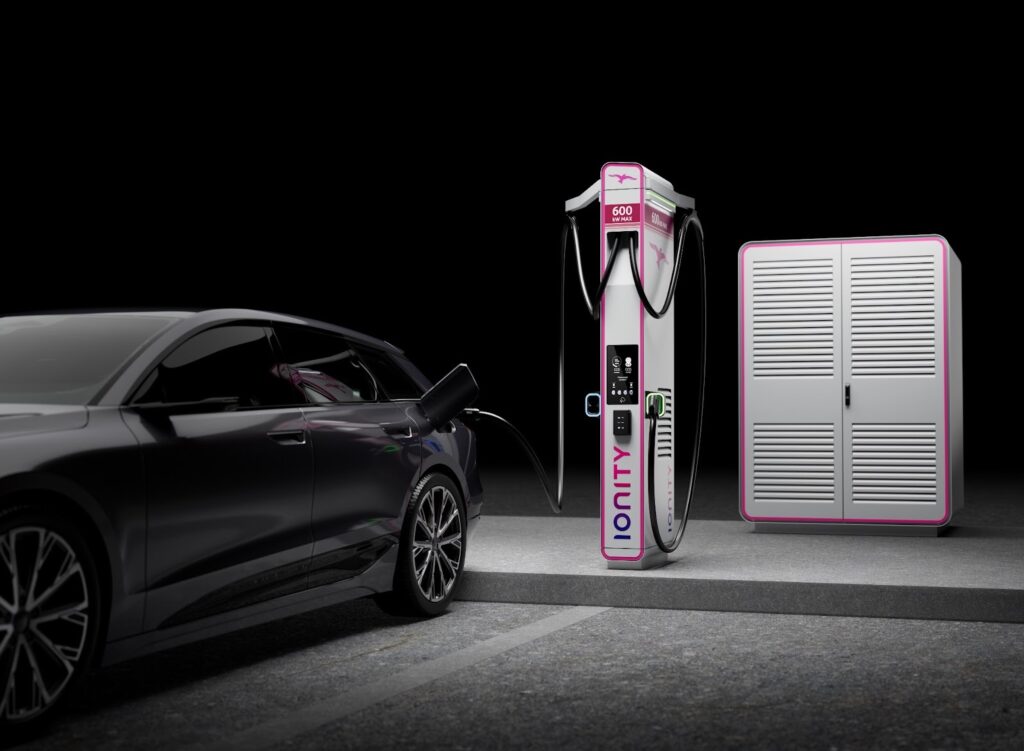
If this complex name didn’t mean anything to you, it does now, because it has just arrived in France. The HYC1000 system, developed by Alpitronic, an Italian manufacturer specialising in high-power recharging solutions, is a so-called « megawatt » recharging architecture. Its principle is based on a central electrical cabinet with a total power of 1,000 kW, capable of intelligently distributing energy between several connected charging points.
In practical terms, this is what the system represents:
- When a single vehicle is connected, the system can provide up to 600 kW of electrical recharging power.
- With this power, a compatible electric vehicle can recover up to around 300 km of range in less than eight minutes via a standard CCS2 connector, according to Ionity.
- What’s more, if several EVs are charging simultaneously, the power is distributed intelligently between the charge points to optimise flows.
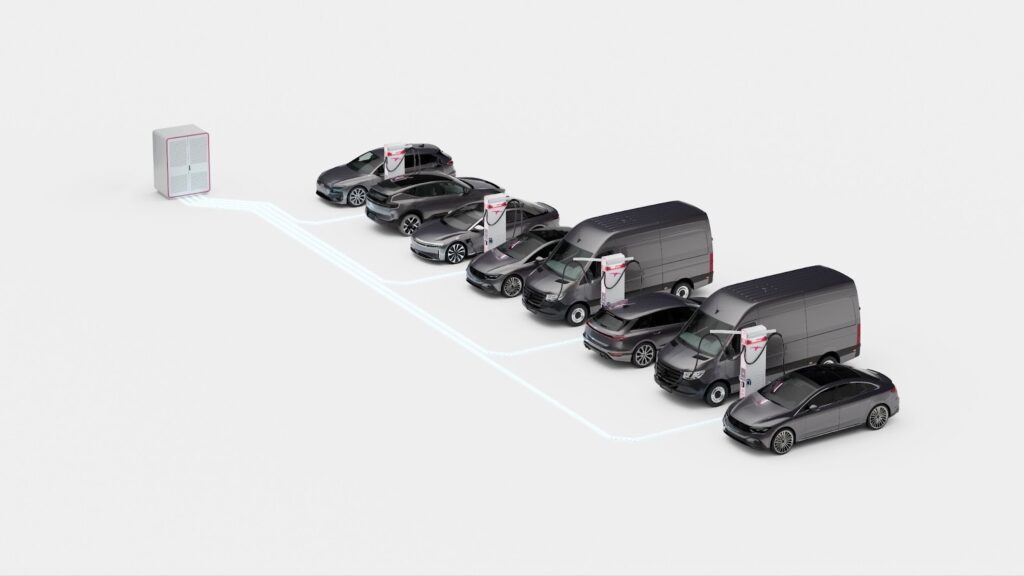
This technology represents a significant step forward compared with conventional HPC charging points (often up to 350-400 kW), offering a real prospect of ultra-fast charging on motorways, close to the time it takes drivers to stop for a break.
And its arrival in France is not just a test phase. In fact, Jeroen van Tilburg (CEO of IONITY) stated in a press release that the Alpitronic HYC1000: « has undergone extensive testing at IONITY’s dedicated test centre near Munich, to ensure its long-term performance, compatibility and reliability in real-life conditions ».

IONITY in France and Europe: a rapidly expanding network
Since its launch in 2017, IONITY has established itself as one of Europe’s leading ultra-fast charging networks for electric vehicles. The brand is backed by a number of major carmakers, including BMW, Mercedes-Benz, Audi, Porsche, Ford and Hyundai-Kia.
The other major piece of information revealed in the press release is that, simultaneously, on the European continent, the network has now reached a total of 6,000 ultra-fast charging points in 24 countries.
In France, the operator has developed a dense network around motorways, in partnership with VINCI Autoroutes and Avia Thévenin & Ducrot:
- IONITY currently operates 60 sites deployed with VINCI Autoroutes and 15 with Avia Thévenin & Ducrot Autoroutes on French motorway networks.
The Alpitronic HYC1000 terminals recently installed include :
- At the IONITY Sorgues station, on the A7 motorway (a strategic route linking northern Europe to the Mediterranean).
- But also on the IONITY Maison-Dieu website.
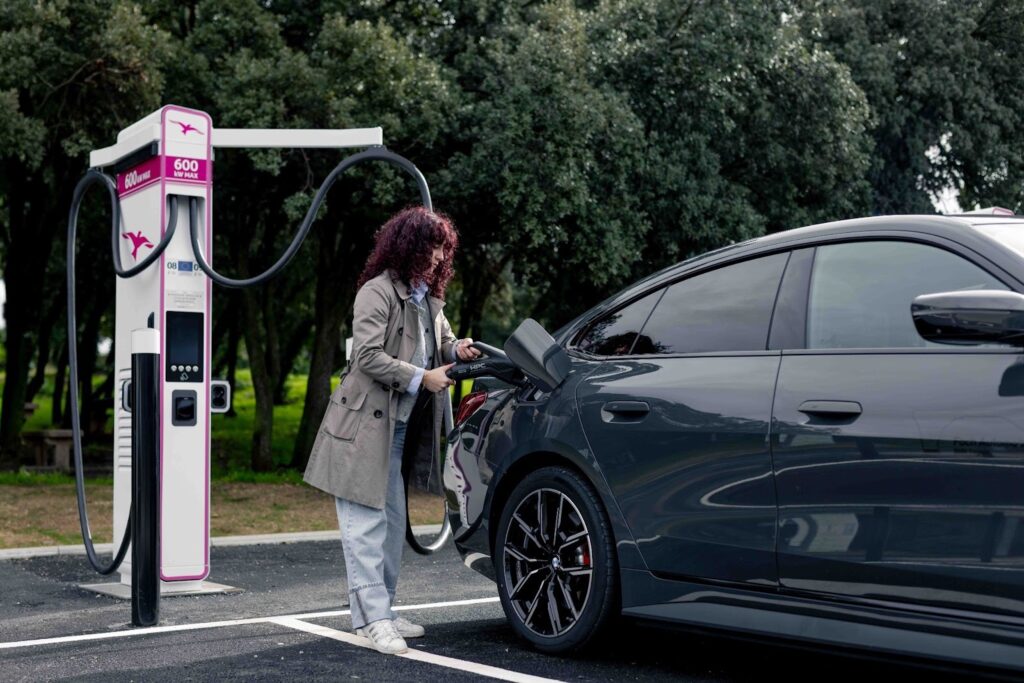
This location is not insignificant: the A7 is one of the busiest routes in France, particularly during the peak holiday season.
Faced with growing demand and increasing waiting times
The arrival of these new charging points is a response to the growing demand for recharging power, as the number of electric vehicles in France in 2026 continues to grow rapidly:
The total number of 100% electric vehicles on the road by the end of 2025 will be 1,663,365, according to the European Alternative Fuels Observatory. The number of plug-in hybrids continues to grow, with around 850,000 units, giving a total of 2.5 million electrified vehicles on the road. Combining these two figures, we arrive at a market share for new EVs (BEV + PHEV) of 26.7% in 2025, of which 20% for 100% electric vehicles alone.

This rapid growth means that waiting times at HPC chargepoints can be long, especially on the busiest roads. The Alpitronic HYC1000 chargepoints meet this need by reducing charging times and increasing capacity.
Looking ahead: a key step for European electromobility
With this press release announcing the brand’s progress, IONITY is anticipating future recharging needs, while consolidating its position as the benchmark network for long-distance electric mobility in Europe. These charging points will meet the growing demand of millions of French and European drivers, while preparing the infrastructure for the next generation of ultra-high-power electric vehicles.