


Since its launch in 2022, the Mégane e-Tech has enjoyed a promising start, followed by a dip in sales due to very aggressive competition. Renault is therefore giving its saloon a mid-life facelift: a sportier design, improved connectivity and a slightly longer range (500 km WLTP) thanks to a new LFP battery. Can the compact saloon win over electric car drivers once again?

An essential facelift
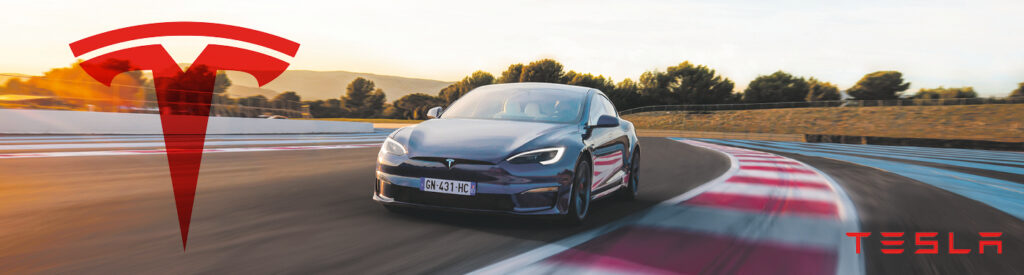
When it was first launched in 2022, the Mégane e-Tech served as a technological showcase for Renault as it truly entered the modern electric era. This repositioning was necessary given that the ‘pioneering’ Zoé was becoming outdated. The compact electric saloon was therefore built on a brand-new dedicated platform (CMF-EV), featuring an original design and a Google OpenR Link multimedia system, which was highly praised for its ease of navigation and use. As a result, sales took off rapidly (with Renault attracting 50 per cent of customers from other brands, some of whom even came from the premium segment): over 47,000 units were sold in Europe in 2023. But this success story saw a marked slowdown from 2024 onwards with the arrival of competitors such as the VW ID.3, Kia EV3 and Chinese models like the MG4, which offered the best value for money in the category. At the same time, Tesla has cut the price of its Model 3. The Mégane e-Tech therefore needed a facelift to stay in the game.

New look
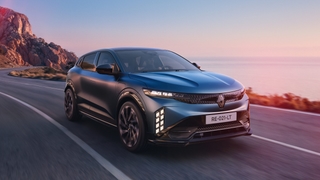
That said, don’t expect any major revolution from this mid-life facelift, which focuses primarily on the car’s appearance. The front end has been completely redesigned (apart from the headlights) with a more dynamic design and a light signature consisting of small diamond shapes in a chequerboard pattern, replacing the side air intakes. The closed, gloss-black grille is also adorned with diamonds, as on the Rafale SUV, the brand’s new identity. At the rear, the horizontal strip incorporates 3D elements, whilst the wide diffuser lends a touch of sportiness. It is worth noting that a new battery housed in the floor does not alter the Mégane’s wheelbase (2.69 m) but does raise its sill height slightly by 20 mm.

An increase of 30 km in range
On the other hand, there have been significant technical improvements. Admittedly, the powertrain remains the same as in the previous generation: a rare-earth-free wound-rotor synchronous motor producing 220 ch and 300 Nm of torque. It is powered by a new, higher-capacity battery: 67 kWh, which delivers a WLTP range of up to 500 km – 30 km more than before. Renault has therefore moved away from NMC chemistry in favour of this LFP (lithium iron phosphate) battery, which utilises a cell-to-pack (C2P) architecture featuring 232 closely packed pouch cells – a world first. This technology enables a pack fill rate of 53 per cent, with improved energy density and greater usable capacity. When charging, the maximum permitted power is 165 kW (+35 kW), with a 25 per cent reduction in charging time from 15 per cent to 80 per cent (approximately 24 minutes). The previous 60 kWh battery, which was insufficient and had lower energy density, no longer met current standards.

AI-powered driver assistance system
Inside, the Mégane e-Tech retains the same dashboard, dominated by the OpenR Link system with integrated Google. Google Assistant will soon be replaced by Google Gemini, the AI-powered conversational agent. Over a hundred apps are now available via Google Play. In terms of driver assistance features, Renault has incorporated a camera to monitor the driver’s gaze (mounted on the B-pillar): this technology also recognises the driver via facial recognition and adapts individual preferences (driving position, temperature, preferred driving mode) as soon as they enter the vehicle. For smartphone charging, the wireless charger now supports the ‘Qi2’ standard (or ‘MagSafe’ on iPhones). Thanks to a magnetic ring, charging power is boosted (50% battery charge regained in 1 hour without overheating). Interior space remains unchanged, though a few new fabric upholstery options for the seats are expected in the top-of-the-range Esprit Alpine versions.

Simplified range
To make things clearer for the public, Renault offers the Mégane e-Tech in two trim levels: Techno, the true core of the range, featuring the 12-inch OpenR dual-screen display with integrated Google, a heat pump and battery pre-conditioning. And a more upmarket Esprit Alpine version with 20-inch alloy wheels as standard (compared to 19-inch on the Techno), more prestigious design features, heated and massaging electric seats, and a Harman Kardon audio system. Regardless of the trim level, the motor-battery combination is identical: 220 ch and 67 kWh capacity.

Competitive rates?
These mid-life updates should reignite public interest in the Mégane e-Tech, whose dynamic capabilities and driving pleasure have never been in doubt. However, Renault’s model has quickly faced stiff competition (from Tesla, VW, Kia-Hyundai, MG, BYD and others), whose entry-level prices were more competitive. The diamond-badged brand has not yet revealed the prices for this new Mégane, but they will need to remain competitive. All the more so as rival models are set to multiply in the coming months. The current Mégane e-Tech starts at €39,500. Although it has not been a commercial smash hit – compared with the more iconic and endearing R5 e-Tech – this electric Mégane will go down in Renault’s history as the car that ushered the brand into the modern electric era.